Today in Arles, the 57th edition of the Rencontres de la Photographie opens. More than 40 exhibitions, 26 venues, more than 160 artists, more than 50 curators spread across 12,000 m². Today’s edition is entirely devoted to it: on the menu, the introductory text by Christoph Wiesner, the Director of the Rencontres d’Arles, Omar Victor Diop kindly agreed to answer our traditional Monday Questionnaire, Fujikina Arles 2026 and a first selection of exhibitions. During the week we will return to the festival, as well as the OFF program. Bon appétit!
GD
WORLDS IN VIEW by Christoph Wiesner, Director of the Rencontres d’Arles
As everything pushes toward simplification, division and reduction, the 57th edition of the Rencontres d’Arles creates a space for complexity and attentiveness—not to artificially soften the violence of reality, but to bring out its depth, and to face a sometimes unsettling world while continuing to find beauty, connection and freedom in it. Photography has a rare ability to chart new paths. As an essential medium, it shows what goes unnoticed, what endures, what circulates, what is passed on and what connects. By bringing together history and more intimate narratives, photography makes it possible to see the world differently.
This shift in perspective runs through the work of major figures such as William Klein, honored by the Rencontres on the centenary of his birth and known for continually challenging forms and conventions; it also allows us to rediscover Martine Barrat, whose powerful and distinctive work takes us into the marginalized neighborhoods of the Goutte d’Or in Paris and 1970s New York, from Harlem to the Bronx; Ming Smith, whose independent and poetic vision broke new ground in American photography; and finally, Harry Gruyaert, who moves us through a vibrant, color‑saturated urban sequence of tightly composed images, from New York to Zanzibar, via Paris, Tokyo and Mumbai.
A new map of the world emerges from a focus on movement, routes, passages and lines of tension across these territories. Between Africa and the Mediterranean, between inherited borders and movements toward emancipation, artists reimagine geographies. Bruno Boudjelal reminds us that images can sometimes emerge from the meeting between an external landscape and inner life.
His work does not document, rather it shapes an experience, bringing out something more subtle, where spirituality, memory and sensation come together. In Anne‑Lise Broyer’s images, the Mediterranean appears, in turn, as a place inhabited by different layers of time, a space of waiting and projection. In Algeria, the suppressed memory of the Black Decade gradually surfaces in Katia Kameli’s long‑term work. Presented as part of the Saison Méditerranée 2026, these three exhibitions show the different faces of the Mediterranean basin.
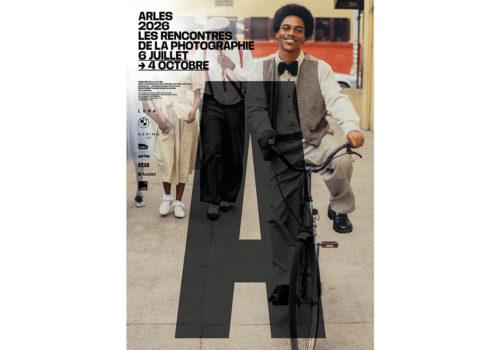
Further on across the African continent, from Ghana to the Ivory Coast and the Congo (DRC), stories of liberation, transmission and reappropriation emerge. In Ghana!, images of independence, from Paul Strand to James Barnor, feed into a collective imagination that remains active today, as in the work of Carlos Idun‑Tawiah, who designed this year’s poster. With Paul Kodjo, an entire Ivorian visual culture comes into being — inventive, popular and modern, able to absorb diverse influences and develop its own language. In Sammy Baloji’s work, photography brings past and present into tension, placing family narratives alongside buried histories, suppressed memories and the ongoing consequences of extractivism.
As Achille Mbembe aptly writes: “Our crises, including ecological ones, stem from the belief that human beings are superior to other species.”
The living world stands at the heart of this year’s edition as a necessity. More than an abstract theme, it compels us to recognize that the world cannot be reduced to our categories. In this regard, the exhibition Animal Model retraces two centuries of photography, showing how animals have always been present in the history of the medium: observed, studied, loved, staged, exploited, mistreated, admired and imagined. Seen in this light, photographing animals is not only about representing otherness, but also about recognizing other ways of being in the world.
The same dynamic shapes the work of Lisa Oppenheim, Meghann Riepenhoff and Lara Tabet. All three remind us that the image is a living medium, constantly evolving. In Meghann Riepenhoff’s work, natural forces act directly on the photosensitive surface, leaving their imprint. In Lisa Oppenheim’s work, a lost botanical memory re‑emerges through the interpretation and combination of past and present image‑making technologies. With Lara Tabet, winner of the BMW Art Makers programme, geological, archeological and organic layers underscore that nothing is fixed, that every form carries multiple temporalities and trajectories. Particular attention is also given to a more intimate aspect of Edward Steichen’s work as part of the Luxembourg Photography Award.
A photographer, curator and pioneer, Steichen was also a botanist, attentive to correspondences between forms, seasons, cultures and images.
Because ways of seeing are shaped from an early age, and because a festival passes on as much as it presents, it was essential for children to be included in this edition. The remarkable collection of children’s photobooks brought together in the exhibition L is for Look reminds us, with a sense of play and invention, that photography can be a space of discovery for all ages, a place where ways of seeing can develop freely.
This year again, the Rencontres d’Arles gives ample space to new voices on the contemporary art scene. The Louis Roederer Discovery Award returns to the Espace Monoprix, curated by Nadine Hounkpatin. It offers a reflection on truth in photography through a selection of seven international artists who use the medium as a space of exchange, connection, engagement and responsibility.
The program also highlights emerging curators, including Alessandra Chiericato, recipient of the 2024 Rencontres d’Arles Curatorial Research Grant, who develops an original analysis of the cannibalistic nature of images.
What connects these projects, different as they are in form, historical periods and geography, is perhaps a shared attention to processes of transformation: narratives that shift, memories that resurface, forms of life that persist, images that—far from freezing the world—help us see it anew.
Together with Aurélie de Lanlay and the festival team, I look forward to welcoming you to Arles for the 57th edition of the Rencontres d’Arles, opening on July 6, and sharing the full program.
Christoph Wiesner
Arles 2026 – Les Rencontres de la Photographie
Practical Information
Festival dates: July 6 July – October 4, 2026
Opening Week: 6–12 July, 2026
All-exhibitions pass: €42 (reduced: €33)
https://www.rencontres-arles.com/en