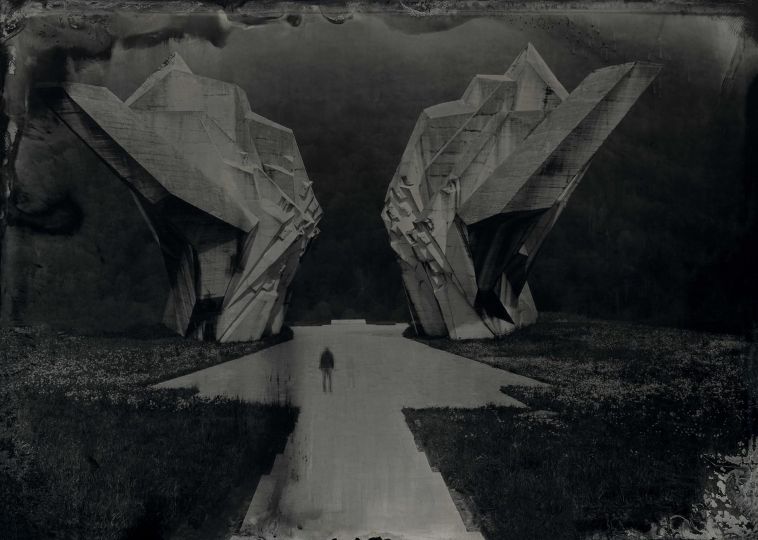


Norwegian photographer Christian Houge has been working with analog photography for more than a quarter of a century. Over the last decade, he immersed himself in a new technique: wet collodion. Three series emerged from this research, now on view on the online gallery Artistics, emphasizing his obsession with a process that is both fragile and deeply intimate.
Could you introduce us to your artistic practice?
I have been working as an artist and photographer for 25 years, very often with analog photography. Spending a long time in darkrooms has really shaped my passion for hand-crafting. Making things by hand makes it much more special for me as it makes me be totally present in my work. I don’t criticize technology, but I make a point of this analog work and the amount of years you have to work with it to find your own voice. I usually spend many years on each project, as I believe knowledge is key: it’s not a one-time thing for me, I need to explore a series until I really understand the deeper levels of what the work represents.
What led you to use the wet collodion process, which has become central to your practice over the last series?
I have been working with collodion for about 12 years. Many people learn it, see the magic of it, and then put it aside, because it’s quite an expensive and laborious process, the silver is very dirty, the ether can be dangerous to breathe in, and some chemicals can cause cancer. In a way, I chose it because of these criteria, because it’s hard, and that difficulty gives the work so much energy and fragility. There’s something about this unpredictable fragility, in both humans and even architecture, which I think the collodion really captures.
Many artists working with historical processes tend to replicate their aesthetic. Did you find ways to bring the collodion process into dialogue with the present?
While many photographers use it for old-fashioned portraits, I’ve always wanted to bring it into something contemporary, not mimic the past, but explore and comment on the time we live in. I’m using books from the 1850s to understand the obstacles I meet every time I work with it. It’s pure alchemy. And I’m so drawn to that in a time of AI, where you don’t know what’s true or not, and the borders of truth are being moved so rapidly. It’s very much about being present and not being able to control every detail.
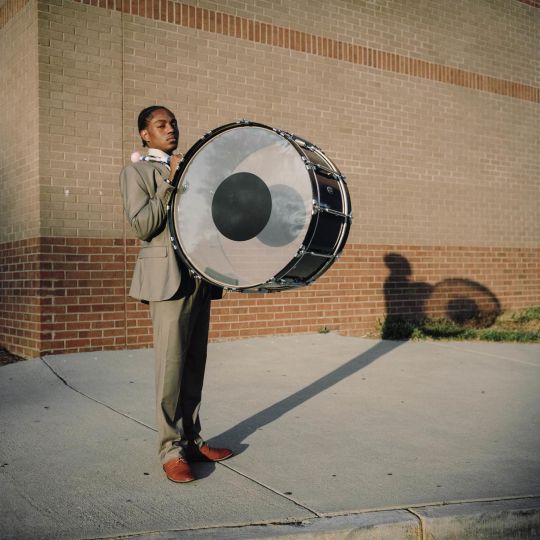
The Subcultural series (2023–2025) brings together portraits of people from underground and alternative scenes. How do you approach wet collodion when photographing human subjects?
Learning collodion means learning to trust the process without controlling it. When you’re working with people, it’s very slow but also very intense, because the person has to sit for sometimes 10, 20, 25 seconds without moving. With this unpredictability of chemicals and this very long exposure, the masks that we wear in day-to-day life drop. Some people almost start crying when they see the plates of themselves, because it’s so intense and personal. I felt collodion was a perfect way of connecting to subcultures, because it’s so intimate. Besides, its unpredictability invites me to make the plates with the people. It’s not about just taking their picture, it’s a totally different process where I feel more included in who they are.
With Gabba (2024–ongoing), you turned your attention to the Sami, the indigenous people of Scandinavia. What brought you to this community after years of looking outward?
Whether it be in rituals, shamanism, or old cultures, I had always been searching outwardly. I spent years studying Indian and Tibetan spirituality, for instance. But my own culture, the Sami people in the north of Norway, I had actually stayed away from, until I got to know a Noaidi, a shaman who had many contacts in this community. I started looking at modern shamanism rituals and the story of Gabba, which is the story of creation for the Sami people. It’s still ongoing. You have to earn the trust of the people you’re going to photograph, and that takes time.
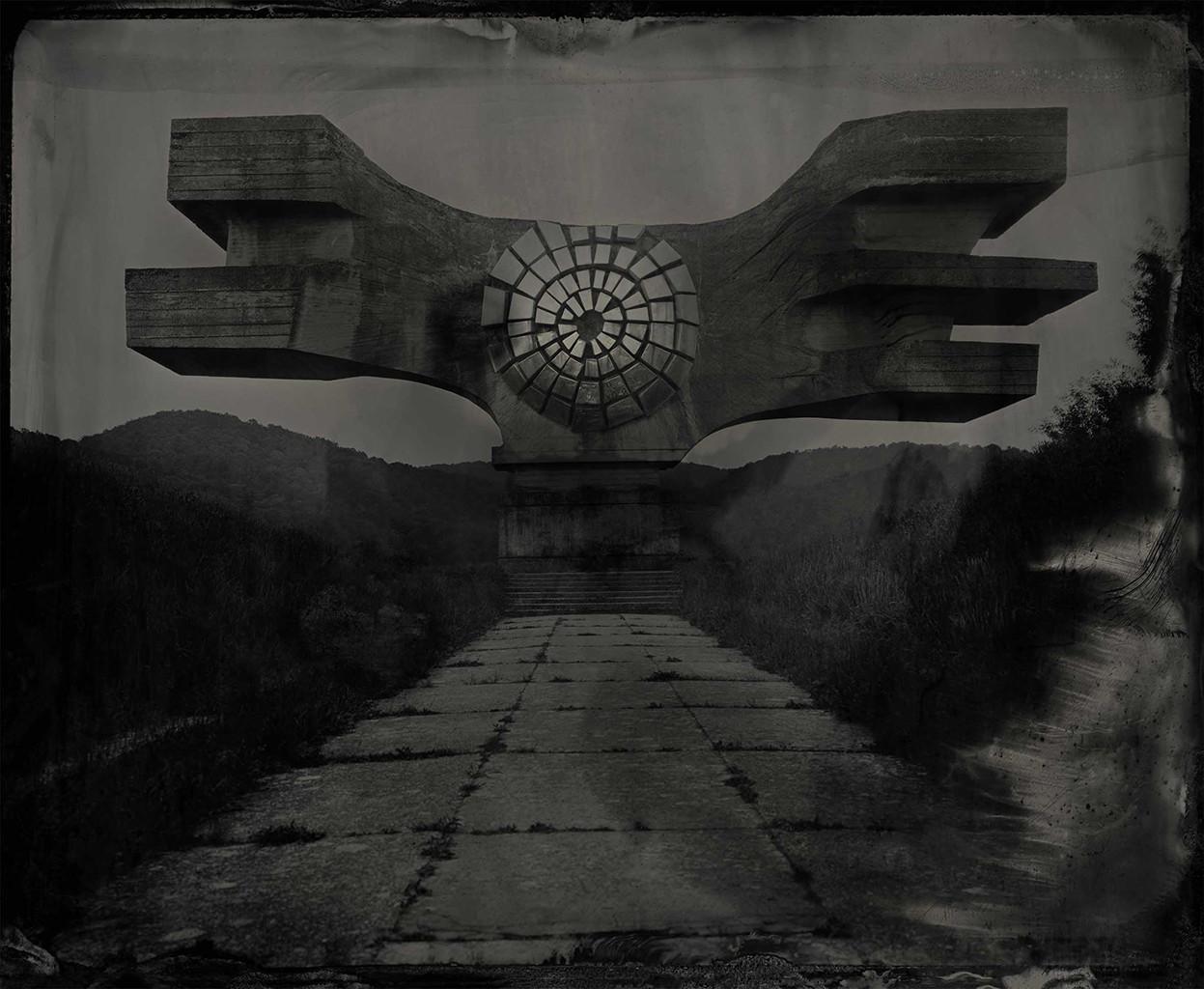
This research culminated in Echoes of Utopia (2025–2026), a series on the Brutalist monuments of the former Yugoslavia. What drove this move from the human figure to concrete, and what do you hope to capture?
I approach these brutalist monuments as more than objects. I’ve always been fascinated by brutalist architecture, but I never thought these monuments could be so fragile and have so much power until I saw them with my own eyes. Most of them are completely isolated, in the middle of nature, and you can feel how time and the elements are slowly taking them back. There’s something about that decay which says a lot about how ideologies fade, and how societies choose what they remember and what they forget. These structures were built as symbols of a unified political vision, and now they’re caught between that past and a present that has fractured everything they stood for.
What I find so compelling is the tension between the material and the process. Concrete is uncompromising, it was built to last forever. And collodion is the opposite, it flows, it’s unpredictable, it’s fragile. The plates come out with imperfections, chemical marks, anomalies, and I don’t try to correct any of that. Those traces become part of the image. I’m not trying to document these monuments, I want to transform them into something else, something that speaks more to memory and loss than to architecture.
What is the story behind these monuments, called spomeniks?
These spomeniks were made collectively to last forever, and it’s extraordinary that already many of them are being destroyed by nature itself. They were built by Tito to remember something true: the partisans’ fight against the Nazis. I will also be making portraits of the last surviving partisans at the end of April. Through this work, I hope to open a conversation about memory, architecture, ideology, and history in all countries.
Looking across all these series, is there a thread that connects them?
It’s really about going out of comfort zones. You have a responsibility as an artist and as a photographer, but at the same time you don’t have the answers about the outcome. That’s really where you grow, going into something where you don’t feel totally safe, but you have a vision of what you want to do. All of these series give me more awareness, and getting to know people in a short amount of time but very intimately, that really makes sense for me.
For more information