“In the Studio” Visiting artists in their workspaces, among works in progress, waiting to be exhibited. Artists at rest, in turmoil, in the midst of research, or assailed by questions. Second episode with Federica Belli.
Entering a place where a work is conceived, woven, and takes form is a delicate privilege, one where a long-term endeavor reveals itself timidly, then with enthusiasm. For the one who steps in like a wolf among the sheep it is essential, I believe, to carry great humility in one’s heart. It is not about big words or self-importance, but about remembering that to enter someone’s studio is to enter what is most precious to them: the intimacy of creation of their home, their work, their thoughts and fascinations.
Speaking of a work in the making is a beautiful thing. One begins to understand the artist, at least small bits. Yet in photography more than in any other medium, a work is not made on an easel, nor with clay between one’s fingers. Images are everywhere and for Federica Belli, it is as much from the shores of Liguria, not far from her native village of Mondovi, as from other Mediterranean horizons.
One would need to watch her all night as she bathes her photograms in the waves to grasp the full weight of this series. To measure her words against her outdoor explorations. But since one cannot follow her everywhere, her Paris studio and her words suffice to imagine her process. In her ongoing series, still untitled and begun in 2024, Federica Belli immerses photosensitive Fujiflex paper into the ocean to render the sea visible: the movement of the waves, the sediments carried by the water, the algae and sand, the forces and currents.
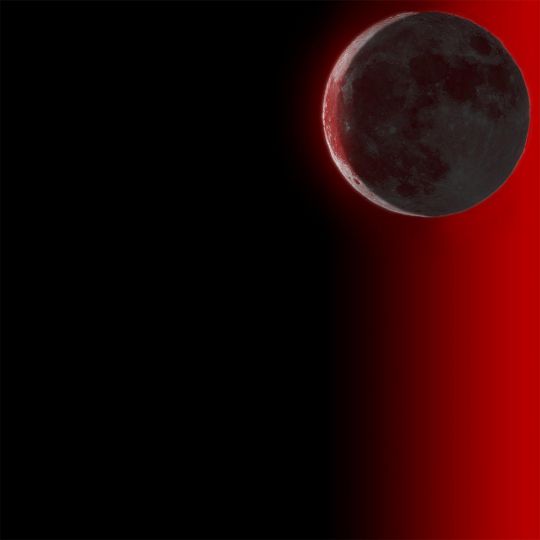
She exposes these sheets to the moonlight for brief fractions of a second, repeating the operation throughout the night to capture marine time and nocturnal light—or perhaps the reverse. Her works reveal an underwater world of fluids, mysterious in its perception, distilled to the essential elements of photography in its formal expression.
This series also highlights the artist’s fascination with representing the invisible. The sea appears here as an inner world. It becomes a flow, a parallel matter in constant transformation, translating in each work an ecosystem of sensitivity, fragility, immediacy, and elements.
At his first exhibition at the Club des Solitaires (1955), where he presented orange, red, green, white, and yellow monochromes, Yves Klein noticed that his audience struggled to immerse themselves in the absoluteness of color. Having “signed the sky” in 1949, he was seeking an absolute, a fullness that led him to favor blue—a color he saw as a space of levitation free from physical constraint, where “human sensitivity” and the “cosmos” could merge.
For Federica Belli, the representation of the sea and its elements also constitutes a form of absolute—akin to conceptual monochromatic research. Having grown up between a farm and the horizon, watching humus, leaves, and twigs carried away by the waves, she seeks to restore a living continuity between land and sea, of which she herself is part. Yet unlike Klein, she does not assert the primacy of art over nature. Her artistic approach is rooted instead in humility, like a door open to all winds, allowing herself to be continuously influenced by nature’s flux and shifting conditions.
In the same series, she also buries photographic paper in the soil to reveal its composition and living nature. The resulting images appear as mottled, fragmented, almost as leopard-like patterns, composite and constellation-like forms on monochromatic backgrounds. In a third gesture, she develops the same paper with fluids from her own body (saliva, sweat, urine, blood). These impressions, in contrast to the marine prints, produce reddish or orange monochromes in an inverse movement to Klein’s: where he moved from nature toward the absolute, Federica Belli returns from nature to the body, to its primal aspect.
Across these three chapters—water, earth, and body—emerges the idea that the artist, and by extension the human being, is a body caught in a network of fluids, dynamics, and wonders carried along by nature. A being borne by various forces, sometimes wide open to its natural surroundings.
This three-part series is laid out on the floor of her studio. Autumn light fades into evening. Leaning against the walls are exhibition catalogues and art books, arranged by color into small and large piles in every corner. On the cardboard covers rest amethysts. On one wall hangs a large dried cabbage leaf. The studio is a realm of fascinations. It speaks in fragments of the one who inhabits it, who composes time with objects left here and there. Within this apparent randomness lies, quietly, what is most precious to the artist.
There is in her studio an attention to both the minuscule and the grand. This sensitivity to forms and scales is also present in her work, particularly in the series Mimesis. In it, the artist stages herself in nature, often nude. Her photographs do not aim to emphasize or play with eroticism, but are rooted instead in a philosophy of nature close to the naturism defined by Margaux Cassin in her book Vivre nu (Grasset, 2023)—a notion of simplicity, of grounding in the immediate environment. A primal, vital cry of existence.
Her body becomes foliage, a root in the hollow of a crevice; her head forms the tip of a twig, the knot before a flower’s bud; her silhouette, a nearly natural frame, were it not for the discreet texture of her skin. In this series, she comes near the use of the body in photography found in Francesca Woodman and Arno Rafael Minkkinen. Their bodies are fully engaged with their surroundings, whether interior or exterior. They disappear or assert themselves with force. Their bodies are both object and performance—reduced to a fragment or elevated to the same beauty as the flower, tree, root, or dune with which they merge.
What distinguishes Mimesis from Woodman or Minkkinen, however, is the attention to color throughout the series. From one image to the next, there is a unity of soft tones, joyful hues reminiscent of the Nabis painters, as if to affirm a single thing—that joy prevails. Joy, yes, prevails. And perhaps that simple affirmation is what should be held at the heart of Federica Belli’s photography, and of her studio: a relationship to the world anchored in majesty and curiosity, a continuous exchange between nature on one hand and interiority on the other.
More information