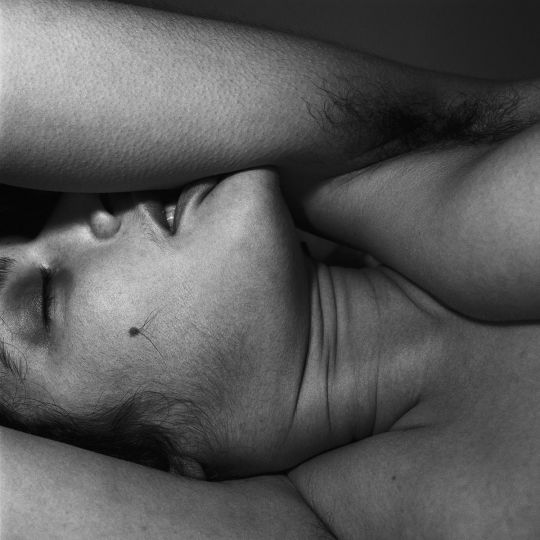
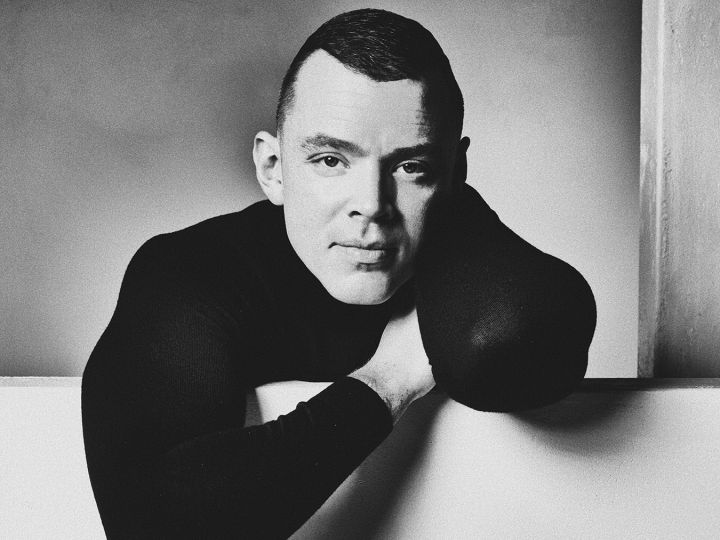
A few months ago, I came across Puria Safary on Instagram and was immediately drawn to his powerful portraiture. Looking through his images, I wanted to know more about the photographer and his creative process. We sat down to discuss it all. Enjoy the read!
Nadine Dinter : Your long-term project is called Safary’s Frame. When did it begin, and what was the moment or impulse that set it in motion?
Puria Safary : It is actually difficult to pinpoint an exact date when Safary’s Frame began. When I moved to Berlin about 16 years ago, I simply followed my instinct without knowing exactly where it would lead me. From an idea, a vision eventually emerged, and from a vision a mission was born. In the search for a clear visual signature, a central component of the project emerged: an old wooden chair. Over the years, this object became a quiet companion throughout the series and a symbol for Safary’s Frame.
From the beginning, it was important for me to work with people who, like me, have a strong vision – artists, actors, musicians, and personalities from my own circle. People who inspired me, or who play a very specific part in my life. Some of them were just at the beginning of their careers at that time; others were already where I once wanted to be myself. Looking back, it is especially exciting to see that many of the people who were part of Safary’s Frame early on, such as Emilia Schüle or Edin Hasanovic, are among the defining voices of German film culture today. Back then we were all on our own path, each in our own way, with a big dream.
For me, the project became more than just a photo series over the years. Safary’s Frame has become a kind of mindset. It is about the idea: You are the person you want to be, and you can start today to become the person you want to be tomorrow.
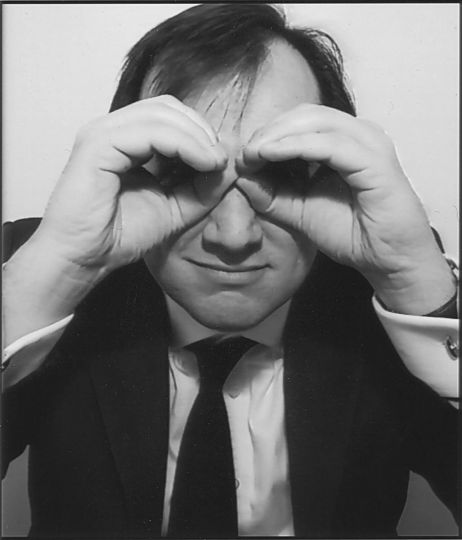
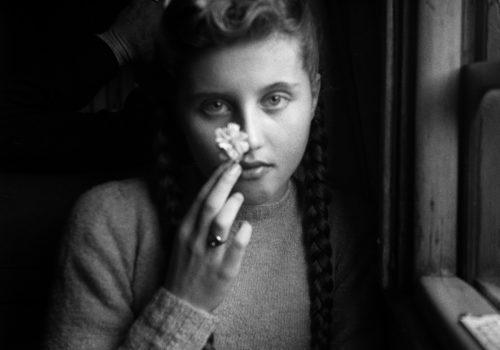
In this body of work, we see black-and-white portraits of renowned actors such as Vicky Krieps and Christiane Paul, as well as prominent DJs like Patrick Mason. How do you create an environment that does justice to both reserved personalities and more extravagant characters?
PS : That is why my studio is so important to me. Over the years, I have created a space there where people can simply arrive – without time pressure, and without the feeling of having to perform. For me, this is the foundation of every collaboration. Before we even start photographing, it is about the person feeling comfortable and being completely centered.
This space works for very different personalities. Someone like Vicky Krieps, for example, brings a very calm, almost poetic presence with her – a kind of strength that is difficult to put into words. Patrick Mason, on the other hand, is pure energy, fire, and movement. The space does not change these people; it simply gives them the freedom to be exactly who they are. A quiet person can be still; an explosive personality can unfold their energy. For me, the beauty of these encounters lies exactly in that.
Your images are very minimalist – no visual distractions, just the person against a classic white background. How would you describe your approach to photography? Do you have a specific process or ritual for setting the atmosphere before you begin?
PS : I would describe my way of photographing as very pure. I work very intuitively and try to reduce everything to the essentials – the human being. My focus is always on the eyes; for me, the truth of a person lies there.
There is no fixed process, because every person who comes to my studio brings their own energy. That is why the moment of arrival is particularly important to me. In most cases, we first sit down together, drink a coffee from my espresso machine, and talk. We get to know each other and speak about many things. Some people need a little more time; others want to start relatively quickly. My real ritual is therefore not a technical process, but this moment of arrival. When I feel that the person is really there, feels comfortable, and is fully present, we begin to create magic. The rest usually happens on its own.
In addition to the people themselves, we see an old wooden chair as a recurring element in some images. Can you tell us a little more about the story behind it?
PS : The old wooden chair is the central element of my passion project, Safary’s Frame. Over the years, it has become a kind of quiet companion to the series. It is not a classic prop, nor is it something that I consciously stage. Rather, it is an object with which people can interact freely. Some simply sit on it; others lean on it, lift it, move it, or simply stand next to it.
This freedom is exactly what makes it so special. Every person brings their own energy and their own relationship to this chair, and this is exactly how the images emerge. For me, it is exciting every time to observe what happens in this moment. The chair is only one element of the project, but it opens a space for expression. Some people show a quiet presence; others play with it, move it, or use it almost performatively. In this way, every image emerges very naturally from the individuals themselves. Nothing is predetermined or directed, and that is exactly why every encounter becomes unique.
From your perspective, what’s the advantage of long-term projects compared to short- term, one-off commissions?
PS : For me, the great advantage of long-term projects is time – even if time is relative. Such a project constantly evolves. New ideas, new encounters, and new feelings continuously feed into it. Sometimes I compare this to when I was training in Muay Thai. My boxing coach always said: repeat a movement hundreds of times. Even if you think you already know it, every time you will find a small nuance that you can improve.
For me, it is exactly the same with a long-term project. You work on it for years, change things, refine details, and always discover new possibilities. With commissioned work, there is a clear goal and an end. A long-term project, on the other hand, grows alongside you – and for me, that is where its beauty lies.
Besides this long-term project, you’re working on a second series called Table of Spring. What’s the concept behind it?
PS : My close friend, the actor Omid Memar, and I created Table of Spring about three years ago to mark the Persian New Year, Nowruz. Our idea was to bring our culture closer to people in another way. In the media, Iran is often portrayed in a very one-sided way, shaped by political images and conflicts. At the same time, there is a very old, poetic, and joyful culture that many people outside Iran hardly know.
A central part of Nowruz is the so-called Haft-Seen table – a table with seven symbolic elements whose names in Persian begin with the letter “s” (seen). Each of these elements carries its own meaning. The apple stands for beauty and health, garlic for protection, and the green sprouts symbolize new life and renewal. Our project combines two perspectives. While I stage the elements photographically, Omid dedicates himself to the texts and the cultural meaning of the individual symbols. Image and language enter into a dialogue and together open a way to access this tradition.
In the last two years, we also worked with actors of Persian origin who each embodied one of the elements. This year, a special development is taking shape for me: Table of Spring merges for the first time with my passion project, Safary’s Frame. The old wooden chair from Safary’s Frame becomes a foundation of the individual Haft-Seen elements.
In this way, two of my most important works meet – a cultural ritual and a personal long- term project – and together open a new form of storytelling.
Table of Spring draws on symbols and narratives from Iranian culture. Could you share a bit more about your background and your roots?
PS : I was born in Germany, and I have actually never been to Iran myself. Nevertheless, I have always felt a very strong connection to my roots. A large part of this comes from my family. My grandparents and my parents introduced me to our culture at an early age, especially through traditions such as the Persian New Year, Nowruz. As a child, I mainly experienced this festival as a moment of family, joy, and togetherness. We ate together, laughed, danced, and celebrated.
For a long time, I simply experienced this tradition without really knowing its deeper meaning. Only through the project Table of Spring did I begin to engage more intensively with the symbols and the stories behind them. Through this, I discovered my own cultural heritage again in a completely new way. It is a special feeling to carry a culture so strongly within yourself, even if you did not grow up directly in it. Perhaps this longing for my roots is also one of the reasons why this project means so much to me.
Where do you see yourself fitting into the Berlin photography scene?
PS : I see Berlin more as the beginning of my journey as an artist. The city was an important starting point for me, but my gaze was never only fixed on Berlin – it was always aimed at the wider world. At the same time, I do not feel that I belong to a specific scene. Not because I do not appreciate other works, but because I strongly follow my own feeling and my own vision.
I realized relatively early that my path is a very personal one. That is why I do not look much to the left or right. I concentrate on developing my own language and forging my own path. For me, photography is above all a tool. I see myself primarily as an artist and a visionary, and the camera is simply the medium with which I translate my thoughts and feelings into something visible.
What advice do you have for aspiring photographers who are just starting out?
PS : My most important advice is to never lose faith in yourself. Especially at the beginning, there will always be people who say that something is not possible or that you should take another path. What I particularly want to impart to young photographers is patience. Every person has their own time and their own path. There is no point in constantly comparing yourself with others.
At the same time, it is important to always keep moving – even if there are setbacks or the feedback is not what you hoped for. I believe that trust and fear cannot coexist. If you truly believe in what you do, you have to learn to let go of fear step by step.
And in the end, perhaps the most important thing is: stay true to yourself. As long as you believe in your work and are at peace with it, you are on the right path.
What’s next on the horizon for you?
PS : After 16 years in Berlin, a new chapter opened for me about two years ago. I began to commute between Berlin and Los Angeles, which helped me expand my work internationally.
Berlin remains my base; my studio is here – a central part of my artistic practice.
The past few years have been a time of great personal and artistic development for me. I have changed, rediscovered many things, and gained new perspectives on my work.
What exactly comes next, I cannot say today. But I am very much looking forward to what is coming. As David Bowie once said: “I don’t know where I’m going from here, but I promise it won’t be boring.”
For more information, check out the artist’s IG account @puria_safary
Release of “TABLE OF SPRING” by Puria Safary and Omid Memar on March 20th, 1 pm, on @puria_safary