Philippe Lopparelli – The Image as a Counterpoint to Reality
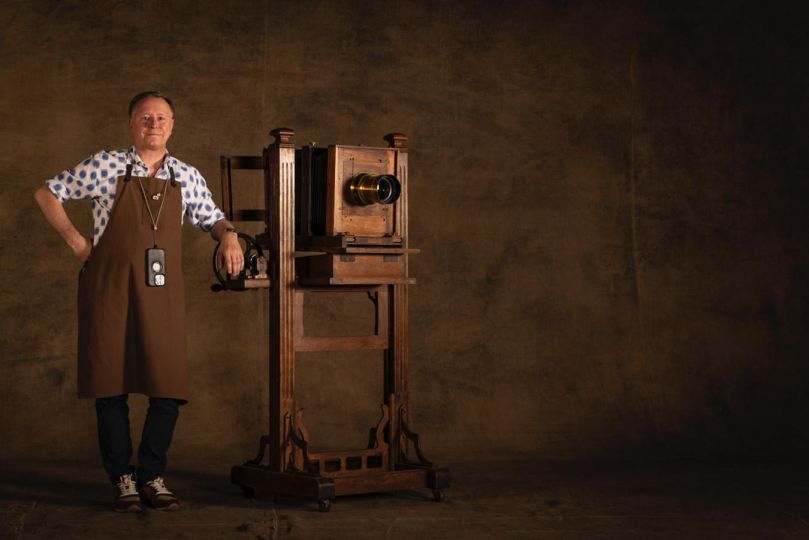
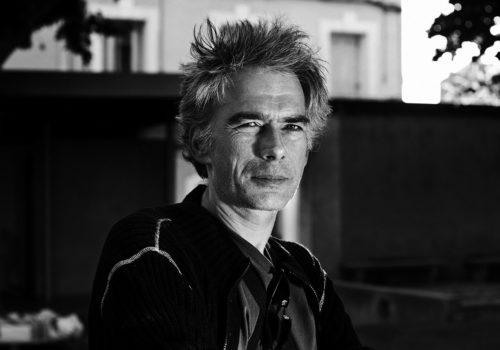
He photographs the margins with an almost liturgical attention. For over thirty years, Philippe Lopparelli has been constructing a rigorous body of work both introspective and political that ceaselessly interrogates what disappears: places, rituals, people, and their territories. Trained at the Beaux-Arts and a member of the Tendance Floue collective since 1996, he belongs to a generation of photographers for whom photography is less a record than a fragmentary form of writing a way of expressing the world without ever summing it up.
His first major project, Paysages Éphémères (1990), captured the silent crash of the dismantling of the steel industry in Lorraine not as a nostalgic spectator, but as a wanderer among ruins, a witness to the shift from one world to another. In it, he already laid the foundations for a singular visual language: dense black and white, unapologetically grainy textures, ghost-like structures. It is the remnants that speak, the interstices of the visible, the presence of absence.
Series after series, he explores peripheral zones both geographic and mental: the backstage of the traditional circus (Quel Cirque?), the carceral world of zoos (Garde à vue), the vibrant rituals of electronic music (Electrotopia), or extreme landscapes Iceland, Antarctica, the Southern Territories where humankind seems to vanish in order to be reborn. For Lopparelli, photography is a threshold, a pivot point, a stage of tension between memory and collapse, between documentary and dreamscape.
His gaze is never frontal: it drifts, delves, resists surface. He does not capture: he listens. Lopparelli photographs like one writes a poem or dreams a film. He extracts from reality its shadows, its silences, its suspended flashes. In defiance of today’s visual saturation, he wagers on slowness, on minimalism, on inner resonance.
With From Arthur to Zanzibar, his latest book—a photographic homage to Rimbaud he continues this sensitive journey, blending geographical wandering with literary introspection. Far from being a visual biography, the book is a mental dérive, a series of echoes between the landscapes traversed by the poet and those inhabited by the photographer.
To meet Philippe Lopparelli is to encounter a demanding photographic mind, guided by intuition, duration, and a rare humility before the world. It is to accept that images are not there to reassure us but to move us.
Instagram : @lopparelli_
News : « D’Arthur à Zanzibar » , Images Plurielles Editions.
Your first photographic trigger?
Philippe Lopparelli: In 1986, the limestone quarry in my village in Lorraine.
The image-maker who inspires you?
P.L.: Ralph Eugene Meatyard.
The image you wish you had taken?
P.L.: One of an albatross in flight.
The one that moved you most?
P.L.: A photograph by Stanley Greene during the Chechen war of a woman’s corpse shot by the Russians, and her cat watching over her.
The one that made you angry?
P.L.: Brent Stirton’s photo of a “crucified” gorilla. My anger is directed solely at the poachers who killed the animal, not at the photographer or those giving the gorilla a final tribute.
A key image in your personal pantheon?
P.L.: A train in the Carpathians.
A childhood photographic memory?
P.L.: A photo of me bundled up for winter, holding a polar bear-shaped piggy bank.
The image that haunts you?
P.L.: A painting by Goya—Saturn Devouring His Son.
The image that changed the world?
P.L.: Blue Marble, the first photo of Earth taken in 1972 during the Apollo 17 mission.
The image that changed your world?
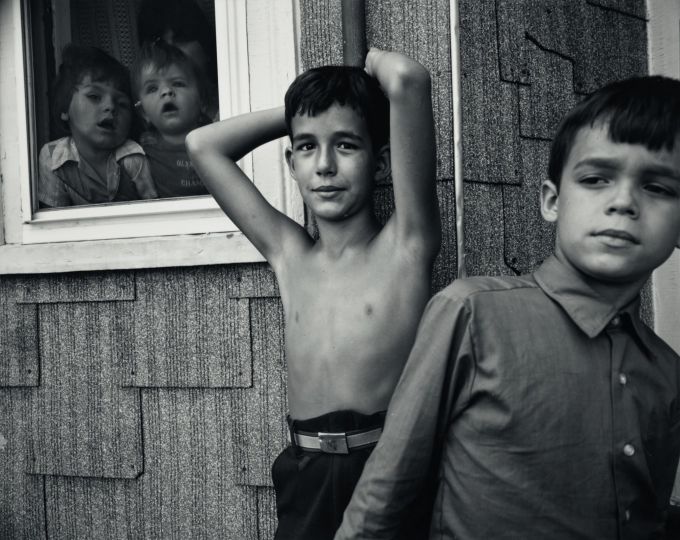
P.L.: A black and white photo by Ralph Eugene Meatyard, taken in 1961, of a child screaming through a door ajar.
If money were no object, what artwork would you love to own?
P.L.: Rodin’s The Gates of Hell.
In your opinion, what makes a good photographer?
P.L.: Curiosity.
The secret to the perfect image, if there is one?
P.L.: That it retains a sense of magic.
The person you’d like to photograph?
P.L.: No one.
The person you’d like to be photographed by?
P.L.: No one.
An indispensable photography book?
P.L.: Gypsies by Josef Koudelka, 2011 edition.
Your childhood camera?
P.L.: I had no camera as a child.
The one you use today?
P.L.: Leica M6, Mamiya 6, Pentax Espio Mini, Holga 120, Fuji X100F.
Your favorite way to disconnect?
P.L.: Gardening.
Your relationship to image today?
P.L.: Rather ambiguous.
Your greatest quality?
P.L.: Imaginative.
Your latest whim?
P.L.: Asking Gilles Coulon to bring me the local press from Zanzibar to wrap my book for the subscribers.
An image to feature on a new banknote?
P.L.: A tree.
A job you would never want to do?
P.L.: Prison guard.
Your greatest professional extravagance?
P.L.: Working in black and white with a Holga for Géo.
Can photography change collective perception of an event or era?
P.L.: Yes, if it remains in its context.
How do you view the influence of social media on how photography is created and perceived today?
P.L.: Oversaturation leads to repetition.
An Instagram account worth following?
P.L.: Tendance Floue.
The last thing you did for the first time?
P.L.: Drove a hybrid car.
What makes a successful photo?
P.L.: An image that retains its mystery universal and timeless.
What do you seek most in an image?
P.L.: Time.
The difference between photography and art photography?
P.L.: The intended recipient.
A city, country, or culture you dream of discovering?
P.L.: Borneo.
A place you never tire of?
P.L.: The Carpathians in winter.
Your greatest regret?
P.L.: Shooting in color on my second trip to the French Southern and Antarctic Lands.
Color or black & white?
P.L.: Black and white.
Daylight or artificial light?
P.L.: Natural light.
The most photogenic city, in your view?
P.L.: Prague.
If God existed, would you ask to photograph Him or take a selfie with Him?
P.L.: Neither, because He is everywhere.
If I could organize your dream dinner, who would be at the table?
P.L.: My extended family and friends.
The image that best represents today’s world?
P.L.: A flooded city.
If you had to start all over again?
P.L.: I’d probably become a forest ranger.
Final word?
P.L.: Do less, to do better.