Olivier Verley: The Enigma of the Gaze
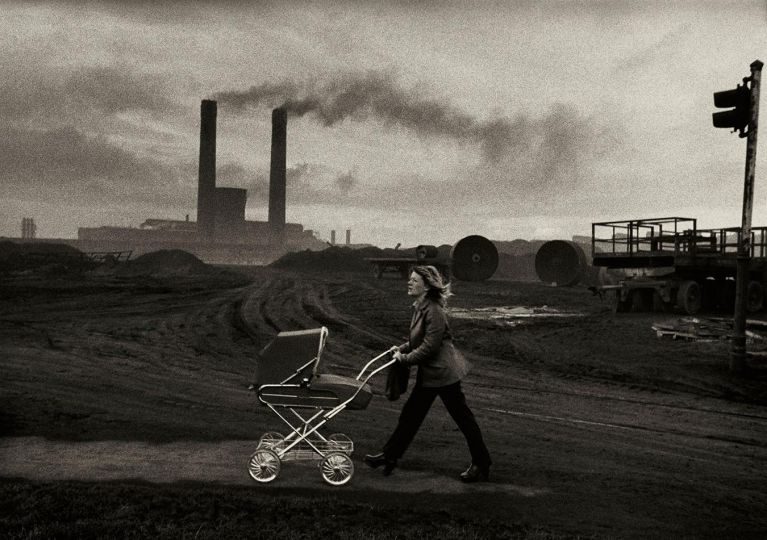
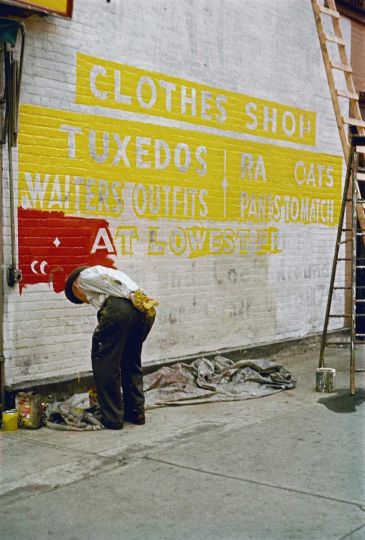
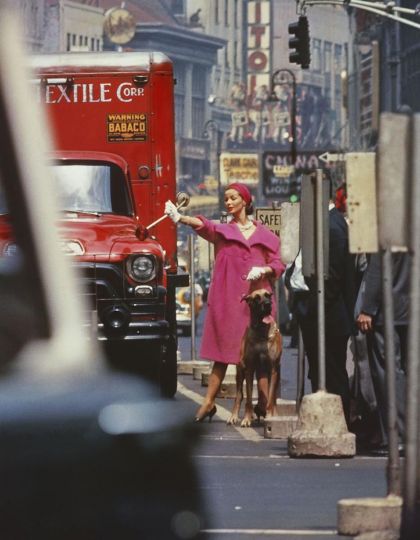
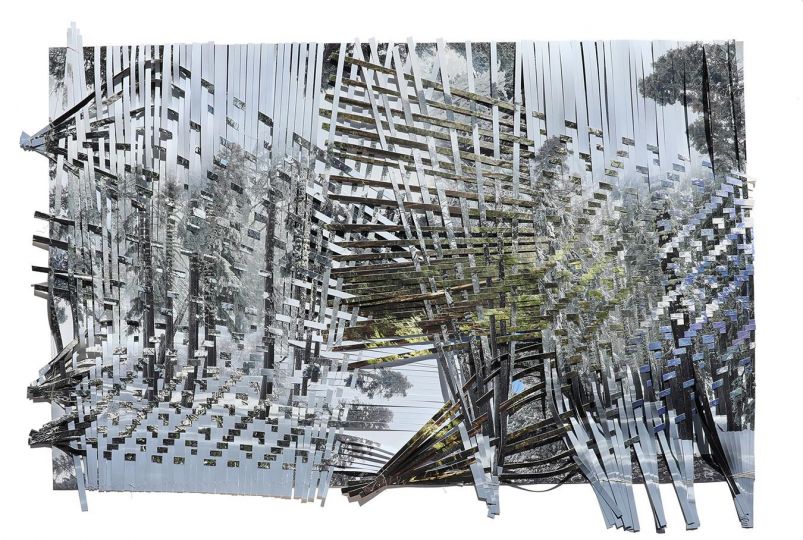
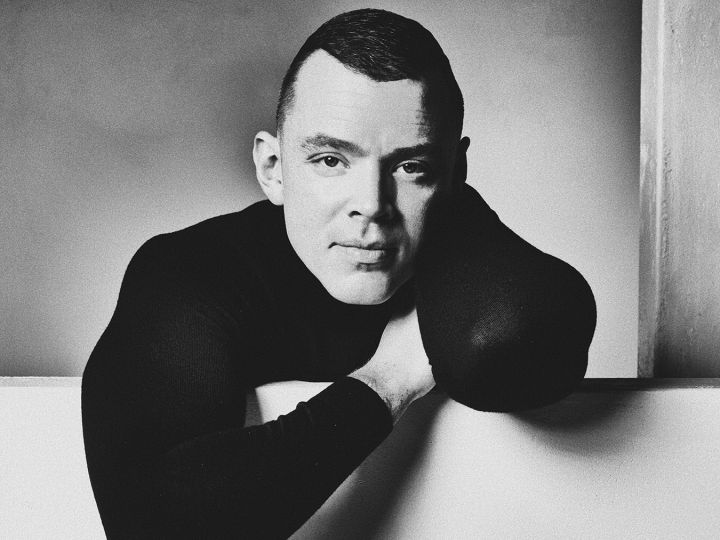
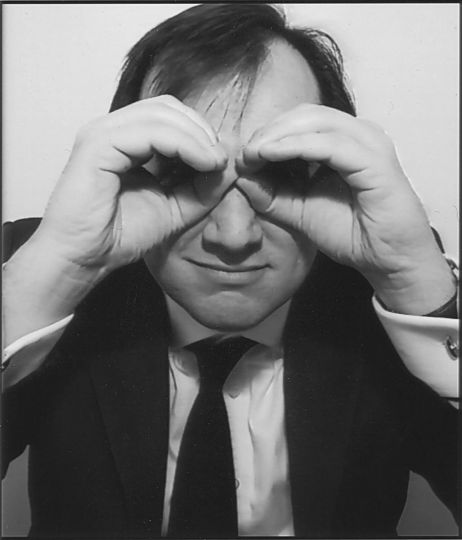
At the intersection of the visible and the literary, Olivier Verley has been developing since the 1980s a demanding photographic work nourished by poetry, cinema, and philosophy. Trained in literature, he approaches photography as a slow form of writing: each shot is an act of thought that sculpts time and does not stop it. Contrary to the flow of instant images, he claims stillness, contemplation, and enigma; his camera becomes an echo chamber where the fragility of a face, the obscenity of a radish, or the whimsical choreography of a flock of starlings come to the surface. For Verley, images carry doubt:they don’t show, they question. He photographs less what he sees than what escapes him suspended faces, mental landscapes, objects diverted from their symbolic use. Working in series and often in large formats, he establishes a silent ritual that places his work within a European lineage, from Tarkovsky to Jean-Christophe Bailly, while evoking, among others, Pindar, Truffaut, Kertész, and Verlaine. Photographer and poet of light, Olivier Verley practices a “photography of distance”: an aesthetic of the threshold, the unsaid, choosing to resist rather than seduce. Each image thus embodies a silent presence, a space where the gaze unfolds in depth, opening onto an intimate and meditative experience of the visible.
Instagram : @verley.olivier / Website : www.olivier-verley.jimdofree.com
News:
“La chambre des secrets” published by Créaphis (https://olivier-verley.jimdofree.com/l-humain/la-chambre-du-secret/)
Residency exhibition: “Des plantes aux paysages” at Château de La Roche-Guyon until November 2025 (www.chateaudelarocheguyon.fr/residence-des-plantes-aux-paysages/)
Your first photographic trigger?
Olivier Verley: The “Club Mickey,” when I was five, on the beach of Sion-sur-l’Océan, in the Vendée region.
The image-maker who inspires you?
O.V.: Chantal Akerman filming Delphine Seyrig peeling potatoes in Jeanne Dielman, 23 quai du Commerce, 1080 Bruxelles. That shot closely echoes one of my own projects (The Secret Room), which uses a long exposure time (four minutes) to create a kind of photographic sculpture, a “time-image.” Over five years, I welcomed around a hundred people into this adventure.
To learn more: https://olivier-verley.jimdofree.com/l-humain/la-chambre-du-secret/
The image you wish you had made?
O.V.: It’s a black-and-white image I once dreamed, which I remember vividly upon waking—of a marvelous creature that cannot be realized. This dream brings to mind Paul Verlaine’s sonnet My Familiar Dream, from his Poèmes saturniens, particularly the first stanza:
I often have this strange and piercing dream
Of an unknown woman whom I love, and who loves me,
And who is, each time, neither quite the same
Nor quite another, and who loves and understands me.
The image that moved you most?
O.V.: There are many, but let’s take this one: a freeze frame (a photogram) from The 400 Blows by François Truffaut the final shot that halts the long tracking sequence of Jean-Pierre Léaud’s desperate run across the dunes to the sea. A tight close-up of childhood’s face, over which the word “FIN” appears—set to Jean Constantin’s unforgettable score.
The image that made you angry?
O.V.: There are countless examples: all the useless, vain, ugly images. All those that do harm to the Image, and are a constant offense to the eye.
A key image in your personal pantheon?
O.V.: A rather strange image of Pierre Molinier, a bizarre and very flexible fellow, performing autofellatio (those unfamiliar should look it up—it’s quite something…).
A photographic memory from your childhood?
O.V.: It’s not a photograph. The memory itself is photographic in nature. And there are many of them. I collect them by the handful.
The image that haunts you?
O.V.: That of a young Chinese man, Fou-Tchou-Li, being executed by lingchi (death by a thousand cuts). Some writers, including Georges Bataille, have written about the ecstatic expression they perceive on his face…
The image that changed the world?
O.V.: Images change nothing. They illustrate the world.
The image that changed your world?
O.V.: See the previous answer.
With no budget limit, what artwork would you dream of acquiring?
O.V.: I don’t feel the need to own. Even if I could, I wouldn’t have the means. If I like an image and can’t buy it, a reproduction on newsprint—within my line of sight—is enough. Of course, I know what a fine print is, and the effort it takes to make my own (sometimes a full day in the darkroom for a single image), which I imagine becoming rare objects that might delight a few fortunate fetishists—the very ones who support my photographic wanderings.
That said, I’m open to contradiction. And if money burned a hole in my pocket, a vintage Kertész print—Satirical Dancer (1927)—might make the shortlist.
In your opinion, what quality is essential to be a good photographer?
O.V.: Curiosity, which is anything but a flaw. From the Latin cura—to take care.
The secret to the perfect image, if it exists?
O.V.: During a 1984 exhibition by Pierre de Fenoyl (I was his assistant at the time) at the BNF’s Galerie Colbert, his friend Henri Cartier-Bresson showed up, took a print off the wall, flipped it over, and said: “Look, this is a successful, perfect photograph. Right side up or upside down, everything is balanced: lines, tones, masses—you can even view it reversed!”
The person you’d like to photograph?
O.V.: Already done. In a museum in Venice, I happened upon Bruno Ganz, and it felt like we had known each other forever. Kindness, fluidity, simplicity. It was my last shot of the trip, the last frame left in my Fuji 6×9.
By whom would you like to be photographed?
O.V.: The Sprinkler (as in The Sprinkler Sprinkled) usually doesn’t like being sprinkled. But sometimes one gives in. In bed, for example, with a lover—when the mood is relaxed.
An indispensable photography book?
O.V.: La chambre du secret, by Olivier Verley, Créaphis Editions (2010).
More info: https://olivier-verley.jimdofree.com/l-humain/la-chambre-du-secret/
Your childhood camera?
O.V.: Kodak Instamatic (I still have it).
The one you use today?
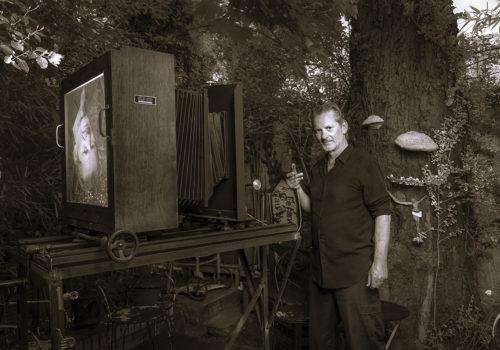
O.V.: Fuji 6×9, and the “HOH-LUX” large-format 40×40 cm view camera.
Your favorite drug?
O.V.: Oxygen. More precisely: the scent of the countryside after the rain.
Your best way to disconnect?
O.V.: Sleep. Leaving the studio, walking a hundred meters, and finding myself on the Auvers-sur-Oise plateau.
Your relationship with images?
O.V.: A very ambiguous and paradoxical relationship. The image I seek is one that contains silence—a silence perceptible to those who truly listen.
Your greatest quality?
O.V.: Indifference? Cowardice? I hesitate.
Your last act of madness?
O.V.: Climbing to the top of a tree (9 meters!) during a thunderstorm to photograph a flax field.
An image to illustrate a new banknote?
O.V.: Argos, Odysseus’ dog, who instantly recognizes his master after twenty years of absence, upon his return from the Trojan War.
The job you would never have wanted?
O.V.: Executioner.
Your most extravagant professional act?
O.V.: Spending two consecutive nights locked in Père-Lachaise cemetery, to immerse myself in the place. Late autumn, with very long exposure times for the images I wanted. I remember an old tree stump, struck by lightning, slowly burning from the inside… and keeping me warm.
Does photography have the power to change collective perception of an event or an era?
O.V.: Perhaps… but without noticeable effect. One nail drives out another.
How do you perceive the influence of social media on how photographs are created and viewed today?
O.V.: A dreadful mess. A free-for-all.
An Instagram account everyone should follow?
O.V.: I hardly ever go on Instagram.
The last thing you did for the first time?
O.V.: My shoelaces. Since I don’t understand how I tie them so fast, I feel like I’m doing it for the first time. I never tire of it.
What makes a successful photo?
O.V.: An image that withstands time and reemerges, like buried sculptures unearthed by a passing plow.
What interests you most in an image?
O.V.: Its enigma. That’s why I’m interested in the secrets of faces.
What’s the difference between photography and art photography?
O.V.: Adding the word “art” to photography is the license to add zeros to its price.
The city, country, or culture you dream of discovering?
O.V.: The city whose prince is a child.
The place you never tire of?
O.V.: My bed.
Your greatest regret?
O.V.: Not knowing what lies behind the door.
Color or black & white?
O.V.: Black and white—for interpreting and simplifying reality. As a student in khâgne, I discovered Pindar (Greek poet born in 518 BC). I read him a lot, but the only thing I remember is this six-word phrase: “The secret blackness of snow.”
Daylight or studio light?
O.V.: Daylight—always, or almost. Except at night, when I use my car’s headlights (they’re magical tools).
The most photogenic city, in your opinion?
O.V.: I don’t travel much. I journey inward, or around my room. Or vicariously, through writers like Nicolas Bouvier (The Way of the World), who does it wonderfully while I read from a deckchair. I went to Venice twice, and yes—it’s beautiful. That’s where I took a (very successful and never shown) portrait of Bruno Ganz. I deduce that a photogenic city is a portrait of Bruno Ganz (or the other way around).
If God existed, would you ask him to pose for you—or take a selfie with him?
O.V.: My God! What a question!
If I could organize your ideal dinner, who would be at the table?
O.V.: I’d rather have dinner alone—with myself.
The image that best represents today’s world?
O.V.: A pink radish from Normandy, given to me by a friend—a sumptuous radish, deformed by nature, which I photographed using my view camera. It resembles an erect phallus, shown front and back (as a diptych) in my current exhibition at the Château de La Roche-Guyon. It is both magnificent and obscene. I chose, exceptionally, to show it in color—because its pink is precisely the pink found in the cheeks of girls when they blush.
If you had to start over?
O.V.: I wouldn’t change a thing. Not even the worst. Unless I could be reincarnated as a mountain bird or a starling, soaring on the wind and defying gravity (though I really dislike raw meat—a problem to solve…).
Your final word?
O.V.: It links back to the previous answer. It concerns the starlings and the way they fly (murmuration), which I’ve fallen in love with—to the point of filming them following a very specific protocol, trying (vainly?) to join their choreography. In my current exhibition at Château de La Roche-Guyon, six sequence shots are dedicated to them. They were filmed at various locations in the French Vexin, in a rush dictated by the starlings’ capricious dance, accompanied—guided?—by a pre-selected soundtrack from my personal pantheon, synchronized and under my command. In doing so, I gave myself the illusion of dancing with them—of escaping gravity. As I followed and filmed them (in both senses of the word), I gave myself a magnificent vertigo (recommended for aspiring dervishes). Starlings are like children who won’t stop playing before bed. That’s how my starlings behave—gathering to play in the sky at dusk, before plunging in clusters into the hedgerows of sleep.