Nicolas Wieërs : The explorer of the margins
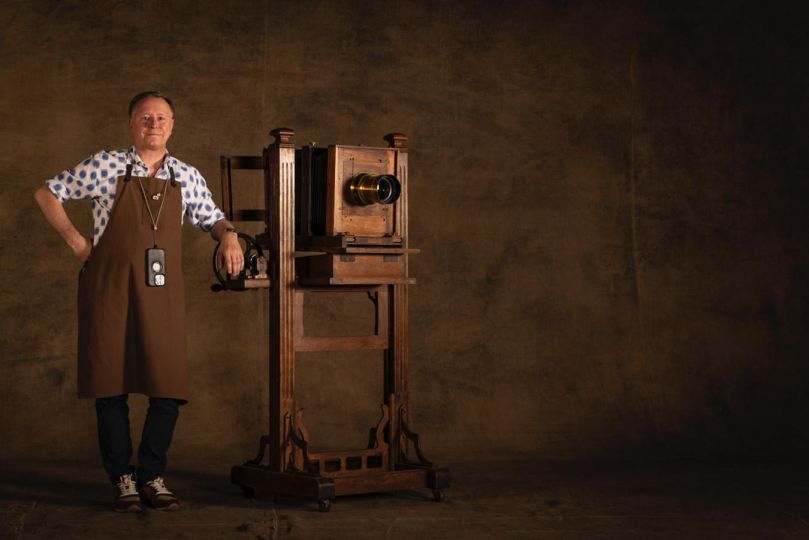
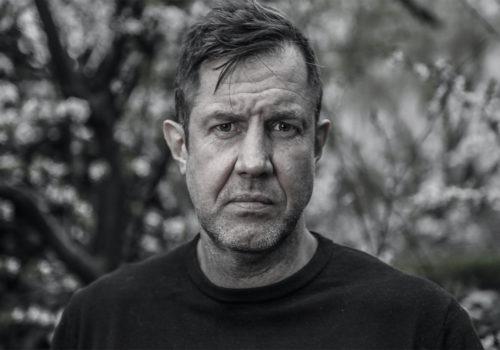
An audiovisual tightrope walker, Nicolas Wieërs is a film craftsman whose journey is read not only in credits or job titles, but in the territories he roams, the margins he inhabits, and the worlds he explores with determination. He grew up in a village where Napoleonic folklore conversed with the collapse of the family business. A childhood on the edge of “third-world” poverty shaped his gaze, sharpened his critical sense, and taught him very early that existence is played out in the tension between necessity and desire.
Trained at the Institut of Arts and Diffusion, he did not settle for following well-marked paths. His career runs through traditional television production Canal+, Be TV, Euronews while venturing into more unstable zones: daring documentaries, comics, photographic exhibitions. During lockdown, he produced a 26-minute documentary, assembling a small team to go and shoot in Kosovo. From his hospital bed, under chemotherapy, he created a comic, turning the ordeal into a creative workshop. And in one last shiver of exploration, he plunged into the clandestine world of the “Vory V Zakone,” translating it into 135 prints for an ambitious and fragile exhibition—extravagant in its risk and cost. Each project is a total experience: it is no longer only about telling, but about living the act of creation—feeling its materiality, its density, its intensity.
Twice Belgian boxing champion, Nicolas Wieërs brings to his life and his art the same sense of combat, discipline, and rigor. His personal universe reflects that openness to others: an Austrian wife with multiple paths, children sponsored by a Kosovar Muslim and a Polish Orthodox woman. His entire artistic and human journey seems guided by a single obsession: crossing borders—cultural, geographical, social—to question the Other, reveal what hides behind our prejudices, and subtly denounce the hypocrisy of our societies.
The Balkan Trafik festival, which he directed for twenty years, distills this approach. Between Southeast Europe, minorities, historical tensions and marginal cultures, he turned the event into a living laboratory, where documentary, art, and human experience answer one another. Even cancer—which he compares to diving in a submarine lost in the abyss—did not slow him down: he made it a lesson in depth, an education of the gaze, an exploration of limits. Five years in Moldova, now Sarajevo, projects scattered across the continent: each place becomes a workshop, each encounter a story, each risk a narrative device.
Nicolas Wieërs is not only a director or producer: he is an alchemist of the real, a bridge between forms, stories and cultures. His art is measured not only by the images produced, but by the scale of the world he brings to life around them. Between audacity, documentary sensitivity and an exploration of the margins, he reminds us that to create is to put oneself at risk, and that the true measure of art lies in the invisible—in the paths it traces, the encounters it sparks, the emotions it stirs.
Your first photographic spark?
Nicolas Wieërs : Photography is an excellent medium for expressing an opinion or conveying a message without having to defend it constantly. I talk a lot about hypocrisy and respect in society through what I create. Of course, everyone has their own opinion on these themes. Through photography, I express conceptually what I want to say, and everyone can do with it what they will, without it turning into a café debate. So my photographic trigger was finding an ideal support for getting a message across.
A photographic memory from your childhood?
Nicolas Wieërs : It’s very simple: a photo of me at three years old with my first dog—also a puppy—who was grabbing my pants and preventing me from moving forward. It’s the kind of “general public” color photo with that very particular grain of the time, due both to print quality and to the chemical structure of film back then.
What do you use today?
Nicolas Wieërs : Today, I mostly use the latest version of the iPhone. My goal is to capture moments at the right moment, without losing them because of technical constraints or timing. I want to transmit. That’s my mission. Take, for example, this series on the former fraternity of the Vory V Zakone. My subjects are people from the street, living off crime, dealing, prostitution, but also ordinary moments of life—always inside their offbeat bubble.
It’s a milieu that leaves no time to set up a frame or install technical equipment—which, in any case, doesn’t interest me. New technologies, excellent in definition and easy to secure, are ideal for my concept based on scouting, immersion, and an ephemeral cohabitation. You simply need to be aware of the limits in framing and light, which suits me perfectly and brings a sincerity to the photograph.
The one that moved you the most?
Nicolas Wieërs : « Garçon du ghetto de Varsovie », taken during the uprising of the ghetto and extracted from the Stroop report.
And the one that made you angry?
Nicolas Wieërs : Every day, certain images make me angry. Everyday photos are often the worst. For example, a screenshot from a surveillance video showing the moment after the throat-cutting of Iryna Zarutska, fatally stabbed on a train in Charlotte, in the United States. In this photograph, a young girl, petrified with fear, curled up on herself in the cold banality of a subway car, aware of her imminent death—alone, abandoned. The off-frame that can be seen in the video reflects, for me, the horror of our society, anguish and anxiety. It is Munch’s « Le Cri » in an image.
A key image in your personal pantheon?
Nicolas Wieërs : Vanessa Paradis, photographed in the late 1980s by Pierre Terrasson. An original large-format black-and-white print, hung in my living spaces for fifteen years. Beyond the photo and its composition, it’s the world it gives off: a sensitive and beautiful Lolita, facing a church with an oppressive perspective. The memories around this photo are just as precious: the gallerist who gave it to me, Chantal Blumann, director of Galerie Blumann in Paris, exhibited many original documentary and backstage prints of cult bands like The Doors, Jimi Hendrix, the Rolling Stones. Her photos made me feel like I could “touch” the stars in their intimacy.
What interests you most in an image?
Nicolas Wieërs : The transmission of an emotion, the “theft” of a shared moment. The value of a photo and its purpose—whether it becomes an exhibition or something else—is to enable contact with a social bubble parallel to ours, accessible only through this medium.
What details do you look for in a face, a landscape, or an object?
Nicolas Wieërs : I like creating the feeling that a puzzle is forming. The face and its immediate environment must be framed in a way that gives an overall view. As you move through the different planes of the photo, you gain an overall understanding of the milieu—or at least, you can imagine it.
Elliott Erwitt said: « Color is descriptive, black and white is interpretive. » Do you agree?
Nicolas Wieërs : Yes. I would sum it up by comparing photography to a film and to a book: black and white is the book, which lets you imagine with your gut.
In your view, can technique take precedence over emotion in photography?
Personally, no. My approach is documentary. I want—I need—to be in the action, in the moment, in the “theft”—no staging, no strolling around with a visible camera. Technique is useful, but secondary for capturing reality, unvarnished.
For you, is beauty in photography purely aesthetic?
Nicolas Wieërs : No, not only. I like images that tell a story that grabs you in the gut. Of course, I’ve sometimes been seduced by purely aesthetic photographs, but my heart always leans toward the story behind the image.
What elements can make silence visible in a photograph?
Nicolas Wieërs : Postures, gazes, an animal at rest in the city.
Does a photograph’s uniqueness come from the moment or from staging? Can a photograph be truer than reality?
Nicolas Wieërs : Photography makes it possible to “crystallize” a moment, which then becomes unique in the eyes of viewers. Everything else, along the timeline, becomes out of frame. So yes, a photograph can be truer than reality.
Can a photograph change our perception of an event?
Nicolas Wieërs : Of course. That’s its whole power—and since its invention, we sometimes abuse it.
Is photography a testimony or a form of manipulation?
Nicolas Wieërs : It can be both. The ethics of the person who photographs is essential for understanding the full message conveyed by the image.
What makes a good photograph?
Nicolas Wieërs : The subject and the framing. A good photo, in my eyes, offers the public—in a single image or a series—a journey into a social bubble in which the photographer has immersed themself.
In your opinion, what quality is necessary to be a good photographer?
Nicolas Wieërs : Passion for the subject, the desire to convey, the ability to integrate into exceptional events, to take risks, and sincere curiosity.
How do you choose your projects?
Nicolas Wieërs : They have to impress me, move me, educate me, and teach me things about life. I have to feel a strong empathy for my subjects. I have to be able to bend to the subject’s rules without feeling dominated, but rather as in an exchange: the subject allows me to enter their world and photograph their intimacy, according to their rules.
How would you describe your creative process?
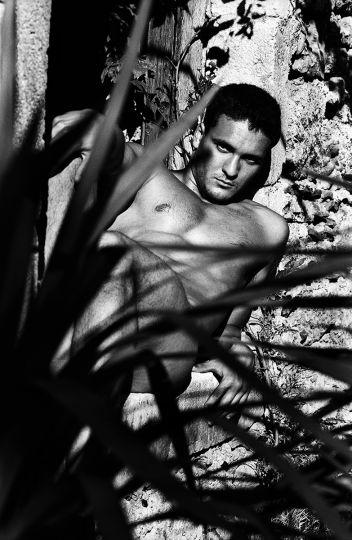
Nicolas Wieërs : I begin a project on the jolt of an emotion: an encounter, an atmosphere, or the feeling that the subject is unknown to the general public. There is potential interest when something is out of the ordinary. Very quickly, the concept emerges and I pursue the project. If that exceptional thing exists only for a “one shot,” I don’t push it further. The final message is essential: it’s a physical, almost animal sensation—the sense of being in the right place at the right time, of benefiting from opportunities—for example, the support of an influential person in the field, which gives direct access to networks that are normally inaccessible. Then I go scouting and let myself be absorbed by the world I’m exploring. It has to be intense and stimulating every day. My work, whether it’s a festival, a film, or a photographic series, is always born from inside the milieu. I listen, I watch, and let my imagination feed on impressions: sounds, languages, music, smells, ways of doing things. Sometimes, those details teach me far more than interviews, which remain occasional and informative. It’s the world I enter that moves me, makes me “feel alive,” and fascinates me. Even without speaking the language, I then translate it into photographs, comics, an audiovisual documentary, or a festival, to extract its artistic quintessence and make it accessible to the public. That closeness—often lived in fragility or discomfort—allows meaning to reveal itself. Once this base is established, I develop a broader concept, always designed according to this principle: to subvert the obvious. For example, in Balkan Trafik, we subverted media clichés about the Balkans: it wasn’t only wars, crime, or prostitution, but a true “traffic of cultures.” In Vory V Zakone, I photographed the bodies, gazes, and tattoos of detainees. Those images opened onto deeper stories: prisons, codes, solitude, dignity lost or preserved. Little by little, I documented not only a criminal world but a parallel humanity—rejected, and symbolic of a broader reality.
The project then takes on a collaborative dimension: I invite experts, philosophers, members of parliament, artists, and media to enrich and complete my vision. The exhibition, the festival, or the documentary is finalized in the tension between my vision and that of others. The viewer doesn’t visit a place: they go through an experience. This logic guided Balkan Trafik: to connect, to make things circulate, to create unexpected dialogues between opposing worlds. Projects naturally continue, each year, like a narrative in constant evolution. Today, I am working on The Russian LAByrinth, a project aimed at bringing Russian and European peoples closer together in Brussels. Through cinema, music, circus, literature, and subcultures, this annual festival/documentary makes it possible to explore a complex and rich space, to better understand and accept one another, moving beyond media and political clichés. In short, my creative process rests on immersion, sensation, listening, collaboration, and translating lived experience into accessible art. It is a blend of curiosity, confrontation, reflection, and transmission.
A forthcoming project that is especially close to your heart?
Nicolas Wieërs : For a few years now, I’ve been working to bring Russian and European peoples closer together. My aim is to encourage an exchange of experiences between Russia and the inhabitants of Brussels, the European capital, through different cultural fields and via artists independent of those in power: cinema, animation, circus arts, traditional music, electronic, rock, avant-garde, jazz, contemporary, and virtuoso music. This festival, designed to be annual, works like an evolving documentary whose overall concept changes each year. The name « The Russian LAByrinth » means: LAB, as in a laboratory of ideas, and LAByrinthe, as in a geopolitical, social and historical space often perceived as incomprehensible, but in which one lets oneself be guided by the richness of the arts. On the left you encounter Russian post-punk and post-electronic music; on the right, the wonderful animated films Mountain of Gems, literature, and certain subcultures such as the tattoos of Vory v Zakone. The goal: to grasp this diversity, find a path, and, on leaving this LAByrinth, gain an overall view—accept oneself, understand one another, and no longer be afraid. Above all, to obtain information that complements what is broadcast by the media and politics. I remember what Jean-Claude Juncker, then President of the European Commission, said during his visit to the St. Petersburg International Economic Forum in 2016: « I have always believed in the power of dialogue. When our relations are tense, we must continue to talk. Even when economic sanctions are in place, we must keep the door open. And if I am here with you today, it is because I want to build a bridge. » At my humble level, that is exactly what I want to achieve with The Russian LAByrinth.
The person you would like to photograph?
Nicolas Wieërs : Henri Storck… but that’s going to be complicated!
The person by whom you would like to be photographed?
Nicolas Wieërs : Henri Storck as well.
An essential photography book?
Nicolas Wieërs : L’Album d’Auschwitz, discovered by Lili Jacob, with the photographs of Henryk Ross in the Łódź ghetto.
The last photo you took?
Nicolas Wieërs : Today, in Sarajevo, in a neighborhood known for its extreme football supporters, the concrete blocks of former Yugoslav buildings had yellowed with time. While scouting this parallel world, I came across a ginger cat, lying on an ocher cushion next to an old yellow car. I took this photo simply for the pleasure of the contrast—this autumnal yellow, this strange calm before the agitation, and this cat enthroned like an anonymous king of the set.
On social networks, are you more Instagram, Facebook, TikTok—and why?
Nicolas Wieërs : I try to distance myself from them. Networks are often an avalanche of frustrations, everyone believing they hold the truth. For promoting my work, I use all three, but I leave it to my communications agency.
What has changed in photography since the success of social networks?
Nicolas Wieërs : Good photos remain good photos.
Your view on AI?
Nicolas Wieërs : I don’t use it for the creative side, but for administrative tasks and research. I’m surprised to see some artists faithfully reproduce what AI suggests to them in response to assigned themes.
Color or black and white?
Nicolas Wieërs : I prefer black and white: fewer distractions, less “imposed” information, better focus.
Which city seems the most photogenic to you?
Nicolas Wieërs : I really like the cities and villages of Russia and Moldova: the people, the way of life, the buildings, the parks. Even the concrete has style—unlike the cities of the Balkans.
The city, country, or culture you dream of discovering?
Nicolas Wieërs : I’d like to explore the Russian world more deeply.
A place you never get tired of?
Nicolas Wieërs : The forest—nature in general.
The image that represents, for you, the current state of the world?
Nicolas Wieërs : The melting of a glacier: a leveling down of society. Not pessimism—just a realistic observation.
In your opinion, what is missing in today’s world?
Nicolas Wieërs : Ethics, empathy, consistency in keeping one’s word, education, sincerity, respect for roots.
If God existed, would you ask him to pose for you, or would you go for a selfie with him?
Nicolas Wieërs : I talk to Him; that’s already something 😄
Your favorite drug?
Nicolas Wieërs : The effects of sport.
Your best way to disconnect?
Nicolas Wieërs : Daily sport, especially cardio. Even if my brain runs continuously, sport channels my thoughts toward creative solutions and projects that bring people together.
Your latest bit of madness?
Nicolas Wieërs : After years of heated discussions with my wife, she finally lets me buy a dog of the breed I love 😄
Your greatest professional extravagance?
Nicolas Wieërs : I’ve produced a few, because challenge and risk attract me: that’s where I really feel alive.
It could be the 26-minute documentary I produced and directed during Covid. I gathered a team of four people to go and shoot in Kosovo the “number zero” of a program for which I’m still looking for a co-producer and a broadcaster (the notice is out!): https://www.balkantrafik.com/extra/documentary/ Or the two comics, the first of which I created: https://europehouse.ba/en/a-voyage-through-the-western-balkans-2/ made from my hospital bed during chemotherapy sessions. That bed actually became my production office for one of the Balkan Trafik editions.
And more recently, this immersion in the disappearing world of the “Vory V Zakone,” which I turned into a photo exhibition of 135 prints.
It’s extravagant because it’s expensive and risky—but it’s exactly what pushes me forward.
The question that bothers you most?
Nicolas Wieërs : « How are you ? »
The last thing you did for the first time?
Nicolas Wieërs : During my immersion with these former criminals (which ended in March 2025), several things that were new—difficult to explain in writing.
Your greatest regret?
Nicolas Wieërs : I can’t really say. Even though I think about it often… I suppose I regret “having taken this direction rather than another.” Yes, there are regrets. Because time flies, you realize it too late, and in the end there are only 24 hours in a day. In 2001, I finished the Institut des Arts de Diffusion. The Institute kindly offered me a place to live—a student room—in the administrative building. In exchange, I handled the “concierge” side of things: mornings, evenings around classes, and weekends. I also had access to the phones and computers. That final year, I sent my CV to lots of audiovisual companies. My experience? “Bachelor’s degree in Performing Arts and Broadcasting & Communication Techniques, Belgian boxing champion, athlete…” Among them, I contacted the famous Rémy Julienne, THE French film stuntman—Belmondo’s double, among others. And then one day, the phone rang in the office of an IAD administrator: « Nicolaaaaas, Rémy Julienne on the phone for you! » He offered me six months with room and board to train in car stunts at an amusement park. And then, « if it works, we’ll try stunts in the movies ». I hesitated… and in the end I chose a permanent contract at Canal+, in sports production. Looking back, I don’t think that was the best choice. It set me on a path in “television directing”… which wasn’t my passion. So sometimes I wonder: what if I had chosen Rémy Julienne rather than Canal+?
If you had to start all over again?
Nicolas Wieërs : Maybe I would take “left” rather than “right,” but always on the margins.
Your ideal dinner?
Nicolas Wieërs : I did it a few years ago, after I was officially declared “cured” of cancer. I asked a caterer to recreate the meal from Le Festin de Babette (1987), with the wines. At the table: my family, a friend, my oncologist and his wife. I gave a thank-you speech, because cancer strongly involves those close to you, and my wife was pregnant at the time.
The one thing one absolutely must know about you?
Nicolas Wieërs : That I am HPI (high intellectual potential), with all the social difficulties that can entail, but that I also have a strong natural empathy for the people around me.
A last word?
Nicolas Wieërs : Can’t wait for your podcasts—thank you for your questions!