Jean-Paul Debout : Verticalities in Resistance
Jean-Paul Debout paints the clamor of the world and the silence of structures, reconciling the brutality of urban graffiti with the nobility of history painting. In his work, the surface is never decorative; it is a field of tension. The entire body of work stems from a constructive obsession — understanding what holds an architecture, a body, a society together. Structure is his true subject, whether it rises as a vertical façade, fractures through satire, or dissolves into nocturnal abstraction.
His palette — deep blacks, electric blues, sharp contrasts — immediately imposes a sense of dramaturgy. Verticality acts as a spine: it elevates as much as it constrains. The artist thus organizes his practice around three fundamental pillars. The first belongs to a Critical and Social Narrative where Icons, Portraits, and Contemporary Satire intersect. Here, he examines power, public image, and the fabrication of modern mythologies. The figure becomes a symptom, embodying the tensions of an era saturated with representation.
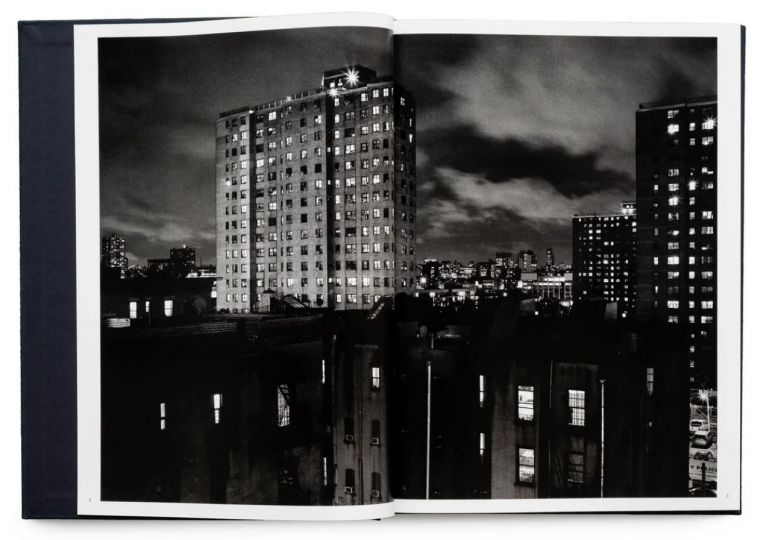
The second pillar, Architecture of the Extreme, explores Peaceful Solitude. Monumentality here is not triumphant but introspective. Buildings, lines, and masses impose an almost metaphysical silence. The world appears emptied of its crowds in order to reveal its underlying frameworks. Finally, Urban Abstraction and Deconstruction, extended through a Nocturnal Verticality, fragment space. The city becomes rhythm, pulse, shattered memory. Debout does not destroy to provoke; he deconstructs to understand.
As much a photographer as a painter, he belongs to a generation shaped by the rigor of analog film, awakened by the immediacy of the Polaroid, and later confronted with the digital flow — a tool, never an end in itself. This trajectory explains his fidelity to gesture and his distrust of spectacle. He is not a technician fascinated by performance, but an observer who claims the instant, imperfection, and emotion as the only legitimate authorities. The shadow of Man Ray hovers without dogmatism: a taste for displacement, irony, formal freedom. Yet where the historical avant-garde sought rupture, Debout seeks accuracy. He mistrusts images that “want to please,” the permanent exhibitionism amplified by social media, and counters this visual inflation with a minimal ethic: observe, wait, release the shutter when the image consents. His pantheon from Nadar to Robert Frank inscribes his work within a humanist lineage where emotion precedes effect. Black and white for intensity, color for vital pulse: for him, beauty is never purely aesthetic; it is decision, framing, responsibility.
As a painter, he composes before representing. As a photographer, he constructs before triggering the shutter. His gaze is formed in space, light, silence — that silence which makes the world’s clamor visible. This questionnaire reveals less a discourse than a stance: to keep alive the tension between irony and gravity, engagement and distance, instinct and awareness. Jean-Paul Debout does not seek to produce images; he waits for them to assert themselves. In an era dominated by speed and exposure, this patience may well be his most radical and most critical gesture.
News: Exhibition from March 23 to 29, 2026 at Carré à la Farine, Versailles.
Free admission from 11 a.m. to 6 p.m.
Your first photographic spark?
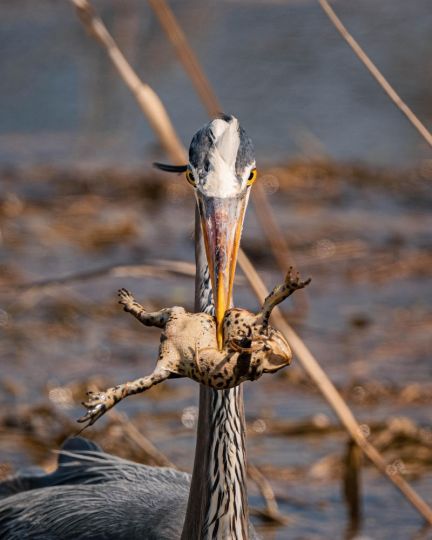
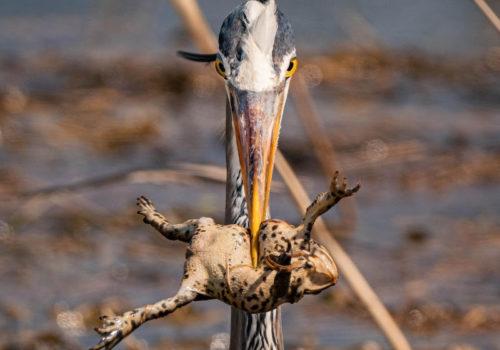
Jean-Paul Debout : A frog and some reptiles, with a Nikon FM, 50mm lens, 400 ISO film.
A photographic memory from your childhood?
J-P.D. : At Christmas, I used to take photos with extraordinary toys for Jours de France magazine and of course, I had to give them back afterward…
The camera of your childhood/beginnings?
J-P.D. : That famous second-hand silver Nikon FM with Nikkor 28mm and 50mm lenses.
The one you use today?
J-P.D. : My smartphone, as well as a versatile, weather-sealed digital SLR a LUMIX with a Leica lens.
The image-maker who inspired you?
J-P.D. : Man Ray.
The image you wish you had taken?
J-P.D. : A photograph of Winston Churchill painting!
The one that moved you the most?
J-P.D. : A photo of an abused animal.
And the one that made you angry?
J-P.D. : None in particular. Generally speaking, images that breathe falsehood, fake smiles, cruelty, the “I want to please” attitude…
Which photograph changed the world?
J-P.D. : The “Earthrise” photograph from the Apollo 8 mission.
And which one changed your world?
J-P.D. : The first one I ever took with a Polaroid!
A key image in your personal pantheon?
J-P.D. : The black-and-white portrait of a child dressed as an emperor, seeming to judge the viewer mischievously while standing on his rock, signed by Nadar.
What interests you most in an image?
J-P.D. : The moment when the eye rests on the viewfinder and sweeps from left to right, coordinating with the finger caressing the shutter, while the other hand seeks focus by turning the lens ring.
What details do you look for in a face, a landscape, or an object?
J-P.D. : Nothing at all. I try to capture the moment when it tells me, “Go ahead!”
Do you agree with Elliott Erwitt?
J-P.D. : About black and white? I’m not sure — it depends on each person. Look at Martin Parr.
Can technique overpower emotion?
J-P.D. : I think we already see that happening. Only emotion allows us to capture a true image not just an image.
Is beauty in photography purely aesthetic?
J-P.D. : No, it’s also emotional. A background, a blurred area, beauty comes first from framing, I believe. What’s inside creates the aesthetic.
What elements make silence visible in a photograph?
J-P.D. : Space, light, and composition.
Does the uniqueness of a photograph come from the moment or the staging?
J-P.D. : Mainly from the moment.
Can a photograph change our perception of an event?
J-P.D. : Yes, it can offer a new point of view.
Is photography testimony or manipulation?
J-P.D. : Both, depending on the context.
What makes a good photograph?
J-P.D. : Authenticity and emotion without forgetting the little imperfections.
What is the essential quality to be a good photographer?
J-P.D. : Observation.
How do you choose your projects?
J-P.D. : Through passion and curiosity about the subjects.
How would you describe your creative process?
J-P.D. : Exploration, observation, then anticipation of the right moment.
An upcoming project close to your heart?
J-P.D. : A series about the lost villages of France.
The person you would like to photograph?
J-P.D. : An artist fully committed to his/her art.
And the person by whom you would like to be photographed?
J-P.D. : A child, a homeless person, an old man…
An essential photography book?
J-P.D. : The Americans by Robert Frank.
The last photo you took?
J-P.D. : A corner of a garden in the rain, with no one there.
On social media, are you more Instagram, Facebook, TikTok?
J-P.D. : Instagram, for its visual aspect. But I’m not really a fan of all that public exposure!
What has changed in photography since the rise of social media?
J-P.D. : The immediacy and virality of images. And we no longer really look at pictures what makes people vibrate, I think, is sending something onto the network…
An Instagram account to absolutely follow?
J-P.D. : None. I buy the book.
Your view on artificial intelligence?
J-P.D. : An interesting tool, but it will never replace humans.
Color or black and white?
J-P.D. : Black and white for emotion, color for life.
Natural or artificial light?
J-P.D. : Natural it creates a unique atmosphere.
Which city is the most photogenic?
J-P.D. : New York Manhattan, Harlem…
The city, country, or culture you dream of discovering?
J-P.D. : Japan, for its visual richness.
The place you never tire of?
J-P.D. : The wild coast, where nature is majestic.
The image that represents the current state of the world?
J-P.D. : A photograph of ocean pollution.
What, in your opinion, is missing in today’s world?
J-P.D. : If we’re talking about people, I’d say more compassion, less ego. But that seems unlikely social media reflects an exaggerated vision of one’s own importance.
If God existed, would you ask Him to pose for you?
J-P.D. : A selfie — it’s more personal!
Your favorite drug?
J-P.D. : A good glass of Morgon!
Your best way to disconnect?
J-P.D. : A walk in nature without a camera, without anything. That’s always when the most beautiful photos are waiting to be taken…
Your latest madness?
J-P.D. : I commit several every day!
Your greatest professional extravagance?
J-P.D. : Telling myself: “Come on back to work!”
The job you would not have liked to do?
J-P.D. : Sitting at a desk behind a screen without creativity.
The question that unsettles you?
J-P.D. : “What does it mean?” or “How long will it take to do that?”
The last thing you did for the first time?
J-P.D. : Nothing.
Your greatest regret?
J-P.D. : Not having started earlier.
If you had to do it all over again?
J-P.D. : I would choose painting and photography from the very beginning.
If I organized your ideal dinner, who would be at the table?
J-P.D. : Man Ray, Salvador Dalí, Louis de Funès, Dua Lipa, Coluche, Jean Gabin, Bernard Blier, Lino Ventura, Charlie Chaplin (with his camera), Manouche (Germaine Germain, the postwar Music-Hall queen), Antoine de Saint-Exupéry, Winston Churchill, Elie Kakou, Ayrton Senna, Jean-Paul Belmondo…
What would you like people to say about you… afterward?
J-P.D. : That he knew how to capture the irony and humor of life.
The one thing we absolutely must know about you?
J-P.D. : I practice ironic humor without moderation.
One last word?
J-P.D. : YES!