In the eye of Allégresse
Known as Allégresse, Camille Gourdan was born in Toulouse and grew up in the heart of the Haute-Savoie mountains. While the landscape did not dictate her affections, it shaped her vision: precise, attentive, open to the subtleties of the world. After studies combining art history, social geography, and cultural management, punctuated by stays abroad, she earned a master’s degree in cultural and intercultural project management in partnership with Sciences Po Bordeaux. Her experiences, notably in Senegal during the 2022 Biennale, nourished her eye and refined her sensitivity, preparing her to fully embrace photography as a language.
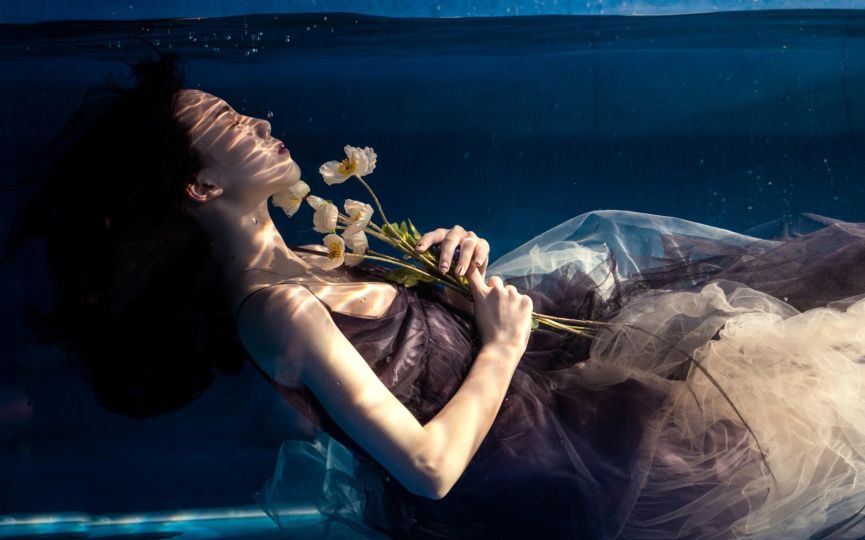
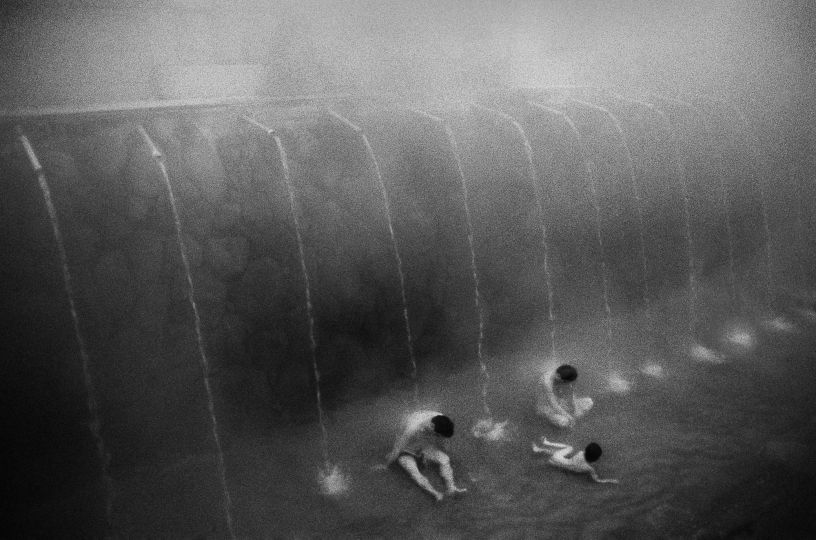
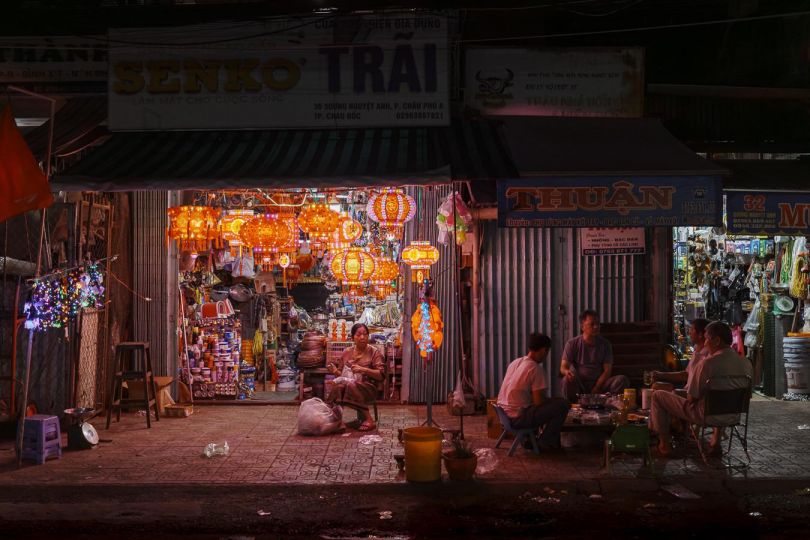
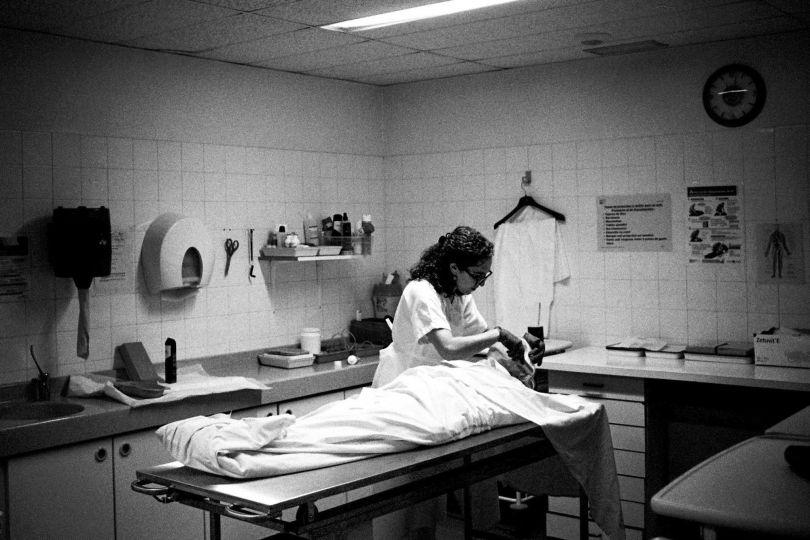
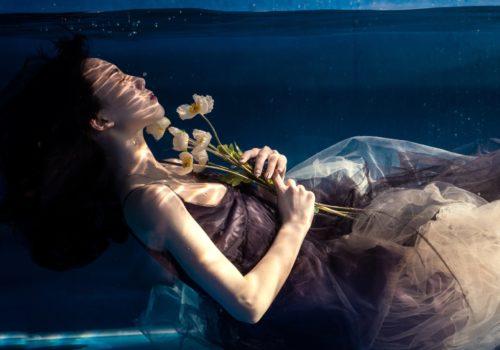
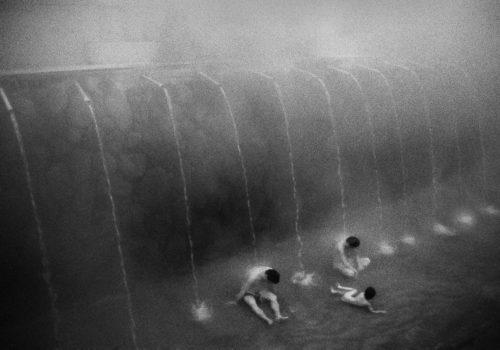
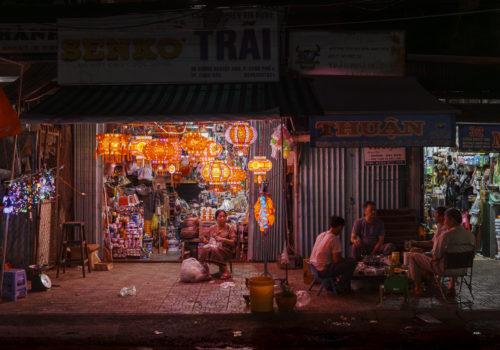
Allégresse photographs as one breathes: naturally, intensely, with attention to every vibration of light, to every silence laden with emotion. Her name is no accident: her joy is never naive; it is lucid, vibrant, a vital energy. Every image she composes seeks to capture that suspended moment where beauty reveals itself without artifice, where softness meets strength, where the instant becomes a story. Her approach is one of purity and sensitivity. For her, light is narrative matter; the face, a territory of emotions; the gesture, punctuation of the soul. Portraits unveil intimate truths, scenes capture the interstices of movement, and color becomes a second heart guiding the eye and touching the mind. In her work, aesthetic is never alone: it converses with emotion, reflection, and memory, transforming each project into a sensitive and contemplative experience.
Actually based in Paris, Allégresse continues her practice in the art world, collaborating with galleries and auction houses. But beyond the professional sphere, her photography remains a space for encounter and exchange, a dialogue with others and with the world. Between spontaneity and rigor, intuition and precision, invention and performance, each image is both a manifesto and a poem: a precise moment where emotion becomes visible and tangible, where the everyday becomes magic.
Website : www.allegresse.work
Instagram : @allgrss
Your first photographic spark?
Allégresse: A breakup in 2020, airplane rides with a friend, and the pandemic.
A photographic memory from your childhood?
Allégresse: The family albums carefully stored at my grandmother’s house.
The camera of your childhood?
Allégresse: A tiny clay camera that I had made myself. I never actually took photographs as a child.
The one you use today?
Allégresse: Depending on the project: a Nikon Z6 II for professional work, and a Fuji XH1 fitted with Nikkor lenses from 1978 that belonged to my grandfather. I have a clear preference for projects done with the latter.
The man or woman in images who has inspired you?
Allégresse: Dora Maar. Not that her work has inspired mine—I don’t think I operate in the same visual register—but her life and courage against the patriarchy of her time deserve respect, and her work should be honored.
An image you wish you had created?
Allégresse: Golden fish in deep blue sea by Bachir Tayachi and Mabrouka Fall. That’s exactly the kind of aesthetic that speaks to me.
The one that moved you the most?
Allégresse: The images coming from the genocide in Gaza.
A photo that changed the world?
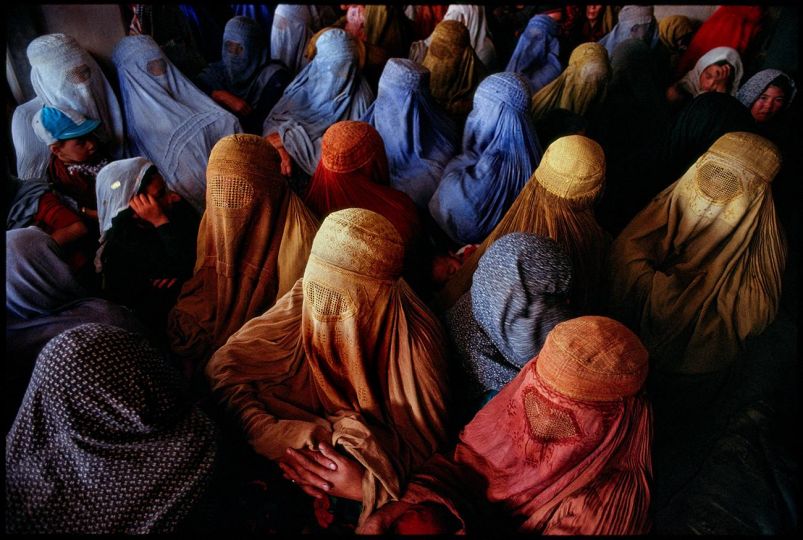
Allégresse: I would tend to say Afghan Girl by Steve McCurry, taken in 1984. It’s a “beautiful” image, yet it says everything about the power dynamics in the Western gaze. For me, it embodies a form of colonial voyeurism, the alteration of reality for the sake of the West. This photograph became the symbol of the aestheticization of misery, of fascination with the “other,” confusing beauty with power. That woman never benefited from the photo, unlike the photographer. It both moves me and angers me, frozen forever in a gaze that wasn’t hers—the gaze of a man upon her.
And a photo that changed your world?
Allégresse: It’s not a photograph, but a tapestry by Papa Ibra Tall, La Semeuse d’étoiles. An immense tapestry whose image accompanies me daily; its colors constantly strike me. If I had to choose one work, one image, one visual, it would be this one.
A key image in your personal pantheon?
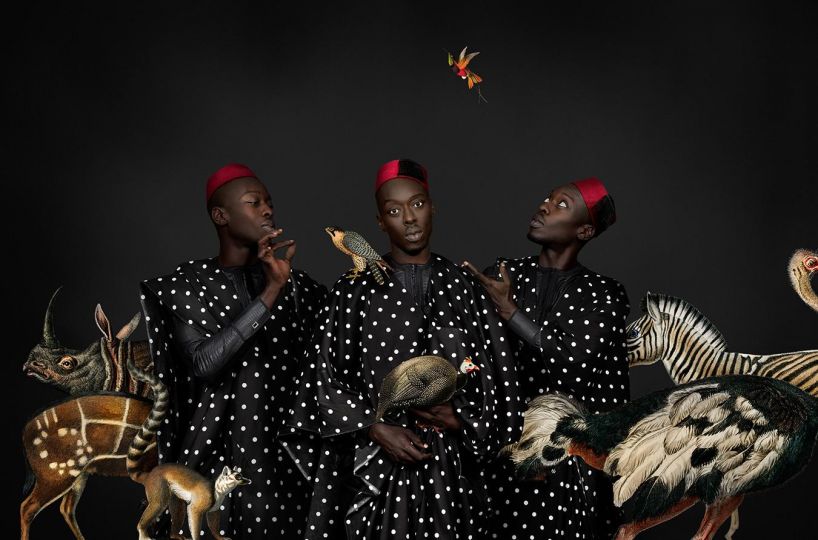
Allégresse: L’Oiseau, created with Franstel Odicky, part of my Figures series. The very first project I carried out when I settled in Senegal.
What interests you most in an image?
Allégresse: The encounter with the subject. I almost don’t care about the result: I don’t need to open the files, I could simply live the moment I took the pictures.
What details do you look for in a face, landscape, or object?
Allégresse: The encounter.
Elliott Erwitt said: “Color is descriptive. Black and white is interpretive.” Do you agree?
Allégresse: To some extent, black and white requires you to guess the colors of reality. Everyone is free to interpret these shades of gray. In another sense, Elliott Erwitt is wrong.
Do you think technique can sometimes outweigh emotion?
Allégresse: Technique can serve emotion.
Is beauty in photography purely aesthetic for you?
Allégresse: Photography can be beautiful because it touches us through the subject, memory, or experience but not necessarily through composition, color, or light. Beauty is very personal. Some images are powerful without being beautiful: I think of war photography. There is nothing beautiful, but the testimony is strong.
Which elements can make silence visible in a photograph?
Allégresse: Non-movement, stillness. Anything can be silence if the viewer decides it.
Does the uniqueness of a photograph come from the moment or the staging?
Allégresse: It depends on the type of photograph. A social or documentary image comes from the moment (at least I hope so). A portrait or editorial photograph can be staged. But the moment can also exist in staging.
Can a photograph be truer than reality?
Allégresse: Depends: reality of whom, told by whom, for whom? What can we consider true and real?
Can a photograph change our perception of an event?
Allégresse: Absolutely. Without words, sometimes images lie. That’s the challenge of instrumentalized and mediated images.
Is photography a testimony or a form of manipulation?
Allégresse: Both. It depends on who, for whom, and for what purpose.
What makes a good photo?
Allégresse: The intention.
In your view, what quality is necessary to be a good photographer?
Allégresse: Sensitivity, sensitivity to the world and its environment.
How do you choose your projects?
Allégresse: They choose me. And even then, I don’t operate in terms of projects but encounters.
How would you describe your creative process?
Allégresse: Spontaneous, intuitive, alive, and situated.
A project particularly dear to your heart?
Allégresse: Exhibiting last November during the Objectif FEMMES festival, bringing to life images created over three years ago in Dakar.
A person you would like to photograph?
Allégresse: Lady Gaga.
One by whom you would like to be photographed?
Allégresse: I don’t want to be in front of anyone’s camera.
An essential photography book?
Allégresse: The Story of Art by Gombrich. Even before making images, it seems crucial to have a broad and open artistic culture, across all eras. To understand the challenges of imagery, whether pictorial or photographic. Photography is a young medium following the steps of a much older language.
The last photo you took?
Allégresse: A photo of my partner.
Social media: Instagram, Facebook, or TikTok? And why?
Allégresse: Instagram. I have a lively, curious, and kind community there. And I’m of that generation.
What has changed in photography since the rise of social media?
Allégresse: Quantity, quality, and above all, its economy.
An Instagram account to absolutely follow?
Allégresse: Bachir Tayachi’s account.
Your view on AI?
Allégresse: A not-too-bad tool if used wisely. I have serious reservations once art and AI are confused.
Color or black and white?
Allégresse: Color. Definitely, always color.
Natural or artificial light?
Allégresse: Natural. We’ve been given the sun.
Which city seems most photogenic to you?
Allégresse: None and all at once. It depends on the gaze you bring and the encounters you have.
A city, country, or culture you dream of discovering?
Allégresse: I lived in Senegal and would like to deepen my knowledge of the country, its cultures, and languages.
A place you never tire of?
Allégresse: My library.
An image representing today’s world for you?
Allégresse: None. There are billions of realities in this world.
What is lacking in today’s world?
Allégresse: Empathy.
If God existed, would you ask Him to pose for you, or take a selfie?
Allégresse: Neither. I would put down the camera and listen.
Your favorite drug?
Allégresse: Boredom.
Your best way to disconnect?
Allégresse: Reading.
Your latest folly?
Allégresse: Loving.
Your greatest professional extravagance?
Allégresse: Trusting.
A profession you wouldn’t have liked?
Allégresse: Accountant.
Which question puzzles you the most?
Allégresse: “What does photography mean to you?” It’s everything and nothing at the same time. A chance accident that turned into a fairly happy coincidence.
The last thing you did for the first time?
Allégresse: Printing my photographs in a professional lab for an exhibition.
Your greatest regret?
Allégresse: Many, and none at the same time. To dwell on regret is to live in the past.
If you had to start all over again?
Allégresse: Start over what? Photography? I would explicitly set my limits and not let anyone cross them.
If I could organize your ideal dinner, who would be at the table?
Allégresse: Milan Kundera, Lady Gaga, Franck Thilliez, Hannah Arendt, Françoise Vergès, Angela Davis, Aimé Césaire, and many others.
What do you like people to say about you… afterwards?
Allégresse: That they felt I was sincere.
The one thing people absolutely need to know about you?
Allégresse: That I am loyal.
A final word?
Allégresse: Thank you.