In The Sierra, published by The Eriskay Connection, Aaron Rothman immerses himself in the grandeur of the Sierra Nevada, exploring the aesthetic concept of the sublime through the lens of the current climate crisis.
The idea of the sublime is well established in the history of art, immediately evoking majestic landscapes that seem to have stepped out of a Romantic painting of the early nineteenth century. It captures the contradictory mix of awe and fear that seizes humans when confronted with the power of nature : a “delightful terror,” as defined by the philosopher Edmund Burke in 1757.
In the United States, this concept quickly became central to national identity: the country sought its greatness in nature rather than in culture. From the Hudson River School to painters of the American West, the vastness of the US landscapes expressed both a divine presence and the uniqueness of a nation that was still young, but “superior” through its natural environment. Albert Bierstadt (1830-1902) found this sense of the sublime in the Sierra Nevada, painting it in all its majesty, bathed in radiant light. In photography, Ansel Adams (1902-1984) pursued this legacy when he captured the mountain range in pictures where the monumental scale of the landscape and the stillness of nature became almost mystical experiences.
It is also in front of the Sierra Nevada that Aaron Rothman experienced this same mixture of wonder and terror. As far back as he can remember, these mountains have always been part of his horizon. Growing up in the relatively flat Midwest, each summer brought him back to his native California, where he explored the heights of the Sierra. As a teenager, when he began photography, Ansel Adams became his guide, and the Sierra his field of study. In recent years, however, the awe he once felt is no longer tied to the Romantic idea of nature’s all-encompassing power. It has instead transformed into anxiety over the growing fragility of the natural world:
“Planning trips now always involves thinking about fires—whether they’ll be active, how smoke might affect visibility. Every visit brings some reminder: smoke-filled skies, newly burned areas. There’s a growing sense of vulnerability in the landscape.”
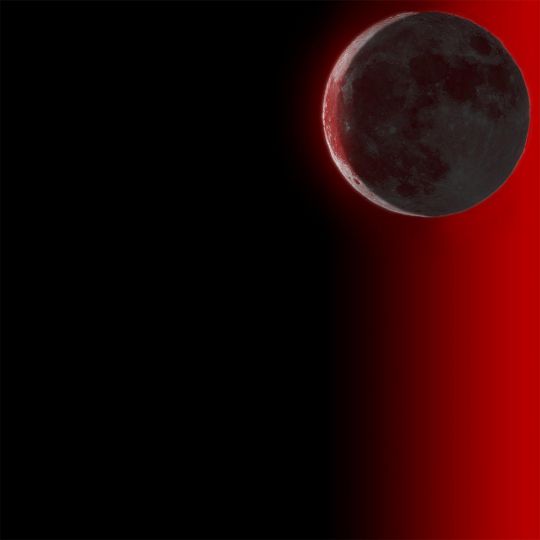
The book project grew from Rothman’s desire to explore this range of paradoxical emotions in relation to the Sierra Nevada: a new form of the sublime, rooted in a historical pictorial tradition, but shifted toward a contemporary eco-anxiety. His images are constructed in two stages: the first, contemplation and capture, often with a large-format camera; the second, digital manipulation, a metaphor for the human imprint on the environment. Subtly executed, the work presents landscapes that are sometimes washed-out, as if veiled in smoke, and sometimes overlaid with chromatic layers reminiscent of the anthotype process. At times, the colors defy reality: the sky turns ochre or green, the vegetation blue or violet. A menacing atmosphere emerges, suggesting an unknown disaster.
This digital work also aims to transform simple representation into experience: “I see these manipulations as similar to how memory or cognition works: when you experience something, you later process and reinterpret it.” By playing with the materiality of the image, Rothman engages with our visual relationship to the natural world and the ways it shapes its own becoming:
“It’s a way of breaking from the notion of the photograph as a neutral record of something ‘out there.’ These images acknowledge that perception itself is active: as we look, understand, and remember, we are constantly shaping the world around us. In that sense, the work implicates me—and all of us—in how the landscape exists. We participate in its perception and transformation.”
This approach, which has run through his work for over two decades, draws on the tradition of American landscape representation—particularly the West—whose imagery continues to shape our collective perception of nature today. A dialogue between past and present that extends even to the book’s cover: by borrowing the lettering of an Albert Bierstadt portfolio, Rothman situates his work within the living legacy of the American landscape imagination, this time transforming the sublime into a warning about the vulnerability of nature.
Zoé Isle de Beauchaine
The Sierra by Aaron Rothman
Published by The Eriskay Collection
40 × 292 mm
112 pages
EN
First edition: 800 copies