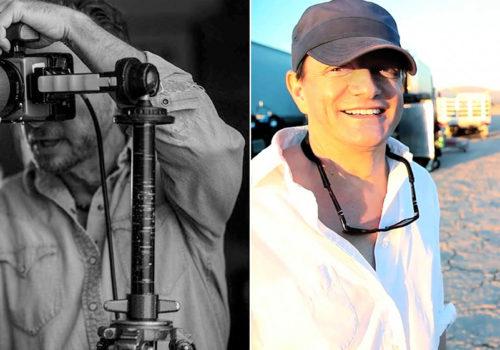
This is the fourth and last episode of the conversation between Sandro Miller and Matthew Rolston, during which the photographers, based respectively in Chicago and Hollywood, reflect on their beginnings in photography, the nature of portraiture and where they’re headed next.
Next question.
“What image represents to you today’s photographic world?”
[screen shows news photograph of Trump with fist raised after assassination attempt]

Photograph after attempted shooting of Donald Trump, Evan Vucci / AP Photos
[Sandro Miller]
This image is one of those that to me is emblematic of the state of where we are with photography right now. What can we believe? What’s believable and what’s not believable? I used to take a look at a photograph years ago, and if it was created by a reputable photojournalist, I’d be able to believe it– that it really, really happened. This was truth for me. Today, with how easily we can change and manipulate imagery with softwares now including AI, what are we going to believe ever again? It’s gone.
I understood what war really was about, the Vietnam War. I knew I didn’t want to go to war because of these photographs. The photographs that Salgado, James Natchwey and National Geographic did of famine, for example, I knew that I never wanted to be hungry. Those images damaged me. I grew up with imagery that I believed and that changed the way I thought about the world. Today, I feel like that’s all gone. I no longer can take a look at an image and truly believe that it really happened. It’s a shame.
[Matthew Rolston]
I feel differently. I feel that there is a thing called ‘expressive truth’ that is separate and apart from ‘objective truth’. All right? This image of Trump is a piece of propaganda. By the way, I just wanna say that it’s a rather magnificent photograph by itself. It looks like a Delacroix. I mean, it’s really incredible. Quite accidental. Obviously, this is not a setup. It’s a horrifying moment in our culture.
[screen shows Delacroix’ Liberty Leading the People]

Liberty Leading the People, Eugène Delacroix, 1830
By the way, if you’re curious to really delve into what these people are doing, just look up “propaganda technique” on Wikipedia. There’s a list from A to Z. It is everything that they’re doing. Every single thing listed alphabetically. Most of these techniques were developed by the Nazis, by Goebbels, and that’s exactly the playbook, if you’re curious, check it out.
Again, I feel differently. I don’t think that there’s ever been any objective truth in a photograph. There may have been expressive truth in Salgado’s imagery, but it’s still that moment out of time. It’s not living. It’s not real. It’s not 360. We don’t know what was behind the camera, around it. We can’t know that. A single photograph can encapsulate the history of an event for the public. I’m thinking of the Napalm Girl.
[screen shows ‘Napalm Girl’ image]
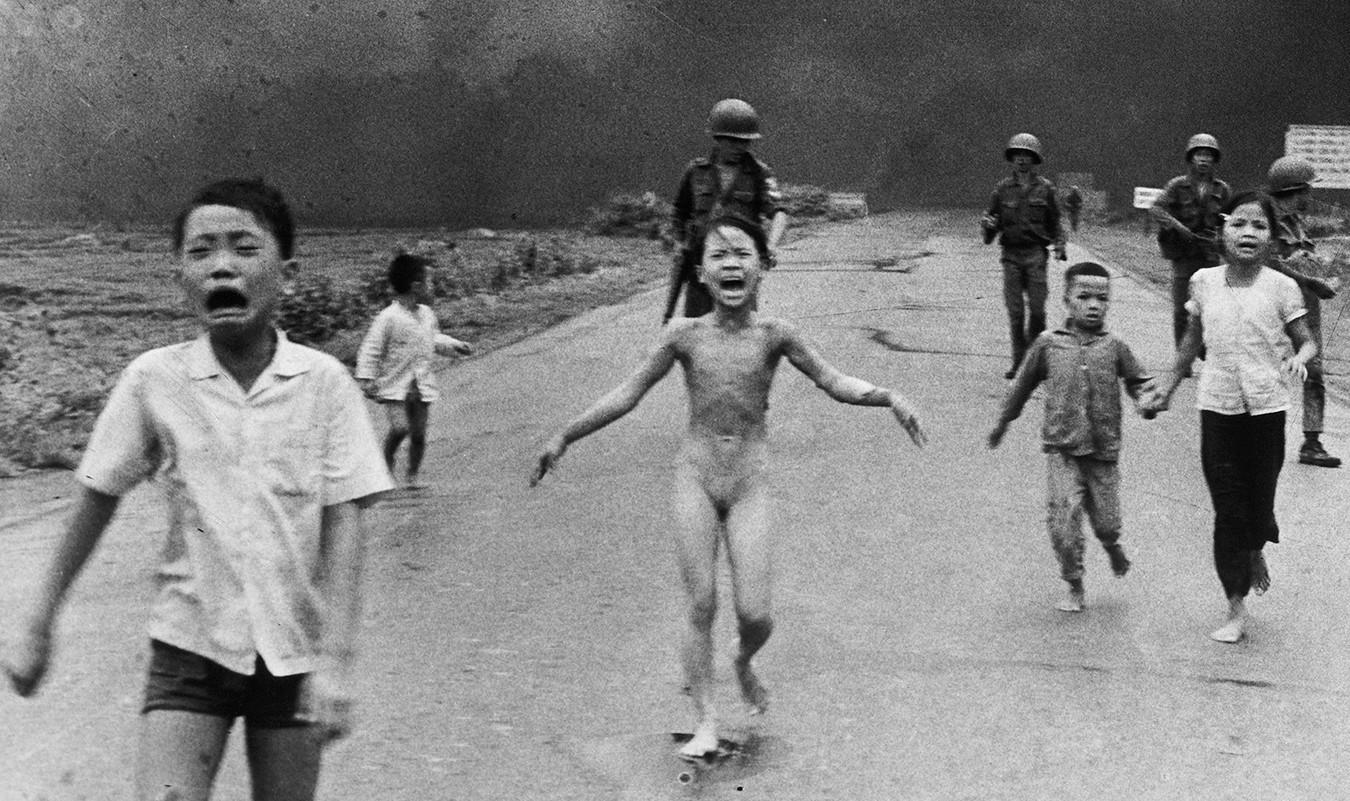
Nick Ut, The Terror of War, June 8, 1972
Everybody knows this image. And it’s considered to be an objective and horrifying image of the Vietnam War. In fact, there’s dispute about who the author of that image is, because the man who has taken credit for that photograph all these years was one of a pool of Vietnamese photographers that were there, and it may have been someone else in that pool that actually took this picture.
So let me be clear. There is no objectivity in a photograph. But we are hardwired to believe them because of survival instincts. You know, “I’ll believe it when I see it.” Well, don’t believe it.
That doesn’t mean you can’t have an expressive truth, though. That’s the work of the artist. And I’ll show you what I think is the current state of the photographic world.
But before we look at it, I will say that I am now abandoning the term ‘photography’ entirely, in place of the term I mentioned earlier, ‘lens-based art’. If it came through a lens or appears to have come through a lens, which is a very particular condition, then it’s lens-based art. Photorealist painting is included in that and so is photo-real AI and so is actual photography. To me, it really should all be under the same umbrella.
Let’s take a look at what I think is the state of the art of AI, some of the best I’ve ever seen. This, to me, is the state of photography today.
[screen shows Janos Deri video]
These are not people. It’s not photography or film. It’s lens-based art, and it’s pretty powerful.
[Sandro Miller]
All AI. Nothing real about that.
[Matthew Rolston]
Now, the man who made this AI, his name is Janos Deri. He’s Hungarian and operates out of Paris and Milan. He’s got a pretty big commercial practice, a great background in photography, filmmaking, and a specialist in automotive and dance, all of which shows in this work.
[Audience]
Can you show it again?
[Matthew Rolston]
Yes, absolutely. I want to say this before we play the video again. Great image makers make great images regardless of the tools. This was created as a showcase reel for the Nike Corporation, who then hired Deri for a major worldwide campaign.
I think it has a tremendous sense of humanity, even though there are no humans involved.
However, I don’t think that reproducing reality is the chief and greatest use of AI. The greatest use of AI is to create something that doesn’t exist. This video could have been created by Janos Deri with a troupe of dancers and a choreographer like Pina Bausch, and that could have been done for real. It’s very well done. But what about fantasy?
If we’re gonna create fantasy imagery in Hollywood today, or in photography, there’s going to be so much CGI and green screen… at this point, what authenticity is there in it anyway? So let’s look at an AI fantasy piece.
[screen shows Marcvs Studio’s Garden of Earthly Delights video]
This artist, Eric Loréal of Marcvs Studio, took Bosch’s The Garden of Earthly Delights, and turned it into a video. And I think it’s a great example of how fantasy can be served very well by AI.
There’s an interesting future in store for us in the visual arts, and it’s just beginning. You know, it reminds me of the argument against photography in the 19th century. They said “photography is not art”. It’s exactly the same prejudice against this form.
It all depends on whose hands it’s in. AI is so interesting because it’s a paradox. It lowers the bar and it raises the bar at the same time. It lowers the bar: anybody with a prompt can make a pretty decent looking image. But for those who are visually literate, those who really think deeply about images, it raises the bar. To make a breakthrough image is now exponentially more difficult. That raises the level of visual discourse, in my opinion. So I am not anti-AI, even though it might kill us all. [laughs]
[Sandro Miller]
I wish we had the time to debate this a little bit more, because Matthew and I look at AI completely differently. I look at it as the destruction of an industry, and Matthew looks at it as a new way to create. It’s a very interesting argument, but we’re not gonna have time to go into that too much today.
[Matthew Rolston]
Next question:
“Please explain the significance of the title of your new book.”
[Sandro Miller]
[screen shows page-turning video of Sandro’s new book]
Born Catholic and having to recite the Lord’s Prayer regularly, I was confused by the phrase, “on Earth as it is in Heaven”. The confusion for me came in the three words, “as it is”.
Heaven: a place where the divine is fully realized. A state without suffering, death or corruption. A place of peace, love, joy and no racism. On the other hand we have Earth. Earth is in a state of racism, sexism, religious persecution, class discrimination, the oppressions of minorities, on and on.
Earth does not mirror Heaven’s values, thus my title On Earth As It Is NOT In Heaven. With the inevitable approaching us all, death, the thought of heaven does often cross my mind. I want to believe that when I transition from Earth my hopes that there will be Heaven are true. When I started thinking about my title for my book, I remembered using a search platform to inform me of how many times the word ‘Heaven’ had been used in songs, film titles and book titles. Because of its positive and hopeful nature, the word was used so many times that the search engine could only give me estimates.
[Matthew Rolston]
Bravo, Sandro!
[to the audience] I told you this is a man who ‘rages against the machine’, didn’t I?
[Audience]
[Laughs]
[Sandro Miller]
Ok Matthew, over to you. What’s the significance of the title of your new book?
[Matthew Rolston]
Well first of all, an observation…
Another interesting coincidence. Isn’t it curious that both of our projects have titles that quote, perhaps ironically, from the Bible?
[screen shows image of cover of Matthew’s new book]

Vanitas: The Palermo Portraits by Matthew Rolston, Nazraeli Press, 2025. Monograph, front cover
My project is called Vanitas: The Palermo Portraits. Two parts, let’s break that down. “Vanitas” has several meanings. Vanity, we know what that means. Vainglory, falsehood, self-deception. Another more philosophical meaning is nothingness.
More importantly, it’s a direct reference to a well-known passage in the Bible, Ecclesiastes, “vanity of vanities, all is vanity”. Of course, everything is open to interpretation, but most people look at this passage as critical of humanity’s desires for status, wealth, all the stuff you ‘can’t take with you’.
But for me it goes beyond that. What is the ultimate human vanity? The desire to cheat death. That’s what it is to me, anyway, and that’s the major statement behind this work.
You have to remember that I come from Hollywood. My background is in glamour photography. The very nature of Hollywood glamour photography is to actively denies aging and death. Think about it. “The stars never die”. Of course they do. “The stars are eternal.” No they’re not, because there is no eternity. And then all the tricks of the glamour trade: makeup, lighting, performance, retouching. It’s all a denial of aging and death, and a celebration of so-called “eternal youth”.
I couldn’t have arrived at this work, Vanitas, without having gotten to a point in my life where I was ready to stop and question what I had been doing for most of my professional life.
I talked before about how attracted I am to contradictions. Well, what if we didn’t deny death and aging? What if we just accepted it? I wanted to explore that object from both sides. It’s always the flipside that completes the work.
Part two of the title explains itself – The Palermo Portraits. It’s my way of acknowledging the location of my subjects and quietly pointing to the long history of artists interested in depicting the mummies there. It’s pretty interesting.
[to Sandro] Did you know that none other than Richard Avedon photographed there in 1961 for Harper’s Bazaar?
[screen shows Avedon image from the Palermo catacomb]
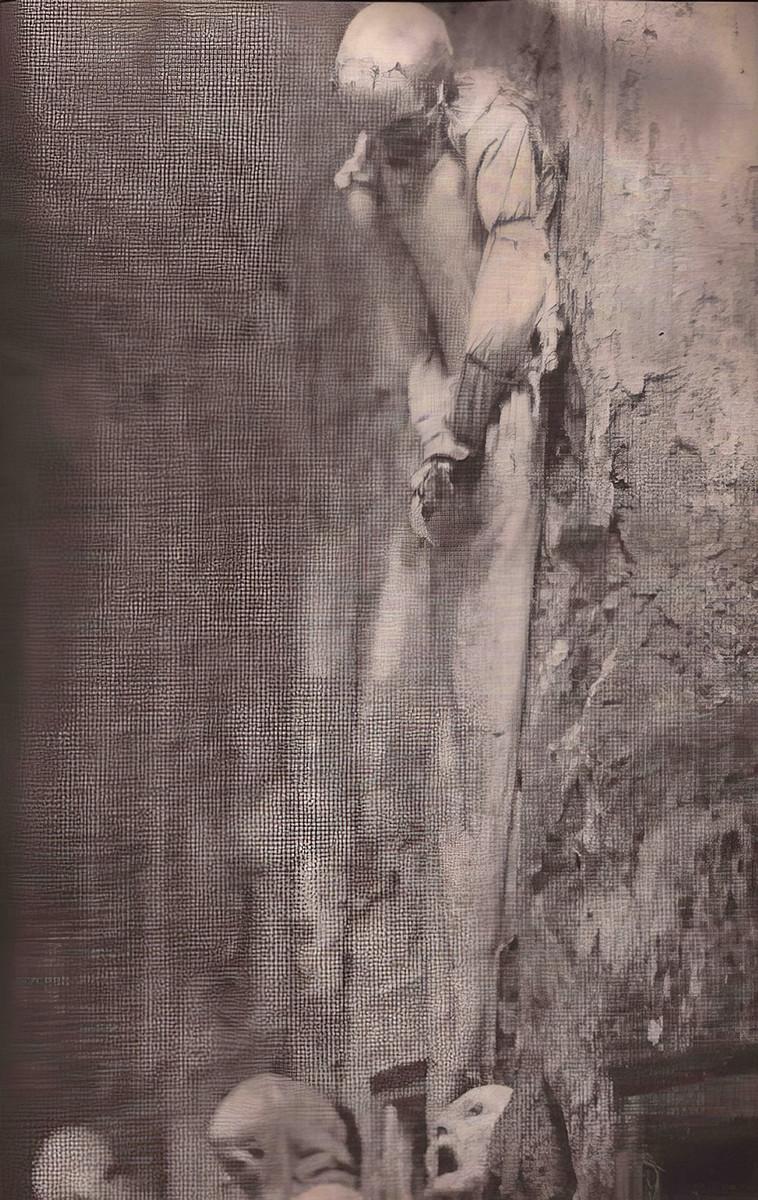
Richard Avedon, Observations on the Capuchin Catacombs 1, 1961
And that the photographer Peter Hujar was there with the artist Paul Thek, photographing in ‘63?
[screen shows Hujar image from the Palermo catacomb]
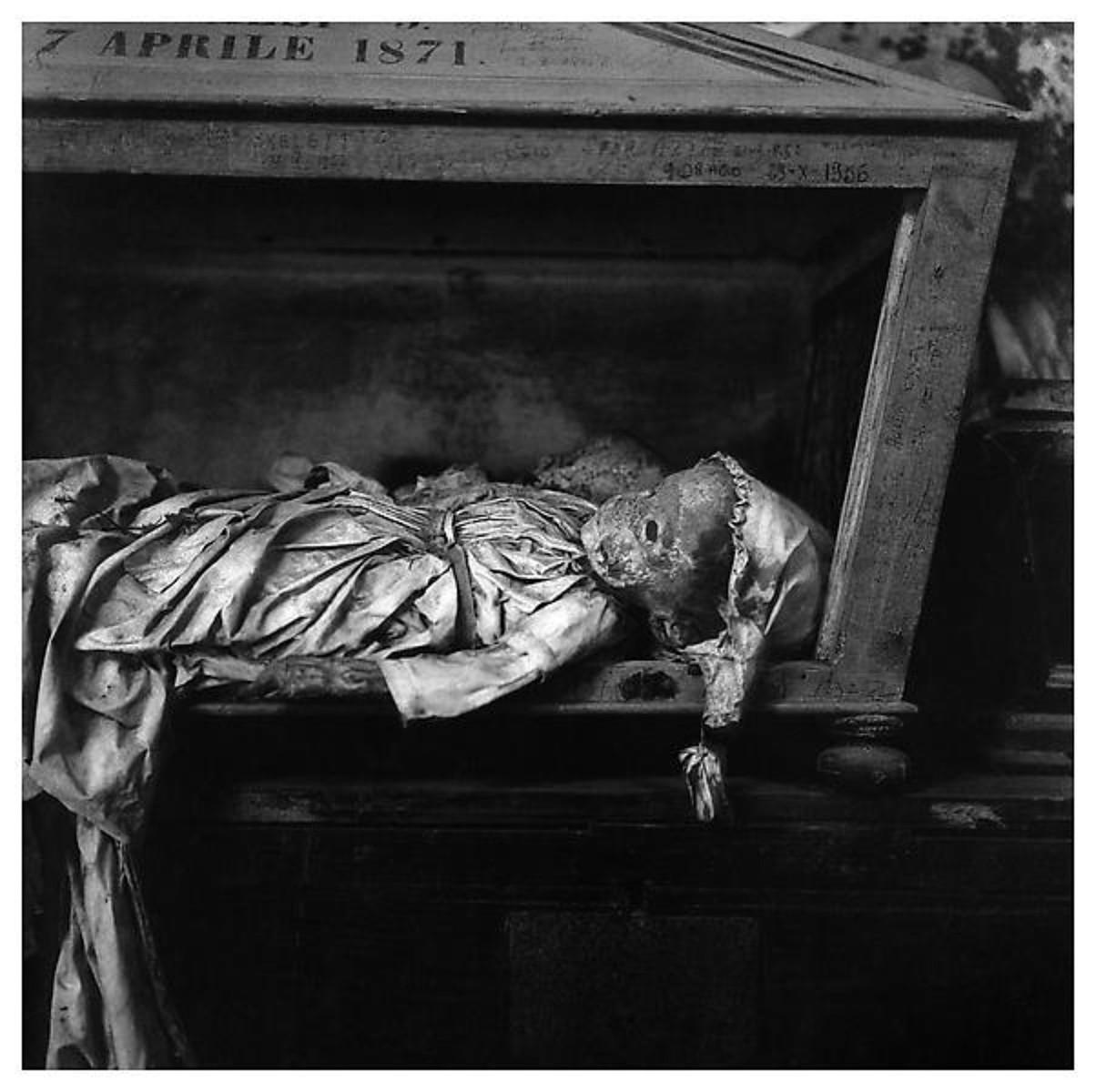 Peter Hujar, Palermo Catacombs #4, 1963
And in ‘76, German artist and photographer Sigmar Polke shot a series there.
[screen shows Polke image from the Palermo catacomb]
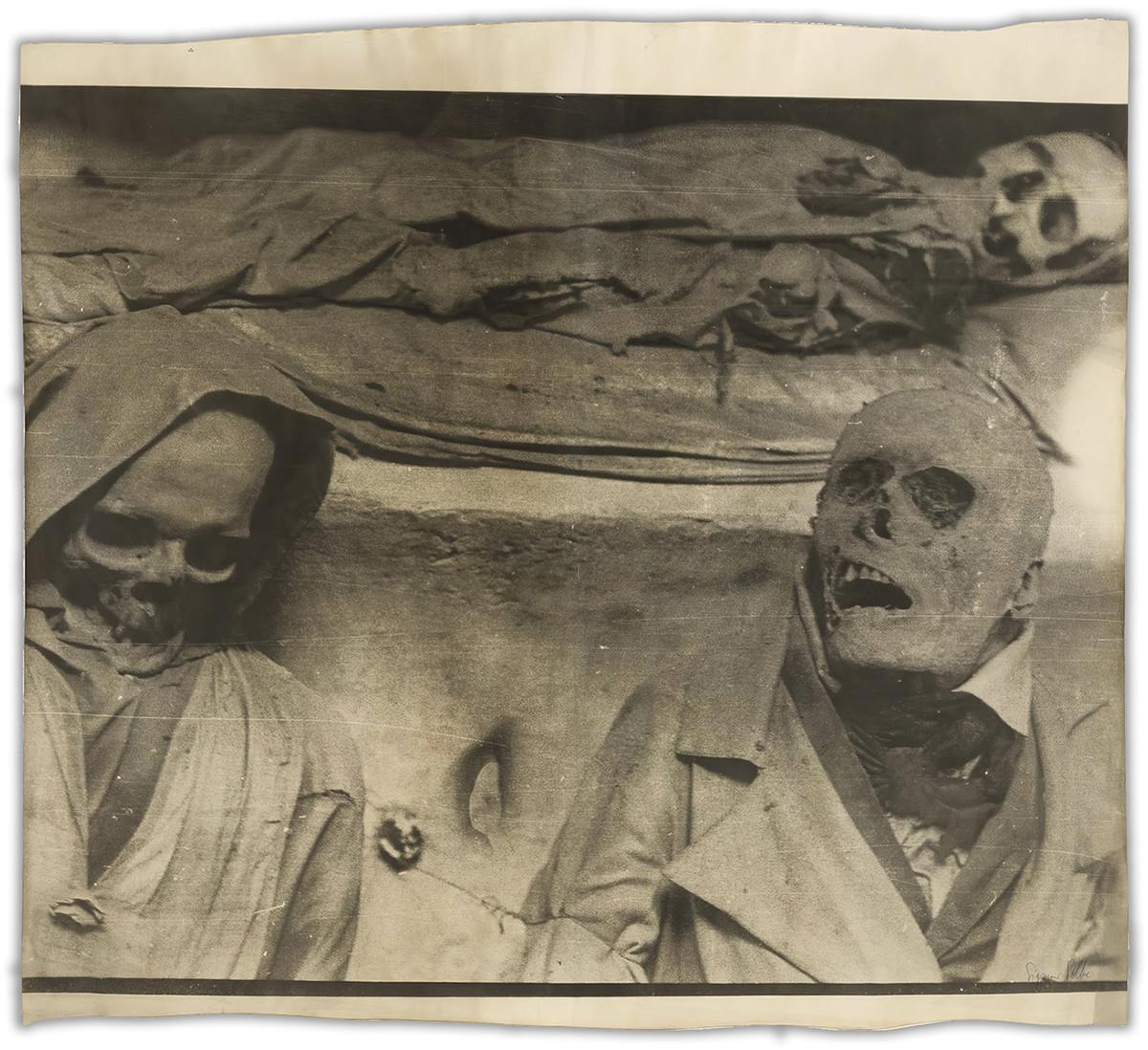
Sigmar Polke, Untitled (Palermo Series), 1976
The list goes on. Each depicting the place in their own way.
Hey, let’s not forget this guy [gestures to Sandro].
[screen shows Sandro’s image from the Palermo catacomb]
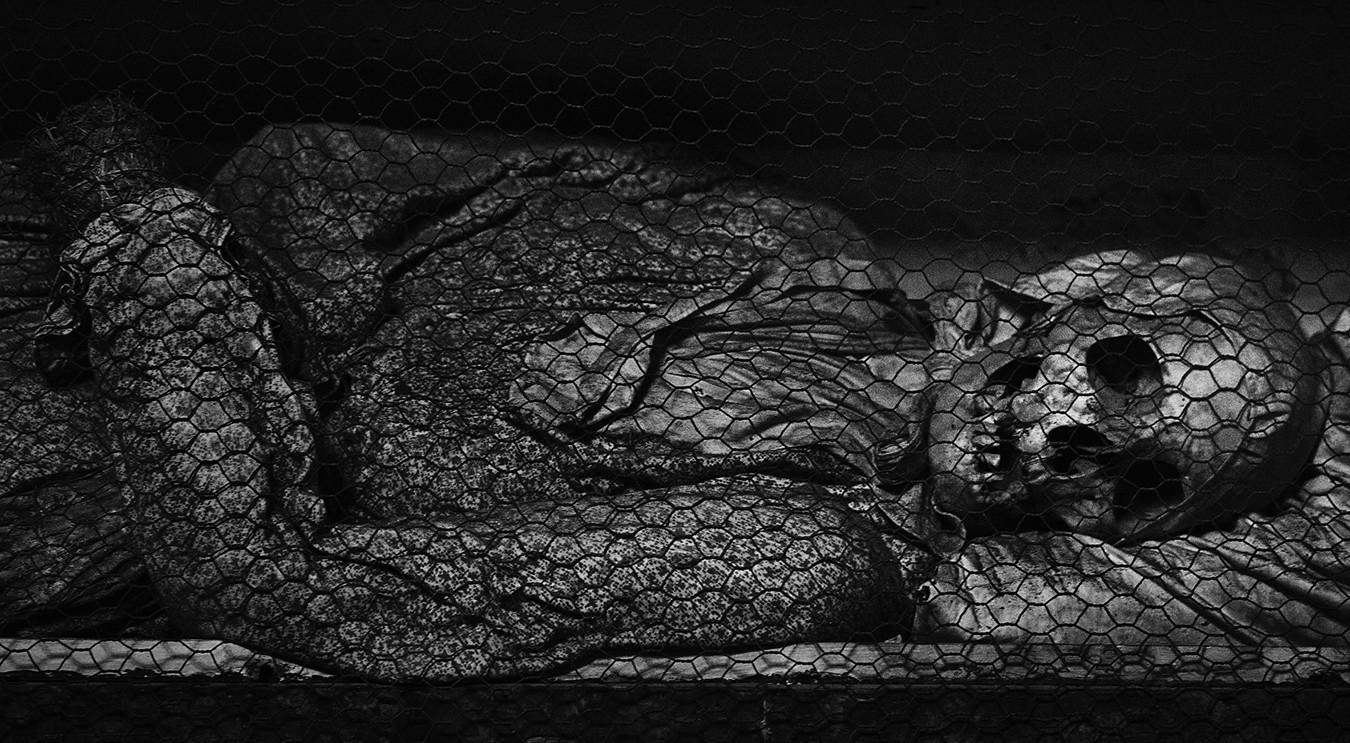
Sandro Miller, At the Catacombs, 2023
Talk about coincidences!
Can you imagine that we both have books coming out right now with titles inspired by the Bible, and both have images of the mummies of Palermo?
No, we did not plan this out!
All right, Sandro, next question:
“What is the photograph, or series of photographs, that were the most challenging for you to create?”
[screen shows five of Sandro’s images for the Truth, Justice and Hope Initiative]

Sandro Miller, Tyann Salgardo, 2016 from Action in Jury Mothers
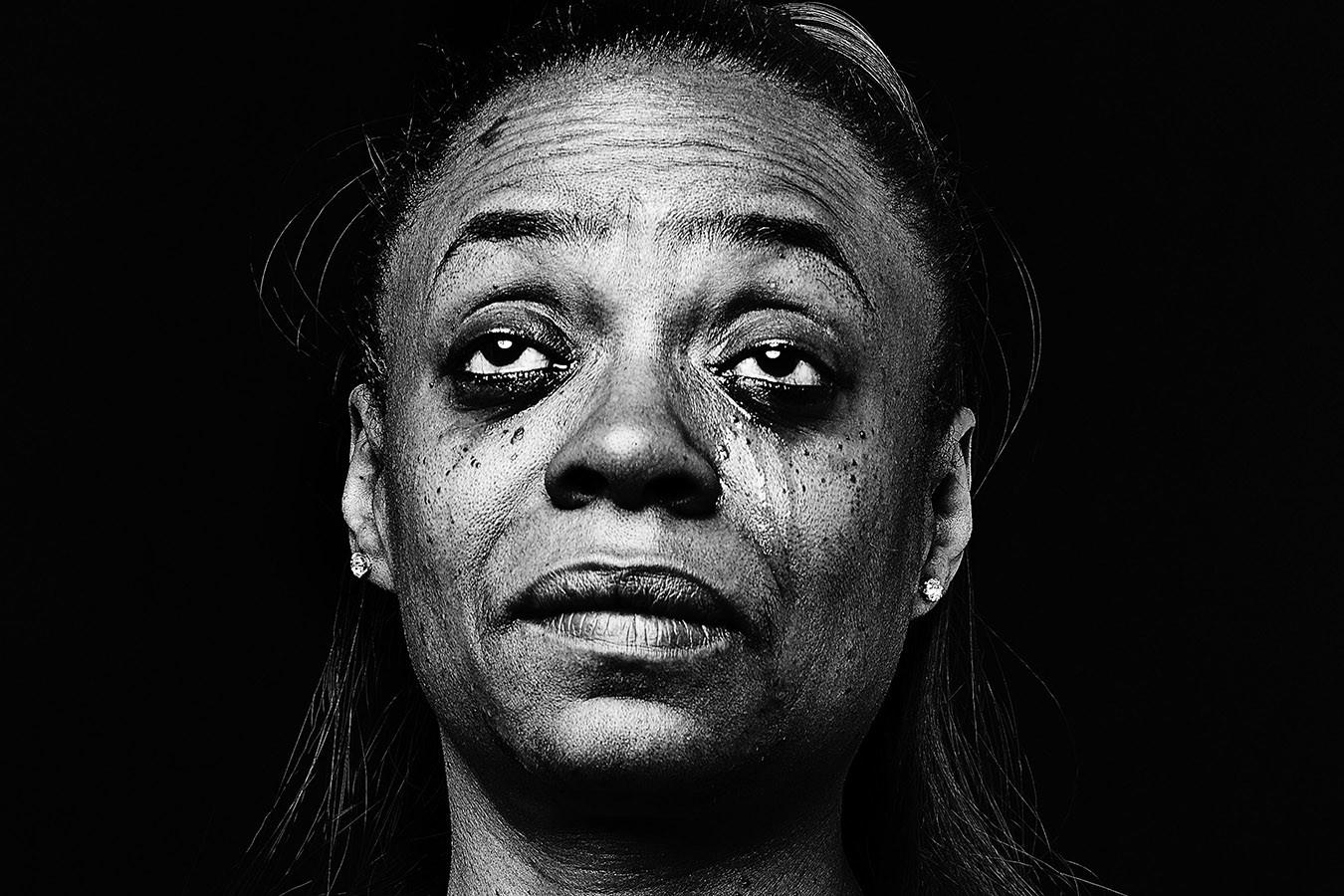
Sandro Miller, Gloria Pinex, 2016 from Action in Jury Mothers

Sandro Miller, Merilla Jones, 2016 from Action in Jury Mothers

Sandro Miller, Samaria Rice, 2016 from Action in Jury Mothers
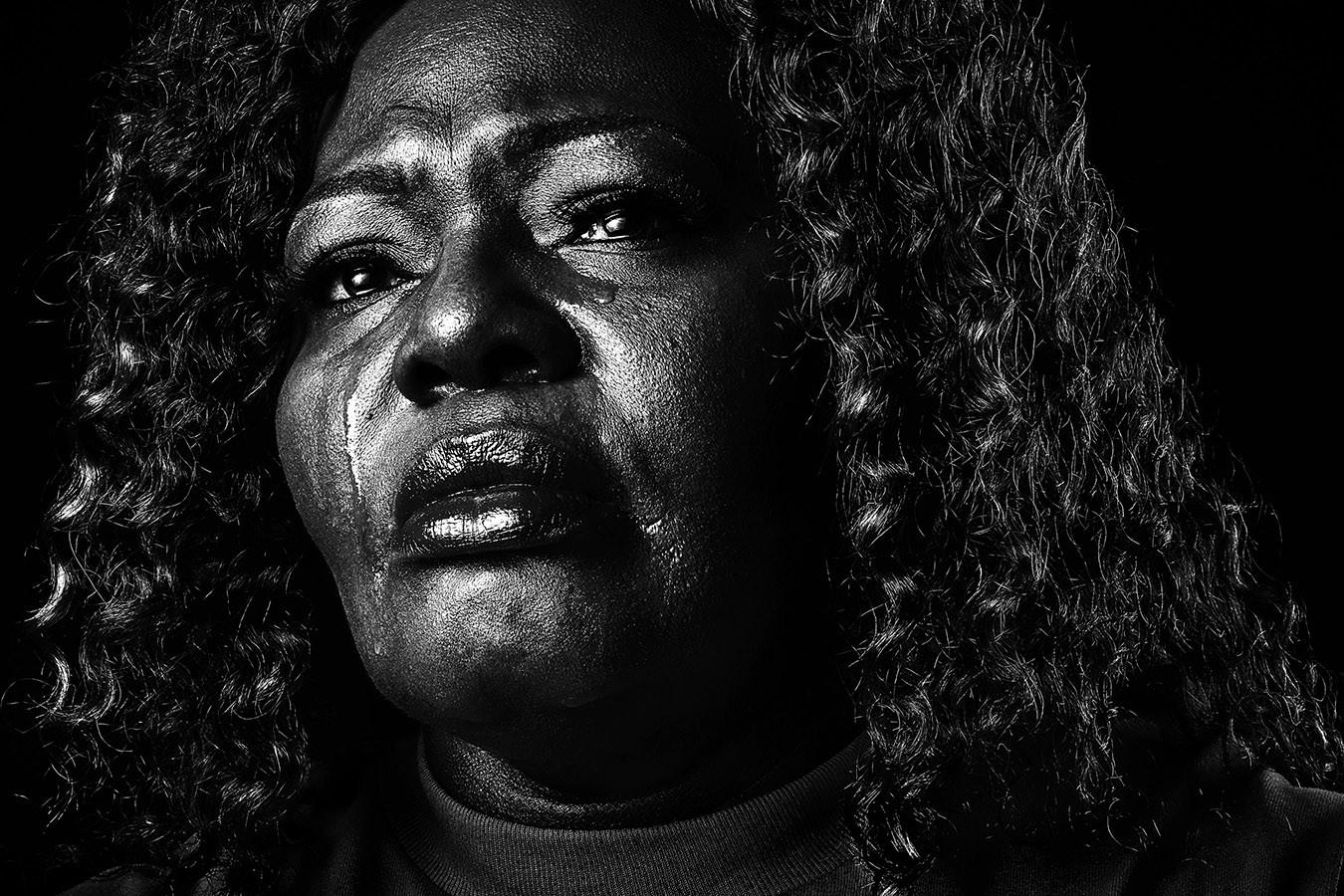
Sandro Miller, Kimberly Hand-Jones, 2016 from Action in Jury Mothers
[Sandro Miller]
In 2017 an activist organization had gathered 27 women of color who had lost their black or brown sons or daughters to unjust police killings. 27 mothers in my studio all sharing the same painful, grief-ridden, stories of injustice.
I was filming them telling their stories of losing their children and then doing portraits of each mother or female relative of the lost kids.
I cried while I was filming, listening to the stories of mothers losing their children, many of them college students, wonderful athletes, great citizens.
None of these kids deserved to be shot in the back, strangled, beaten or tortured.
Because their skin was not white, this racist country allowed this to happen over and over and over again.
Towards the end of our session all the women gathered in a circle and sang Amazing Grace. If you were not crying, you have no heart.
I wept that day in empathy and compassion. The stories they told were heartbreaking and haunting.
[screen shows Sandro’s teaser trailer video for the Truth, Justice and Hope Initiative]
[Matthew Rolston]
Wow. The edit of that video is so on point.
[Sandro Miller]
Okay, Matthew. Your turn. What was your biggest challenge?
[Matthew Rolston]
I have to say it was this current project, Vanitas. Not just the shoot itself, and grappling with all the, as they say, “big questions”. Not the logistics, which were extreme. I had to personally fund a kind of ‘expedition’ to Palermo with a crew of ten, some from Los Angeles and some from Milano, including a film crew. Not the post-production and printing, etc., which took men ten years to get happy with. Not the multi-venue exhibition we set up last year. I could go on. There were many, many challenges with this project.
[screen shows short behind-the-scenes video of Matthew’s new project]
But THE challenge was finding acceptance of this work. The denial of death runs deep in our culture. I had a major Parisian gallerist look at the work and say to me, “it’s obvious you’ve had a successful commercial career – you’ve built a beautiful product shot”. Can you believe that?
[Sandro Miller]
Wow!
[Matthew Rolston]
And I had a German gallerist – in Berlin – refuse to even look at it. She only wanted to see my glamour portraiture.
And given my background as that Hollywood glamour guy, I think there has been a built-in mistrust of anything that I might have to say, conceptually, on this subject.
I’m still grappling with that.
This work may take time to ultimately find its audience. That doesn’t mean it hasn’t been seen, written about, reviewed, regarded, but I’ve only seen it truly understood by a handful of people, on very rare occasions.
That’s an honest answer.
Okay, next question:
“Can you name one of your photographs above all that could serve as your ‘signature’ image?”
[Sandro Miller]
[screen shows Sandro’s Gangster, a portrait of a man with a raised middle finger]

Sandro Miller, Robert “Gangster” West, 1991 from the book, American Bikers
If I had to choose one image to serve as a visual signature, I would have to say it’s this portrait from my American biker series titled Gangster.
Irving Penn once said: “A good photograph is one that communicates a fact, touches the heart and leaves the viewer a changed person for having seen it; it is, in a word, effective”. In my collection of images, no other photograph does that quite like Gangster.
Gangster has broad shoulders, long hair, with gorgeous Robert Redford eyes.
He stares down the barrel of my lens giving the camera the finger, the proper way to give the finger. The Nazi swastika symbol tattooed on his chest.
The photograph became one of my most famous images after Tina Brown, as we discussed earlier the then Editor-in-Chief of The New Yorker magazine decided to run it in a double page spread in The New Yorker in 1995.
The readers of this literary magazine became unraveled at the use of such a vulgar portrait in their intellectual magazine.
The photograph, like much of my work, is raw, gritty and tough to look at. It is emotionally impactful and hard to forget. It speaks of humans that live on the other side of the tracks, hardened and rough, the ones you wouldn’t expect to see in the glossy pages of your home, in The New Yorker magazine.
Thank you Tina Brown for helping make this an iconic image.
[Matthew Rolston]
Okay, I guess it’s my turn.
[screen shows Matthew’s Cyndi Lauper, ‘headdress’ portrait]
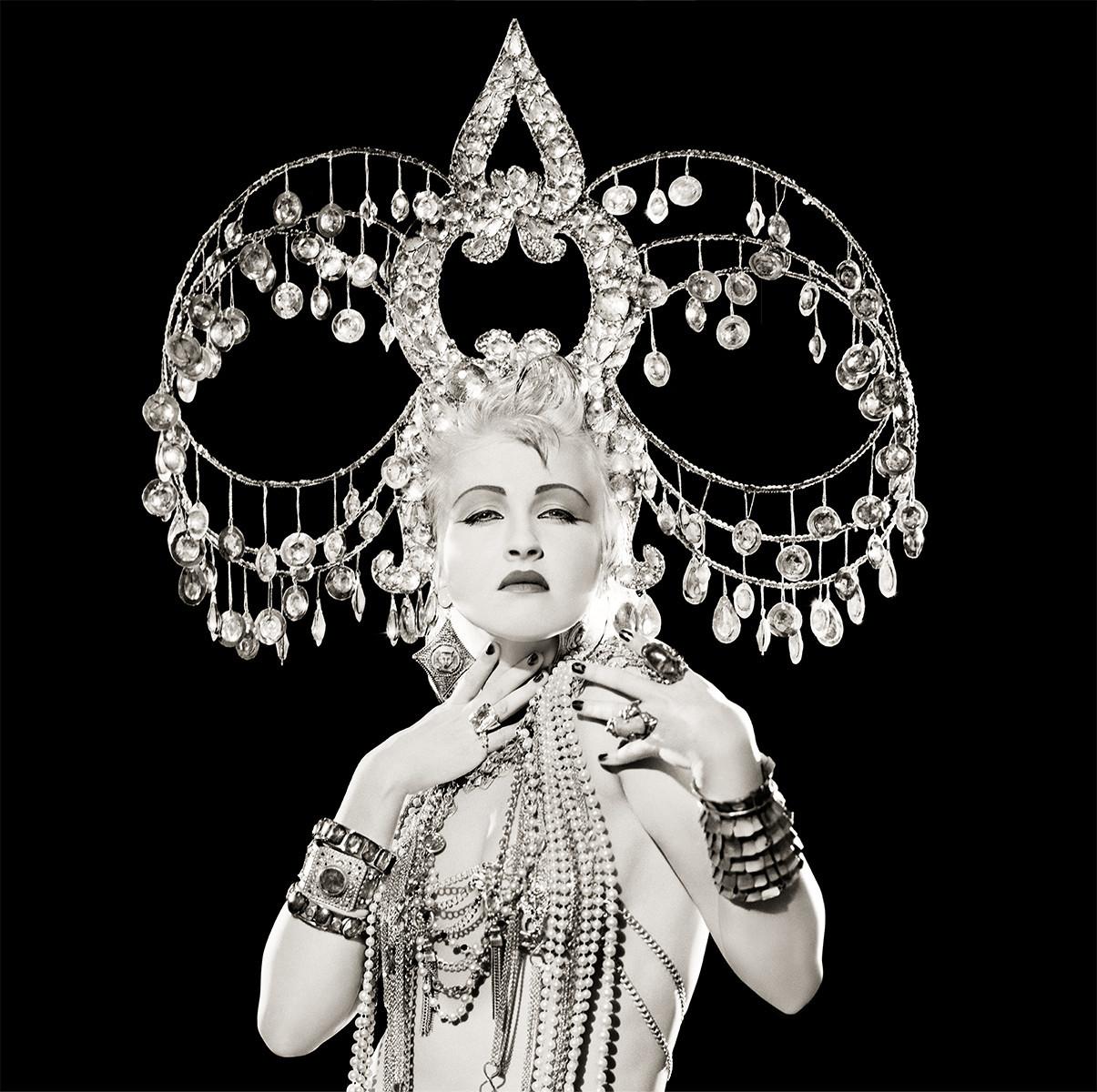
Matthew Rolston, Cyndi Lauper, Headdress, Los Angeles, 1986
From the series Hollywood Royale: Out of the School of Los Angeles
I’ve had a long career. A lot of chapters. A lot of looks. Long enough to know that no single image can truly sum up my career. There are just too many eras, too many experiments.
Still, when people ask for a “signature” image, and it’s come up before, I usually end up talking about a portrait I made of Cyndi Lauper in 1986 for Interview.
In the 1980s, I started revisiting Old Hollywood imagery—not out of nostalgia, but as a way to talk about contemporary celebrity and constructed identity. I wouldn’t have used those terms at the time, that’s me talking now.
With Cyndi, I was referencing the silent era, specifically silent glamour star Mae Murray. Art Deco glamour. Exaggeration. The whole thing.
[screen shows image of Mae Murray in a headdress]
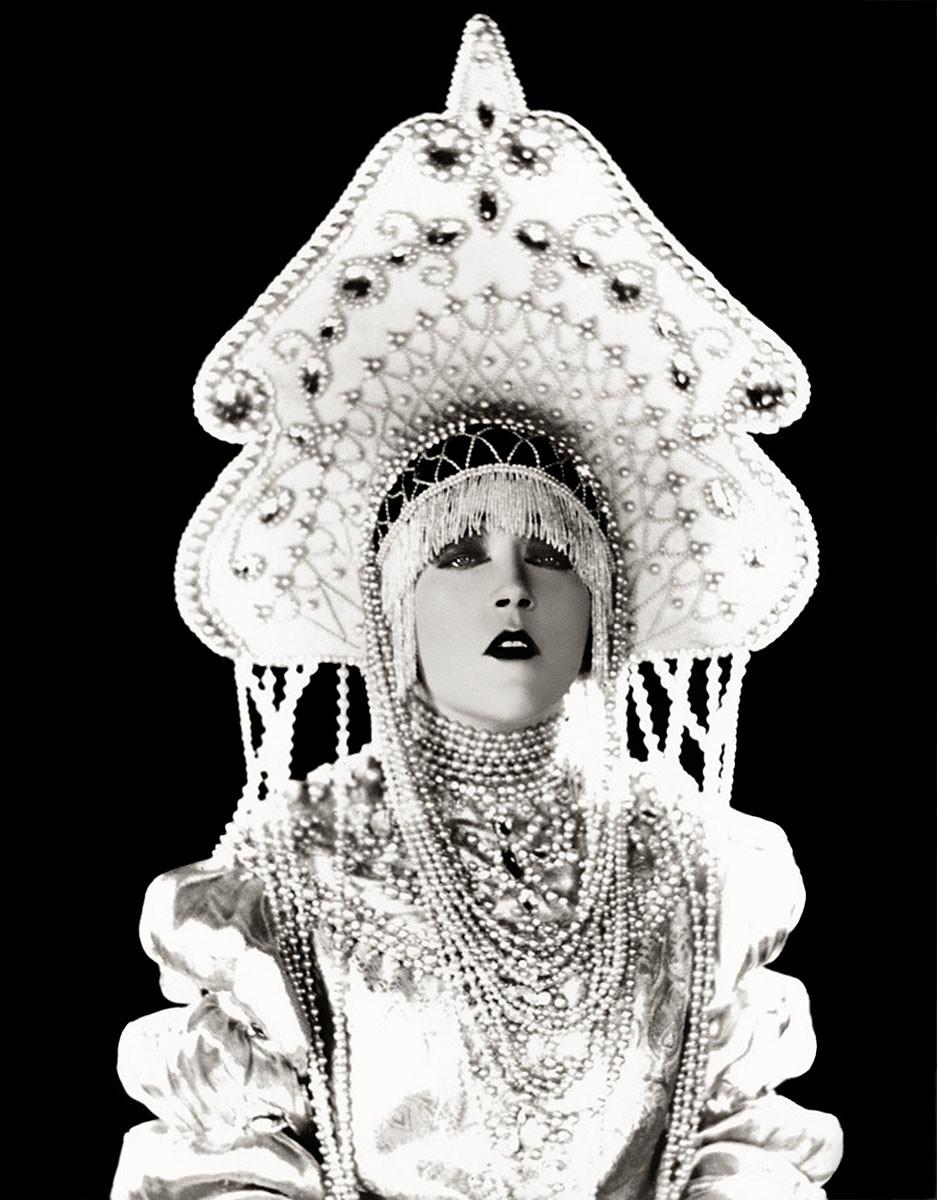
Photographer Unknown, publicity still of Mae Murray as Olga Farinova in Fashion Row directed by Robert Z. Leonard, 1923
Which was, of course, ironic.
Because Cyndi… [to the audience] ..is Cyndi the quiet type? Do you think of her as a silent star?
[Audience]
[laughs]
[Matthew Rolston]
Cyndi is, and always has been, anything but silent!
I just took that contradiction and pushed it, hard. You know I love a good contradiction.
At the time, I wouldn’t have said I was working conceptually. I didn’t have that vocabulary yet.
Looking back, though, that image marks the beginning of a more conceptual approach to portraiture for me, whether I knew it or not at the time.
Years later, this photograph appeared in a retrospective of my first decade that I titled Hollywood Royale. The title was another easter egg with a couple jokes included.
Hollywood “royalty.” There happens to be a famous building in Hollywood called the El Royale Apartments. It’s where Mae West lived, and a bunch of other early Hollywood stars.
[screen shows image of the El Royale building]

Entrance to the El Royale apartments in Hollywood c.1950s
And then there’s another layer. A nod to Tarantino’s Pulp Fiction and the “Royale with Cheese” scene.
Because “Hollywood Royalty”? Let’s be honest. Isn’t there something a little cheesy about that?
[Audience]
[laughs]
[Matthew Rolston]
Last question:
“What’s next for you?”
[Sandro Miller]
Currently I am working on three projects:
[screen shows three images from Sandro’s I Am Beautiful]
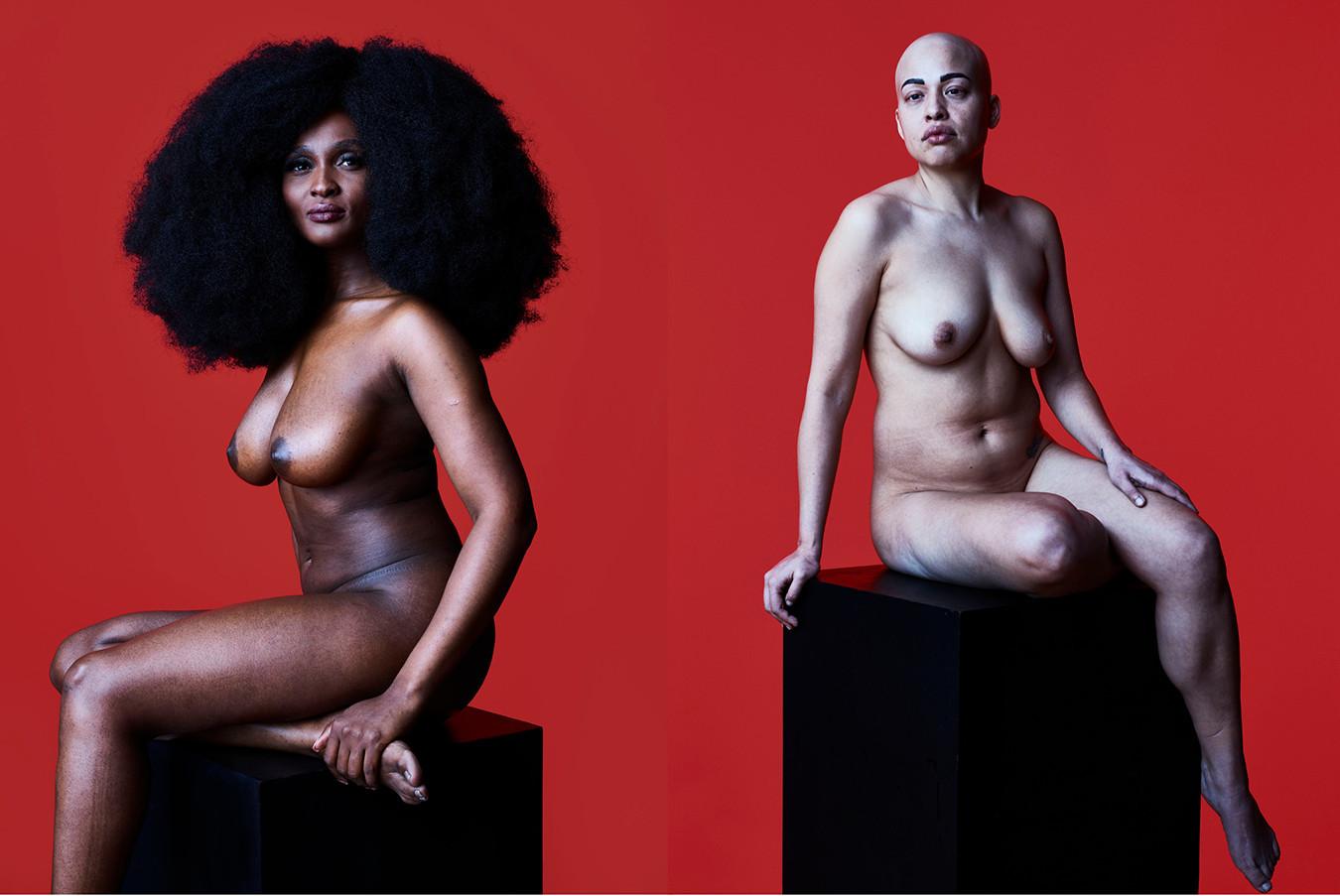
Sandro Miller, Iris & Ne’Tosha, I AM BEAUTIFUL, 2025

Sandro Miller, Brianna & David, I AM BEAUTIFUL, 2025
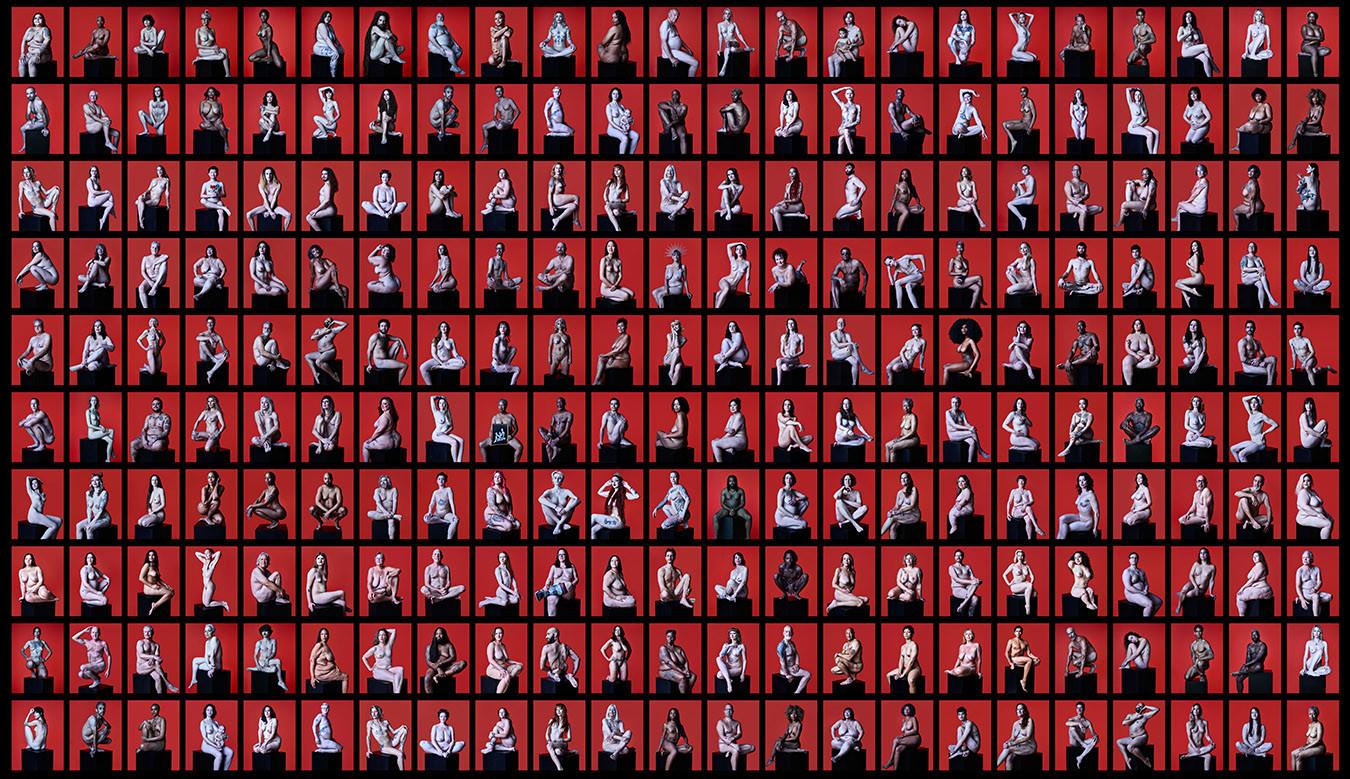
Sandro Miller, I AM BEAUTIFUL, 2025
I Am Beautiful is a series of 240 portraits, nudes of people proclaiming their beauty. People of all genders, colors, cultures, sizes and handicaps. People that believe they are beautiful just the way they are. It’s a testimony to the beauty that this world is made up of. It’s about acceptance and love for yourself and your fellow human beings.
[screen shows three images from Sandro’s Steppenwolf 50th anniversary book]

Sandro Miller, John Michael Hill, 2024, Steppenwolf 50th Anniversary
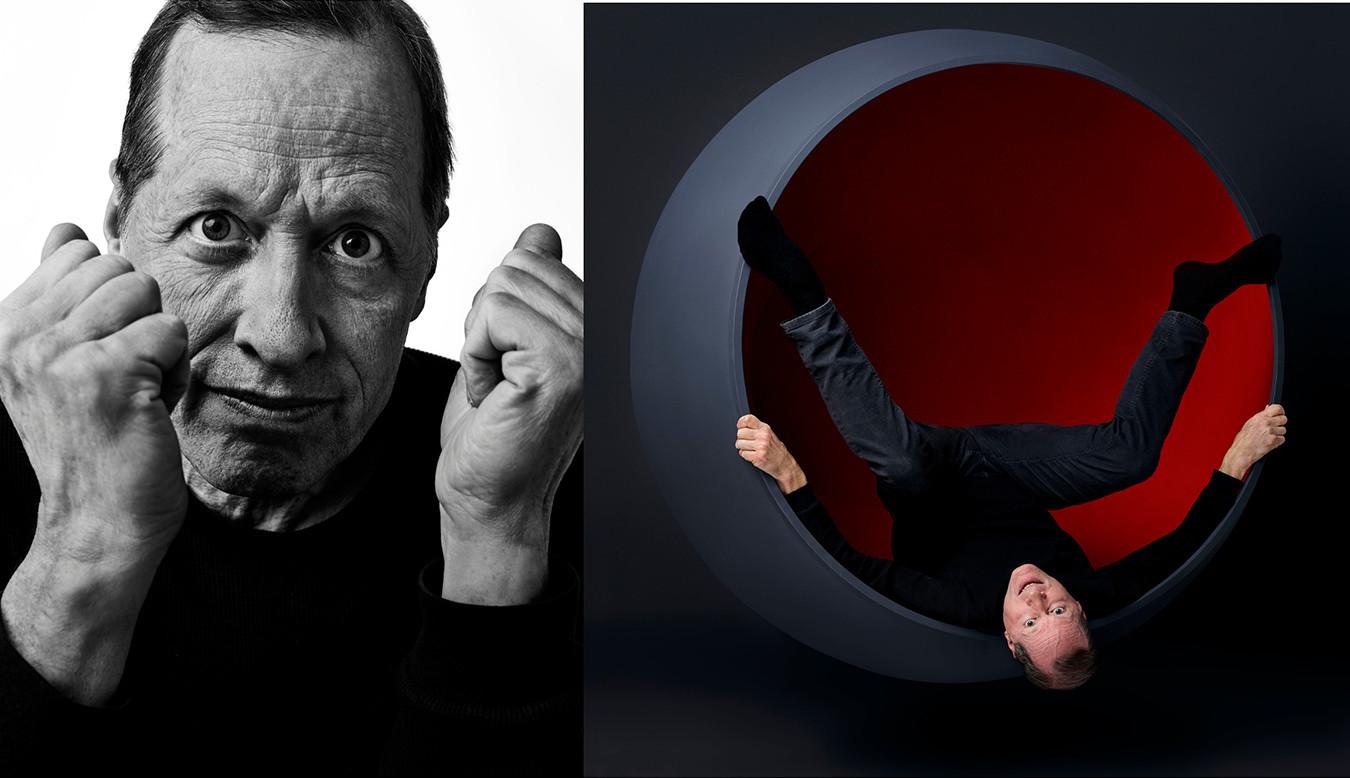
Sandro Miller, Tim Hopper, 2025, Steppenwolf 50th Anniversary
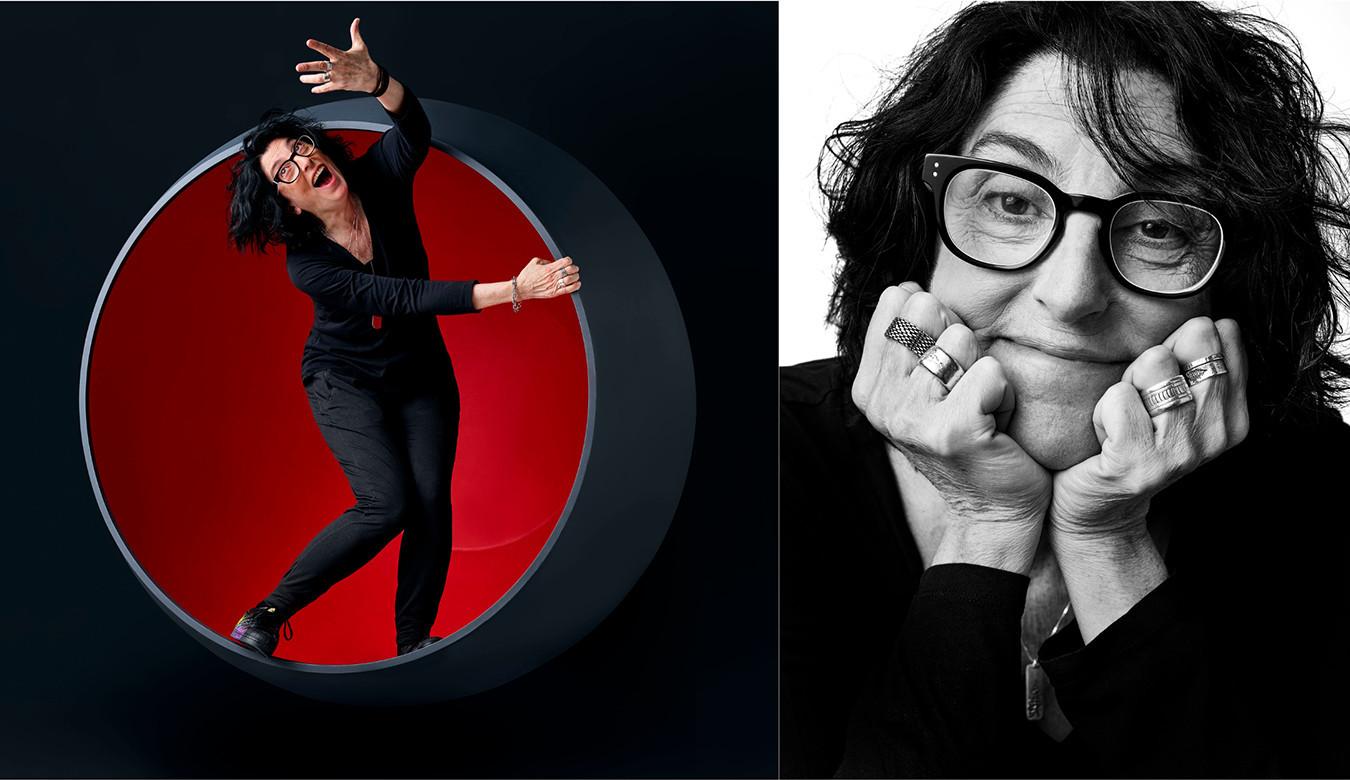
Sandro Miller, Tina Landau, 2025, Steppenwolf 50th Anniversary
Secondly I am working again with the great Chicago-based Steppenwolf theatre company. It is their 50th anniversary, and together we are creating a portrait book of the existing ensemble.
[screen shows poster for Sandro’s Mark Hauser documentary]
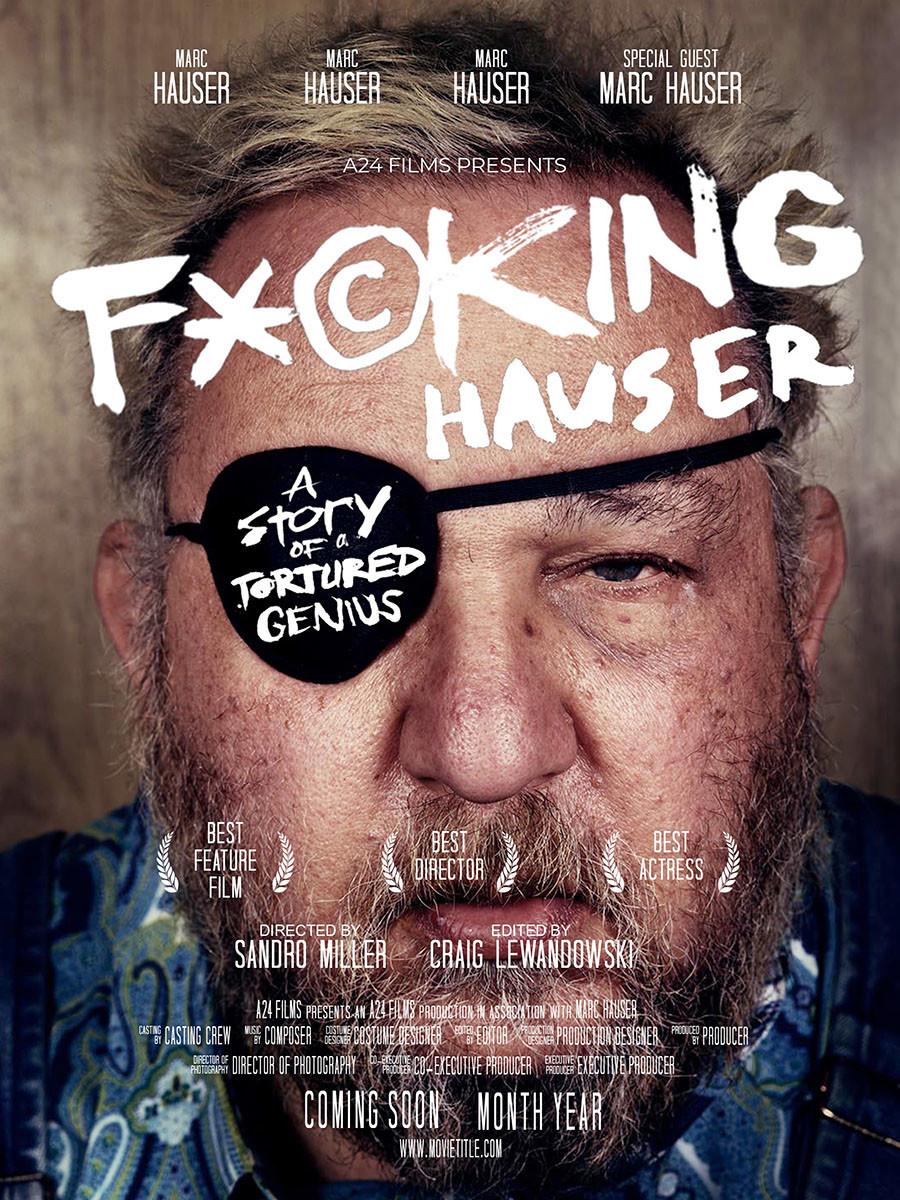
Sandro Miller, F*@KING HAUSER, documentary poster, 2026
Lastly, I will be finishing a documentary I have been working on for the last 6 years. The documentary tells the story of the tortured soul of an iconic photographer of the 70’s, 80’s and 90’s. A photographer that was a prodigy at 16 years old. His career for 25 years – the who’s who of the world. His name is often mentioned along with Irving Penn and Avedon. Marc Hauser lived a life that can only be dreamed of. After years on top, a long battle with drug addiction, gambling addiction and food addiction, Marc lost it all. He made a comeback in 2008 shooting GROUPON portraits for 100.00 per portrait and survived another 10 years before he finally succumbed to his demons.
Matthew, what’s next for you?
[Matthew Rolston]
Going forward, my focus is now on legacy. That has several parts. Arts education, scholarships, the establishment of a private foundation, publishing, fine art projects, and many other things.
Like I said, one element is arts education, and for that I’m actively teaching an original class that I wrote at my alma mater, ArtCenter. I’m in my tenth year of this! Everyone thinks that because I’m primarily known as a photographer that I would be teaching photography, but that’s not the case. At all.
I’m teaching a communications class. It’s called The Power of Pleasure: Decoding the Art of Visual Seduction, and it circles around the mass communications of fashion, beauty and luxury products. In particular, fragrance.
In the world of mass communication, there’s no more creative area than fragrance advertising. I mean, think how far you can go into what I call the ‘poetics’ of communications! Maybe some other categories go fairly far, like high-end automotive or spirits, or super-prestigious timepieces, but really fragrance beats all that in terms of being able to make a piece that’s almost like art.
Let me show you what I’m talking about. Let’s take a look in a second at a student piece from my class. Before I show it, a little preamble.
My class works as if we’re an ad agency specifically for high-end designer fragrance. The student projects are spec spots for real brands and products, ones that I select for the students. It’s as if I’m the head of the agency, its chief creative officer, and my students are my creative directors-slash-makers.
Only eight students at a time, so it’s very intimate.
Our last semester, I chose the French fashion house Mugler, which is a very avant garde design business that happens to have a hugely successful fragrance division.
With hit fragrances, that is, products that have sold into the multi-multi millions all over the world, they’ll typically roll out new versions under the same name. Different color, different formulation, different marketing campaign, to capitalize on the success of the original.
So I picked Mugler’s fragrance called Alien. It’s a highly successful product that’s had more than a dozen iterations over the last fifteen years. The one that’s currently on the market is a version called Alien Hypersense, so I invited my students to help invent, essentially, next year’s version. We called it Alien Cristalessence.
I told them that we would do something very unusual. No models. No humans at all! But at the same time, it needed to be extremely erotic and underscore the ‘alienness’ of the brand. And I wanted the pieces to be vertically formatted for iPhone. You know, Instagram Reels and TikTok? That’s where the eyeballs are.
You know that no-one under forty watches television anymore!
That’s quite the brief. Let’s see what one of my best students did with that. Her name is Meg Charles, studying photography, film and creative direction…
[screen shows student video spot for Alien Cristalessence from Matthew’s class]
[to the audience] What do you think?
[Audience]
[scattered applause]
[Matthew Rolston]
Anyway, beyond arts education, I’ve already set up several scholarships, one at ArtCenter and another at a second alma mater of mine, Otis College of Art and Design, both in Los Angeles.
On top of that, I’m in the beginning phase of establishing a private foundation to support those scholarships, focusing on communications and lens-based art, hopefully in perpetuity, as well as exhibiting and publishing new fine art works like Vanitas.
[Sandro Miller]
Ok, is this when we open our conversation up to a couple of questions?
[Matthew Rolston]
Yes! Because that’s the most lively… we’re in a moment together!
[to the audience] We’re in the room. It’s not you guys and us. It’s all of us. So please, somebody be brave and ask a question. I’m pointing at you, sir. On the spot. No, don’t look behind you. Yes. Will you ask a question, please?
[First Audience Member]
I am still very curious about your take on artificial intelligence, in the sense of it being an enabler and a destroyer of worlds at the same time, when it comes to the creative industry. 25 years ago, I started as an artist and it just is something that you’ve seen completely change things.
[Sandro Miller]
Well, let’s take that Janos Deri piece, the one that Matthew showed us of those dancers, okay?
So let’s say that the agency Wieden & Kennedy, a creative director, came up to us and they needed to shoot it for – maybe it was a shoe company or is it an apparel company or whatever. They would’ve employed, to do that project, minimally 40 people. Imagine, 40 people would have fed their families and put their kids through school. With the Deri piece, one person sat in a room and created the work in which, even as good as that is, if you look closely, it still needs a lot of help. It really does.
But to me, what I’m seeing is the destruction of an industry, a trillion-dollar industry that provided livelihood for millions of people for many years. Matthew’s argument’s gonna be, “Well, you better shift. You better get into AI.” Well, that’s kinda hard to do when you’re 40, 50, 60 years old, to all of a sudden say, “Okay, well, I’m gonna just take up AI.” And then how many positions in AI are truly available?
What I’m finding here is that AI can be extremely destructive. It’s scary. Yes, there was the shift from film to digital, and we adapted, but the digital format gave us room to adapt. I’m not sure AI is gonna give us that room to adapt and really provide the jobs that you think it will.
[Matthew Rolston]
That’s not my concern, to be honest. Although it is inarguably a valid concern. I think there’s a better comparison than the shift from analog film to digital image-making. In 1929, in Hollywood, the year of the crash was also the year that we shifted from silent film to talking film. And it was every bit as abrupt as this is. And suddenly, in the span of one or two years, the whole culture of Hollywood changed. The stars who were not English speakers or had heavy accents never worked again. In the silent era, there were no scripts. There were scenarios. You know, a page of a story for the producers and then title cards for the audience. Those people were out of work, unless they had the skills to become screenwriters. And the culture changed completely.
Think of the late ’20s films – Gloria Swanson in an art deco peacock costume, you know, in profile. With lines from, I don’t know what, a French poet. And then in ’31, gangster movies and language like, “Did you see the getaway sticks on that tomato?” You know, it was a cultural shift. Would you have been that person in 1929 in Hollywood saying, “This sound thing is bullshit. Silent film forever!” I don’t think so. So progress… look, pop culture, which this is, is supposed to change. Hi, MTV. Bye-bye. You’re dead now. That just happened. Okay? It’s supposed to.
The other thing to remember is that the advent of AI is not an absolute. It’s not ‘either or’, it’s ‘yes and’. The first mass-produced material in Western culture was the invention of the Gutenberg press in, I think, 1440. But we still have books. We have every digital means, and now AI digital means, of creating music, sharing it, monetizing it, but people still buy vinyl. There will always be ‘organic’ photography. It’ll just be a much smaller niche, but it’s not going away. In fact, it will be valued much more highly than that which is created through AI. We don’t really know. It’s very, very new. It’s only two or three years that it’s been available to the general public to work with. So wait and see.
But I’m seeing magnificent things. And part of my professional world is not just being a photographer. I served as creative director for a number of projects. And right now, if I was just hardcore doing an advertising project, I’d hire that guy over almost any photographer I could think of. Just ’cause it’s better. Not because it’s cheaper or easier.
[Sandro Miller]
And really quick, my thought is corporate America doesn’t give a shit if they’re feeding anybody. They really don’t. They just care about their bottom line.
[Matthew Rolston]
Oh, well, yeah. You know what? For me, as an artist, I don’t give a shit about how it was created. I just want it to be great.
[Sandro Miller]
I understand that, Matthew. You know, I understand, visually you want something that is just absolutely incredible. And I think everyone here in this room would like that as well.
[Matthew Rolston]
And that will always come from the human creator.
[Second Audience Member]
I’m curious, what do you think in maybe 50, 75 years from now, how are people going to view your photographs? Like, for instance, we sit and we talk about Avedon, and all the old photographers. How do you think that people 50, 75 years, 100 years from now are going to view your photographs?
[Matthew Rolston]
I think we have to think about the creation of objects, right? A photograph. This room is filled with objects, right? [gestures to the walls in Sandro’s studio]
I think we all know that objects have a great deal longer life and more varied life than that of their creators. Walk into a museum or a bookstore or a library. So it’s incredibly important to go beyond the digital, which is ephemeral, and create the physical object. That is the embodiment that seems to last the test of time. So that’s my answer to your question.
[Sandro Miller]
I just hope that my work is being talked about in 50, 75 years. I mean, that’s really the big thing.
[Matthew Rolston]
We can’t know.
[Sandro Miller]
Will it be talked about? We don’t know.
[Matthew Rolston]
Van Gogh was not… Van Gogh sold one painting in his lifetime, for pennies, to buy some root vegetables so he wouldn’t starve. And look where his regard is today.
Vivian Maier was unknown in her time.
We can’t know, either of us, what will happen to our babies. We can only give them the best pedigree and send them out as objects into the world to have their own lives.
[Sandro Miller]
But I think the best thing that you can do, and both Matthew and I are very good at this, is archiving our work. We’re getting it prepared. We’re setting it in institutions. We are preparing for our demise, which is inevitable.
[Matthew Rolston]
Books are a big part of that.
[Sandro Miller]
And making sure that the work does live on.
[Matthew Rolston]
Books are objects, and you’ve been prolific, sir. A great many great books…
[Douglas Fogle]
[interrupting] I told you it’d be a special conversation! Let’s thank Sandro Miller and Matthew Rolson for this afternoon.
[audience applause]
The books are here. There are some libations and sweet treats over in the kitchen. The two photographers will be around to talk and share their books. Please come and join…