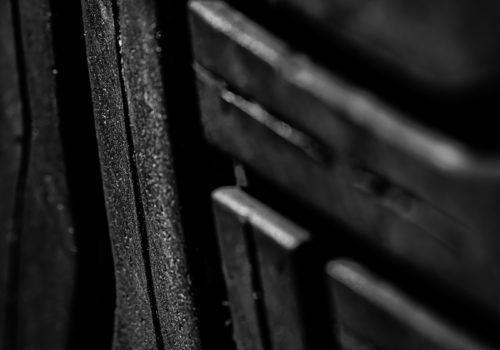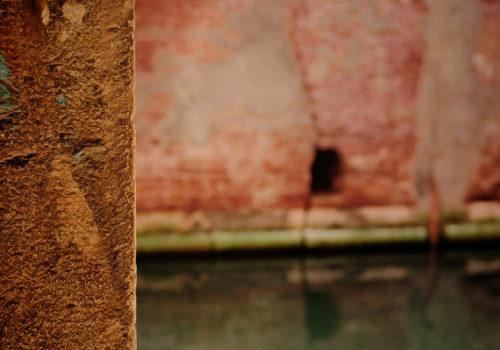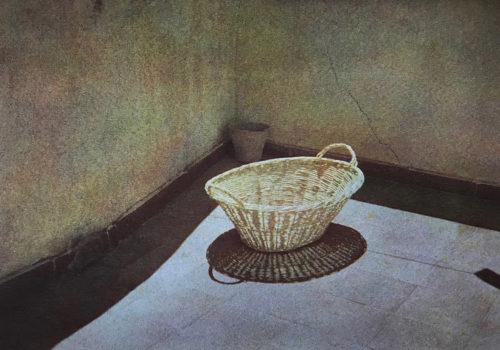
The renowned rambling photographer introduces us to a Spain never seen before at the Ombres Blanches gallery in Toulouse; here, he talks about himself, the things and people he loves.
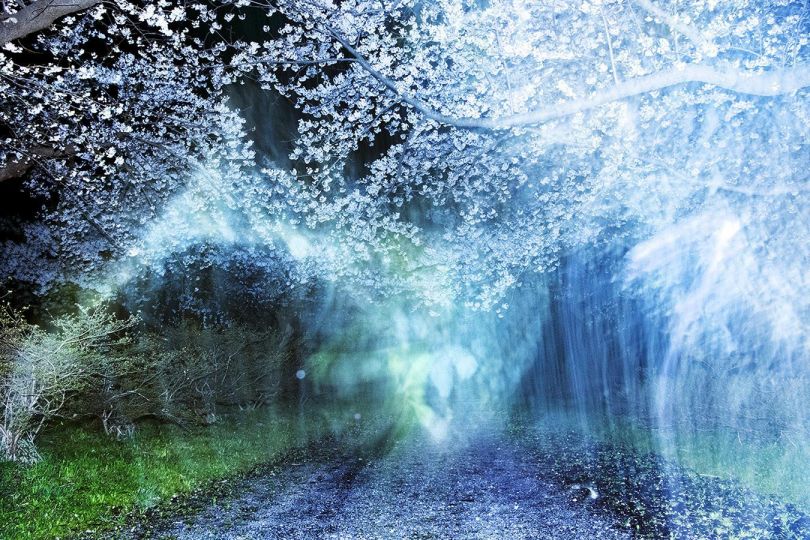
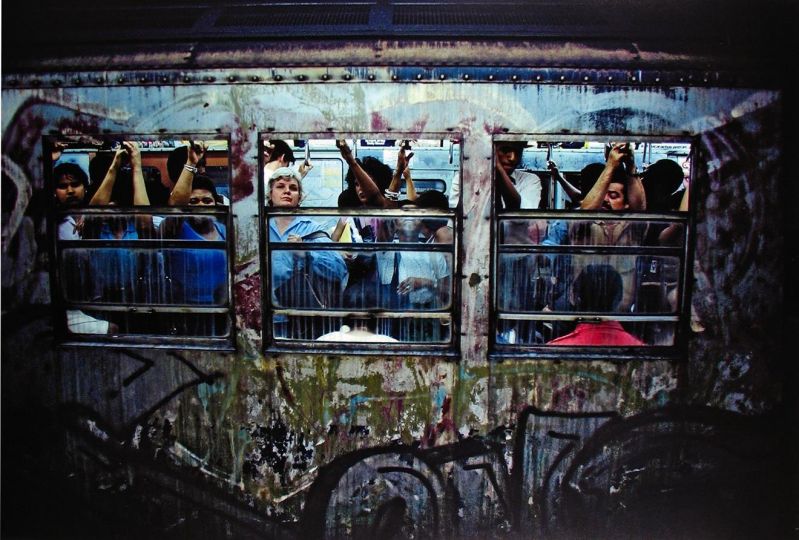
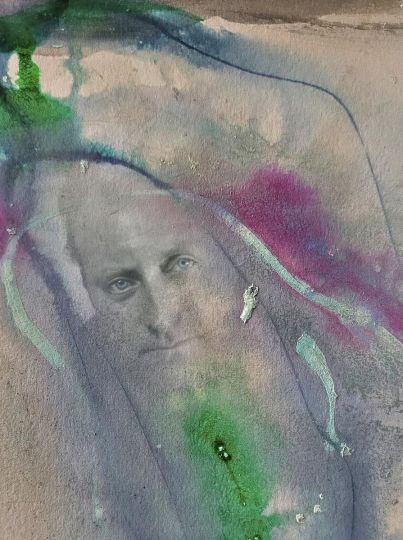
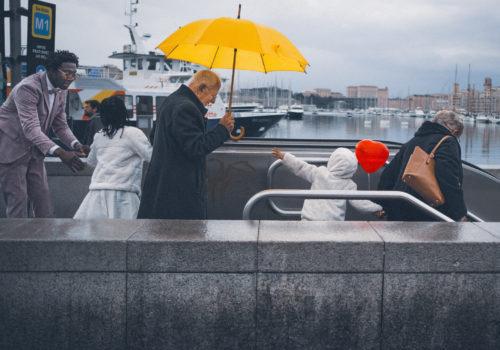
“Spain is like a second homeland for me,” says this great traveler, best known for his black and white work, who also often contemplates the world in color. A long-time fan of the Fresson photo printing process, named after the family who developed it and which provides unparalleled color and longevity, Bernard Plossu offers us no fewer than 110 images in a new space at the Ombres Blanches bookstore. Let’s meet.
Jean-Jacques Ader : You’re a photographer of books rather than exhibitions, do you agree?
Bernard Plossu : Yes, that’s true. Usually, books accompany exhibitions, and for me, it’s the opposite; exhibitions must accompany the book, that’s clear. For books, I know what I have to say. When creating a model, the photographer is in the best position to know which photo goes with which, to find the magic in the opposites, like a painter knows when to use green or red. And I like small books. The press often talks about me through large works, but never about small ones. Yet I prefer small ones because they are manifestos.
JJA : And what makes you want to exhibit?
BP : It’s a way of communicating with people. But even if a photograph is merely poetic, the act of showing it is political; the choice to show it is a political gesture, whether we like it or not.
JJA : Exactly, when we look at your images, held in a contemplative light while the world is in perpetual turmoil, it’s almost subversive, isn’t it?
BP : It’s contemplative, yes, that’s true. Perhaps it’s not by chance. In my generation, we were all about Krishnamurti (the Indian thinker of alternative education), Zen, and all that. Having read all those books, I think it made an impression on me. Above all, the photos shouldn’t tend toward aestheticism; the worst you can say about them is “it looks like a painting.” That’s a mistake; it’s not the same approach.
JJA : Yet, when you make Fresson prints, you’re looking for pictoriality, right?
BP : It’s not the same content. Many people compare Fresson prints to pictorialism, but it’s just similar; it’s not the same thing. Jeanne Fouchet-Nahas puts it very well: “It’s not for pictorialist reasons that Plossu loves this process so much, but for poetic reasons. Fresson prints have sometimes been wrongly compared to the autochromes of Heinrich Kühn, one of the greats of 20th-century pictorialism, whose quest was for a formal perfection that has nothing to do with Plossu, who is careful not to create beauty.” (Bernard Plossu, Fresson prints, Textuel 2020)
JJA : Was it when you discovered the Fressons that you started making color prints?
BP : Yes, well, not quite. Kodak gave me their little Stretch Panoramic camera, and we made large, classic prints that decorated the Kodak living rooms. Then, with those color negatives, I made black and white prints of travel photos. I’ve met all three generations of the Fressons: the grandfather, the father, and now the son, who, by the way, plans to stop the business. He’s the last one, and he has no descendants. It would take a young person to convince him to pass it on, because only he knows the process and possesses the equipment and the know-how. They were also quite strong characters, all three of them. One day I received a call offering me the famous Chevalier des Arts & Lettres medal. I immediately refused, and the guy on the phone burst out laughing and asked me who to give it to. I told him: the Fressons! Some time later, I called Michel, the father, and asked him: “Did they call you?” “Yes, yes, we refused…”Only, if their technique stops, all these prints will increase in value, and that will interest speculators. Recently, someone wanted to buy 25 of them from me; I understood their intention… So I ask galleries to only sell my photos to people who like them, and in small quantities, 4 or 5.
JJA: So you’ve been shooting color for a long time, alongside black and white?
BP: So, I work with Nikkormat and 50mm. When I was younger, I had two cameras with me, one in black and white and the other in color. Out of 10 rolls of film, I generally shoot 8 in black and white and 2 in color. Now it’s more complicated; these cameras are quite heavy, and I only have one camera; so I alternate, changing the films as needed.
JJA : You’re rather allergic to technology.
BP : Yes, it doesn’t interest me much. I know the bare minimum of technique needed to take photos; I don’t even need a cell anymore. I do it by touch.
JJA : You say you’re interested in the intensity of banality, but banality is everywhere; how do you recognize it?
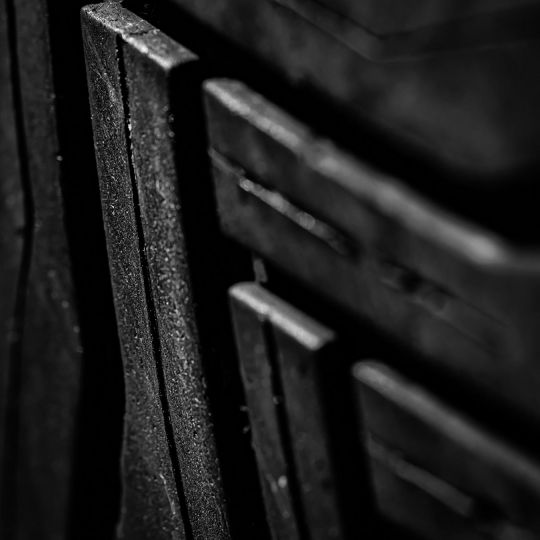
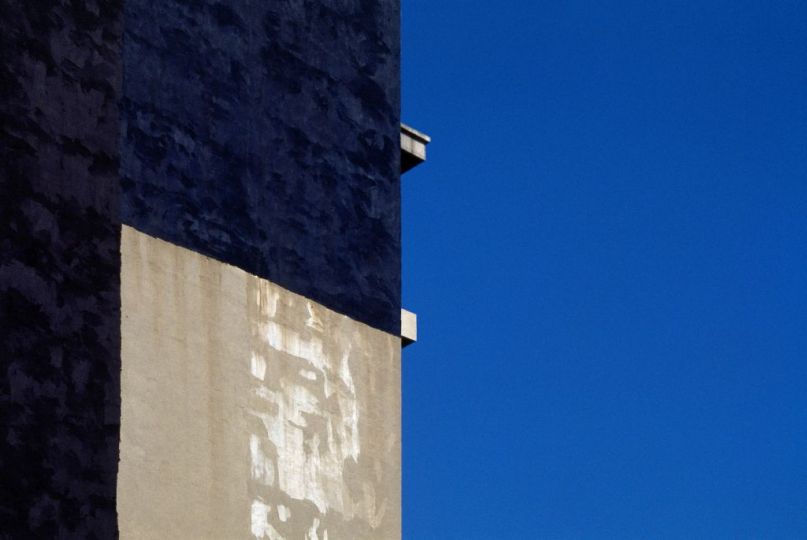
BP : Ah… everyone sees their own. I don’t necessarily look for it, but all of a sudden, I see a garage door I like. It’s not particularly beautiful, but I take a picture of it. Photography is what allows you to take a picture of a garage door. That’s a new definition of photography (laughs). In fact, banality is obvious; it falls on you.
JJA : We come back to contemplation.
BP : That’s right; after a while, you can’t “not see.” Even without a camera, I’m in photographic vision, all the time, from the time I wake up to the time to go to bed.
JJA : Isn’t it exhausting?
BP : Not at all, it’s always interesting. As we were saying, it allows you to live intensely; you never get bored for a second. But sometimes, being interested in the banality of things can be misinterpreted. When I travel now, I often have a map or plan in my hand, to look like a tourist, because I’ve already been stopped by the police, in the United States and in Portugal, “What are you doing?” We live in an era where everyone is suspicious.
JJA : In a documentary, you say that there’s the thickness of time in the grain of a photo.
BP : Yes, what more could you say? It’s also the matte aspect, the weight of time. It’s not easy to talk about it.
JJA : So, no to digital?
BP : With digital, you quickly take 600, 800 photos on a memory card, and I believe that you need rigor to create. You can’t take 600 photos and choose two; it’s unhealthy.
JJA : So, what is the purpose of photography for you?
BP : To share. It serves me to satisfy a need, to create things with strong lines. There’s no philosophy there; it’s purely a visual pleasure.
JJA : You often refer to painting too.
BP : I really like painting, especially Italian painting, and Italian literature. I have an exhibition project with only photos of Italy, which would be called “Homage to Italy.” My library at home is three-quarters Italian, you know.
JJA : Do you have any other projects?
BP : Yes, with Marcelo Fuentes, a Spanish painter I love very much, this fall at the Olula Museum in southern Spain. And then next February, Marval-RueVisconti will release “Entre les livres,” the book of my books; 300 pages with all the books I’ve made in my life, a book that means a lot to me.
Text and interview by Jean-Jacques Ader
Color photography exhibition by Bernard Plossu, “España en Fresson,” at the Ombres Blanches gallery in Toulouse from July 4 to September 6, 2025.
Information: https://www.ombres-blanches.fr/post/7364/bernard-plossu