Planet, Forest, Mangrove, Mud
The mangrove is a forest, like all forests. But unlike most other forests, it thrives in tidal movements. It is underwater twice a day.
The environment is prehistoric—a landscape that existed before history. The interface of land and sea, both here, trading spaces, trading places.
The plant life that thrives here, while capable of survival in almost any ambient, has been forced out by plants that grow faster in drier climes, that outpace the mangrove trees in their race for sunlight. Few plants can survive in these salty conditions. The ones that do have developed mechanisms to expel the salt, filter the salt, survive the salt. Amazing methods of root extension horizontally that stabilize the trees in the soft terrain, methods of expelling salt, pneumatophores that look like roots but grow vertically to enable the trees to breathe in areas with very little oxygen available in the soil. So the space deemed useless or uninhabitable by these more numerous plants has been adapted to by these species that have developed mechanisms to survive in the harsh environment.
Being submersed on a daily basis by brackish water, as well as the characteristics of the silty soil, in other words mud, became the place of the mangrove.
Mangroves started to form about 100 or 300 million years ago in the Tethys Sea between Gondwana and Laurasia in Pangaea.
It all starts with erosion. Rocks beaten by rain and wind and broken by ice formation erode causing silt to run off into the rivers.
Silt in the rivers is transported and deposited ever further down the course of the river until it reaches the sea, being deposited on the sea floor. Kilometers deep piles of mud. Kilometers.
But some of the mud sticks to the side of the river. Before the arrival of the mud , the river meandered through sand or just over rock. As the silt, mud, built up along the sides of the river, the course of the river started to stabilize.
The process compounds as more and more mud forms along the sides of the river. Dirt begins to build up on top of the rocks. .Between wind and rain and freezing and unfreezing, the rock is eroded and deposited downhill in tiny pieces, which is dirt. Wind spreads these particles over the surface. Not just the river. As the dirt gets deeper, plants start to grow in it. The plants grow and die again and again and all sorts of organic matter is mixed together. Insects develop. They eat the plants and defecate, repeatedly . They die and their bodies are mixed in with the dead plants creating an ever richer mixture.
The silt keeps flowing down the river, The silt goes down the river and forms big mud plains at the sea if the shelf is not too steep there. The sea is also depositing silt brought back by the tide. The material descending the river and the material returning from the sea are pushed together.
Over time there are big piles or pools or lakes of mud . Depending on the terrain the mud gets deeper in some places and less so in others. How often and how long a place stays under water during tidal movements is a factor.
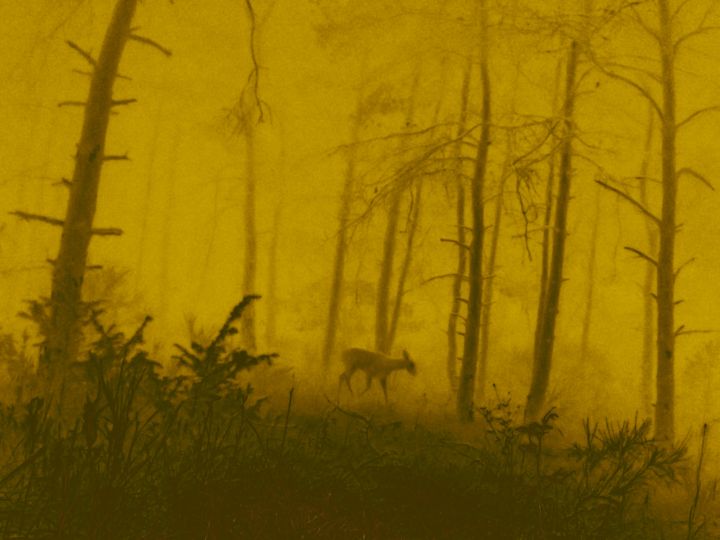
This is the mangrove.
These are the mangroves of Guanabara Bay, Rio de Janeiro.
www.patkilgore.com
@pat.kilgore.75