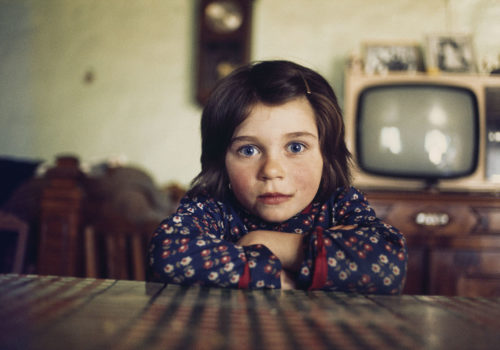
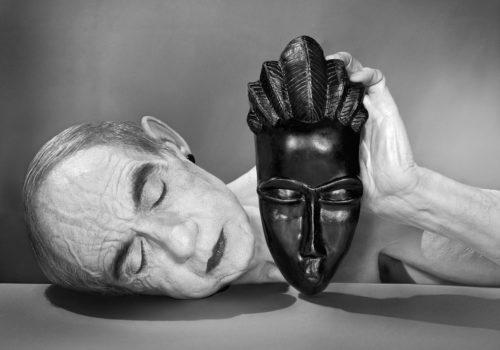
Let’s take a step back in time to the 1950s and 1960s, when the weekly magazine Il Mondo was a key reference point for Italian journalism and photojournalism. For its editor, Mario Pannunzio, photographs were as important as articles. To mark the centenary of Paolo Di Paolo’s birth, Palazzo Ducale in Genoa is presenting the retrospective Found Photographs dedicated to him, who was one of Il Mondo’s main photographers. In 14 years, he published 573 photos in it. He was also one of the most frequent contributors to the weekly magazine Tempo, providing photographic reports from Italy and abroad. As a correspondent, he travelled to the Soviet Union, Iran, Japan, the United States, and throughout Europe.
The exhibition features 300 photographs, many of which never been seen before, as well as archival materials, videos, period magazines, and original documents illustrating Di Paolo’s career from his debut in 1953 until 1969.
As his daughter Silvia explains, “In 1966, Il Mondo unexpectedly closed down, marking the beginning of a profound personal and professional crisis for Paolo. Television began entering Italian homes, taking business away from the print media”. As the tabloid press became increasingly popular and Paolo decided to leave photography and return to his studies. His archive remained in the cellar for half a century, until it was discovered by Silvia.
Together with Giovanna Calvenzi, she has revisited her father’s archive. This has led to the exhibition Paolo Di Paolo. Found Photographs which showcases the rediscovered work of an artist who portrayed post-war Italy with sensitivity and deep insight.
After arriving in Rome from Molise in 1949 to support himself while studying History and Philosophy at La Sapienza University, Paolo Di Paolo began working as a delivery boy, editor and proofreader for a small gazette. He also worked as an advertising salesman before becoming editor-in-chief of the magazine Viaggi in Italia and a volunteer editor at the daily newspaper l’Unità. He befriended intellectuals and artists. In 1953, he bought his first camera, a Leica IIIC, and started taking photos in the city and its suburbs.
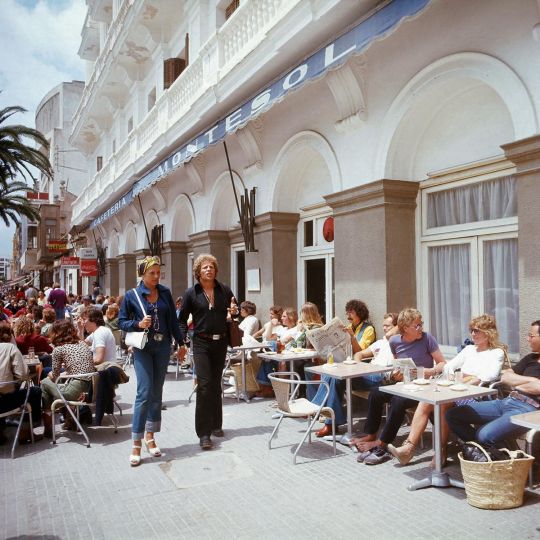
He was invited to contribute to Montaggio, a poetry and photography magazine for which Di Paolo is responsible for the photography and graphic design. In 1959, he started an significant photographic series for the monthly magazine Successo, titled La lunga strada di sabbia (The Long Road of Sand): together with Pier Paolo Pasolini, he travelled along the Italian coastline documenting Italians on vacation. “He was searching for a lost world, a world of literary ghosts, an Italy that no longer existed. I was searching for an Italy that looked to the future,” Paolo Di Paolo said years later.
For Tempo, he produced reportages for an investigation into L’Italia in automobile (Italy by car) and others dedicated to the Italian industry. Tempo was created in 1939 by Alberto Mondadori with the intention of replicating the success of Life: a weekly magazine with renowned contributors and ample space dedicated to photographs. The magazine was republished in 1946 after the war. Edited by Arturo Tofanelli, it featured Di Paolo as one of its leading photographers. Di Paolo produced photographic reports on current affairs, portraits of personalities in the world of culture and art and travelled all over the world. Together with journalist Irene Brin, he worked for Bellezza. Mensile dell’Alta Moda e della Vita Italiana (Beauty. Monthly Magazine of High Fashion and Italian Life), founded by Gio Ponti, and for Domina, a monthly magazine published by the Domus publishing group.
“The Italian publishing industry experienced a period of particular fervour in the 1950s. Illustrated magazines achieved excellent circulation. Reconstruction had begun after the war years, and the economic boom was imminent. However, Italy was still primarily an agricultural country with 47 million inhabitants and an illiteracy and semi-illiteracy rate of 12.9% and 46.3% respectively. Therefore, photography could be an excellent means of information for the part of the population that was better at looking than reading,” curator Giovanna Calvenzi says.
At a friend’s suggestion, Paolo Di Paolo photographed Lucia Bosé (Miss Italy 1947) and the bullfighter Luis Dominguín. The couple posed and joked for the photographer. “This would always characterise his relationship with the art world: a tone of respect and cheerful irony, a sense of complicity with his subjects, and a great ability to portray people and the context”, Calvenzi explains.
Cinecittà in Rome attracts actors, actresses and directors from all over the world. This was the era of the paparazzi, of photographers waiting for stars in Via Veneto, the beginning of La Dolce Vita.
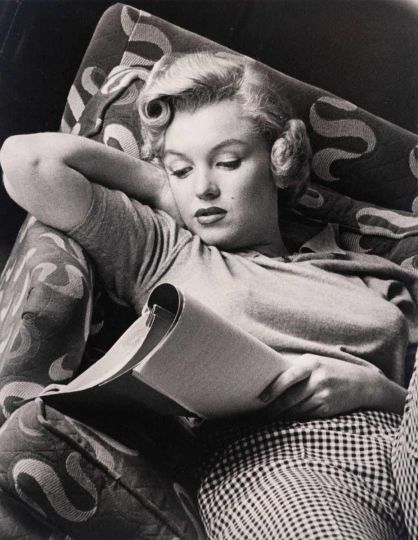
Thanks to his friendships in the worlds of film and art, he produced exclusive portraits of leading intellectuals, artists, actors and directors of the time, including Pier Paolo Pasolini, Anna Magnani, Lucio Fontana, Giorgio de Chirico, Sophia Loren and Marcello Mastroianni.
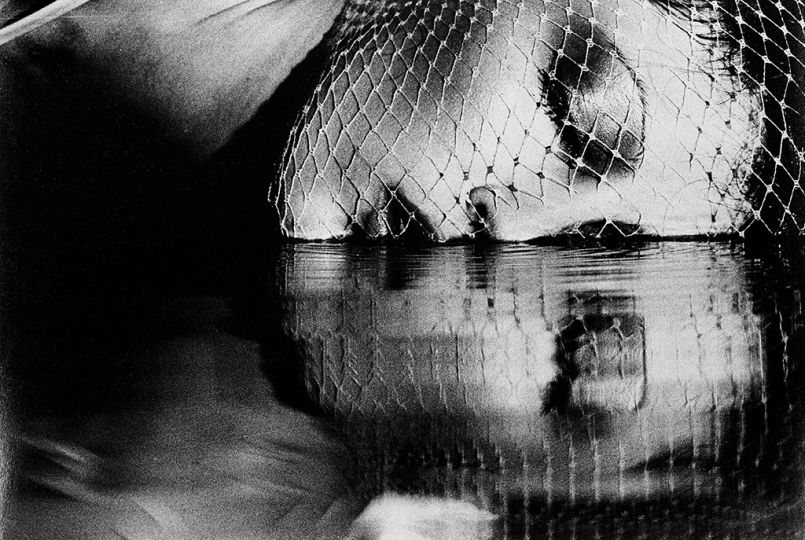
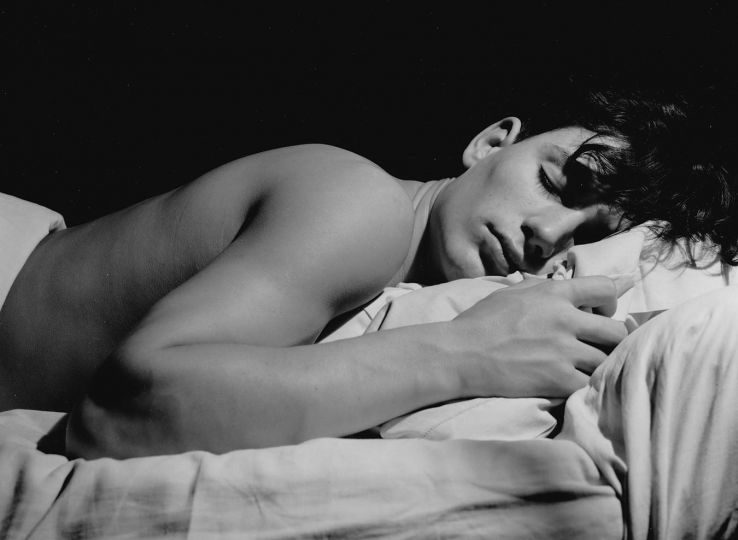
There is a growing awareness that photographs can convey complex stories without relying on text alone, providing a testimony that is perceived as an integral part of the depicted reality. Di Paolo embodies this principle, encouraging readers and viewers to interpret not only the photograph itself, but also its broader context.
The exhibition, curated by Giovanna Calvenzi and Silvia Di Paolo, is accompanied by a book published by Marsilio Arte (Paolo Di Paolo. Found Photographs), with texts by Giovanna Calvenzi, Silvia Di Paolo, Isabella Rossellini, Alessandro Sarlo, Michele Smargiassi, Roberta Valtorta and Bruce Weber. Marsilio Editori is also publishing a novel by Silvia Di Paolo with Antonio Leotti, inspired by the discovery of Di Paolo’s archive. The novel tells the story of the photographer and intertwines family history with reflections on art and memory.
In 2019, the MAXXI Museum in Rome hosted his first major retrospective, Lost World – Photographs 1954–1968. In 2021, the photographer and filmmaker Bruce Weber released the documentary The Treasure of His Youth, dedicated to Paolo Di Paolo. In May 2023, Paolo Di Paolo received an honorary degree in Art history from Sapienza University of Rome.
Paola Sammartano
Paolo Di Paolo. Found Photographs
From October 23, 2025 to April 6, 2026
Palazzo Ducale – Sottoporticato
Piazza Giacomo Matteotti 9
16123 Genoa
Italy
https://palazzoducale.genova.it/