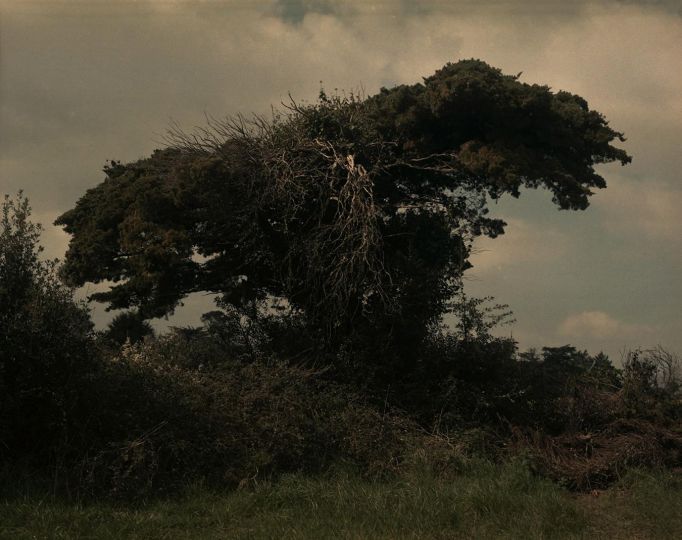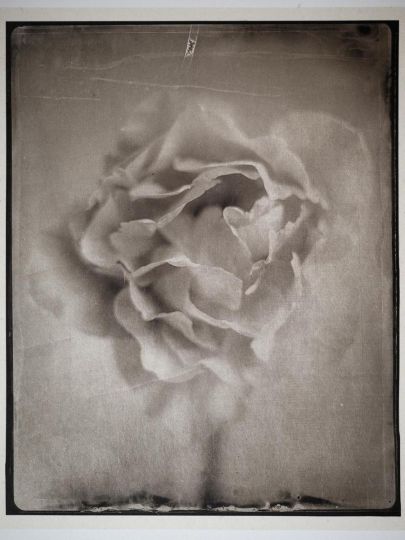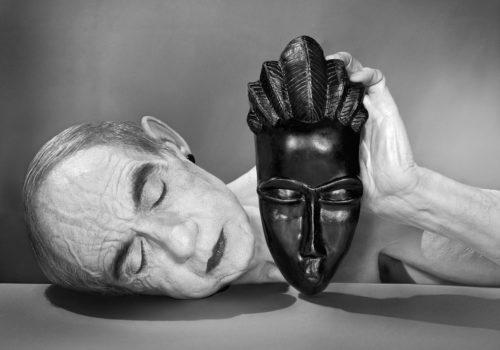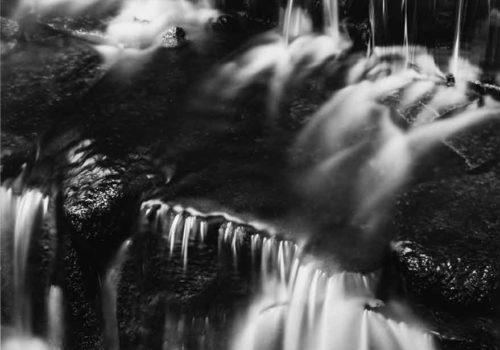
Obscura Gallery presents Virtuosos, a two-person exhibition by 20th-century masters Paul Caponigro and Ansel Adams. Each originally a gifted pianist, these photographers are renowned for their exquisite black and white artworks in which they blended poetic vision with unmatched darkroom skills. Ansel Adams honed the technique of photographic chemistry and developed the zone system – a calculated way to control exposure and development of a negative and a print to achieve a specific tonal range. While Paul Caponigro learned technical skills from Adams’ methods, he worked more intuitively, relying on his creative intuition more than strictly analytical field methods to achieve his final prints. While these two artists approached the medium differently, they both produced some of the most iconic and revered photographic prints from the 20th Century known for their beauty that stand as landmarks of fine photography in the history of the medium.
Obscura Gallery has worked with and represented Paul Caponigro (1932-2024) for the past seven years. Paul Caponigro, born in Boston, became interested in photography at age 13, while also developing a strong passion for music. At the age of 18, he studied at the Boston University College of Music before deciding to devote himself to photography on the opposite coast, at the California School of Fine Art, where Ansel Adams had established one of the first photography programs in the United States. Caponigro learned Ansel Adams’ methods for exposing and processing film, but he also became heavily influenced by Minor White, who delved into the psychology and spirituality of the photographic image. Caponigro later studied under Minor White when White had become Director of the George Eastman House in Rochester, New York. White gave Caponigro his first exhibit there in 1958. In the ensuing years, Caponigro taught photography part-time at Boston University, while consulting on various technical research projects with the Polaroid Corporation. He received two Guggenheim Fellowships and three grants from the National Endowment for the Arts (NEA). In 1974, he and his family moved from Connecticut to Santa Fe, where they lived for nearly 20 years.
Paul Caponigro not only found beauty in natural forms, landscapes, and still lives, he transformed such discoveries into superb black and white prints through tireless work in the darkroom, resulting in meticulous, luminous gelatin silver images. His subjects, which led to over 20 photography books under his name, include Stonehenge and other Celtic megaliths of England and Ireland; the temples, shrines and sacred gardens of Japan; the deep, mystical woodland of New England; and desert landscapes from New Mexico. The George Eastman House exhibition in 1958 launched his photographic career, leading to numerous exhibitions throughout the United States and abroad. Caponigro’s work is included in important collections including The Guggenheim, The Museum of Modern Art, The Whitney, Norton Simon Museum, New Mexico Museum of Art, San Francisco Museum of Modern Art, The Getty, and countless others.
In recognition of his significant contributions to the art of photography from a career spanning nearly seventy years, Caponigro was awarded The Royal Photographic Society’s Centenary Medal and Honorary Fellowship in 2001. In 2020 he was the Honoree for the Achievement in Fine Art presented by the Lucie Awards. Most recently, in November 2024, Paul was inducted into the International Photography Hall of Fame. Paul passed away in November 2024 and this is our first exhibition of his work since his death.
Not only were Paul Caponigro and Ansel Adams both virtuosos in photography, they were also both talented pianists, an experience they each identified as contributing to their visual art. In an interview with the Santa Fe New Mexican in connection with a 2020 retrospective of his photography at Obscura Gallery, Caponigro said, “The black-and-white tones in the print are very close to the tones in the music.”
Similarly, Ansel Adams (1902-1984), who seriously pursued a musical career from age 12 until his late twenties, cited the music of Bach and Beethoven as providing the discipline, structure, and precision that influenced his “straight” photographic style and meticulous print visualization.
Ansel Adams (1902–1984) was a preeminent American photographer and environmentalist renowned for dramatic photographs of the American West. Born in San Francisco, Adams had a formative 1916 trip to Yosemite National Park—where he received his first Kodak Brownie camera—that permanently shifted his focus toward the wilderness. In 1932, he co-founded Group f/64, an influential collective of photographers who rejected the soft-focus “pictorialist” style prevalent at the time, in favor of “pure” photography characterized by sharp detail and strong contrast. Adams further revolutionized the field by co-developing the Zone System, a scientific method for controlling tonal range, from deep blacks to brilliant whites, during exposure and development.
In 1933, Adams met Alfred Stieglitz, who gave him a solo exhibition at his New York City gallery, An American Place. In 1937, Adams moved to Yosemite Valley, where he opened his own gallery, and resided until 1962, teaching annual photography workshops for the next several decades. Adams helped form the first Department of Photography at the Museum of Modern Art in 1940; he founded the Department of Photography at the California School of Fine Arts in 1946; in 1967 he established the Friends of Photography in San Francisco; and he cofounded the Center for Creative Photography at the University of Arizona in 1975. Adams was the recipient of three Guggenheim Fellowships during his career, the first awarded in 1946 to support his photographing every national park. In 1968, Adams moved to Carmel, California, where lived for the remainder of his life.
Beyond his contributions to the evolution of photography, Adams was a tireless advocate for conservation, serving on the board of the Sierra Club for 37 years and using his work to lobby for the creation and expansion of national parks like Kings Canyon. His legacy in the environmental movement was cemented in 1980, when he received the Presidential Medal of Freedom from Jimmy Carter and his name was memorialized in the Ansel Adams Wilderness and Mount Ansel Adams. In 1984 Adams was inducted into the International Photography Hall of Fame.
Paul Caponigro – Ansel Adams : Virtuosos
On view through April 26, 2026
Obscura Gallery
225 Delgado Street
Santa Fe, New Mexico 87505
www.obscuragallery.net
Reception Celebrating Ansel Adams Birthday: Friday, February 20, 2026