







Francesca Malgara is director of the Milan fair MIA Photo Fair BNP Paribas, which takes place in Milan from March 18 to 22, 2026. An interview about an edition that is markedly more international, with ever-rising quality.
You have been directing the fair for three editions. What vision did you have for the fair in 2024, and what evolution have you sought to pursue since your arrival?
Since my arrival, one of the major changes has been the introduction of an annual theme. Over the past three years, we have worked around the notions of “Changing,” “Dialogue,” and this year the structuring theme is the idea of “Metamorphosis.” These themes reflect both the fair’s gradual transformations and the constant changes in the photographic medium, in its social uses as well as in artists’ experiments.
The decision to propose a theme has profoundly changed the galleries’ approach. They must now present a genuine curatorial project, which allows us to make a more qualitative selection. It has also strengthened the role of exhibition curators. Previously, choices were made essentially by the management. Today, we entrust several sections to curators, which means opening the fair to different perspectives and more varied artistic scenes.
Has this evolution also resulted in greater internationalization?
Yes, that was another important goal, and one that we achieved this year, with 30% of the galleries coming from abroad. Of the 76 participating galleries, 23 are taking part for the first time, which means the fair has opened up compared with previous years. And this opening up is once again the result of the research carried out by the curators, who explore different artistic scenes, particularly in Latin America (with a “Latino” focus this year), making it possible to discover promising galleries and artists.
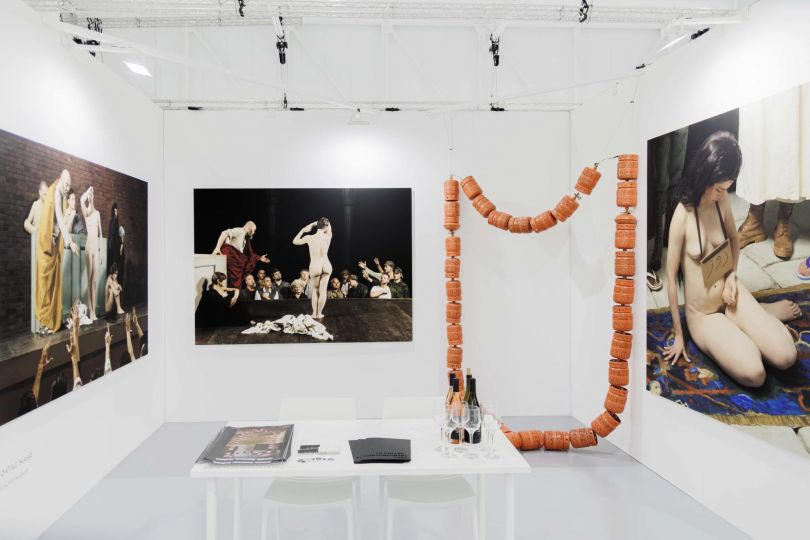
You have also given very young galleries a chance. I am thinking in particular of Galerie Vue, founded barely four months ago, whose only exhibition to date is its first. Vue won the second edition of the Casa Museo Molinario Colombari Award, presented to the stand that is the most carefully conceived and the most committed to a curatorial approach at the fair.
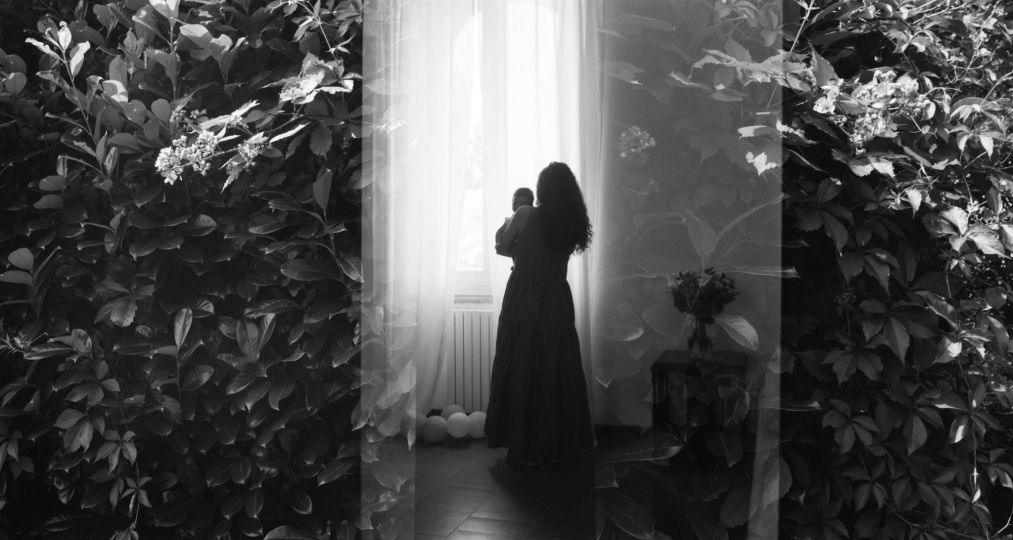
Vue contacted us last December, and the presentation of Julie Scheurweghs’s exhibition “Maman est là” was more than convincing. It was a great opportunity for us, as for them, to welcome them. The fact that this gallery then received the Casa Museo Molinario Colombari Award confirms that we made the right call.
This year, many galleries opted for monographic presentations. I am thinking of Galerie Vu, but also of Galeria Alta with Todd Hido, and Building with Roger Ballen. Is this a direction encouraged by the fair?
It is a choice that entails a certain commercial risk for the galleries, but one that considerably enriches the quality of an art fair. The solo shows allow for an immersion in an artist’s work, and I believe that this is particularly appreciated by informed collectors. Several have in fact told me that they prefer this type of proposal. I think this direction also helps make the fair more legible and more coherent.
How do you position MIA Photo Fair today within the Milanese and Italian photography landscape?
The fair has undeniably established itself as the leading photography fair in Italy. It is now an event people look forward to every year. We hope to maintain an open atmosphere, where visitors do not feel intimidated. Not all visitors necessarily come to acquire major works, but they can discover artists, speak with galleries, and sometimes complete acquisitions later on. We are also seeing growth in the act of collecting. Milan’s international dimension reflects this, with a great many internationals having settled here. The city has opened up, undeniably.
And this is precisely the first year that the fair has expanded throughout the city, with a satellite program.
MIA Photo Fair has strengthened its collaborations with Milanese institutions. This year, several museums are presenting photography exhibitions alongside the fair, such as 10 Corso Como with an exhibition on the new vision of the American West – and an invitation extended to Howard Greenberg. There is also the Senato Hotel Milano, Tecno Showroom, Alessia Paladini … and many other galleries, joining nearly ten museums that also have photography programming linked to the fair. For example, MUDEC – Museo delle Culture is currently presenting two centuries of photographic history.
Finally, what can be said about the place given to publishers, especially Italian ones, within the fair?
Even though this section remains modest in scale, I wanted to connect it to the heart of the galleries. The ten or so publishers, most of them Italian, offer a glimpse of the dynamism of photographic publishing, and I wanted to position them so that all visitors would pass by their stands. They are fully integrated into the galleries’ route. It is a greatly appreciated sector, one that makes the fair even more lively.
More information