We received the series by Léonard Bourgois Beaulieu entitled Espa.èces menacé.es. He presents it as follows:
The series Espa.èces menacé.es follows on from my research into the corporeality of photography. I wanted to analyze and document life in a place where ecological balance is disrupted by human activity. I explore empathy for the living world through analog processes that make the fragility of the natural world tangible.
For about fifteen years, I have been experimenting with the proliferation of microorganisms on the surface of negatives, creating a second skin that frees photography from its temporal confinement. These living organisms actively participate in the image and establish a non-dominating relationship with nature. The negative becomes a body rather than a simple support; it begins to live. This approach led me to photograph loved ones, friends, people in transition—and, for this series, elements subjected to erosion: worn, cracked, already reclaimed by vegetation.
Venice emerged as an ideal setting for this reflection. A city encircled by water, where every human effort aims to stave off its disappearance, it is built on slabs of Istrian stone reputed for their impermeability. Yet erosion, constant humidity, and marine vegetation are gradually reclaiming their place.
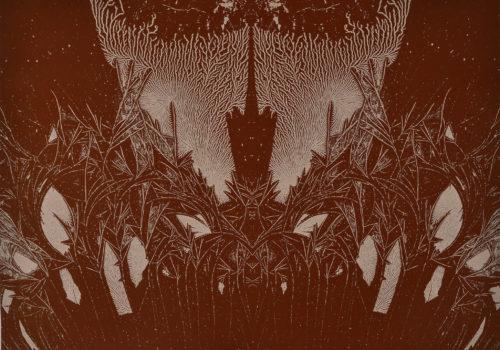
I explored the steps along the quays and the submerged alleyways at different times of day, observing how light influences the growth of algae. Some Polaroids were immersed directly in canal water; others were hung on a line above it, left to dry in air saturated with humidity. This double gesture allowed the water, the salty mist, and the Venetian climate to accelerate the development of microorganisms and minerals on the surface of the emulsion, producing unexpected reactions. A real transfer took place between algae, minerals, and photographic matter.
The Polaroids were scanned once to document the visible alterations, then again two years later. This second scan revealed a marked evolution: microorganisms and mineral crystallizations had multiplied and spread, showing a progressive colonization of the surface. These successive scans bear witness to an organic transformation of the image over time: photography is no longer a fixed instant; it becomes an ongoing process.
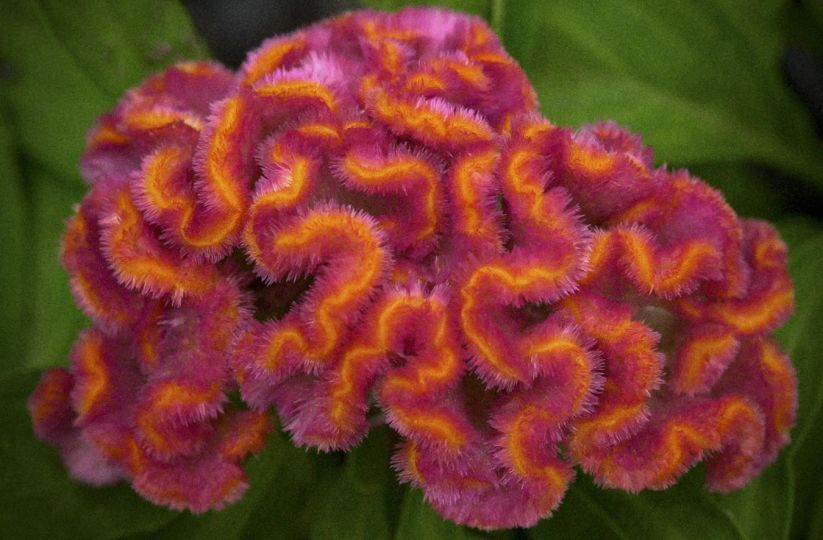
The results reveal surprising organic reactions, altering textures and hues—sometimes to the point of abstraction—where the initial image fades to make way for an unprecedented form. As in the lagoon, a silent struggle unfolds between native and invasive species.
Through this series, I continue an inquiry into a form of photography that frees itself from its role as mere recording, accepting to be worked on by time and by the living. Nothing is fixed anymore; unpredictability is total, and the living becomes a co-author of the work while making visible the human impact on its ecosystem.
Léonard Bourgois Beaulieu