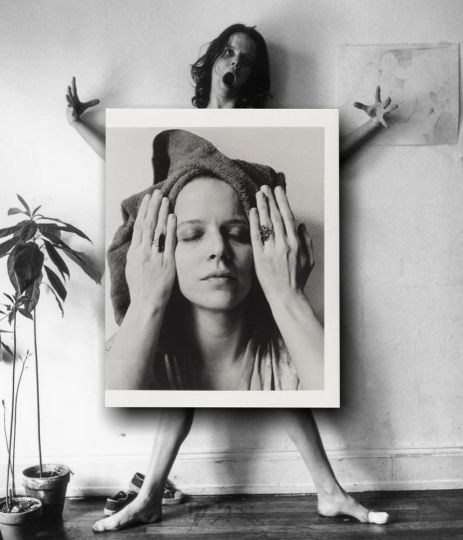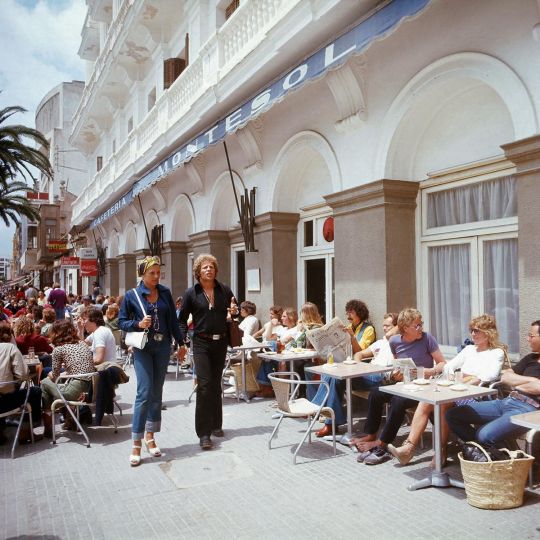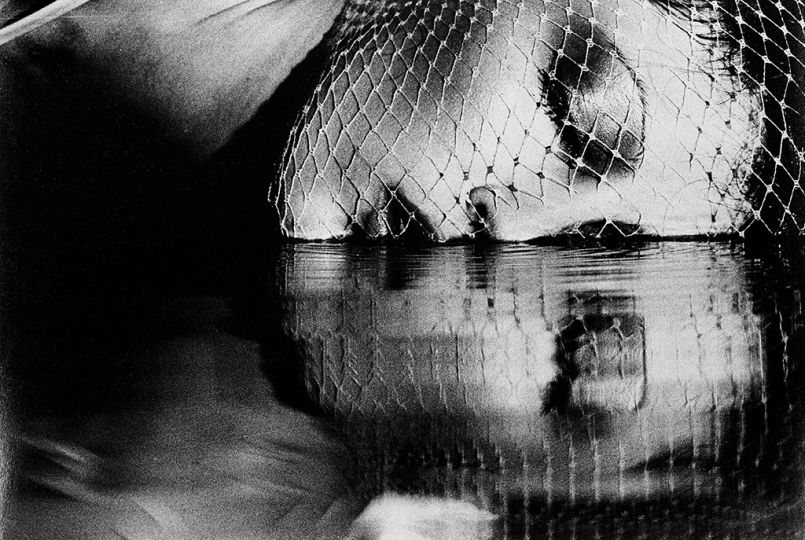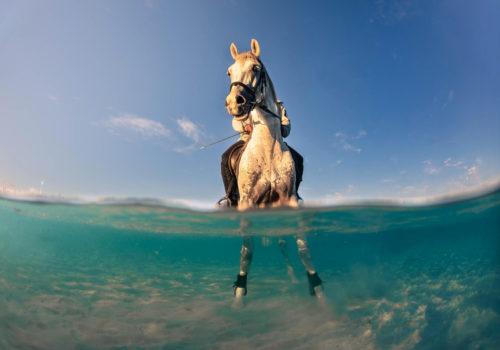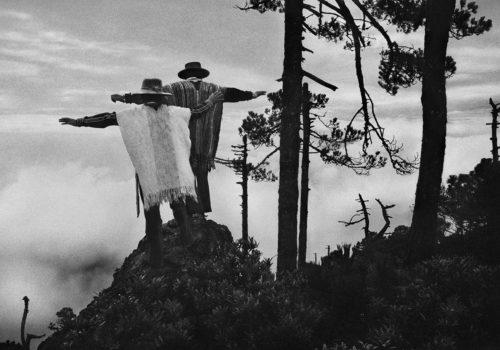
The city of Paris is paying tribute to internationally renowned Brazilian photographer Sebastião Salgado, who died last year on May 23 at the age of 81, with a major exhibition at City Hall.This exhibition, curated by Lélia Wanick Salgado, includes nearly 200 works and an exceptional loan of 114 prints from the Maison Européenne de la Photographie, a Parisian museum close to the photographer’s heart. The exhibition also features some of Sebastião Salgado’s most iconic images and his unpublished project on Paris, where he lived from 1969 onwards.It also presents photographs of the Salgados’ work at the Instituto Terra, a reforestation project of more than 3.5 million trees and a living example of the revival of the Atlantic Forest. The exhibition concludes with the pictorial work of their son, Rodrigo Salgado.
Lélia Wanick Salgado is a Brazilian environmentalist, designer and scenographer. She studied architecture and urban planning in Paris. Her interest in photography began in 1970. She and Sebastião Salgado formed a duo both at work and in life, designing all photography projects together. In the 1980s, she began working on the design and layout of most of Sebastião Salgado’s photography books and all of his exhibitions. In the late 1990s, Lélia and Sebastião created the Instituto Terra, an NGO dedicated to reforestation, conservation and environmental education in the Rio Doce Valley region of Brazil. Located in the Atlantic Forest biome, this institution has already planted more than 3.5 million trees and has become a world reference in ecosystem restoration, environmental recovery and preservation. For her work as an ecologist, Lélia was one of the people chosen in 2023 to receive the Gulbenkian Prize for Humanity.
I wanted to show different facets of Sebastião Salgado the man: the father, the photographer, and the environmentalist. These three facets harmoniously compose a large part of his essence. In addition to being a loving father, he passionately defended photography committed to values essential to humanity and the planet, as well as a more socially egalitarian and ecologically sustainable world – Lélia Wanick Salgado
Sebastião Salgado is internationally recognized for his undeniable talent behind the camera. Over the years, he has become one of the leading figures in modern humanist and documentary photography. But the man behind the camera had many lives beyond the images he captured around the world. We shared more than sixty years together. As close partners in life and work, we built a family and created an extensive photographic body of work, presented in dozens of books and hundreds of exhibitions. In addition, we founded a reforestation institute, which today is responsible for planting millions of trees.
In this exhibition held in his honor, an invitation from Mayor Anne Hidalgo — whom I would like to personally thank here for this generous initiative — I wanted to show different aspects of the human being Sebastião Salgado: the father, the photographer, and the environmentalist. These three facets together harmoniously make up a large part of his essence. Tião, as he was known to those close to him, left us prematurely last May. In addition to being a loving father, he passionately championed photography committed to values essential for humanity and the planet, as well as a world that is socially more equal and environmentally sustainable.
THE MEP COLLECTION
Since 1985, the European House of Photography (MEP) has developed a deep relationship with the work of Sebastião Salgado, built over 40 years of collaboration. Today, the institution owns a collection of 454 prints of his work, representing his most significant series. Images from the beginning of his career, including the decolonization wars in Africa (1974–1976), the depths of Latin America (1977–1984), and the drought and famine in the Sahel (1984–1985) form the foundation of the collection.
In 1987, the MEP acquired around a hundred of his photographs to support the realization of his major project titled The Hand of Man, for which he traveled across twenty-six countries over six years to create a “visual archaeology” of the industrial era, where manual labor predominated. From 1995 to 2000, the MEP contributed to the realization of the Exodus project, a thorough study of major migratory movements around the world.
The collection also includes important donations of prints from the series Gold/Serra Pelada, documenting the gold rush in a Brazilian mine; Genesis, a search for the planet’s most untouched places, still free from human destruction; and Amazônia, our most recent major project, a call to preserve the world’s largest forest and protect the indigenous communities living there.
In this exhibition, I present a selection of this precious collection, a brief summary of Sebastião’s trajectory as a photographer. All of the MEP’s prints measure 40×50 cm, but I took advantage of the magnificent spaces in the Saint-Jean room to display some of these images in very large format.
PARIS
In 2024, the Paris city hall invited Sebastião to photograph the city in order to illustrate its end-of- year greeting card.
At first, he was hesitant, because it wasn’t the type of project he was used to, but he ultimately decided to take on the challenge. On the condition that, if he wasn’t satisfied with the final result, he would not give up any images. As he never did anything halfway, he set out across Paris with his equipment, accompanied by his inseparable assistant Jacques Barthélemy, for work that lasted several weeks.
The result pleased him, and after a careful selection, one image was ultimately chosen by Mayor Anne Hidalgo. This was the last photographic work Sebastião Salgado completed during his lifetime, and I am extremely happy to be able to exhibit a part of it here for the first time, at the Paris city hall.
INSTITUTO TERRA
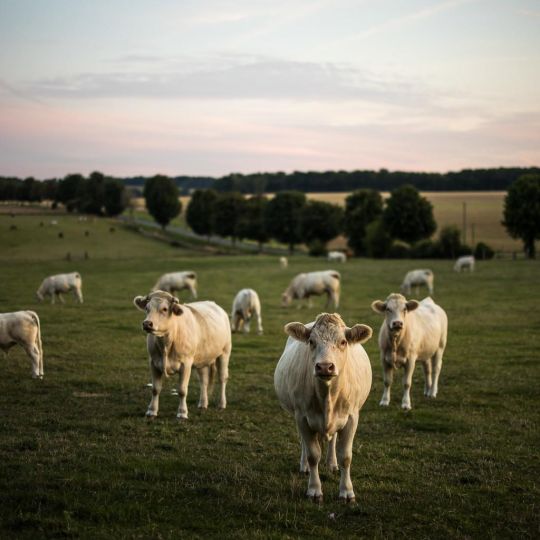
At the end of the 1990s, while I was with Sebastião on his parents’ farm in Aimorés, in the state of Minas Gerais, Brazil, I had an almost utopian idea. On this land, which had been extremely degraded by successive years of cattle ranching and erosion caused by the rains, I suggested that we replant the forest that once grew there long ago. Sebastião immediately embraced the idea with enthusiasm. In 1998, we founded Instituto Terra together, a non-governmental organization that, more than 25 years later, has become a reference in reforestation, ecosystem restoration, and environmental education. We have planted more than 3.5 million trees, restored the local biodiversity, flora, and fauna of the Atlantic Forest, and we are currently reforesting a total area of 2,300 hectares.
We have also created a long-term program to restore the water sources in the Rio Doce valley region through tree planting, benefiting both nature and the local rural landowners. We produce endemic Atlantic Forest seedlings in our nursery and also develop scientific research and environmental education programs.
Instituto Terra, to which Sebastião dedicated so much of himself, is concrete proof that it is not utopian to transform arid land into a living, lush forest, by recreating nature and improving people’s lives, and that together we can still save our planet.
RODRIGO SALGADO
Our son Rodrigo, born with Down syndrome, has been painting every day since his childhood. By 5 a.m., he was already sitting in front of his easel, and sometimes he would even wake up in the middle of the night to paint. He has always been an artist and, over time, has built a remarkable body of work. In May 2025, sixteen stained glass windows created from his works were installed in the former Sacré-Cœur Church in Reims. No longer a place of worship, the old church now houses the Simon-Marq stained glass workshop in its basement, founded in 1640. In addition to the inauguration of these stained glass windows, one example is presented here in the form of a window decal, we organized an exhibition on site featuring 80 of Rodrigo’s works, representing his different artistic phases. His paintings, initially characterized by an abundance of color when he was more independent, took on a darker tone as he began to lose abilities. Sometimes he painted on tiny squares, other times on larger formats, exploring different shapes and densities.
The painter Michel Granger welcomed Rodrigo into his studio for a period, and his words reflect this experience: “What impressed me was that he had no doubt; he drew with the certainty that every artist would wish to have. Rodrigo has taught me so much and still instructs me; he probably gave me more than I could offer him. He introduced me to the idea of difference, helping us understand each other through the constant presence of his kindness, his attention, and his humor.” Rodrigo never stopped painting, but today, at 46, he no longer produces drawings; his creations have taken the form of scribbles. Black still predominates, but colors reappear here and there, like sparks emerging from the darkness, a sign of encouragement in his daily life, affected by his fragile condition. The artist has not given up on his art, and as a person, he continues to share his affection wherever he goes and with everyone he meets.
Unfortunately, Sebastião was never able to see the exhibition in Reims; he passed away the day before the opening. He would surely have been deeply moved to know that some of his artist son’s works are now exhibited here alongside his own, at the City Hall, for the general public.
by Lélia Wanick Salgado, curator and scenographer of the exhibition.\
AROUND THE EXHIBITION
200 YEARS OF PHOTOGRAPHY
In 1826–1827, the French engineer Nicéphore Niépce (1765–1833) succeeded in fixing a photographic image onto a light-sensitive material. To pay tribute to this technique, which has since become an art form in its own right, the City of Paris will celebrate the bicentennial of photography throughout 2026 and 2027.
In Paris, the municipal photographic heritage, whose origins date back to the time of photography’s invention, contains more than 13 million photographs: daguerreotypes, prints on paper, and negatives preserved in the museums, libraries, and archives of the City of Paris. These exceptional collections represent immense historical, cultural, and artistic value.
The prestigious historical collections come from donations, bequests, or deposits, as well as commissions or purchases from photographers of the time, and include some of the greatest names in photography: Atget, the Henry Clarke collection at Galliera, Cartier-Bresson, Marville, Brassaï, the France Soir collection at the Historical Library of the City of Paris…
Current acquisitions, covering both historical photography and contemporary creation, continuously enrich these collections.
On the occasion of the bicentennial, the City of Paris is offering several exceptional exhibitions highlighting the diversity and beauty of Paris through a wide range of photographs:
- The “FRAGMENTS” campaign, entirely created by photographers from the City of Paris. Its posters depict a multifaceted Paris, capturing details and Parisian atmospheres far removed from postcards. It is the Paris of suspended moments.
- All of the City of Paris’s free exhibitions, shown across the entire Parisian territory.
- The “Expos 24/7” campaign highlights free, publicly accessible photography exhibitions in Parisian public spaces (the railings of City Hall, the Saint-Jacques Tower, the Seine riverbanks). Expos 24/7 promotes an open culture—freely accessible, without time constraints.
- The exhibition “Tribute to Sebastião Salgado” from February 21 to May 30 at the City Hall (Central Paris).
PRACTICAL INFORMATION:
Free exhibition from February 21 to May 30, 2026
Open Tuesday to Saturday from 10:00 AM to 6:30 PM, except Thursdays from 1:00 PM to 8:00 PM. Closed Sundays, Mondays, and public holidays.
Registration required: https://www.paris.fr/quefaire
ACCESS:
Salle Saint-Jean at City Hall
Entrance at 5 rue de Lobau (Paris Centre)
Hommage to Sebastião Salgado
February 21 – May 30, 2026
Hôtel de Ville de Paris
Place de l’Hôtel de Ville
75004 Paris
https://www.paris.fr/evenements/la-grande-expo-hommage-a-sebastiao-salgado-104232