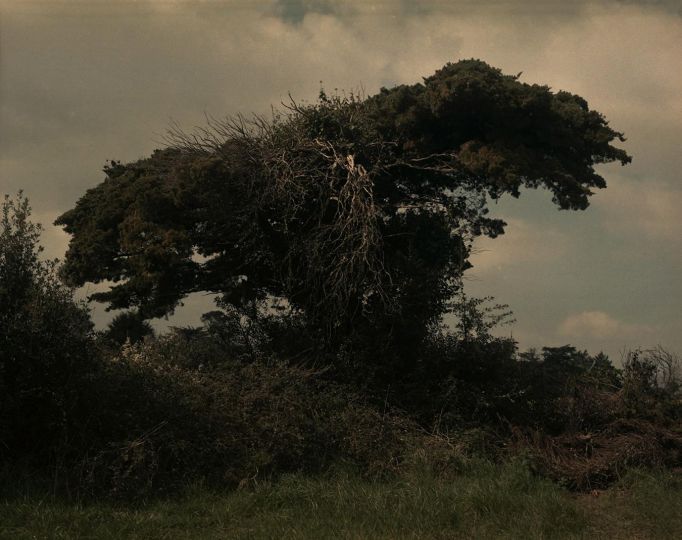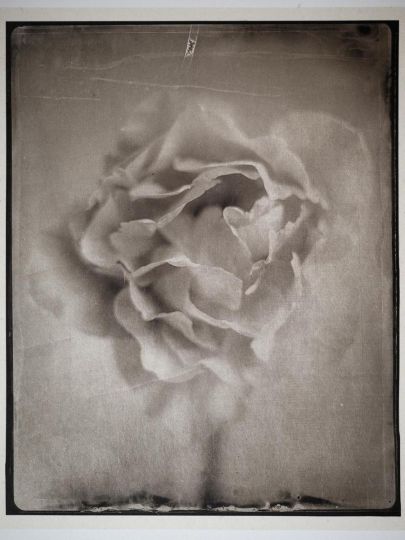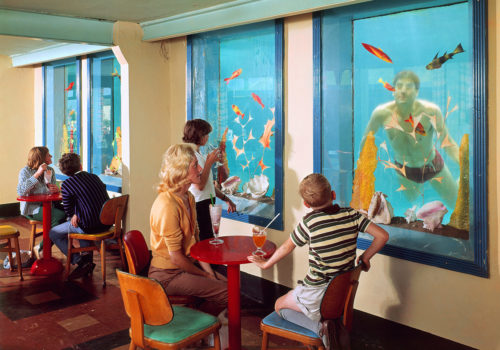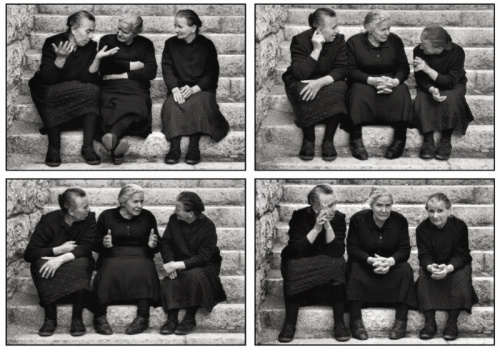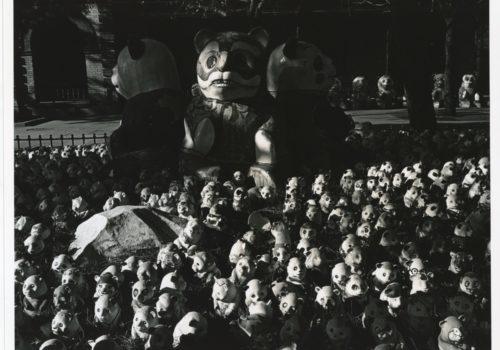
Tucked inside a light-filled building in Tokyo’s Ebisu district, the MEM gallery was presenting through April 12 Skeleton Goats Dust Storms, an exhibition by photographer Osamu Kanemura. Known for his images of Tokyo’s urban landscapes, Kanemura here offers a twilight immersion into the outskirts of Beijing.
At the top of a flight of white wooden stairs, the intimate space of MEM, short for Multiply Encoded Messages, unfolds. Founded by Katsuya Ishida in 1997, the gallery is currently showing a series of high-contrast prints by the Japanese photographer, drawn from Skeleton Goats Dust Storms, produced in Beijing in the aftermath of the 2008 Olympic Games.
The exhibition coincides with the publication of a book bearing the same title. “I went to Beijing for a week, encouraged by Etsuro Ishihara from Zeit-Foto Salon. He thought I would find decaying landscapes there. I took these photographs at the time, but I had never published them until now,” the artist explains. Conceived in collaboration with Ishida, the exhibition also includes previously unseen images that do not appear in the book. “The book focuses on devastated areas. For the exhibition, I wanted more balance, with street scenes and zoo animals. In that sense, it is a bit more ‘pop’ than the book,” Kanemura adds with a smile.
Piles of bicycles, groups of pandas, and other unexpected motifs appear alongside stripped-down landscapes devoid of human presence, where emptiness seems made up of oil stains, weeds, and poverty. In the gallery’s second room, four photographs convey this stark atmosphere. “They create a suffocating feeling,” he notes. In the book, he writes: “In Japan, nature and human life are intimately connected, whereas on the outskirts of Beijing, this intimacy is completely absent. Here, nature and humanity refuse to coexist.”
Kanemura invokes the concept of Sappukei to describe this refusal of coexistence between nature and humanity. “There is a word in Japanese, ‘Sappukei’, composed of the ideograms for ‘murder’ and ‘landscape’, referring to a landscape from which all emotion has been stripped away. In the suburbs of Beijing, there was this sense of harshness, which can also be found in certain outskirts of Tokyo, such as Gunma or Saitama. Discovering these landscapes in China, I found myself wondering whether Japan might one day become like this as well,” the photographer reflects.
A river with banks strewn with debris and horizons swept by dust storms, as suggested by the second part of the series title, form a desolate visual universe. This reference echoes a scene from John Cassavetes’s film Love Streams. “There is a moment when the door of a house suddenly opens and animals rush inside. The building, which had been standing until then, ends up looking like a heap of garbage. Harmony collapses, everything turns into confusion.”
The photographer also acknowledges the influence of cinema in the very construction of the book. “I approached it with a strong cinematic awareness. It begins with an opening, then images respond to one another. For instance, if a path appears on one page, I make sure the next either echoes it or creates a contrast. That is the feeling I wanted to convey, a bleak and stripped-down labyrinth. The path seems to continue straight ahead, but in the end, you lose your way,” he concludes. The exhibition encapsulates this profound desolation, leaving viewers free to imagine what unfolds beyond the frame.
Marie Baranger
Osamu Kanemura – Skeleton Goats Dust Storms
MEM Gallery
March 21 to April 12, 2026
Open from 12 pm to 6 pm, closed on Mondays