“Is photography a mirror or a window? I believe it is both.” Daido Moriyama, 2012
The Fondation Henri Cartier-Bresson presents the exhibition Daido Moriyama : Lettres d’amour à la photographie.
For Daido Moriyama, photography is alive, very much alive. Since the early 1960s—that is, since he began to maintain with this sensitive form of recording the world a daily and quasi-existential relationship—he has never stopped addressing it through projects, images, or texts that, each time, amount to declarations. In 1972, his book Shasin yo sayonara [Adieu photographie] deconstructed the accepted rules of good photographic practice.
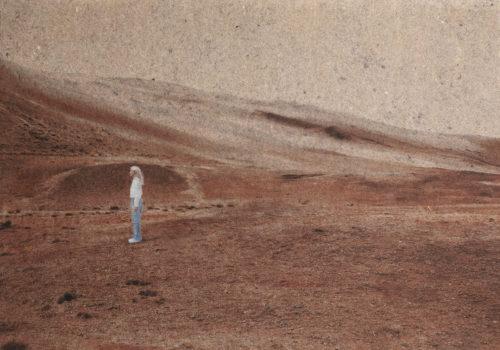
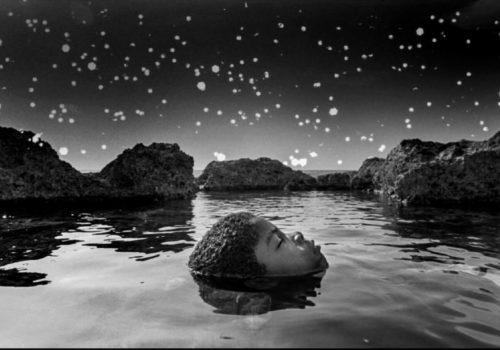
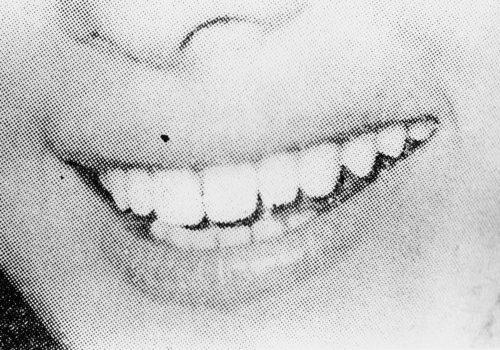
At the same time, he regularly published photographic essays in the specialized Japanese press (Asahi Camera, Provoke, Shashin Jidai, etc.) that functioned as manifestos. He also made numerous photographic pilgrimages in the footsteps of the very first photographer, the Frenchman Nicéphore Niépce. Many of his images, taken day by day, also constitute forms of mise en abyme of the medium. They hold up a mirror to it. The exhibition at the Fondation Henri Cartier-Bresson is not a traditional retrospective with a chronological sequence of masterpieces. It is based on a clear curatorial position, proposing to follow the thread of Moriyama’s obsession with photography itself.
The exhibition Lettres d’amour à la photographie consists of 60 prints accompanied by documents and publications, mainly from the archives of the Moriyama Foundation, and unfolds in 4 sections.
At the end of 1972, Daido Moriyama published an absolutely radical book entitled Shasin yo sayonara [Adieu photographie]. The book is a kind of “poke in the eye” or “declaration of war” against the photographic establishment. By presenting deliberately blurred, dark, off-center images, with grain and subjects that are not immediately recognizable, he challenged everything that constituted the conventions of “good photography” at the time. For him, this was a form of liberation from tradition. But after this clean slate, one had to learn how to photograph again. Moriyama then rediscovered photography through a series of explorations of the medium’s own capacities: framing, reproducibility, documentary value, etc. The printed form of the photographic image, through the book or the magazine, is very important to Moriyama. Each of his publications is a manifesto.
The exhibition Lettres d’amour à la photographie consists of 60 prints accompanied by documents and publications, mainly from the archives of the Moriyama Foundation, and unfolds in 4 sections.
Daido Moriyama
Born in 1938 in Osaka Prefecture, Japan, Daido Moriyama lives and works in Tokyo. Trained as a graphic designer, he turned to photography and became assistant to Eikoh Hosoe, founder of the Vivo agency, before starting out as an independent photographer in 1964.
He published various series in magazines such as Camera Mainichi, where he documented the rapid transformations of Japanese society. This work earned him the New Artist Award from the Japan Photo Critics Society in 1967.
Moriyama quickly made his mark with a radical approach to the photographic medium and a singular aesthetic, recognizable in his blurred, grainy black-and-white images, notably developed within the magazine Provoke. Rather than documenting the world objectively, he sought to capture its vibrations, invisible details, and fragments of life. His camera became an extension of his gaze, guided by instinct and curiosity. This visceral quest is notably evident in Adieu photographie (1972), a manifesto work that deconstructs the traditional codes of the image.
After a profound personal and artistic crisis, Moriyama returned to photography in the early 1980s.
He then continued his exploration of identity, memory, history, and the very essence of the image, while regaining a strong interest in street photography. He walked the streets of Tokyo, New York, and Paris in a state he described as a “photographic trance.”
His work has received several major awards, including the Lifetime Achievement Award from the International Center of Photography (2012), the Order of Arts and Letters from the French Ministry of Culture (2018), and the Hasselblad Foundation Award (2019).
Exhibition curator : Clément Chéroux
Scientific advisor : Jean-Kenta Gauthier
Daido Moriyama : Lettres d’amour à la photographie
Until October 4, 2026
Fondation Henri Cartier-Bresson
79 Rue des Archives
75003 Paris, France
www.henricartierbresson.org
This volume extends the exhibition Daido Moriyama – Lettres d’amour à la photographie by making available, for the very first time in French, a selection of twenty-two texts by the photographer. Written over the decades, these essays, fragments, and position statements illuminate his practice and his reflection on the medium from within. They reveal a free, direct, and often radical way of thinking that accompanies and extends his photographic oeuvre.
Daido Moriyama : Lettres d’amour à la photographie
Publishers: Éditions Delpire and Fondation Henri Cartier-Bresson, under the direction of Clément Chérou
Scientific advisor: Jean-Kenta Gauthier
Texts by Daido Moriyama, Clément Chéroux and Jean-Kenta Gauthier
Hardcover
17 x 24 cm
256 pages
100 color and black-and-white photographs May 2026
ISBN: 979-10-95821-86-1
€42
www.delpireandco.com