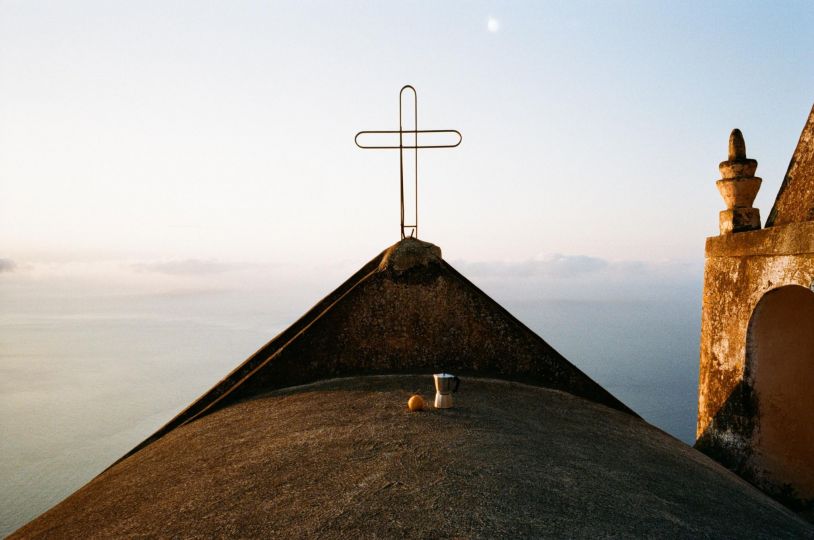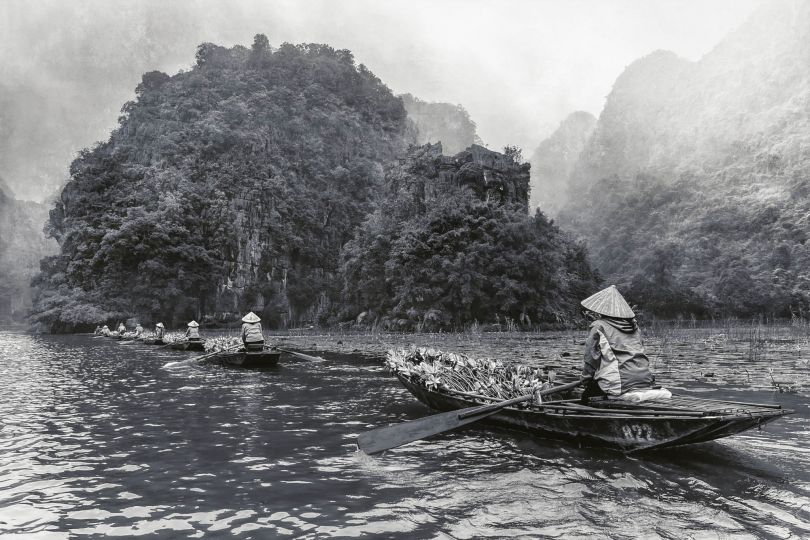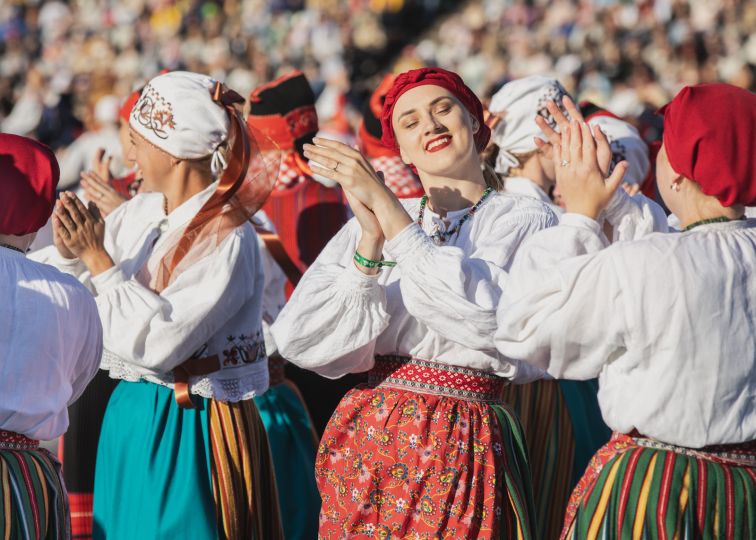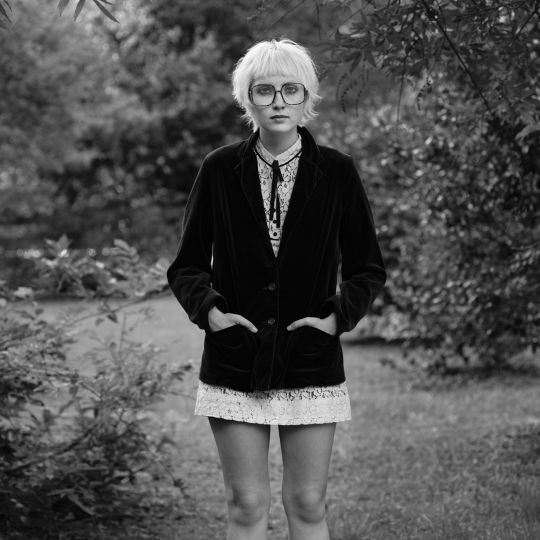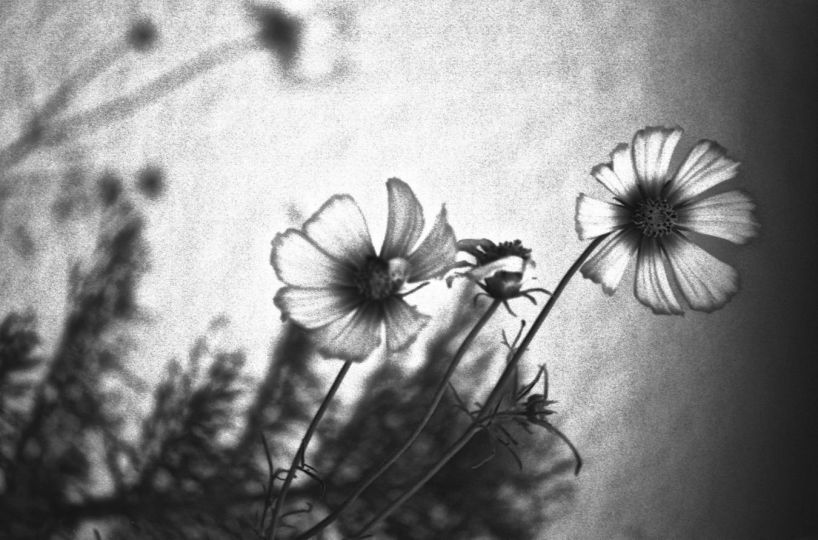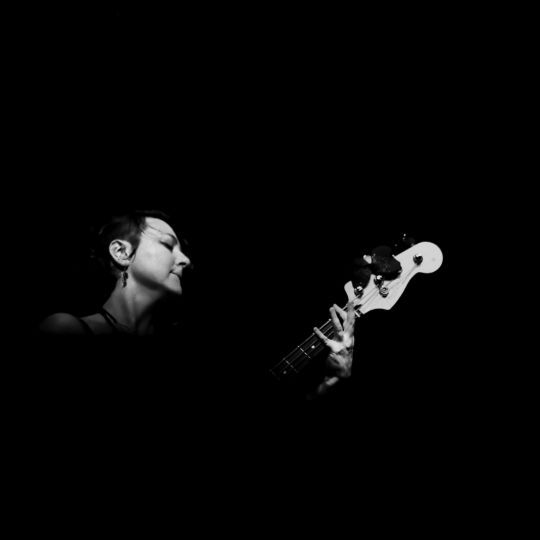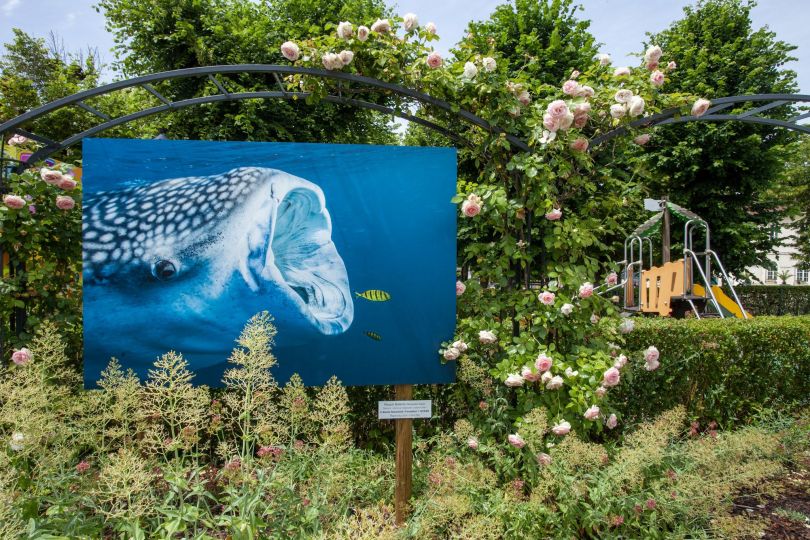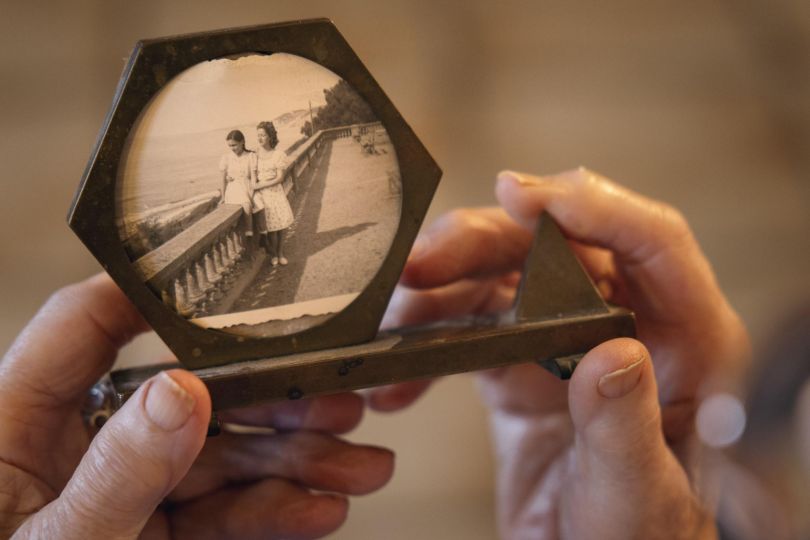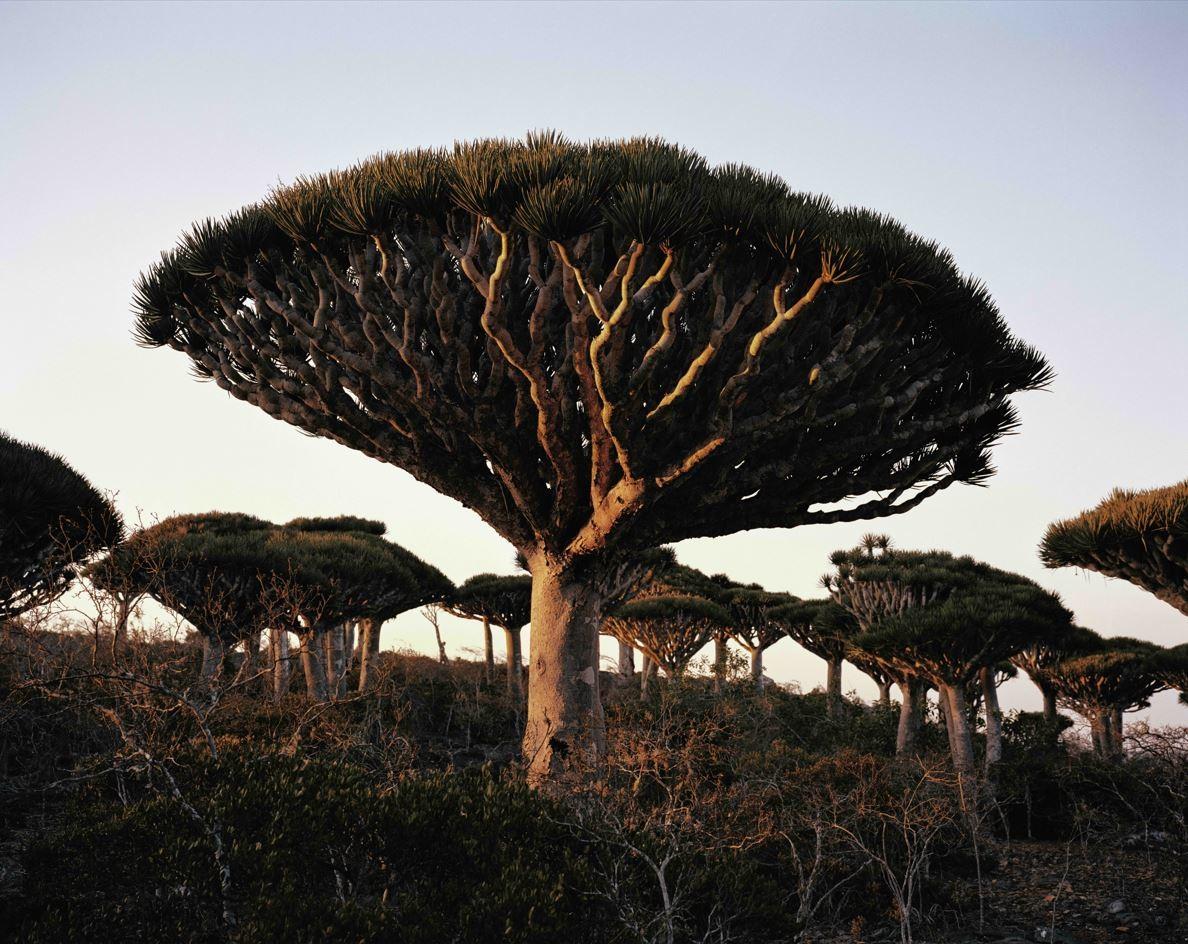
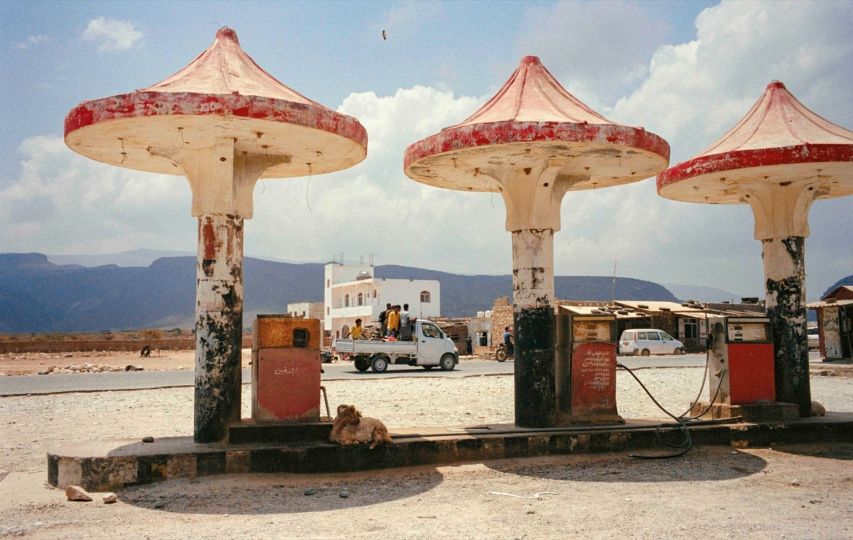


“Socotra is a raw gem lost off the coast of Yemen, populated by moons and starry branches typical of the dragon trees that watch over the island. These legendary trees are home to an old myth, that of Cain and Abel, according to which the two brothers first clashed here. The blood spilt gave rise to the red sap of the dragon trees – the sacred resin of these ageless trees, which have no rings but are the bearers of a thousand tales. Another legend has it that a dragon was defeated here by an elephant, giving its name to the Dragon Blood Trees.
At the exhibition, you’ll find this deep, almost blood-red resin, extracted from these trees that rise up in protective umbels. It can be burnt as incense or used as a pigment.
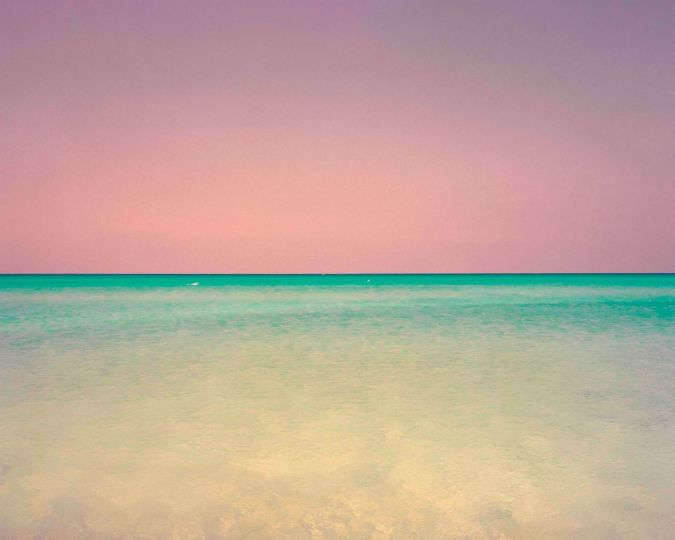
But Socotra doesn’t just live for its trees. It lives for its moons, its stars, its infinity. For the night that breathes as much as the day, for its dry, sweet perfumes, for its thousand faces of changing hues, for its luminous, burnt colours, for its blossoming fruit, for the bark of its stars, for the tiny shells that cling to this bark for just a few hours and then fall by the hundreds like a shower of fossils. For the ocean and the sea that meet, for the sea swallows that dive, twirl and dance with the currents.
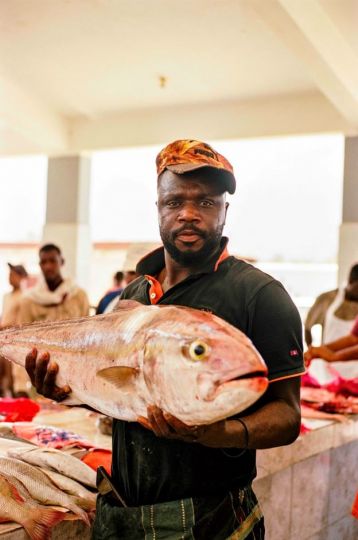
For its accompanying silver fish. Socotra is one of those rare refuges that has managed to preserve a fragment of the Soul of the World. This evanescent world where the pulse of Nature beats loud and clear and where human encounters have retained their essence of yesteryear. Beyond its infinite horizons, the soil of the island’s fishermen and shepherds unfolds…
… In the highlands, Egyptian vultures accompany the shepherds as they make their way down the rivers and up the forests, their goats recognising the accent of their song.
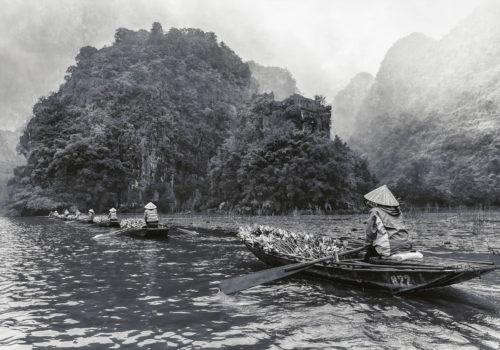
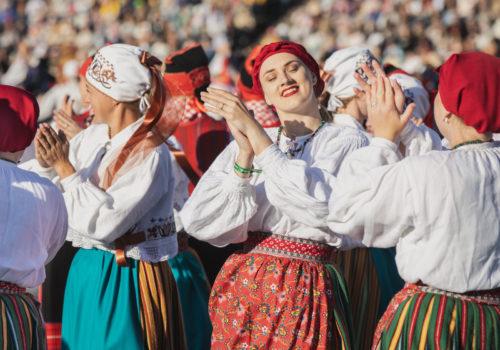
Further down the shore, fishermen hoist their nets at dawn and glide across water that is part sea, part ocean. Their movements are precise, rooted in skills passed down in hushed tones. Because in Socotra, stories are not written, they are told, sung and sometimes danced to the rhythm of the sea, the stones and the wind.
On this island, however, a whole literary imagination comes to life. Romain Gary’s, Joseph Kessel’s, Amin Maalouf’s, Jack London’s, Lampedusa’s… Literature has found its horizon here, the sky has planted its roots”.
Marguerite de Tavernost
Born in 1991 and based in Paris, Marguerite de Tavernost has refined her eye through various travel series where she lets herself go with the flow to spontaneously encounter the sources where the winds find their breath.
Marguerite’s work explores Nature, light movements and infinite variations of the atmosphere.
She also nurtures an anthropological angle by exploring cultures from within as some of her previous work reveals (Madagascar, Norway, Kenyan, Namibia, Faroe Islands etc). Intuition is her sole compass. She adopts the purist codes of analog photography, thereby “grounding herself in the moment, abandoning herself to contemplation in its most simple form and greatest purity”.
Her photographic practice plays with and sublimates imperfections that are inherent to film photography.
Marguerite de Tavernost – Ecorce de lune
Opening this Wednesday 25 June at Galerie Vellutini
Until Sunday 29 June
35 rue Guénégaud, Paris 75006
6-10pm.
Information
Galerie Vellutini
35 rue Guénégaud, 75006 Paris, France
June 25, 2025 to June 29, 2025