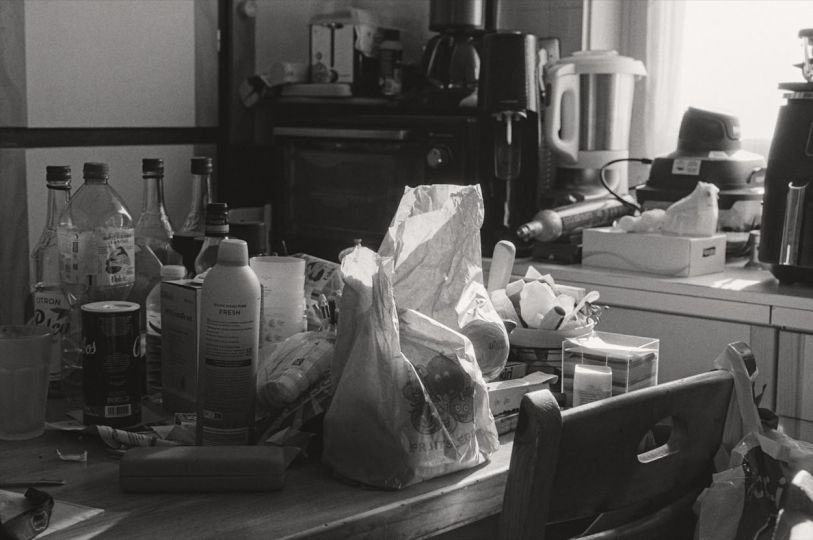
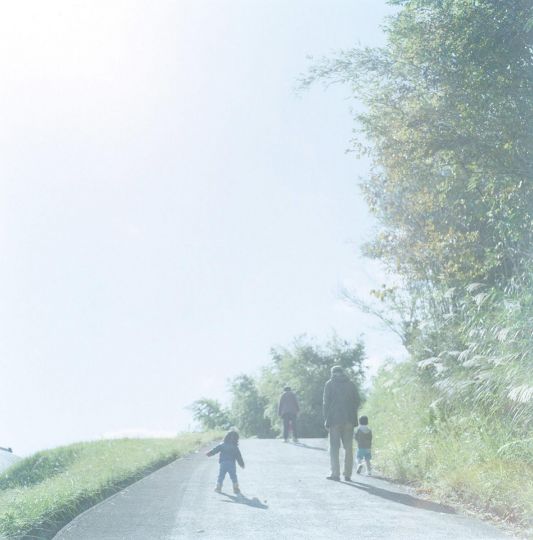
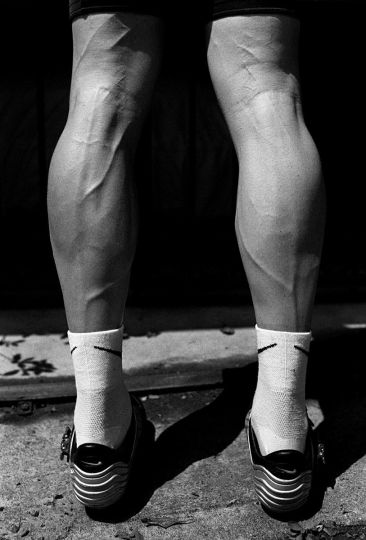
Andrew Macpherson fell in love with photography as a 13-year-old at school. He began working in the photography department of the National Motor Museum during school holidays, then after leaving school at fifteen, moved to London to do an apprenticeship at a photo production lab in Fleet Street. He went on to assist several legendary photographers including Horst P. Horst and Lord Snowdon before becoming a photographer in his own right at 23. He spent the first ten years of his career shooting fashion for The Face, Elle, Bazaar and Vogue before moving to Los Angeles at the turn of the millennium to focus his lens on the legends of entertainment.
During this time, he has been working extensively on personal projects which you can see on his website – www.andrewmacpherson.com
Gallery – https://www.arcanespacela.com/
Social media
- Insta @andrewmacpherson_official
Book and print sales –
- Book signing Saturday May 2nd at Arcana Books, Culver City – https://www.arcanabooks.com/
- Book and print sales through the Gallery – https://www.arcanespacela.com/
- Also, directly through the website – www.andrewmacpherson.com
Prologue: Andrew Macpherson’s Synchronicity represents a significant evolution from the polished worlds of fashion and celebrity portraiture into something more meditative and ecological.
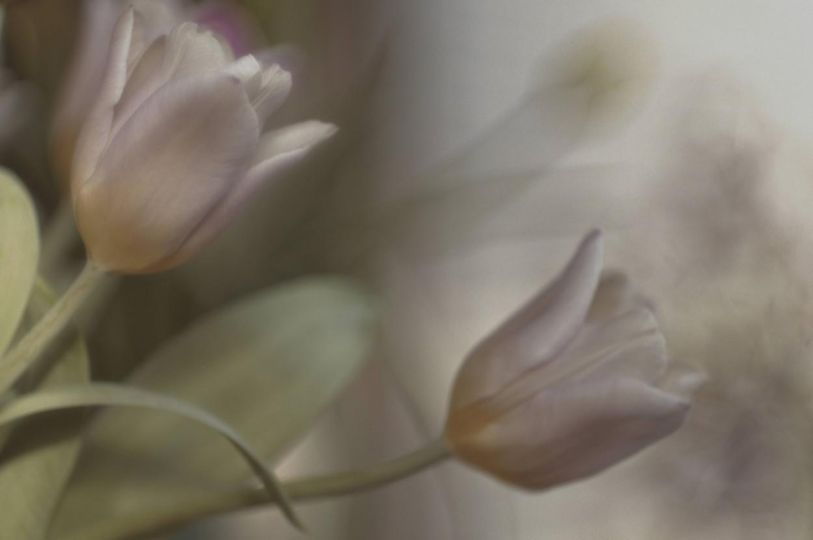
Macpherson: I believe our existence, the reason we’re here experiencing life’s journey, is for creation to see its magnificence through our eyes. I spent a decade photographing fashion in the time of Supermodels, then three working with the stars of entertainment here in Hollywood, and between that work of celebrating the beauty of humanity, I’m out searching for ways to see and celebrate the beauty of this reality. My daily hikes keep me connected to nature and the blanket of life wrapped around our planet. This series captures the fleeting beauty of the flowers seen on those hikes. The Exhibition Synchronicity opens at ARCANE Space in May 2026.
Lanza: Synchronicity project is rooted in the idea that nature in not passive. Discuss the title and references to the Jungian idea of” meaningful coincidence” and the reason for the naming?
Macpherson: The phenomenon of synchronicity was initially recognized by Carl Jung. He proposed it was a way of describing a coincidence of events which appear meaningfully related but are not causally connected, illustrating an intangible and mystical connection between mind and matter. This book was born of a series of synchronicities that I never could have envisaged.
The first synchronicity came with a sudden, overwhelming urge to get a little easy to carry camera to take pictures on my daily hikes. A quick search on Amazon brought one up for $12.50 that had been $900 a year earlier. I clicked “Buy it Now,” sure it must be a mistake, but three days later it arrived.
The second synchronicity came with the discovery that my serendipitously sourced little camera allowed me to capture the beauty of flowers in an unexpected and unique way. It echoed two of photography’s greats, Weegee, who’s graphic images revealed the underbelly of New York in the 40’s, and Guy Bourdin, who defined Paris fashion in the 70’s. With a conscious nod to their extraordinary work, I started capturing the flowers seen on my daily hikes. As the days turned to months, the project blossomed into imaging the flora and fauna I found on my travels across the American southwest.
The third synchronicity took two years to be revealed. When I began this project in 2021, we were still in a decade long drought. However, a series of atmospheric rivers ushered in two exceptionally wet winters, breaking the drought and producing extraordinary super blooms. The subsequent years have been much drier, giving us far fewer wildflowers, terrible fires, and a stark reminder that water really is the source of all life. When the rains fail life becomes imperiled, but when it falls in abundance, life blooms and blossoms in celebration.
Lanza: Discuss the process behind the images
MacPherson: The process behind the images was to document the flowers where they grew, to capture them in their environment. Over the two years I worked on this series I photographed many hundreds of cultivars, and became completely intrigued by their extraordinary range of, colors, shapes and stories. However, by the third year we were back into a much dry weather pattern, with five few wildflowers, and those that were blooming I had already photographed several times. That is when I stopped taking the pictures and started work on creating the book.
Lanza: To what extent is Synchronicity about perception itself rather than nature as subject?
MacPherson: This project, like all my work, is an exploration, but beyond that it is a prayer, a spiritual pursuit, a recognition of the magic and mystery of creation.
Lanza: Do you see interconnectedness in ecological terms, psychological terms, or metaphysical terms?
MacPherson: Absolutely, our weather patterns here alternate between long droughts and short wet spells. From the rains life flourishes an explosion of extraordinary colors and shapes, born of the dance of gravity and our seasonal cycles. The sun evaporates the oceans, then gravity pulls that moisture back to the ground as rain, from which blossoms a joyous celebration of the goddess of life.
Lanza: Your work seems to ask viewers to reconsider not only nature, but the act of seeing itself. Do you think photography still has the capacity to retrain perception in a culture oversaturated with images?”
MacPherson: Today’s over-saturation of images is on the screen, and this work is absolutely asking the viewer to take the time not only to smell the roses, but to appreciate the beauty of every part of them, from their roots to their petals, see the shapes see their life stories as part of the mystical and mysterious blanket of life wrapped around our planet.
Lanza: What affect do you hope the images have on the viewer?
MacPherson: Most of all I would like these images to evoke a sense of wonder at the magical and mysterious splendor of creation.
Text and interview Patricia Lanza