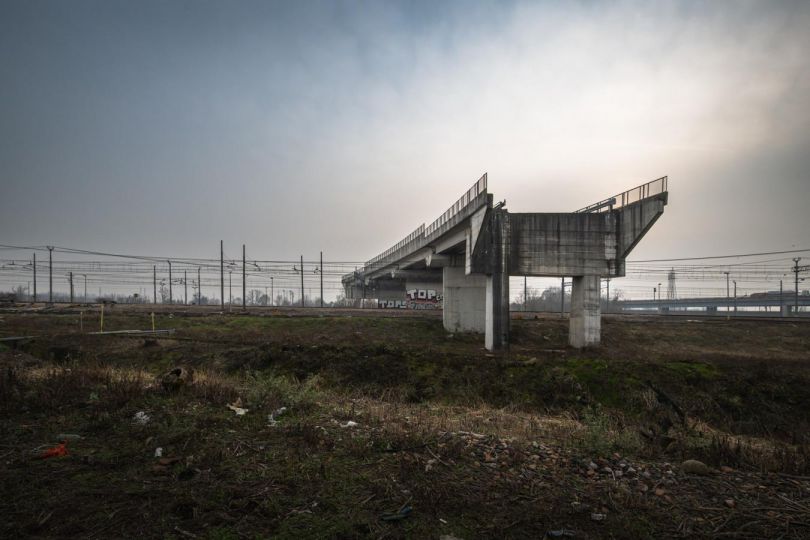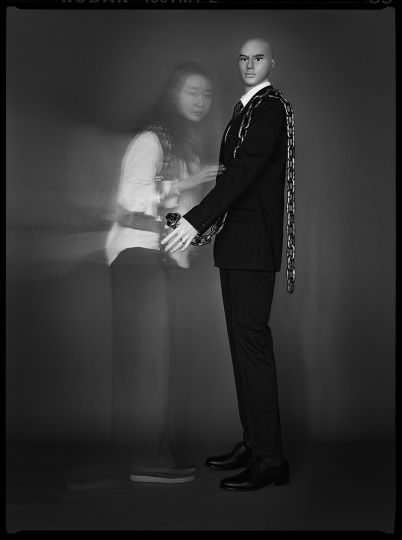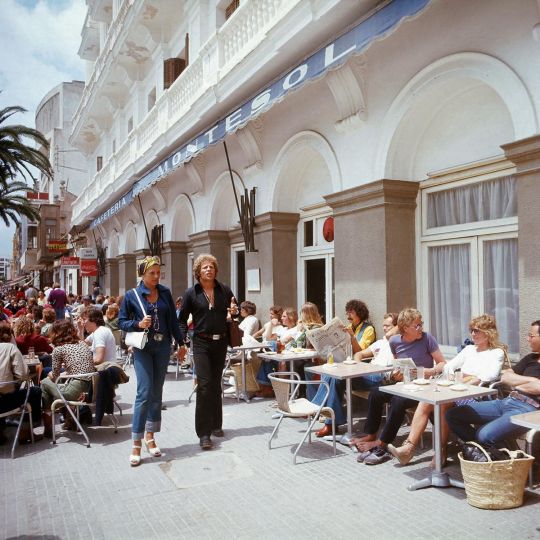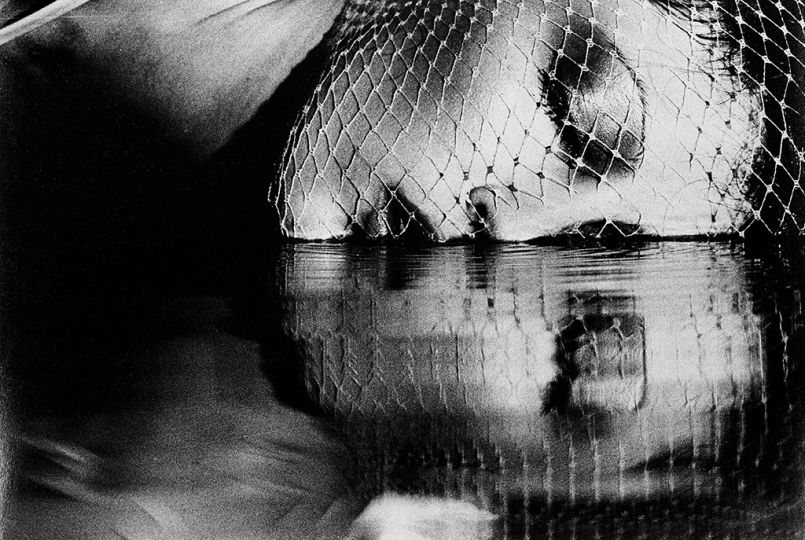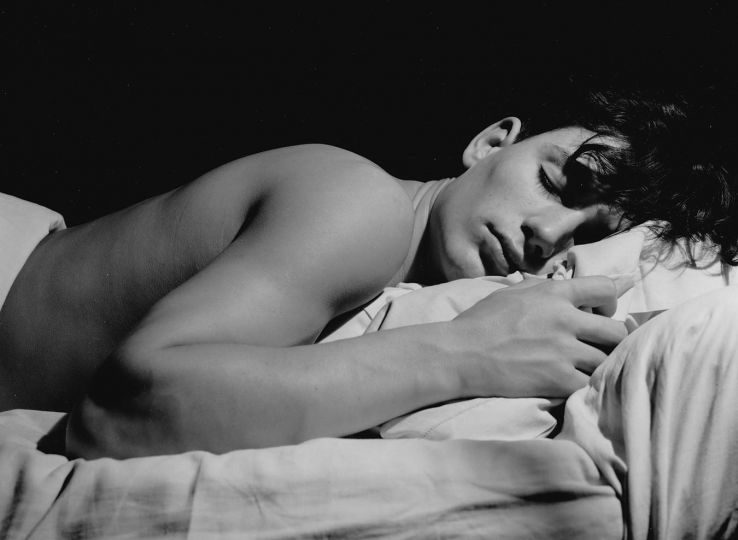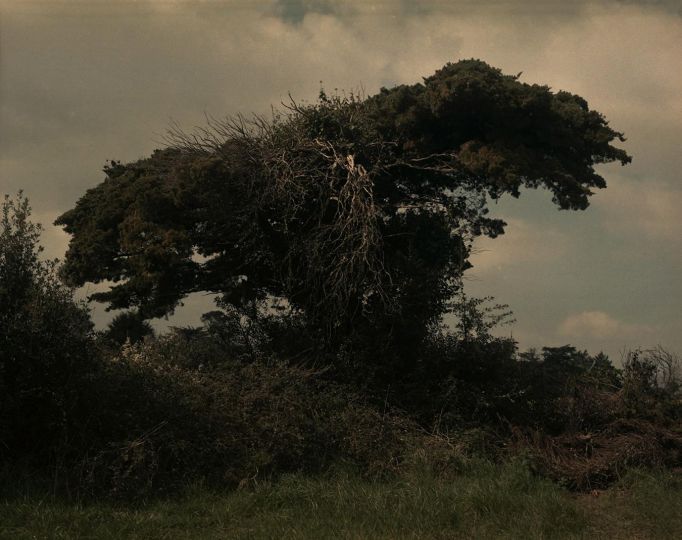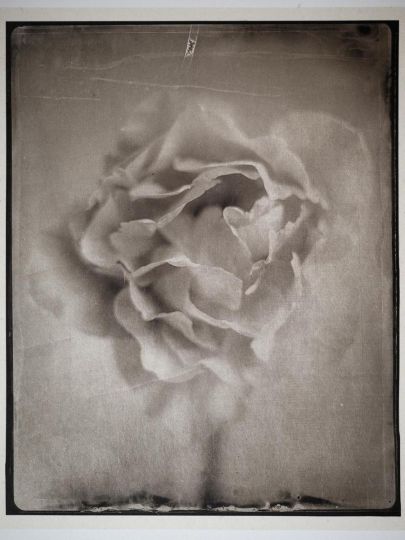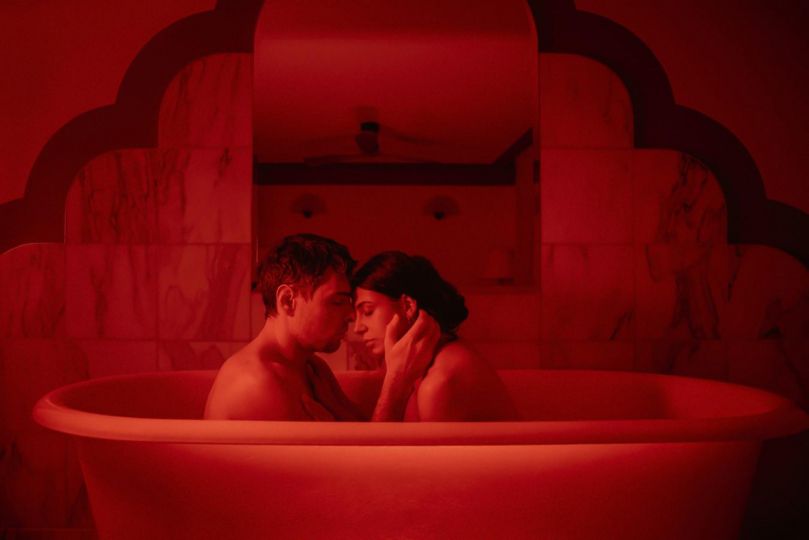
Château La Coste presents Laisser la vie se produire ( Let life Happen), an exhibition dedicated to the work of photographer Frank Horvat.
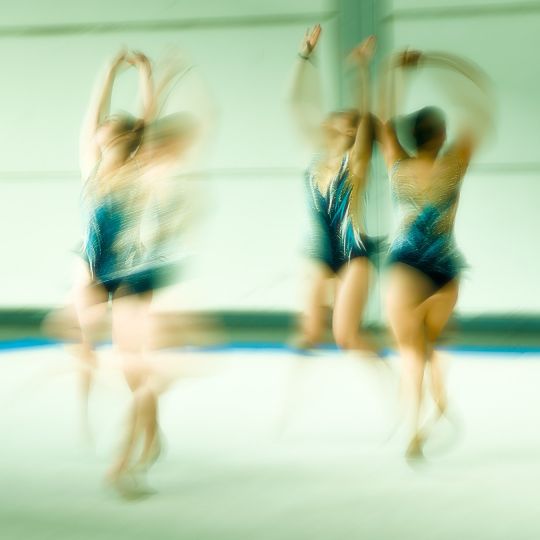
Borrowed from a phrase by Rainer Maria Rilke, a poet deeply admired by the artist, the exhibition’s title resonates as an invitation to inhabit the world as it is. Throughout his career, Horvat observed reality with rare freedom, allowing fleeting moments, bodies in motion, and unexpected framings to emerge—constantly testing photography’s ability to suspend time while remaining open to chance.
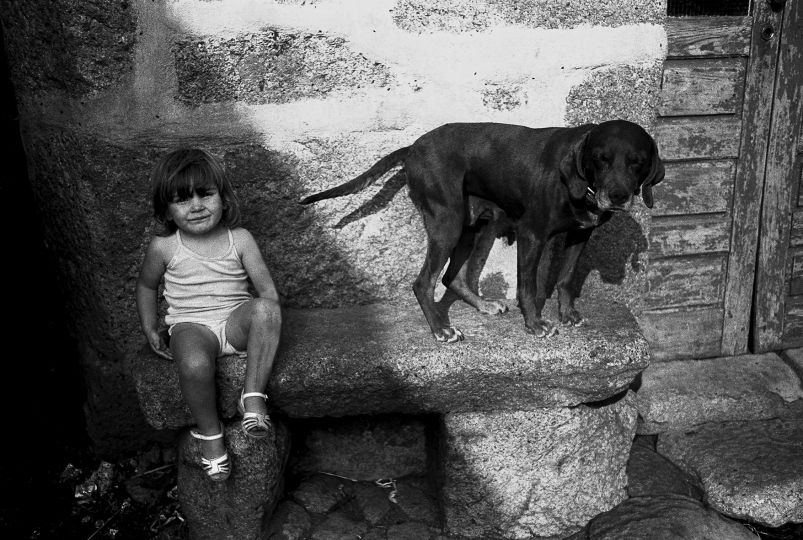
A major figure in twentieth-century photography, Frank Horvat’s work spans decades and genres, from the nocturnal streets of Pigalle to revolutionary fashion imagery, from iconic black-and-white photographs of New York to vibrant color series made twenty years later. Produced in close collaboration with the Frank Horvat studio, the exhibition brings together 46 original prints, covering a period from the mid-1950s to the late 1980s.
The first black-and-white series made in Paris and London established Horvat as one of the major photographers of his generation. His celebrated series Paris de nuit offers an intimate view of post-war nightlife. Often grainy, dark, marked by blur or movement, these images shot lmostly with a 35 mm camera portray dancers, night owls, cafés and bars, imbued with discreet sensuality and a melancholy, solitary atmosphere. They also reveal Horvat’s keen attention to the urban environment: textures, light, typography, and architecture play a central role. This sensitivity to the urban landscape continues in his photographs of London and New York, also presented in the exhibition.
« A good photograph is a photograph you cannot remake. A photograph must be unpredictable, and everything in it must be necessary ».
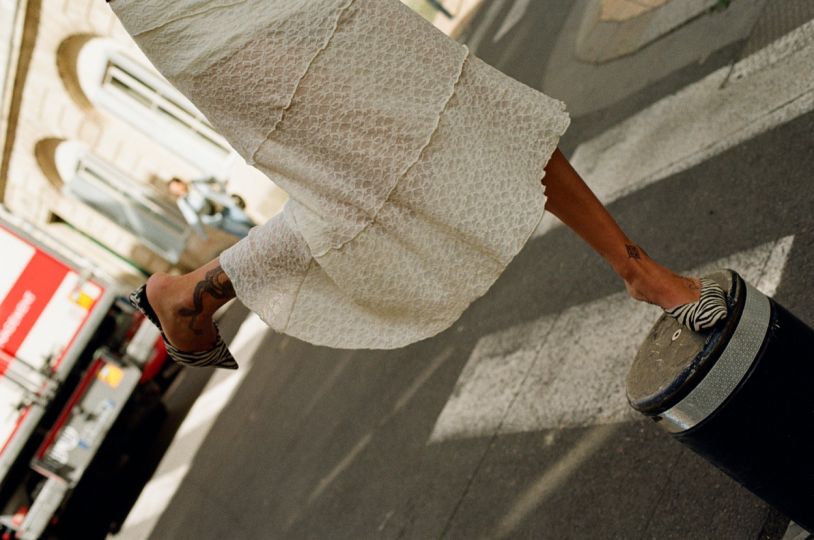
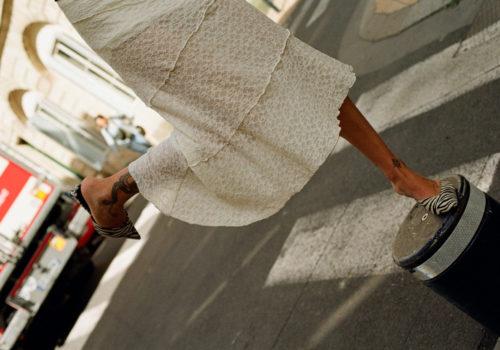
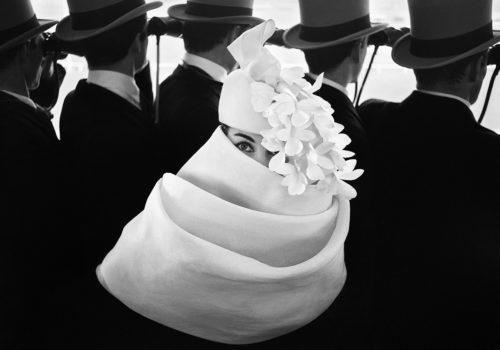
Moreover, the exhibition highlights Horvat’s innovative approach to fashion photography. Described as a « reportage style », his work breaks with studio conventions, favoring real locations, natural gestures, and the unpredictability of the street while retaining an undeniable sense of elegance and glamour. This approach profoundly influenced the language of fashion photography.
Beyond assignments Horvat’s enduring appetite for travel and observation runs throughout the exhibition, from an early photograph taken in Calcutta to later color images of New York. Across decades, his work remains strikingly modern, eschewing easy classifications in favor of a direct engagement with the present moment. The use of telephoto lenses and unconventional viewpoints often from above gave rise to several iconic images. The real, spontaneous, and psychologically complex character of his work has had a major influence on many photographers, across all genres.
Taken together, these works attest to a free, bold, and profoundly human corpus. Let life Happen, is to accept the world without imposing constraints upon it? This exhibition invites visitors to explore that question through Frank Horvat’s singular gaze.
A propos de Frank Horvat
Born in Abbazia, Italy, in 1928, Frank Horvat began his career as a photographer in 1950. A first formative journey to Pakistan and India from 1952 to 1954 brought him to the attention of the international press and earned him a place in the famous exhibition The Family of Man, at MoMA in New York, in 1955.
Settling in Paris in 1955, he produced reportages for Réalités and Jours de France, which led him to create several series on prostitution and the shows of “Paris by night”, as well as a major personal essay on Paris with a telephoto lens.
His outsider’s view of Paris caught the attention of Jacques Moutin, artistic director of Jardin des Modes. He suggested that Horvat apply his photojournalistic style to fashion photography.
This breeze of spontaneity, infused with humor, turned Frank Horvat into a successful photographer, working for the major fashion magazines through the 1980s, such as Vogue, Harper’s Bazaar, Glamour, or Queen.
He nevertheless sought to escape the stereotypes of reportage photography as well as fashion. In 1962–1963, he undertook an important photographic essay that took him to twelve major cities around the world: he gave free rein to his fascination with the hours of the night when masks fall away.
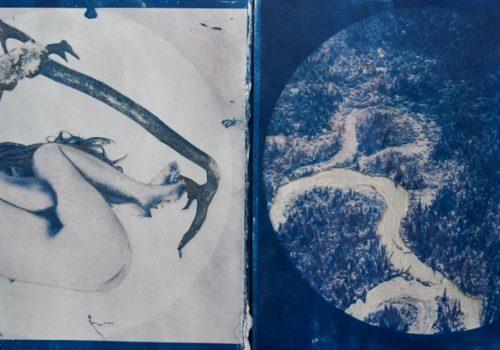
In the early 1980s, he turned his research toward New York, seeking abandoned individuals, tenderness as much as personal introspection on the passing of time and his own presence in the world. From then on, he pursued numerous personal projects guided by his explorations of color (the New York Up & Down project, the Trees project from the 1970s), the beauty codes (Vraies Semblances), his early exploration of digital technology from the 1990s onward, or more intimate investigations such as his exploration of Europe with 1999 or La Véronique in 2004. He continued to photograph everyday life up to 2020 with L’oeil au bout des doigts.
Frank Horvat died on October 21st 2020.
For 40 years, he exchanged prints with photographers he admired. This collection of 500 photographs illustrates the artistic language to which Frank Horvat belongs.
His studio-home in Boulogne-Billancourt still preserves 70 years of archives, as well as his personal collection, now managed by the Studio Frank Horvat. The studio archives, promotes, and exhibits this unique collection.
Frank Horvat : Laisser la vie se produire
15 February – 12 April 2026
Château La Coste
Galerie des Anciens Chais
2750 route de la cride
13610, Le-Puy-Ste-Réparade
www.chateau-la-coste.com