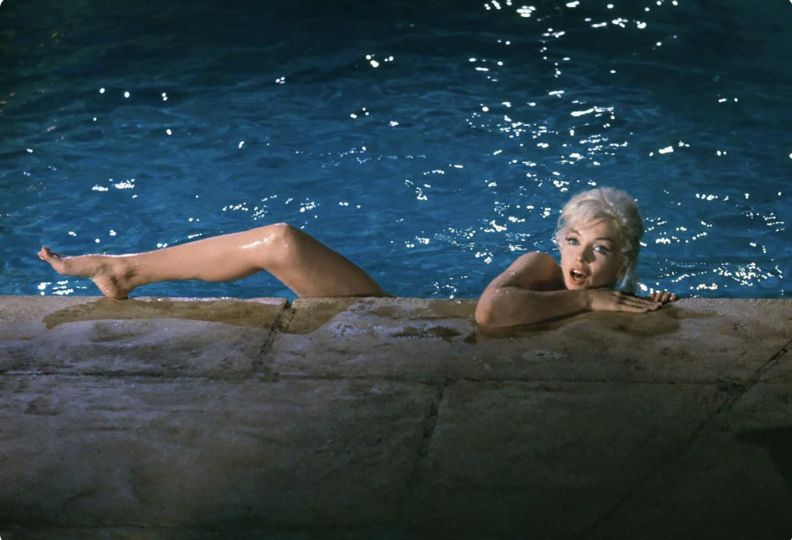
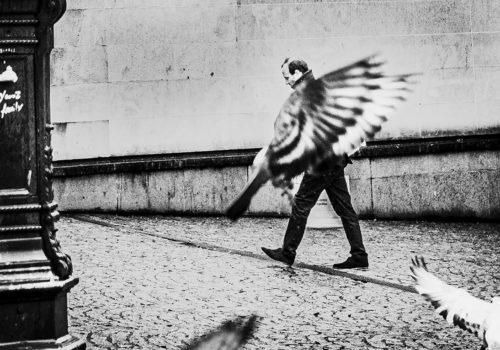
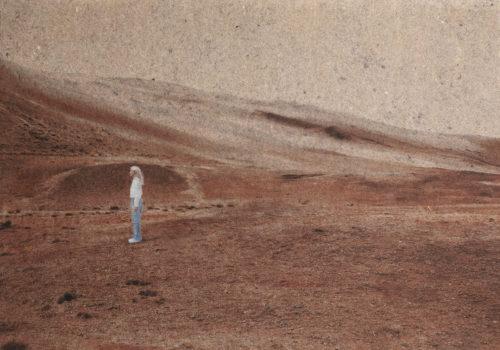
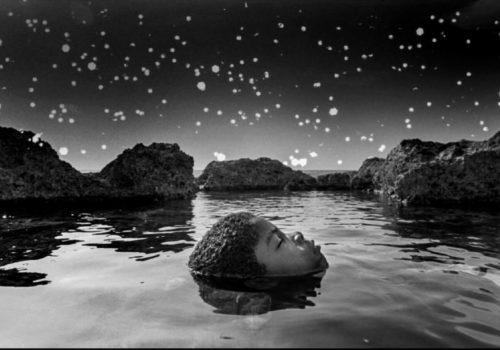
A book can change a life. Discovering Les Américains by Robert Frank in the late 1950s, Bertien van Manen suddenly understood what her photography could be: a way of inhabiting the world rather than commenting on it.
In those pages, she sensed that it was not about proving but about looking, about letting things come. This revelation acted like an inner shift: photography will no longer be, for her, a theater of effects, but a space of relationship.
Daughter of a mining engineer in the Netherlands, she grew up in a world marked by work, rigor, and an awareness of social realities. In 1985, she travelled to the American Appalachians to meet women working in the coal industry. She traded her professional equipment for a modest 35mm. This gesture was not insignificant. It marks the abandonment of fashion commissions and polished staging in favor of a more fragile, almost domestic temporality. The lightweight camera became the tool of free movement, of discreet attention.
In small wooden houses, mobile homes, or makeshift cabins on the forest’s edge, the photographer shared meals, silences, laughter, waiting. She sat at the kitchen table, watched light slide across a plastic tablecloth, listened to whispered confidences. She did return for more than thirty years, faithful to these places and these women. Her images, never cynical, hold together the harshness of living conditions and a fragile beauty caught in a flash of light, a suspended gesture, a gaze that meets the lens without defiance.
Born in 1935 in The Hague, first a model and then a magazine photographer, Bertien van Manen very early turned away from spectacle. She prefered to keep company with people on the margins and with grand narratives. Neither diary nor family album, her photographs borrow the apparent simplicity of those registers in order to subvert them. The bed, a recurring motif, speaks of that territory of intimacy where sleep, love, and exhaustion play out. Private space becomes a silent political stage.
Her work, unfolded in the Netherlands, the United States, the former USSR, or China, composes a subjective chronicle of ordinary lives, jolted by a history that exceeds them. She photographed upheavals without naming them head-on, attentive to the traces they leave in bodies and interiors. Books, even more than exhibitions, become the privileged space of this sensitive documentary writing. The sequencing of images builds a rhythm, a breathing, a lasting closeness with those she met.
In this state of wandering and displacement, Bertien van Manen has built a rare body of work: a photography of empathy, without pathos, where each encounter became world, and where each world, patiently approached, teaches us to look differently.
Jean-Jacques Ader
Exhibition from 21 February to 3 May 2026 at the Centre d’art et de photographie de Lectoure (Gers) Open Wednesday to Sunday, 2–6 pm, free admission
Centre d’art et de photographie de Lectoure
Maison de Saint-Louis
8 Cr Gambetta
32700 Lectoure, France
https://centre-photo-lectoure.fr/