Avedon. His new portraits, with commentary by Roland Barthes of the Collège de France.
Avedon’s portraits often bring to mind a collection of rare, exotic, and sumptuous butterflies. For all of them, the treatment and capture were the same, and the hunter’s only pleasure seems to have been to pin them uniformly in ordinary, unadorned boxes.
Avedon’s latest book, “Portraits,” is published this month by Editions du Chêne. It is cold, icy, beautiful, and fascinating. We asked Roland Barthes, a professor at the Collège de France and one of the masters of structuralism, to explore the meaning of the other side of the image and of this strange hunt. He writes: “Looking at a photograph by Avedon: you will see in action the paradox of all great art of the great race: the extreme finiteness of the image opens onto the extreme infinity of contemplation, of stupor. How many photographs are rather stupidly said to be “living,” “animated,” etc., all mythical values mobilized by the advertising of photographic equipment! But Avedon’s art is to take still photographs, and is therefore inexhaustible, like an object of fascination: what fascinates both the dead and the living is what makes it fascinating.” Avedon’s photographed bodies are in a sense corpses; but these corpses have living eyes, which look at you, and which think: this realistic art is also a fantastic art.
The Seven “Gifts” of an Avedon Photograph
From this, a committed production, immediately opening a social critique, and which, however, does not fall into the stereotype of commitment: Avedon, in some of the photos I saw, manifests the opacity, the hardness, the involuntary sadness of the American establishment, everything that makes the man who has arrived a closed body, who has given too much to power, not enough to pleasure; but in a second part of his work, and sometimes in the same photos (why not? History is complicated), without departing from his style, it is something completely different that he presents to be seen : pensiveness, gentle severity, intelligence freed from the poses of intelligence, entirely gathered in the eyes, which never lie. From this comes that, in front of a photograph of Avedon, one always communicates with the model: not only does he speak to you, or better still, because more heartbreaking, he wants to speak to you, but you also respond to him, with the very impossibility of detaching yourself from this image which holds you without repeating itself (is it therefore a loving relationship that we have with these photos?).
I spent an entire evening looking at Avedon’s photographs; the day before, I had gone to the cinema, where I had been a little bored, and I was comparing (albeit with a certain injustice) these two arts. Avedon’s leads towards a theory of Photography, unjustly sacrificed today to the flourishing Theory of cinema or even of Comics. As a production, Photography is prisoner of two unbearable alibis: sometimes it is sublimated under the guise of “art photography”, which precisely denies photography as an art; sometimes it is virilized under the guise of reportage photography, which draws its prestige from the objective it has captured. But Photography is neither a painting, nor… a photograph; it is a Text, that is to say a complex, extremely complex meditation on meaning.
Here, for example, is everything I read in an Avedon photograph, the seven gifts it gives me: first, the true, the truth, the sensation of truth, the exclamation of truth (“how true!”); then, the character (pensiveness, sadness, severity, satisfaction, gaiety, etc.); then, the type (the politician, the writer, the manager); then, Eros, a commitment, either seductive or repulsive, to affect; then, death, the vocation of the corpse; then again, the past, what has been captured, can no longer return, can no longer be touched; finally the seventh sense is precisely the one that resists all the others, it is the unspeakable supplement, the evidence that, in the image, there is always something else: the inexhaustible, the intractable of Photography (desire?). Avedon’s photos make me do this whole journey, and start again endlessly; with them, it is never finished; they are both rich and naked, they give constantly, and constantly hold back; in short, they are the very figures of a dialectic: in them, the greatest intensity of meaning, and finally the very lack of meaning: something of a restrained enjoyment.
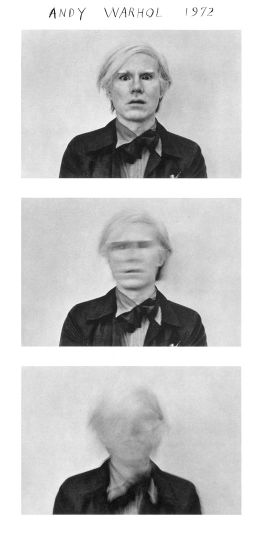
First of all, the senses abound, the excitement is at its peak; and then, led by an inflexible, though supremely discreet, hand, Avedon’s, the sense is exhausted: of the body represented, no sure adjective remains. It seems to me that if I were photographed by Avedon, I would have (finally!) no desire to judge my own body (with the image of which, like everyone else, I maintain thorny relationships), to find myself too much of this, not enough of that: my body would simply persist in being, in persisting: Avedon’s photography does not play (unlike the photographic image): no one is ugly, no one is beautiful (except, for an exception that signs the rest of the project, the two naked boys of Andy Warhol’s “factory”).
In short, I would be such, and in this suchness of my body, I would perhaps experience something of the serenity of the great oriental sages.”
Roland Barthes