Nature, ecology and aesthetics prevail at Flat//Land Gallery:
ANNELIES DAMEN NL 1968
For over two decades, Annelies Damen has returned to the Lamu Archipelago off the coast of Kenya. Lamu has long been a crossroads of African, Arab, Persian and Indian cultures. Over centuries, people from different regions, settled here. Each bringing distinct roots, traditions and identities. From this convergence emerged a vibrant Swahili culture, developing from the twelfth century onwards which is still thriving today. The knowledge passed down through generations how to live in community, share resources, pass on traditions and sustain collective life is fading, and with it, cultural identity itself.
LONGING FOR LAMU unfolds both as a love letter and testimony—a formal simplification that mirrors the precariousness of the ecosystem and the cultural knowledge under threat. Her works bear witness to a place where cultural memory, environmental balance, and human identity remain inseparable—and increasingly fragile.
ZANA BRISKI UK 1966
In NIGHT WILD – PHOTOGRAMS OF ANIMALS MADE IN THE WILD, Zana Briski has deepened her connection to and collaboration with wild animals by taking the camera out of the picture. She creates one-of-a-kind, life-sized photograms of wild animals at night in the field. These photographic prints are made directly onto light-sensitive photographic support without a camera, lens or negative only time, presence, and trust.
From Africa to Australia, Brazil to Borneo, Zana embarks on unhurried five-month long expeditions. When an animal appears, Zana make a quick exposure with a small handheld flash, minimal enough to go unnoticed. After the animal disappears into the forest, she collects the paper and later develops the print in her darkroom. Only then does the image reveal itself.
The result is a unique and magical direct impression of a wild animal onto photographic paper. What emerges is not an image of an animal, but a physical imprint of an encounter part shadow, part apparition. The effect is visceral and profound.
KIM BOSKE NL
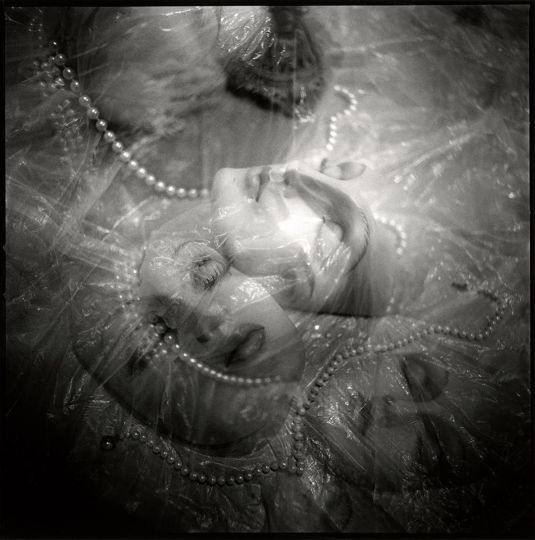
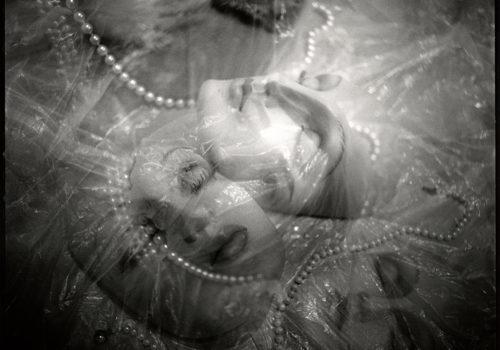
The multiple layers in Kim Boske’s photographic images seem to be holding, one layer upon the other, merging and intertwining, different moments in time, revealing hallucinating phenomena that are impossible to see with the naked eye. By going beyond the photographic media, which captures the “moment”, Boske collects fragments of reality that are then layered into intricate and mesmerizing compositions which pay tribute to the incredible complexity of the natural world. This multitude of layers can be interpreted as a play with ecological ideas of diversity and symbiosis, embracing the character of the environment as a non- hierarchical, continuously changing complexity. In Kim Boske’s latest project Ensō no photographic lens was used. Boske worked only with washi paper and layers of her own handmade recycled indigo dots from pieces of prior photographic indigos. These tiny works of art depict streaming rivers and invisible micro-organisms. Working with natural materials reflects both literally and figuratively the importance of biological diversity through the presence of the many soil micro-organisms in her work.
VINCENT MUNIER F 1976
Vincent Munier is one of the most acclaimed and respected wildlife photographer and cinematographers of the world. His work is known for his exceptional ability to capture silence, mystery, and respect for nature.
Munier won numerous international awards, including the César for Best Documentary for “The Velvet Queen,” one of the most prestigious awards in France. In 2026, he again received a César for Best Documentary and a César for best Sound with his new film “Le Chant des Forêts (Whispers in the Woods).
SCARLETT HOOFT GRAAFLAND NL
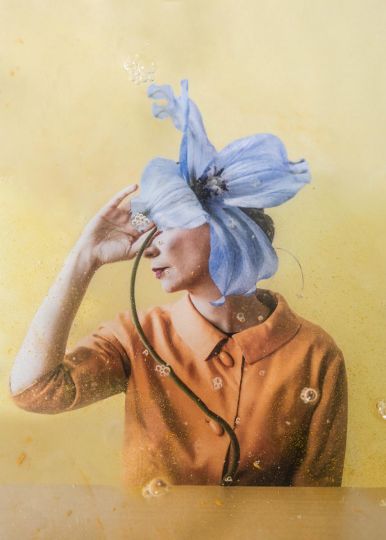
Scarlett Hooft Graafland is known for staging surreal landscapes in nature which reflect issues faced by local communities. Recently, in January 2026, she visited one of the oldest pyramids of Egypt. Built around 2700 BC as the final resting place of the very first pharaoh, its cultural and architectural value is enormous. Hooft Graafland created a new work ‘Dust to Dust’ with two brooms and their shadow line a new pyramid.
Traveling to the most isolated corners on earth, for Scarlett Hooft Graafland these austere surroundings become live actors in the highly choreographed performances that she stages there. Whether it is the salt desert of Bolivia, the Canadian arctic, Madagascar, Socotra island or Vanuatu, Scarlett Hooft Graafland merges with the surroundings and the local culture. After weeks of preparation, working closely with inhabitants, Scarlett creates a scene, where local social issues take center-stage and the vast surreal landscape becomes the chorus of a classical tragicomedy that silently comments on the subject.
John Devos
johndevos.photo (a) gmail.com