







At the Archives de Lyon, the exhibition Instants Polaroïd showcases the unique and multifaceted world of photographer Alain Guillemaud through his specialisation in instant photography. An interview with the artist.
When you began working as an independent photographer in 1987 in studios in Lyon, you were mainly working on commissions, within a highly codified framework, in the era of analog photography when everything had to be perfect from the moment the picture was taken. How did your eye and style develop in such a constrained environment?
The work was intense, but formative. We photographed everything, from tins of peas to ping-pong tables. At school, it was very theoretical. Here, the image had to work, to sell. I learned the discipline of preparation and the importance of lighting. In the studio, I loved working with a large-format camera on highly constructed images. Then corporate reportage allowed me to leave the studio and meet people. In advertising, you had to be creative, come up with ideas and propose an original angle. But time was limited. We also worked from layouts drawn by art directors. There were tensions. There was also the client, with their whims. I remember an art director who absolutely wanted mimosa in wine photographs, out of season. We imported it from the other side of the world, only to discover that the company director was allergic to it. It was absurd, but typical of advertising in the 1980s and 1990s, when fortunes were sometimes spent on artificial details. In corporate photography, paradoxically, there was more freedom. Agencies were less present. But even there, you still had to convince.
When you chose Polaroid to pursue your artistic research, it was largely associated with popular, amateur and family culture. Wasn’t that a paradox?
Yes, there was that rather banal image of birthday photos, Christmas pictures, family albums. But at the same time there was also the whole image of the Factory, with Andy Warhol, where Polaroid became a tool for creation and mythology, with images of artists and musicians. It was no longer just about photographing a birthday cake. There was a certain ambiguity. Experimental artists such as William Wegman with his dogs, Paolo Roversi with his large formats, and Sarah Moon with her blurred, dreamlike images were of great interest to me. You also have to find the right tools in order to break free. You don’t work in the same way with a large-format camera, a Polaroid camera, a digital camera or a smartphone. People in front of the lens don’t behave in the same way either.
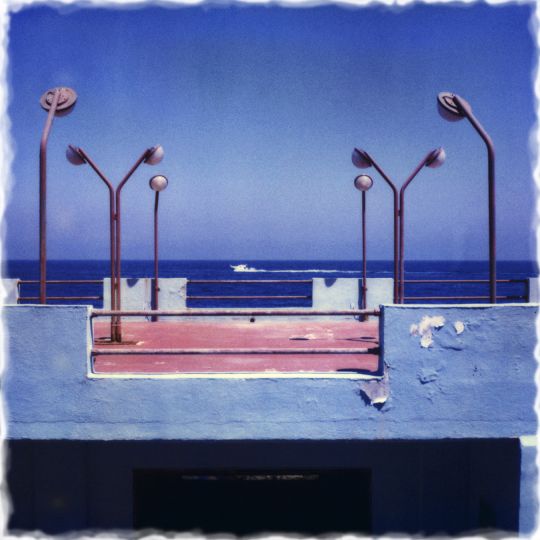
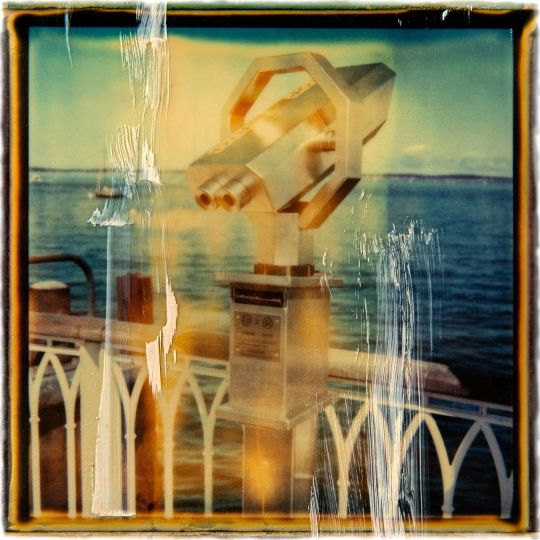
When discussing your seaside Polaroids, you tend to avoid the term “landscape,” preferring “wandering” or “drifting.” Color, particularly blue, plays a central role. One might think of the paintings of Yves Klein as well as the writings of Michel Pastoureau on the social history of color.
When I say I don’t like landscape, that’s not entirely true. What I don’t like is the cliché landscape, the kind you make just to say “I was there.” What interests me more is color and atmosphere, especially those of seaside places, slightly remote, somewhat outdated, romantic, inviting reverie. I think this partly comes from painting. When I go to a museum, I look a lot at still lifes, composition, objects. You realize that the rules are very close to those of photography. I like introducing a detail, a small variation, as painters do. Sometimes I think I would have liked to be a painter. Maybe these photographs are a way of being one. What I don’t like are overly flashy colors, saturated red-yellow-blue combinations. They bother me visually, I find them lacking in subtlety. I prefer colors that breathe, that leave room for nuance, time and material. That’s where I feel at ease. I like the colors of the 1970s, the sky blues of cars, particular shades of green, varnishes, tinted glass.
In 2002, you won the Polaroid International Prize. You stood out by submitting not original prints or conventional enlargements, but Polaroids with blurred edges, printed on textured paper, at the dawn of digital printing, in a context dominated by satin, ultra-glossy papers inherited from the advertising aesthetics of the 1990s. What did this prize change for you?
Until then, I kept a strict separation between my professional practice and my personal work. I rarely dared to show my artistic work to advertising agencies. After the Polaroid Prize, things changed a little. Of course, you can’t rely solely on awards to build a career, but they do provide a certain legitimacy.
Why does still life occupy such an important place in your work? As a classical genre in art history, does it allow you to play with pictorial codes while also slowing down time? Can these carefully composed images also be seen as a form of self-portrait or portrait of an era, where nostalgia, humor and irony often intermingle?
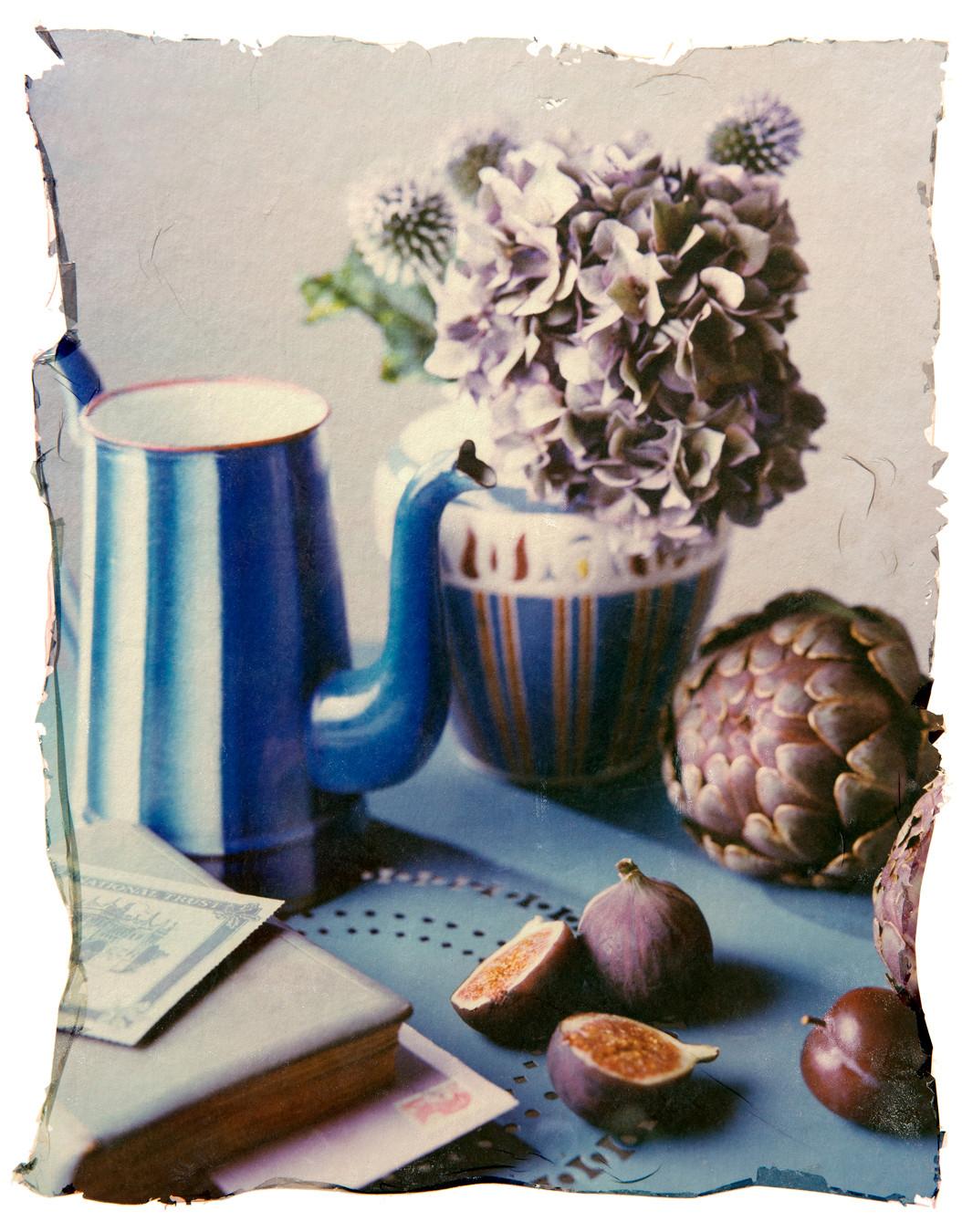
I have always loved still lifes. I have never stopped making them, even though this field remains relatively underexplored today, both in art and in advertising. For me, they offer a space of total freedom. You can play with all the elements, composition, light, details. It’s very playful, almost without limits. Sometimes I find it hard to stop. I can spend hours, entire days moving objects around, testing several variations of the same image, exploring a bouquet of flowers in countless ways. Still lifes also allow you to recompose reality, sometimes to have fun with it by creating distance, and thus transform the ordinary into emotional memory. Each object tells something about our past-present, family memories, obsolete technologies, everyday items more or less trivial. These seemingly insignificant traces, signs of passing time, become symbols of our individual and collective histories.
Among your still lifes, some stand out for their monumental film format and exceptional resolution, offering total immersion in the image. How were these photographs conceived?
These original images were produced in 2003 using a legendary camera, the Polaroid 20×24 inch (50×60 cm), considered the largest instant camera in the world. One of the rare examples of this camera was lent to me for a few days after I received the Polaroid Prize. Each print is unique and requires absolute precision. Before capturing these images, I tested composition and lighting on smaller formats. The size of the format and the use of long focal lengths reduce depth of field, but in the sharp areas of the image the resolution is astonishing and the grain of this instant film is almost invisible.
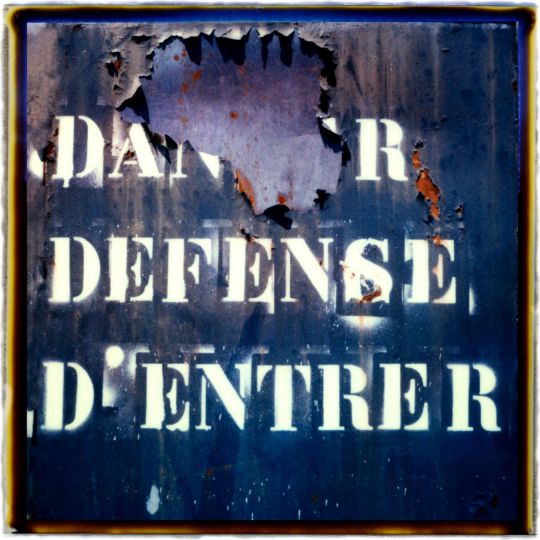
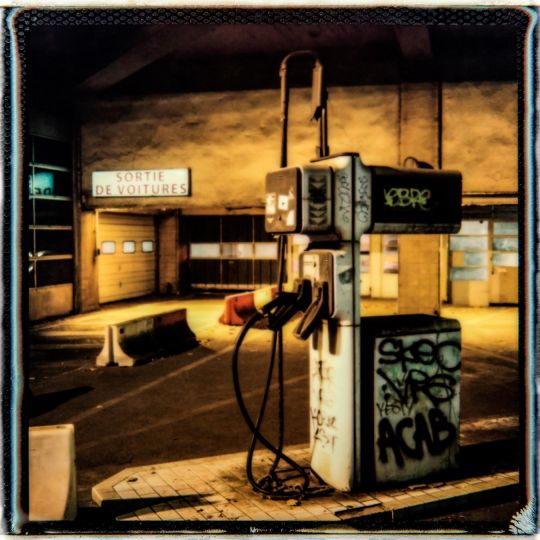
When you photograph these abandoned places, factories, squats, small shops, you are not seeking spectacular landscapes or urban exploration in the usual sense of aestheticized ruins, but rather ordinary, sometimes forgotten places?
These are everyday places where people have worked and lived. Today they are demolished, transformed, replaced by something else, without always questioning what is gained. With my images, I simply want to look at these places and pay attention to them. Some may be perceived as political, although that is not my intention. For example, a photograph bearing the words “There will be no return to normal.” Many see it as a slogan linked to the pandemic, whereas I photographed this occupied building more than ten years ago. The phrase spoke to me for that specific place. It was neither a slogan nor a manifesto. But I find it interesting that people project their own ideas onto it. I like that shift, when an image does not immediately reveal its meaning. Even in advertising, I sometimes slipped in a detail that the client did not initially want, which amused me. When people interpret my images in many different ways, such as that green butcher’s shop façade that some see as an ecological or nostalgic statement, I appreciate it, because it was not premeditated. I prefer that to a clear, explicit, imposed message. I don’t particularly like explaining my images, not out of disdain for the viewer, but because I prefer everyone to form their own interpretation.
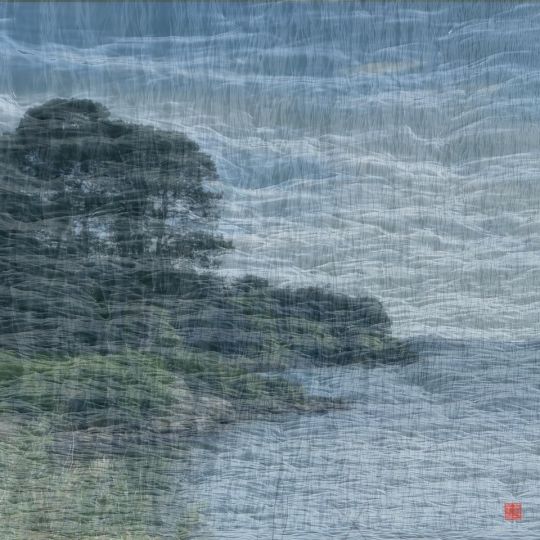
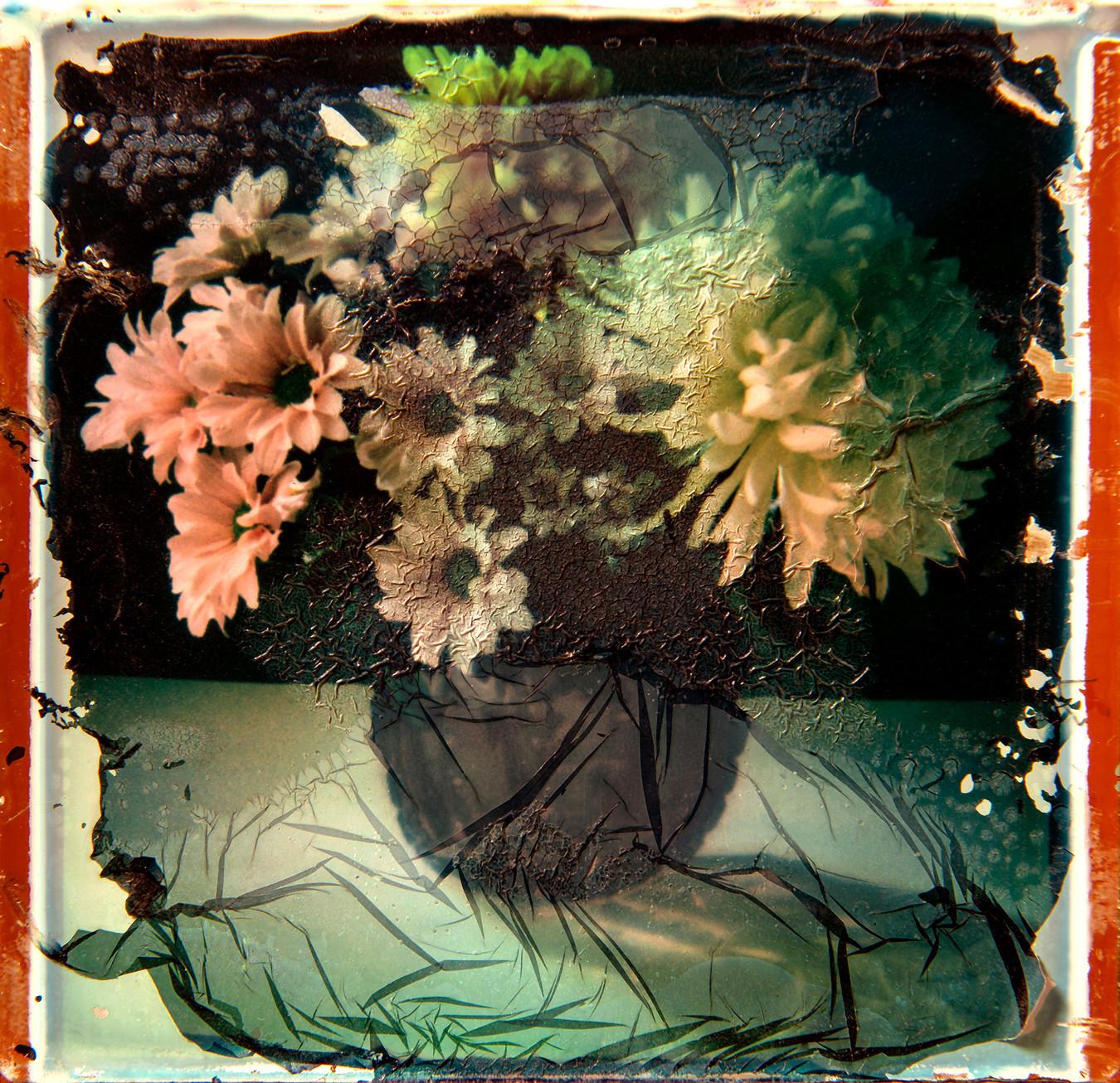
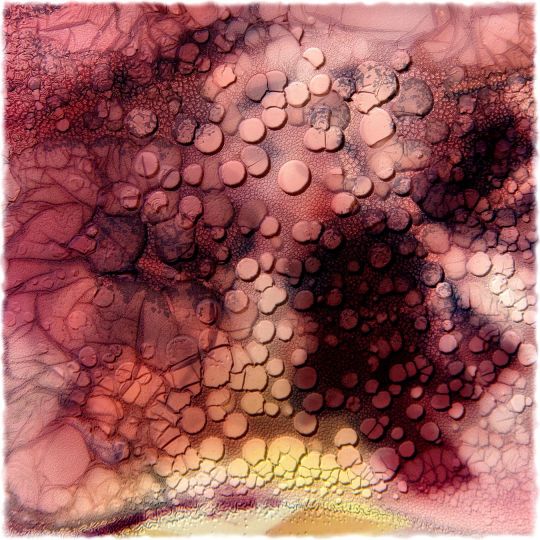
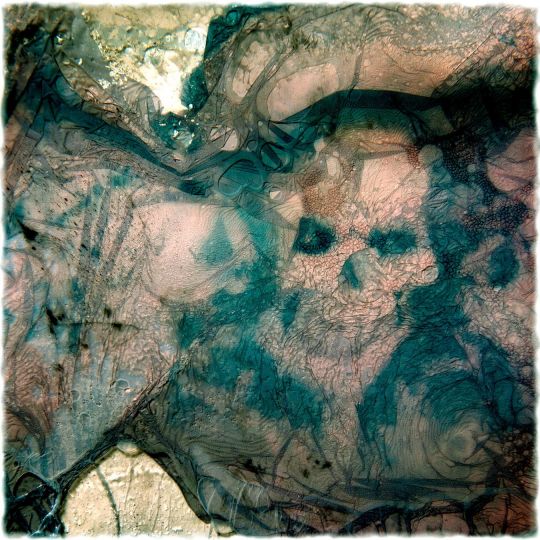
With the “Accidents” series, your work gradually moves away from representation toward the threshold of abstraction. These images mark a turning point, abandoning the strict constraints of commissions in favor of a completely free field of experimentation. At a time when digital imagery and artificial intelligence tend toward ever smoother and more predictable perfection, how did accident, material alteration and loss of control come to play such a central role in your work?
When everything became perfect, controllable and flawless, I started to get bored. With analog photography, there was always a color cast, an image too bright or too dark, a stain, each film had its own character. Today, everything can be corrected, reconstructed, even reinvented. With AI, you can add sky, smooth a face, insert an object or a figure. There is no longer any uncertainty. So I tried to provoke the accident, to dismantle the Polaroid, to age the films, to see what remains when the material is altered. Digital images are often beautiful and technically impeccable, but sometimes without surprise. Film, when it ages, when it scratches, deforms or changes color, tells something else. Perfection bores me. What I am looking for is what resists, what escapes, what goes slightly off track. It is in that fragility that I still feel alive within the image.
Text and interview Julie Noirot
More information