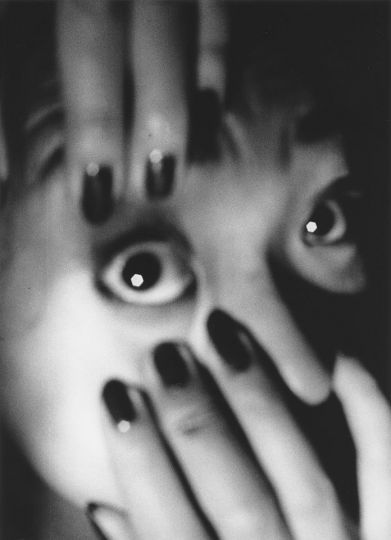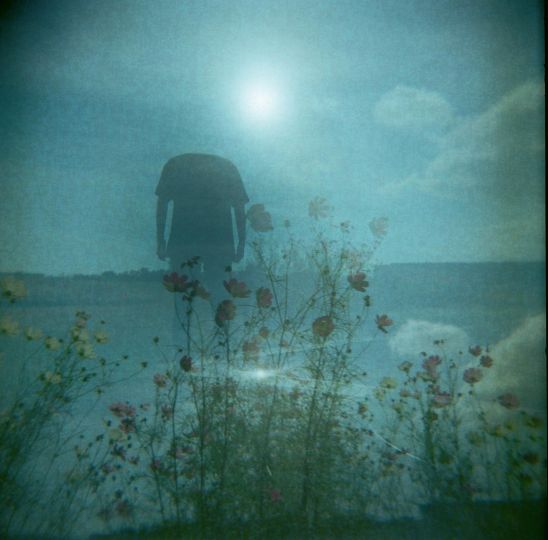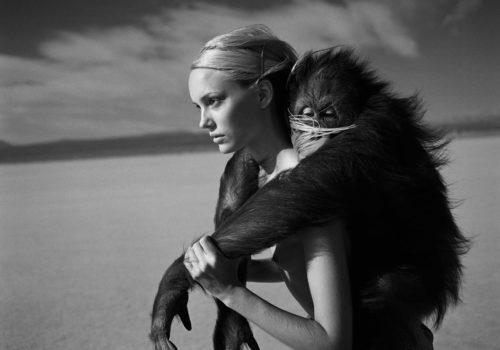
Turin has a reputation for being an esoteric city. While the origins of this reputation are unclear, it is intriguing nonetheless, even were it purely a perception. However, it is a well-established fact that photography appeared here shortly after its invention. In those years, photography was suspended between science, art, and even a little magic, as a mirror that could reflect reality and preserve its trace without human intervention. We suggest visiting the photographic exhibitions in the city, following the the fil-rouge of its mysteries.
Turin, which counts famous alchemists such as Nostradamus and Cagliostro among its illustrious visitors, is said to lie at the apex of two triangles: one of white magic connecting it to Lyon and Prague, and one of black magic with San Francisco (or Chicago) and London. However, the city’s magical dimension reveals itself cautiously, much like the latent image in photography.
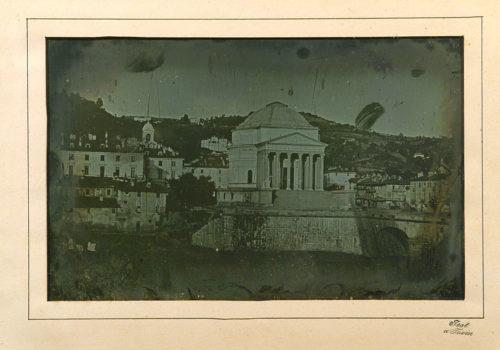
Let’s start with the “white” part of the city, from the church of the Gran Madre di Dio, built in the early 1800s, on the site of what is said to have once been a temple dedicated to the Egyptian goddess Isis. Outside the church, one of the statues holds a cup and indicates the secret location of the Holy Grail. This is also our first stop in terms of photography. The daguerreotype of the church, taken by Enrico Federico Jest on October 8, 1839 and believed to be the first photograph of the city, is preserved at the GAM – Galleria Civica d’Arte Moderna e Contemporanea di Torino and was exhibited as part of Expanded, I paesaggi dell’arte (2024). Jest ran a company that sold instruments and equipment for physics, chemistry, and optics. Studying manuals by Daguerre, he produced one of the earliest photographic devices in Italy.
The Mole Antonelliana, a structure said to emit positive energy, stood at almost 170 metres, including the statue atop it, in the past: a winged genius with a five-pointed star. Today, it houses the Museo Nazionale del Cinema and is hosting Pazza Idea. Beyond ‘68: Pop Icons in Angelo Frontoni’s Photography, that tells the story of the protagonists of the artistic and musical scene of the time, while reflecting changes in taste and the collective imagination.
A porticoed road runs from Piazza Castello to the river, framing the Gran Madre church. This is Via Po. The University is located here, as was the study of Cesare Lombroso, the scientist who established the controverse field of criminal anthropology at the turn of the 20th century. As Laura Audi, a researcher of esotericism and creator of Torino Magica tour, recalls, “He was an expert witness for the Municipality of Turin in cases related to hypnotism and esotericism. An avowed enemy of all occult phenomena, Lombroso criticised mediumistic séances, which were very popular among Turin’s upper classes at the time. He also dismissed the “evidence” provided during these séances, namely photographs of spirits”. In this role, he investigated a case of alleged poltergeist activity in the city. Unable to find a rational explanation, he “began to take an interest in and believe in the paranormal, publishing reports and books that caused a scandal.” It also worth mentioning that they contain pages dedicated to Transcendental Photographs, with “clearly visible” ectoplasms.
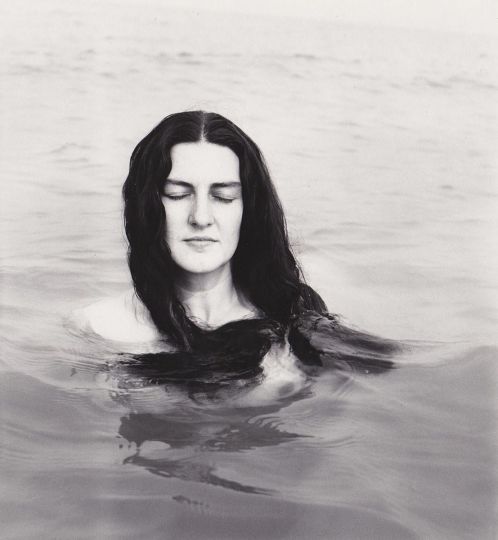
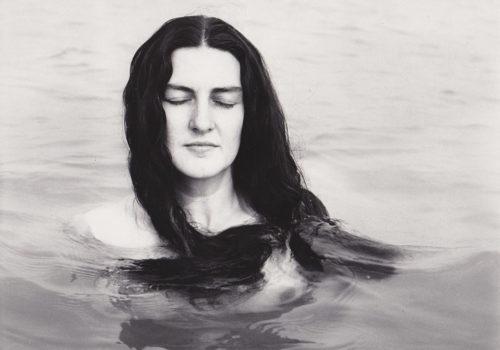
Nearby, Camera – Centro Italiano per la Fotografia presents the exhibition Lee Miller. Works 1930-1955, featuring 160 images from the Lee Miller Archives, which reveal the infinite perspectives of this American surrealist and fashion photographer, model and war reporter. It is an opportunity to explore her work and a quarter of a century of history. Also at Camera, Cristian Chironi. Inhabiting the Image interprets the relationship between photography and performance. Additionally, the exhibition Edward Weston. The Matter of Forms will be on display from February 12, offering an extensive overview of his works.
Not far away, the Galleria Umberto Benappi presents the Volatilia project (at NH Collection Piazza Carlina) featuring works by Paolo Pellegrin dedicated to the theme of flight and its forms in nature. Created in Japan and Norway, the photographs and a video create an immersive visual “cloud.”
The next stop is Piazza Castello, another place of positive energy. The Dioscuri statues here are supposed to mark the boundary between the white city and the black city, between the east and west, where darkness falls.
The Teatro Regio overlooks the square and houses a photographic archive of 250,000 images documenting its activities. Part of the archive depicts the theater prior to the 1936 fire. It was rebuilt in 1973: it was designed by Carlo Mollino, a renowned architect, designer and fascinating photographer with an eclectic personality. Mollino created twelve entrance doors, one for each sign of the zodiac, to symbolise the theatre’s rebirth and introduce the art of music. By the way, The (Museo) Casa Mollino, located near the Po River and almost opposite the Gran Madre church, is as eccentric as its owner. Although Mollino never lived in the house, he took some of his Polaroids there. Exuding esotericism, the house is adorned with symbols referencing Egyptian mysteries.
This brings us to the Museo Egizio, second in importance only to the one in Cairo. Some artefacts are said to be charged with positive energy. The museum has an interesting photographic archive, part of which is already available online. This consists of 45,000 images, including around 25,000 photographic plates on glass or celluloid, 15,000 slides and 4,500 prints from the 19th and 20th centuries.
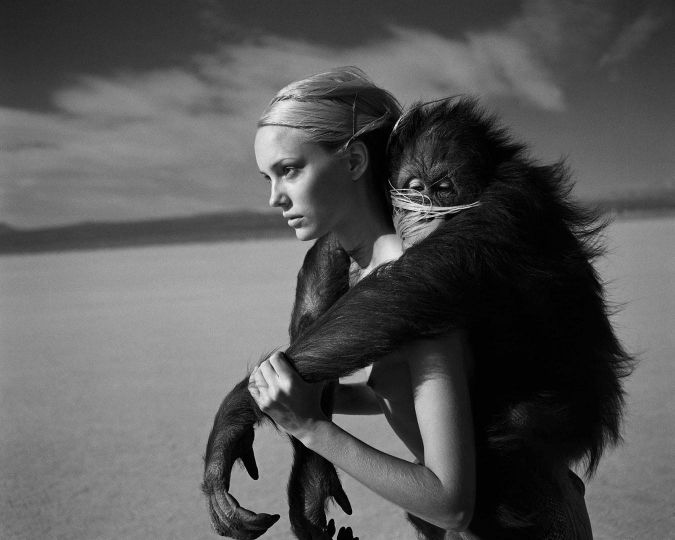
Piazza San Carlo is also said to be imbued with positive energies. Here, in Palazzo Turinetti, you can find the Gallerie d’Italia – Turin, Intesa Sanpaolo museum. Its is entrance protected by small masks that probably serve as apotropaic charms. On show: Jeff Wall. Photographs, spanning over forty years of the artist’s career, and Riccardo Ghilardi. Piano sequenza la Mole, a photographic story dedicated to the 25th anniversary of the National Cinema Museum. Like a long sequence shot, it recounts the history of cinema, the Mole and the Museum’s collections, featuring leading figures from the world of cinema. The exhibition Nick Brandt. The Echo of our Voices will be on stage since March 18.
One of Turin’s esoteric symbols is the Fontana Angelica in Piazza Solferino. Inspired by freemasonry, it is laden with symbolism and is said to contain a portal to unknown dimensions, believed to be the space between the two statues representing autumn and winter. Not far away is the Portone del diavolo, whose unsettling decorations include a door knocker in the shape of a devil’s head. This is the entrance to Palazzo Trucchi di Levaldigi, linked to legends of pacts with the devil and unsolved murders.
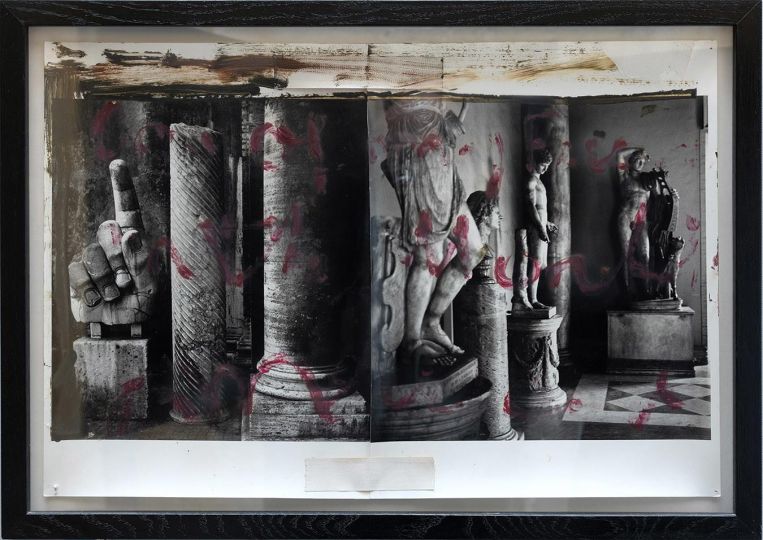
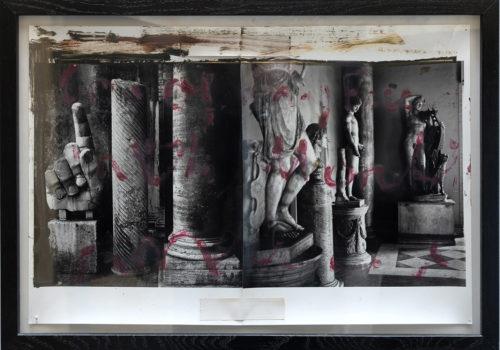
South of Piazza Solferino there is the GAM – Galleria Civica d’Arte Moderna e Contemporanea. As part of the Third Resonance, series of exhibitions on the language of art, the GAM is presenting Linda Fregni Nagler. Anger. Pleasure. Fear, where the artist uses the photographic medium, interweaving research, collecting activities and an in-depth investigation of the material nature of the image, constructing narrative devices to generate reflections on the present. Also on display is Lothar Baumgarten. Culture Nature. Anprominent figure in conceptual art, he intertwined aesthetic inquiry with anthropological and ecological reflection, shedding light on alternative forms of knowledge that are often marginalised.
We then move on to the darkest area, the one where the sun sets. As Laura Audi explains, “Here, the Romans located the city’s necropolis and, centuries later, executions were carried out”. Piazza Statuto, home to the Monument to the Fallen of Fréjus, is the black heart of the city. According to some esoteric interpretations, the monument has a hidden meaning. Built using rocks from the tunnel excavation, it is topped by a winged genius holding an “upside-down” five-pointed star, that would be a positivist allegory of Reason triumphing over the brute force of nature. However, some interpret this figure as a Luciferian presence. In this western part of Turin, the Museo della Stregoneria Contemporanea houses ancient and contemporary witchcraft artefacts, including reproductions of late 19th-century photographs that their authors claimed to show ghostly presences.
Paola Sammartano
Camera – Centro Italiano per la Fotografia
Via delle Rosine 18 – 10123 Turin
Lee Miller. Works 1930-1955
From October 1, 2025 to February 1, 2026
Cristian Chironi. Inhabiting the image
From October 24, 2025 to February 1, 2026
Edward Weston. The Matter of Forms
From February 12 to June 2, 2026
https://camera.to/en/
Gallerie d’Italia – Turin, Intesa Sanpaolo museum
Piazza San Carlo 156 – 10121 Turin
Jeff Wall. Photographs
From October 9, 2025 to February 1, 2026
Riccardo Ghilardi. Piano sequenza la Mole
From November 12, 2025 to March 1, 2026
Nick Brandt. The echo of our voices
From March 18 to September 6, 2026
https://gallerieditalia.com/en/turin/
Galleria Umberto Benappi
Via Andrea Doria 10 – 10123 Turin
Paolo Pellegin. Volatilia
From October 25, 2025 to May 24, 2026
NH Collection Piazza Carlina
Piazza Carlo Emanuele II 15 – 10123 Torino
https://umbertobenappi.com/
GAM – Galleria Civica d’Arte Moderna e Contemporanea di Torino
Via Magenta 31 – 10129 Turin
Linda Fregni Nagler. Anger Pleasure Fear
From October 29, 2025 to March 1, 2026
Lothar Baumgarten. Culture Nature
From October 29, 2025 to March 1, 2026
https://www.gamtorino.it/en/
Museo Casa Mollino
Via Napione 2 – 10124 Turin
https://www.carlomollino.org/museo-casa-mollino
Museo della Stregoneria Contemporanea
Via Giovanni Somis 4 – 10138 Turin
https://www.museodellastregoneriatorino.com/
Museo Egizio
Via Accademia delle Scienze 6, 10123 Turin
https://www.museoegizio.it/en/
Museo Nazionale del Cinema
Via Montebello 20 – 10124 Turin
Pazza Idea. Beyond ‘68: Pop Icons in Angelo Frontoni’s Photography
From September 20, 2025 to March 9, 2026
https://www.museocinema.it/it
Somewhere
https://www.somewhere.it/en/
Teatro Regio Torino
Piazza Castello 215 – 10124 Turin
https://www.teatroregio.torino.it/en
Turismo Torino e Provincia
https://turismotorino.org/en