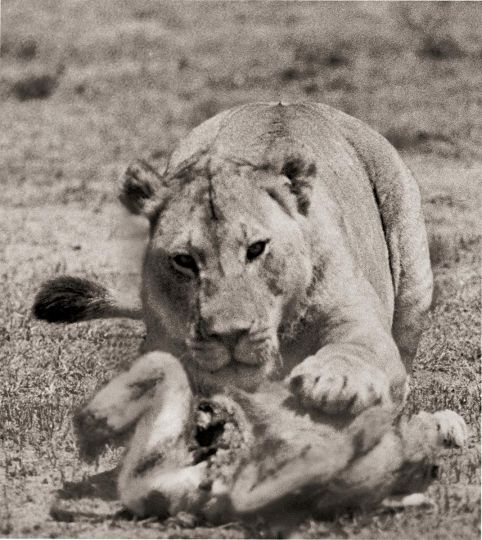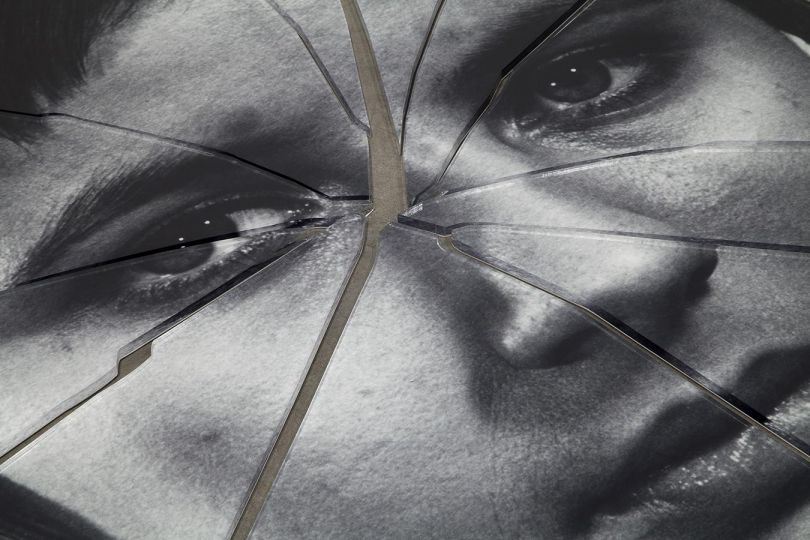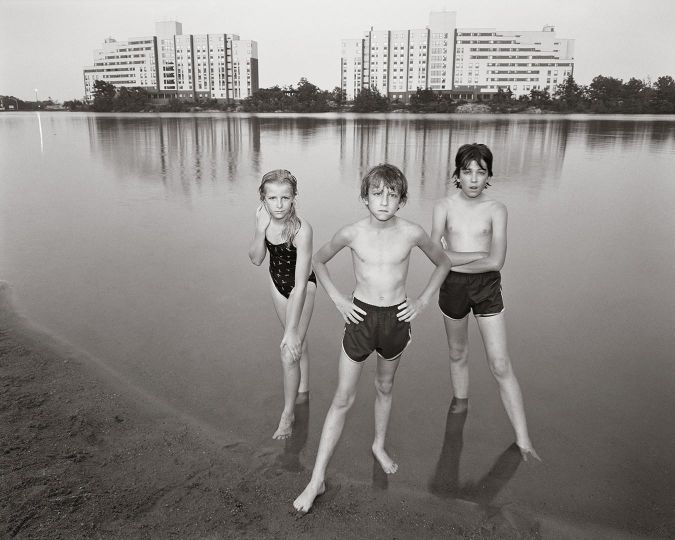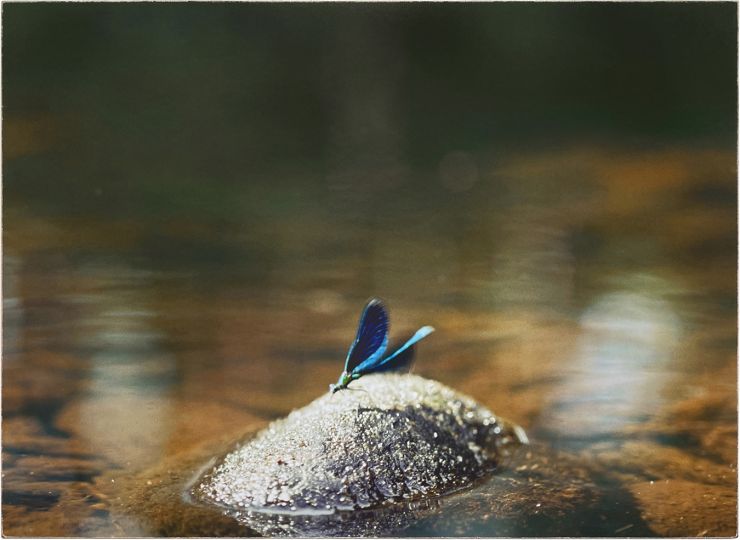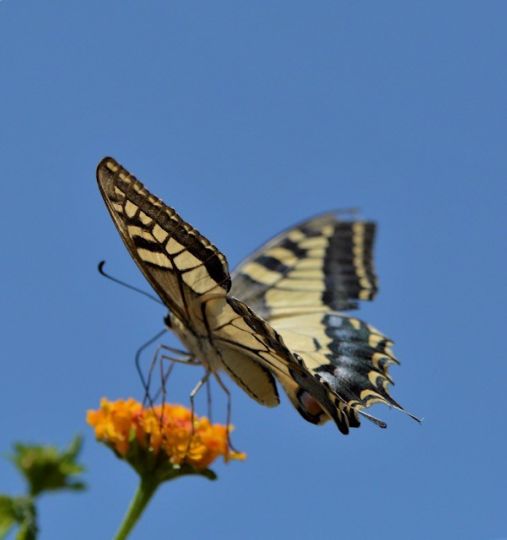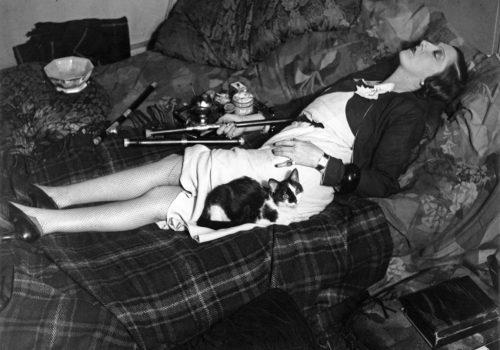
Les Douches la Galerie presents C’est l’été !, a group exhibition bringing together works made starting in the 1930s to the present day. Uniting photographers from different generations and backgrounds, the exhibition explores the singular place that summer has occupied in the history of photography. Through a selection of iconic and rarely shown works, it illuminates the way in which this season has nourished photographic gazes and practices for nearly a century.
Summer holds a particular place in the history of photography. As a season of travel, leisure and abundant light, it has profoundly shaped the production and dissemination of images since the twentieth century. With the rise of paid holidays, tourism and portable cameras, it became a privileged moment of photographic practice, giving birth to a vast visual repertoire composed of family albums, postcards, illustrated reportages and amateur images.
Through constant reproduction, certain motifs have imposed themselves as genuine clichés: a beach, a silhouette in the water, bodies stretched out in the sun are now enough to evoke the fine season. Yet the exhibition C’est l’été ! does not seek to inventory these familiar images. On the contrary, it explores the way in which artists have seized upon themes associated with summer water, light, travel, rest, conviviality in order to renew their vision of the world and experiment with the possibilities of the photographic medium.
Bringing together works made from the 1930s to the present day, the exhibition assembles photographers from different generations and backgrounds, among them Harry Callahan, Leon Levinstein, Ernst Haas, Frank Horvat, Ray K. Metzker, Pierre Boucher, Arlene Gottfried, Denis Roche, Hervé Guibert, Sabine Weiss, Jean-Claude Gautrand, Stéphane Couturier, Joël Denot and Albarrán Cabrera.
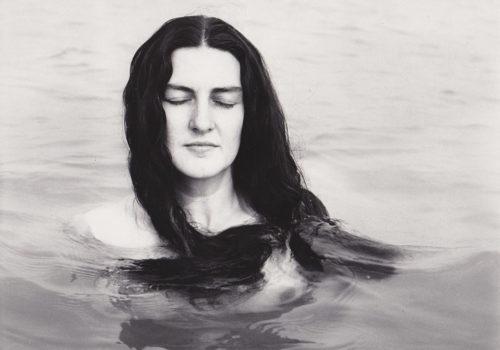
The exhibition opens with the world of swimming. Beaches appear notably as spaces of freedom, where bodies relax and temporarily escape the constraints of everyday life. Harry Callahan’s wife Eleanor become a figure suspended between two states: eyes closed, hair spread across the surface, she appears more as a figure of abandonment than as a simple bather. In Rainer Leitzgen’s work, the gaze passes beneath the surface: a face photographed through water seems to oscillate between apparition and disappearance. At Coney Island, Leon Levinstein moves in as close as possible to holidaymakers. His tight framing causes the setting almost to disappear in favour of bodies, their postures and their physical presence.
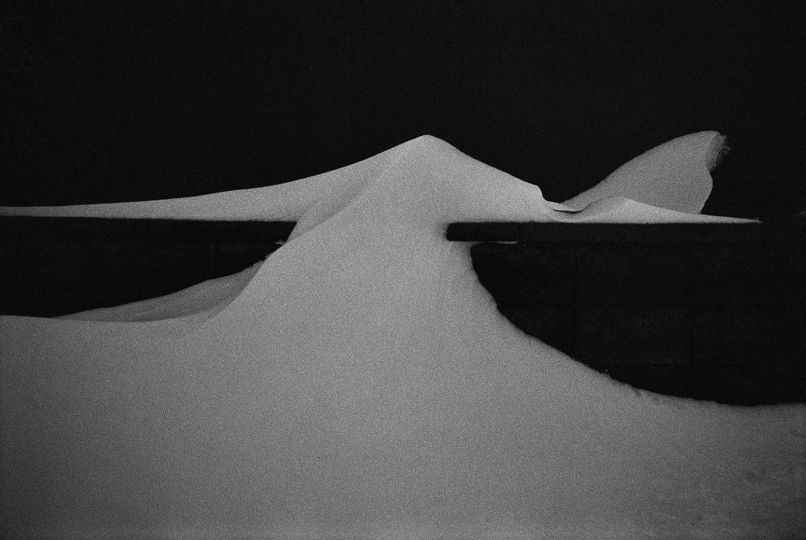
As the exhibition unfolds, the photographers move away from pure description of reality to explore the formal possibilities offered by the medium. The bather photographed by Frank Horvat is reduced to a few curved lines carved out by light. In Ray K. Metzker’s work, contrasts and reflections fragment space until visual markers dissolve. Ernst Haas, for his part, pursues his research into colour and movement. In his Water Reflections, water becomes a field of vibrations where forms dissolve in favour of light and colour. With Nu vague, Pierre Boucher pushes this transformation even further through superimposition, which seems to fuse the body with the elements surrounding it.
Other works emphasise the human relationships that form during summer. Arlene Gottfried’s photographs, made within the working-class New York communities she frequented over several decades, bear witness to great proximity. Street scenes, neighbourhood parties and family gatherings show a society in motion, traversed by forms of solidarity and conviviality.
This intimate dimension is equally present in the works of Denis Roche and Hervé Guibert. Both maintained a close relationship between writing and photography and made their artistic practice an extension of their personal experience. The bodies they photograph are neither models nor anonymous subjects, but those close to them lovers, friends, travelling companions.
Colour also occupies an important place in the exhibition. In Ernst Haas’s work, warm tones, reflections and variations of light convey a sensation as much as a landscape. The duo Albarrán Cabrera develops a more contemplative approach, in which light and skin tones take on an almost timeless dimension.
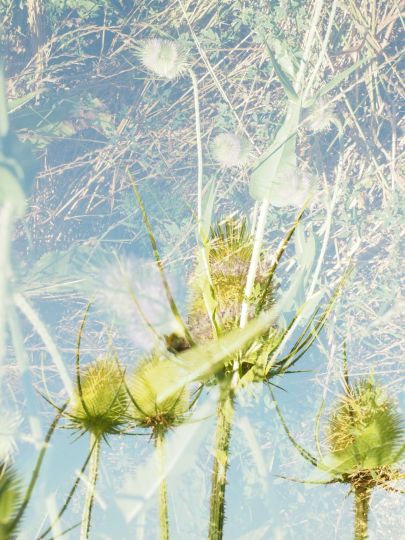
When human figures disappear, their presence nonetheless continues to make itself felt. The grilled fish photographed by Sabine Weiss in Turkey, the refreshing still lifes of Jean-Claude Gautrand or the urban views of Thomas Boivin all show a suspended activity rather than an absence. The works of Stéphane Couturier and Joël Denot extend the attention paid to light that runs throughout the exhibition. Reflections, transparencies and coloured vibrations take precedence over description of places and figures.
More than a period of the year, summer appears here as an experience of the gaze. Through these works, photographers capture less the events themselves than the sensations, traces and fleeting instants they leave behind. It is perhaps here that photography and summer converge: in this capacity to reveal what, without them, would pass unnoticed.
C’est l’été !
July 1–31, 2026
Les Douches la Galerie
54, rue Chapon
75003 Paris
09 61 48 92 34
www.lesdoucheslagalerie.com