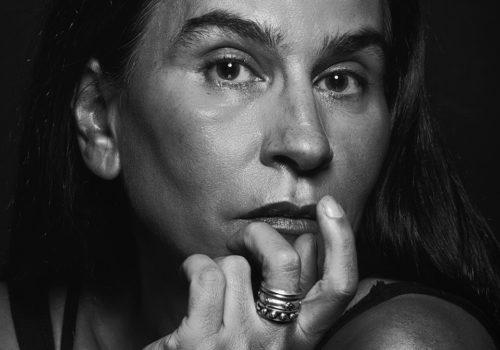
Noémia Prada : The Human Gaze.
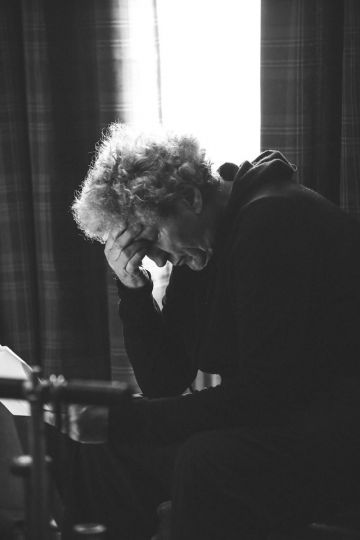
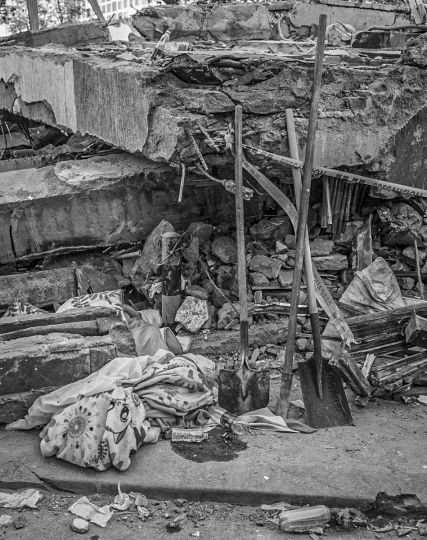
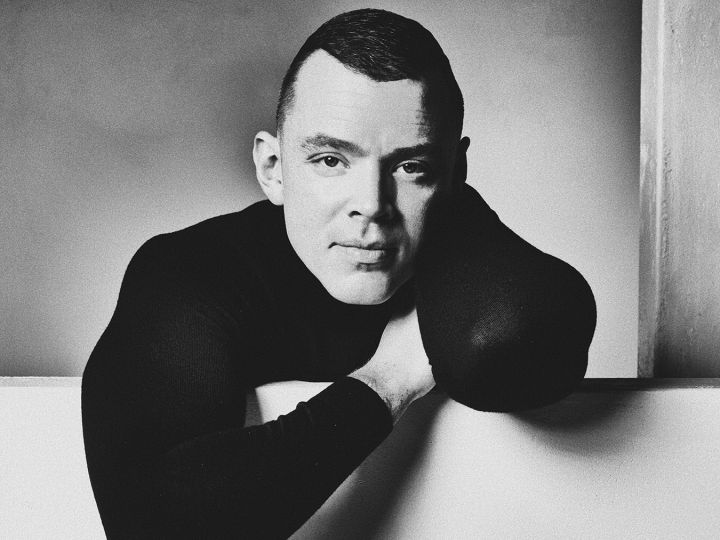
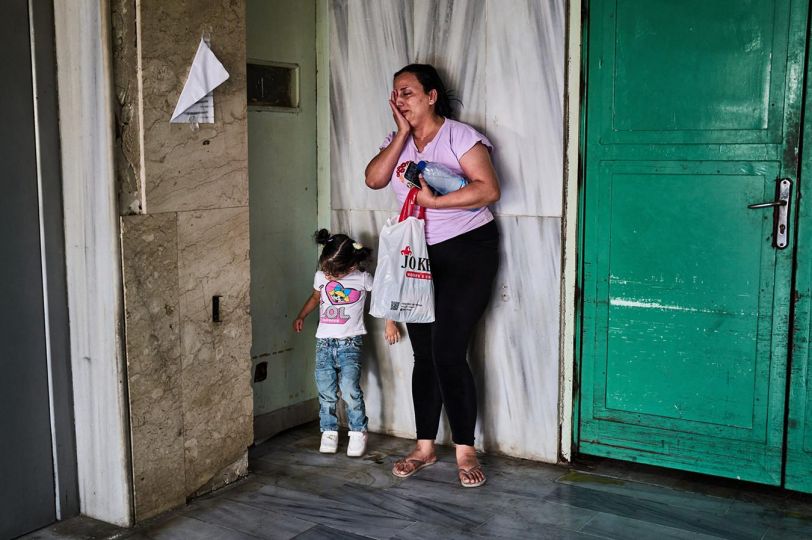
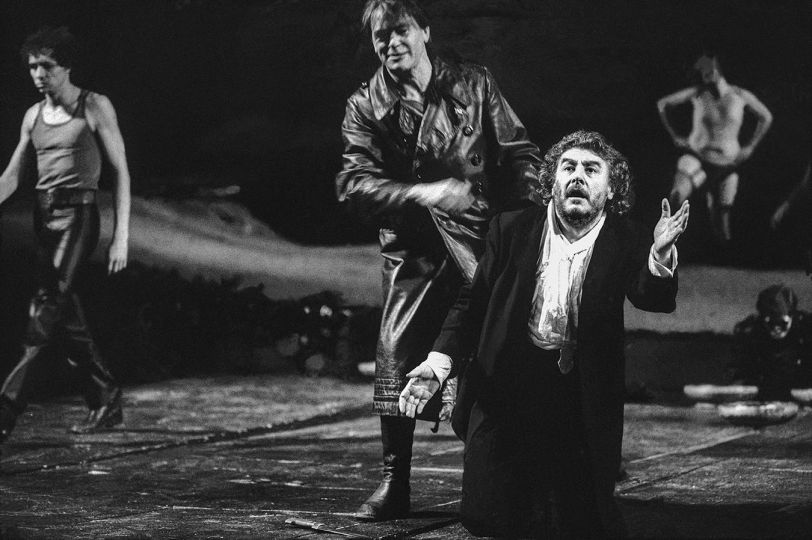
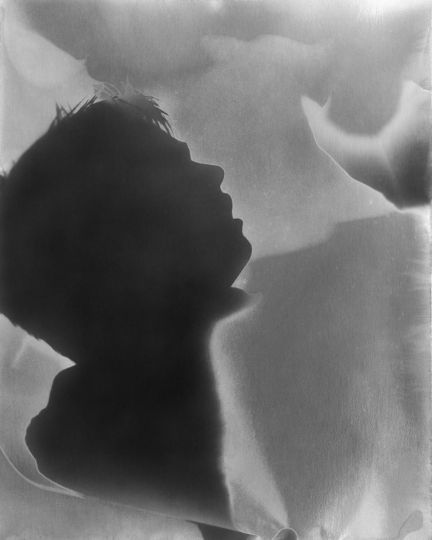
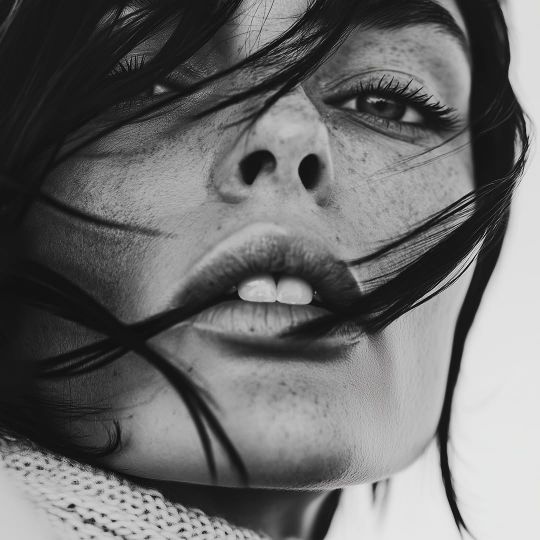
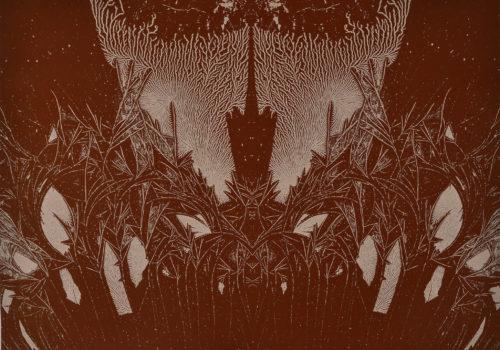
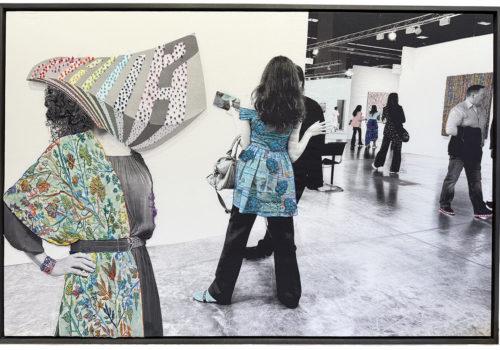
At a time when images are no longer simply captured but also generated, Noémia Prada explores the unstable territory where memory, perception and contemporary technologies converge. Her work neither seeks to pit photography against artificial intelligence nor to celebrate innovation for its own sake. Instead, it examines how emerging technologies are reshaping our relationship to reality, identity and the construction of visual narratives.
Born in Portugal in 1969, Prada has developed a multidisciplinary practice informed by a wide range of influences. Her background spans journalism, illustration, painting and photography, complemented by academic studies in communication sciences and sociology. This dual artistic and intellectual foundation underpins an approach in which every image is as much the result of conceptual inquiry as of visual investigation. In her work, photography is never a mere recording of the visible; it becomes a language, an analytical space where observation, fiction and interpretation intertwine. The years she spent living across Europe, Africa and the United States, following her husband’s diplomatic appointments, profoundly shaped her perspective. This intimate geography—marked by continual displacement and immersion in diverse cultural environments—has fostered a practice deeply attuned to questions of belonging, memory and transformation. Her images bear the imprint of these experiences, probing the construction of identity, the points of friction between cultures, and the subtle mechanisms through which individuals compose their own narratives. Rather than producing autonomous images, Noémia Prada creates cohesive bodies of work in which each photograph contributes to a broader visual narrative. This serial approach enables her to explore the echoes and correspondences between images while developing a visual language in which silence, absence and ambiguity play a central role. Emotion is never overtly expressed; instead, it emerges in the spaces between images, in the tension between what is revealed and what remains deliberately beyond the frame. Artificial intelligence naturally extends this line of inquiry. Far from functioning as a mere image-making tool, it becomes a critical medium through which Prada deepens her exploration of authenticity, memory and the construction of reality. By confronting photography with AI-generated imagery, she deliberately blurs the boundaries between document and fiction, remembrance and invention, inviting viewers to reconsider the trust they place in images at a moment when they have never been more abundant or more malleable.
Her work ultimately forms part of a broader reflection on the future of photography in the twenty-first century. It is no longer simply about representing the world, but about questioning the very conditions under which representation is produced. Through an aesthetic distinguished by formal precision and emotional restraint, where rigorous composition coexists with profound psychological depth, Noémia Prada creates images that function not only as visual experiences, but also as spaces for reflection works in which thoughts and sensation become inseparable.
Website : www.noemiaprada.com
Instagram : @noemiaprada
What first drew you to photography?
Noémia Prada: I think my first attraction to photography came from the simple fact that I always loved being photographed. Back then, long before mobile phones existed, I remember that when I was sixteen or seventeen, my friends and I would constantly play around with a camera. I was usually the one posing, asking them to photograph me. I always enjoyed being in front of the lens. I have always been aware that my appearance was one of my strengths not in a boastful way, nor because I ever dreamed of becoming a model, but because I genuinely liked seeing myself in photographs. I was fascinated by the way I appeared through the camera’s eye. Perhaps my love of being photographed also comes from the fact that I have so few photographs from my childhood. Looking at images of myself throughout the years has become a way of rebuilding what was never photographed.
What is your strongest photographic memory from childhood?
Noémia Prada: I have many memories of my childhood, but strangely enough, it is through the handful of photographs that survived that I am able to reconstruct it. It wasn’t a particularly happy childhood. It was a difficult one, marked by separation. My parents emigrated to France, while my sister Luiza and I remained in a small village in northern Portugal, living with our aunts and uncles. I remember that period as a challenging time, and above all, one with very few images. I don’t even have a photograph of myself as a baby. The earliest picture of me was probably taken when I was about three years old. In many ways, my entire childhood has been rebuilt from perhaps ten photographs at most. Those photographs are incredibly precious to me precisely because they are so rare. Today my own children have thousands of photographs. I have maybe ten. I look at them often, and I feel that many of my memories have been reconstructed through those images. It is as though my childhood exists as a memory recreated from photographs, because I have the feeling that I have forgotten so much of that time. A large part of those memories seems to have simply disappeared.
What was the camera of your childhood?
Noémia Prada: I didn’t have a camera when I was growing up, and neither did my parents. At the time, owning a camera was almost a luxury for a family like ours. The first cameras I remember using were Kodak disposable cameras the ones with twenty-four exposures that you used once before sending them off to be developed. That is probably my earliest real memory of a camera. During my childhood, photographs mostly came from other people. My aunt occasionally took a few pictures. There were the annual school photographs, and some from the short period when I took ballet lessons. I also have a few pictures taken in France, where I lived for two or three years. But I can’t really say that I had a childhood camera. Photography was something rare in my life back then.
What camera do you use today?
Noémia Prada: I use several cameras. One of them was given to me by a photographer friend: a professional Canon EOS-1Ds Mark III, which I mainly use for portraiture. I also own a Canon Rebel EOS T5 that I bought in the United States. And, of course, I use my smartphone as well. Ultimately, though, the camera matters less to me than the moment being captured. The best camera is always the one you happen to have in your hands when the story unfolds. For street photography, for example, a smartphone can be an excellent tool because it allows you to capture an unexpected moment. We don’t always carry professional cameras with us I certainly don’t. More than the quality or the price of the equipment, what truly matters is the sensitivity of the photographer’s eye: the ability to recognize a moment and tell a story through a single image. The camera doesn’t make the photographer. The photographer, whether using the most sophisticated camera or the simplest one, is the person capable of capturing something unique.
Which photographer has inspired you the most?
Noémia Prada: My greatest inspirations come above all from the humanist photographers of the twentieth century. Their way of looking at the world—with empathy, curiosity and deep respect for ordinary people—has profoundly influenced the way I think about photography. Henri Cartier-Bresson, for instance, remains an essential reference because of his extraordinary sense of the decisive moment and composition. Letizia Battaglia is another photographer I deeply admire for the humanity that permeates her work. Robert Capa inspires me through his ability to place himself at the very heart of history, while Vivian Maier revealed an extraordinary sensitivity to everyday life. What moves me most about all these photographers is their understanding of composition. Many of them possessed an exceptional ability to frame a scene, organize space and construct an image. For me, composition is never merely an aesthetic concern; it is a way of telling a story through photography.
What is the photograph you wish you had taken?
Noémia Prada: I believe the photographs I most wanted to make already exist: they are the photographs of my children. Nothing in photography is more important to me than those images. I have taken hundreds of photographs of my son and daughter, as well as hundreds of videos. They are the greatest loves of my life, and those are the images that move me most. I have also photographed my parents. Ultimately, my inner world matters more to me than the outside world. Perhaps that sounds limiting, but it reflects who I am. I live a rather introverted life, one centred on family and on the people closest to me. Photographing those I love has been my greatest achievement. Perhaps it is the most meaningful accomplishment of my life.
Which photography has moved you the most?
Noémia Prada: Apart from the photographs of my children, I would say the images that have affected me most are the photographs I made of my father’s hands. Those hands tell the story of an entire lifetime of work. My father is now eighty-eight years old. He spent his life working in construction, both in France and in Portugal. His hands are powerful, deeply marked, covered with wrinkles and the traces of time. I created an entire photographic series devoted to them. Hands, in fact, are a recurring element throughout my work. But photographing my father’s hands was especially emotional because they contain the story of a life. They are, in many ways, a portrait of everything he has lived through.
And which photograph has made you angry?
Noémia Prada: There are many photographs that can make me angry, especially those depicting poverty, suffering and human pain: starving children, mutilated bodies, all those images that bear witness to human misery. They move me deeply and fill me with indignation, even though I wouldn’t describe myself as someone who is angry at the world.
Perhaps I have a rather fatalistic even resigned view of life. Things are often the way they are, and we cannot always change them. It would be comforting to believe that photographs can change the world. And I do believe that, at times, one of the photographer’s responsibilities is to bear witness and denounce injustice. Some photographers have altered history with a single image. Personally, however, I don’t feel I belong to that category of photographers.
Which photograph changed the world?
Noémia Prada: One photograph that profoundly changed the world is Migrant Mother, made in 1936 by the American photographer Dorothea Lange. It portrays Florence Owens Thompson surrounded by her children in a migrant workers’ camp during the Great Depression. Her anxious gaze, fixed somewhere beyond the frame, became a universal symbol of poverty, dignity and human resilience. The image had an immediate impact: after its publication, food aid was sent to the camp. More broadly, it helped raise public awareness of the hardships endured by agricultural workers and strengthened support for New Deal social policies. Migrant Mother is therefore not simply an iconic photograph it genuinely contributed to changing the world’s perception of poverty and social injustice.
And which photograph changed your world?
Noémia Prada: Many photographs have changed my world. Photography itself has transformed the way I look at life, so it would be impossible for me to choose just one image. Countless photographs have shaped my way of seeing, each in its own way.
What truly changed my world, however, was the moment I stopped working in colour and devoted myself almost entirely to black and white. That happened about eight years ago. Before then, my photographic universe was primarily in colour. I photographed life as it unfolded. But once I decided to work in black and white, something fundamental shifted in the way I perceived photography. That decision transformed not only my visual language but also my relationship with the medium itself. I often say that my world is now black and white.
What is the defining image in your personal pantheon?
Noémia Prada: Without hesitation, it is the photograph of my father’s hands.
What interests you most in an image?
Noémia Prada: Above all, the human element. Human presence is what moves me most in photography. I am particularly drawn to street photography to authentic images that capture real moments unfolding naturally in everyday life, intimate stories, and sometimes stories of suffering. For me, a photograph does not need to be technically perfect. What matters most is the story it tells. If an image contains a genuine and compelling story, that is infinitely more valuable than technical perfection. I generally prefer spontaneous street photographs to carefully orchestrated studio images. Anything too posed or overly constructed can drift away from reality. I practice both street photography and studio photography, but I almost always find greater authenticity in those unplanned, fleeting moments than in carefully directed poses.
What details do you look for in a face, a landscape or an object?
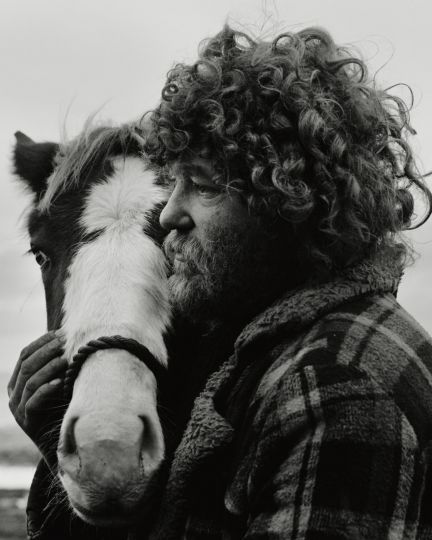
Noémia Prada: In a face, I look for wrinkles the marks left by time. I am attracted to what is raw, almost rough, even to what some might call imperfection. But what I am really searching for is the beauty of reality: the life that is inscribed on a face. I especially enjoy photographing elderly people. Their faces fascinate me because they carry the weight of an entire lifetime. Children’s faces move me just as deeply. They represent the two stages of life I most love to photograph: childhood and old age. In landscapes, I look for drama and contrast. I am especially drawn to the sea and coastal landscapes, particularly when they possess a certain visual tension. I also love images that evoke solitude or isolation a solitary tree, a single figure, an almost empty, minimalist space. When photographing objects, I search instead for softness, for tenderness, almost for a human quality. I have a particular affection for photographing watches.
Elliott Erwitt once said, “Colour is descriptive. Black and white is interpretative.” Do you agree?
Noémia Prada: Absolutely. I couldn’t agree more. For me, black and white is almost photography’s natural language. It is the visual language that tells stories with the greatest clarity. Colour often contains too much information. It can distract the eye and dilute emotion. I prefer stripping an image down to its essence. That essence lies, for me, in the dialogue between light and shadow two opposing forces, two elemental contrasts: black and white, delicacy and strength. I have always been fascinated by dualities. Life itself seems to be built upon them: childhood and old age, finitude and eternity, imprisonment and freedom, life and death. Black and white has the unique ability to translate these tensions visually. That is why it is interpretative. Paradoxically, by reducing an image to its essentials, one can often achieve greater emotional intensity. And on a purely aesthetic level, I have always loved black. I find it more elegant, more refined, more minimalist, more timeless. An image reduced almost to its essence possesses, to me, far greater power.
Can technique ever take precedence over emotion in photography?
Noémia Prada: For me, emotion always comes first. Technique only matters insofar as it serves that emotion. A photograph may be technically flawless, but if it contains no emotion, no story and no human dimension, it remains empty. It becomes nothing more than a static image that says nothing. Technique is therefore a means rather than an end a vehicle through which emotion can be conveyed. Of course, mastering technique is important, not only when taking the photograph but also during post-production. In black-and-white photography especially, editing plays a crucial role. I edit all my own images, and the process can be quite elaborate because I approach it almost as if I were painting. I work extensively with the relationship between light and shadow, deepening the blacks, softening the highlights and sculpting the forms. This process allows me to intensify the emotional resonance of the image, something I consider fundamental in black-and-white photography.
Is beauty in photography, for you, purely aesthetic?
Noémia Prada: No. For me, beauty can never be merely aesthetic. Beauty can exist everywhere: in sadness, in desolation, in a wounded body, in a crying child, in a beggar asking for help. Beauty is everywhere, and very often it exists precisely where people choose to look away. When someone says, “I look ugly in this photograph,” or “This image is too sad,” I often reply that beauty does not belong only to what is perfect. It also resides in what is rejected, in what is conventionally considered ugly. I find beauty in imperfection in a scar, a wrinkle, pain, solitude and desolation. That is where true beauty lies for me. Photographs that pursue beauty for its own sake often strike me as rather dull and emotionally empty. A beauty that is too perfect can become ordinary because it no longer tells a story. What attracts me instead is what is raw, imperfect, sometimes even unsettling. I am not searching for an idealized beauty, but for a beauty that carries a life within it.
How can silence become visible in a photograph?
Noémia Prada: Silence is a fundamental notion in both my work and my visual storytelling. I believe it becomes visible by isolating elements, through carefully considered compositions and images that suggest rather than explain. To convey silence, a photograph often requires preparation and an extraordinary attention to detail. The images in which I feel I express silence most successfully are usually carefully conceived sometimes even made in the studio rather than entirely spontaneous. Silence can also emerge in a landscape through the presence of a single isolated element, or within a face. I remember a photograph of my daughter looking downward. The composition is built around a strong contrast: half of her face is illuminated, while the other half dissolves into shadow. For me, that image evokes purity, contemplation and silence. There is another photograph my son’s hands holding a watch that gives me exactly the same feeling. Silence, to me, is almost the opposite of narrative. It belongs to the unknown. Through composition, one can evoke calm, stillness and absence. Silence is deeply connected to absence and nostalgia. In Portuguese, we have a beautiful word for this feeling: saudade the longing for someone or something that is no longer present. Whether in street photography or studio work, I believe silence requires contemplation, patience and suspended time. It is perhaps one of the most difficult emotions to express visually, but also one of the most meaningful to me.
Does a photograph derive its uniqueness from the moment or from staging? Can a photograph ever be truer than reality?
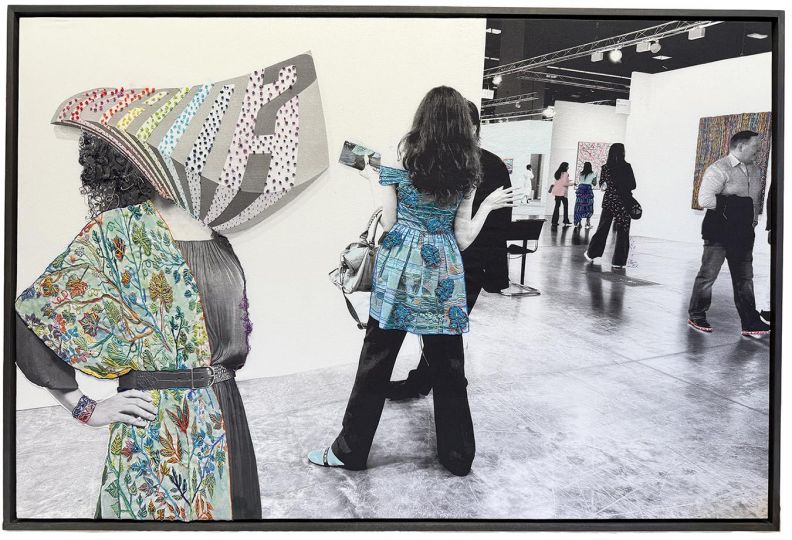
Noémia Prada: For me, the uniqueness of a photograph comes more from the truth of the moment than from staging. When an image becomes overly constructed or meticulously planned, it can lose part of its authenticity. Too much control, too much design, can distance it from truth. Today, however, the question has become more complex: what is reality? The very concept of reality feels increasingly fragile. I work with artificial intelligence myself, and I sometimes create images that look entirely real while not being real at all. So I don’t believe a photograph can ever be truer than reality. It is already an interpretation sometimes even a manipulation of reality. The event itself is real. But the moment it passes through the photographer’s eye, and later through the gaze of the viewer, it has already become an interpretation. It is like telling a story: every narrator adds something of their own. Photography is therefore never more truthful than reality. Images especially today are not reality itself. Reality is what happens. Photography is one possible reading of it. The angle, the framing, the decisive moment, the light all these choices already shape perception. Perhaps video comes closer to recording reality, yet even there manipulation remains possible. Today, questions of truth and authenticity have become central because we no longer instinctively trust what we see. Whenever we encounter an image or a video, our first reaction is often: Did this really happen? Or was it generated by AI? That question has become almost universal. We now doubt nearly everything. For me, truth resides primarily in the event itself and in those who witnessed it. Every form of recording is, ultimately, an interpretation.
Can a photograph change the way we perceive an event?
Noémia Prada: Absolutely. A photograph can profoundly alter our perception of an event. As I mentioned before, photography is always an interpretation of a moment. It guides our gaze, influences our reading of a situation and, at times, can even manipulate it. When an image is taken out of context, it can easily produce a false understanding of what actually happened. That is why I believe photography is far more than a simple record of truth. It can also construct truth or distort it. A photograph never shows everything. It selects, frames and isolates a single instant. Those choices inevitably shape the way we understand the event itself.
Is photography a testimony or a form of manipulation?
Noémia Prada: I believe it can be both. Once an image is removed from its original context, it can immediately generate misunderstandings. Photography is therefore much more than evidence it is also a construction, and sometimes even a manipulation, of truth. Every photograph is the result of choices: what to include, what to exclude, when to press the shutter, where to stand. Those decisions inevitably influence how an event will later be perceived.
What makes a good photograph?
Noémia Prada: Several things can make a photograph successful. If an image reveals human suffering, it is already powerful. If it tells a story, if it carries emotion, then it becomes a truly good photograph. A good image is one that makes the viewer feel something. If a photograph conveys no emotion and tells no story, it remains empty. We often see street photographs that simply depict people walking past without any real narrative. To me, that alone does not necessarily make a good photograph. Meaning, storytelling and emotion are what matter most.
In your opinion, what is the essential quality of a great photographer?
Noémia Prada: There are many important qualities, but the most essential is having both a personal vision and a profound sense of humanity. To become a good photographer, one must have lived, felt and developed sensitivity. A photographer should be someone who observes the world, who has experienced life, who loves music, art, literature and culture someone who remains curious. It isn’t about age; it’s about emotional experience. Only those who have truly felt deeply sometimes even suffered are able to recognize those emotions in others. Without sensitivity and empathy, it becomes difficult to capture human vulnerability and truth. For me, those are the essential qualities: to have lived, to have felt and to have moved through life with intensity.
How do you choose your projects?
Noémia Prada: My projects reflect who I am: eclectic, multifaceted and constantly evolving. I choose them according to what I am feeling at a particular moment. I change a great deal. My way of thinking is constantly evolving. Most of my projects begin with an impulse, an emotion a piece of music that moves me, a film that resonates with me. Very often, these experiences become the spark that gives birth to a new series. Ultimately, every project emerges from my inner world and from whatever I happen to be experiencing emotionally at that particular time.
How would you describe your creative process?
Noémia Prada: My creative process almost always revolves around telling a story through multiple images. I rarely think in terms of a single photograph. I prefer building visual narratives. I combine very different kinds of images: seascapes, landscapes, portraits, close-ups and wide views. I move freely between street photography and studio photography. I enjoy creating visual diversity while maintaining a coherent narrative thread. In many ways, I work like a fashion designer creating a collection. Each piece is different, yet all belong to the same universe. My projects therefore take shape as collections built around a central theme born from a particular inspiration even though those inspirations are constantly evolving.
Is there an upcoming project that is especially close to your heart?
Noémia Prada: The project I most want to continue developing is my series on hands.
It is a subject I have explored for a long time: photographing nothing but hands. I would now like to deepen the project by connecting hands to different professions the hands of a butcher, a musician, a football player…In other words, I want to tell people’s lives and professions through their hands. It is a project I feel compelled to pursue further.
Who would you most like to photograph?
Noémia Prada: There isn’t one particular person I dream of photographing. No public figure fascinates me in that way.
I am far more interested in ordinary people. I have never been someone who idolizes celebrities, politicians or public figures. What truly interests me are anonymous lives: a homeless person, an elderly resident in a care home, a child living in an orphanage.
Those human realities move me profoundly. Those are the people I want to photograph.
Who would you most like to be photographed by?
Noémia Prada: I would love to be photographed by one of the great humanist women photographers of the twentieth century. Perhaps Letizia Battaglia. Her gaze was profoundly human. I like the idea of being photographed by a woman whose vision is rooted in empathy and humanism.
An essential photography book?
Noémia Prada: I would recommend Por uma Vida Melhor by Gérald Bloncourt, one of the major figures of humanist photography. Exiled from Haiti for political reasons in the late 1940s, Bloncourt settled in Paris, where he built an extraordinary career as a photojournalist. This book documents the arrival of nearly one million Portuguese immigrants in France during the 1950s and 1960s, many of whom fled Salazar’s dictatorship through clandestine crossings known as o salto. His photographs of the shantytowns surrounding Paris built from wood and corrugated metal, without electricity or running water do not merely depict poverty. Above all, they reveal an extraordinary human dignity in the face of impossible conditions. In 2016, his work was officially recognized by Portuguese President Marcelo Rebelo de Sousa as an essential visual testimony for an entire generation of Portuguese immigrant families.
What is the last photograph you took?
Noémia Prada: The latest series I completed was made during a trip to São Tomé and Príncipe. Photographing there brought me immense joy, although street photography can sometimes be challenging because not everyone wishes to be photographed. I tried to think carefully about composition even in the most spontaneous situations. Even when working on the street, I always seek to balance composition with the unpredictability of the moment. And then there are all the photographs I never managed to take because I didn’t have my camera with me, or because the moment disappeared too quickly. Those are the images that continue to haunt me, leaving behind the quiet frustration of having missed something unique.
On social media, are you more Instagram, Facebook or TikTok—and why?
Noémia Prada: I’m active on Instagram, Facebook and LinkedIn. Most of the time, when I post an image on Instagram, it is automatically shared on Facebook. Each platform has its own audience. Facebook tends to attract an older and more traditional community, while Instagram reaches a younger audience that is often more receptive to certain aspects of my work, particularly my AI-generated projects. Facebook users can sometimes be more critical of that part of my practice. For me, maintaining a presence on social media is important, even though I don’t make a living from photography. I don’t sell much of my work. I create because I have an inner need to create. At the same time, people’s reactions give me the energy to continue. We all need appreciation and recognition in one way or another. Today, that often comes in the form of likes. They may feed the ego a little, but they are also a sign that someone has taken the time to stop and look. I create first and foremost for myself, but I genuinely appreciate when people respond to what I do, and I think that is perfectly legitimate. I should also mention that I worked as both a journalist and a copywriter. Writing therefore occupies an important place in my practice. Whenever I publish an image, it is almost always accompanied by a text, and often by music as well. For me, these three elements image, text and music form a single, coherent experience. They are different languages that complement one another. I rarely engage in private conversations on social media. I prefer the public space of comments. I am currently at a more introspective stage of my life, more inward-looking than before. But I remain deeply grateful to everyone who takes the time to look at my work, to feel something through it, and to share their thoughts.
What has changed in photography since the rise of social media?
Noémia Prada: A great deal has changed, and perhaps not always for the better. Photography has less impact today than it once did. Video has taken centre stage, while people’s attention spans have become dramatically shorter. Many no longer want to engage with anything that requires time. Ten seconds often seem enough. Our capacity for sustained attention appears to be shrinking, and audiences increasingly seek content that is quick, effortless and immediately gratifying. Within this environment, photography sometimes occupies a smaller space. To capture attention, creators rely more and more on fiction, artificial intelligence or endlessly repeated visual formulas. The goal often seems to be attracting attention rather than creating meaningful images. I believe photography is currently experiencing a certain decline not only in quality, but above all in originality. We see hundreds of photographs made by different people that all look remarkably similar. One obvious example is the overuse of silhouettes: silhouettes in tunnels, on bridges, against sunsets. These images may be visually attractive, but very often they say very little. Storytelling is almost absent, and everyone ends up producing the same photographs.
When photography is created primarily to gain likes and followers, its quality can suffer. Some hugely popular accounts, in my opinion, produce work that is rather superficial and unoriginal. Conversely, some extraordinary photographers remain largely unnoticed simply because their work is less artificial and less compatible with the algorithms.
One Instagram account everyone should follow?
Noémia Prada: Beyond my own account, @noemiaprada, I would highly recommend @etomographyone. It is a collaborative project I developed with my dear friend, photographer Tom Baert. More than simply an Instagram page, it is a photographic hub conceived as a space for visual dialogue. Through etomographyone, we explore a central idea: achieving a form of perfection through imperfection. We are interested in the beauty of fragile, imperfect and sometimes raw things an aesthetic rooted in both humanism and originality. The account showcases work by photographers from different generations, whether well known or largely undiscovered. Every image is selected according to a shared sensibility, chosen for its ability to communicate emotion, tell a story and reveal something deeply human.
What is your view of artificial intelligence?
Noémia Prada: My perspective on artificial intelligence is closely connected to my own artistic practice. For about a year now, I have also been creating images with AI.
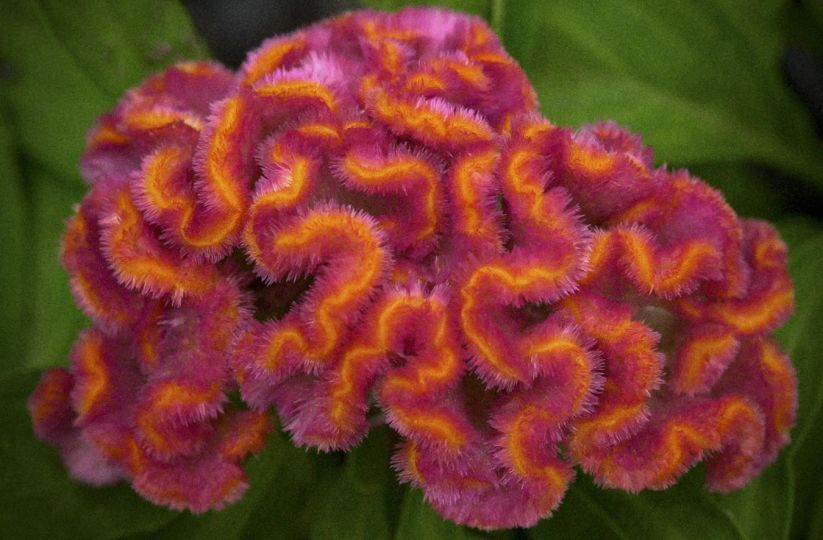
I believe this approach is entirely legitimate, provided it remains faithful to the artist’s identity and is used with complete transparency. Transparency is the key. It should always be made clear that an image is AI-generated and not a photograph. Otherwise, people can easily mistake it for reality. Honesty is essential. I see artificial intelligence as an extraordinarily powerful creative tool. It allows me to realise projects that would otherwise be impossible because of limitations of time, resources or budget. It expands the possibilities of my practice. I’ve always had more ideas than I could physically produce, and AI allows me to bring some of those ideas into existence. Perhaps it’s only a phase. Perhaps one day I’ll move on to something else. My career has always been eclectic. I began in journalism, then moved into painting, later photography, and now artificial intelligence. The next chapter may well be something entirely different. I’m not opposed to AI quite the contrary as long as it is used honestly. What doesn’t interest me are AI images that are excessively fantastical or completely detached from reality. I try instead to create images that preserve a recognisably human dimension, as much as that is possible.
Colour or black and white?
Noémia Prada: Without hesitation: black and white. I almost never think in colour. My way of seeing the world is naturally black and white. That is how I perceive and construct my images.
Natural light or artificial light?
Noémia Prada: Natural light. Always. I’ve experimented with artificial lighting I even have studio lights and a small studio at home but I have to admit that I greatly prefer natural light. My strongest photographs have almost always been made using it.
Which city do you find most photogenic?
Noémia Prada: Several places immediately come to mind. I loved photographing Marrakech and Venice, both of which I find extraordinarily photogenic. São Tomé also inspired me enormously; it is visually rich and endlessly fascinating. In Portugal, I am deeply attached to Lisbon and Porto, both of which offer magnificent settings for photography. But if I had to choose only one city, I would say Marrakech. Its atmosphere is unique, but above all it is the light that makes it unforgettable—an almost unreal light that makes it an endlessly inspiring place to photograph.
Which city, country or culture do you still dream of discovering?
Noémia Prada: There are still many countries I dream of visiting, especially in Asia.
India is at the top of the list. I’ve never been there, and I would love to photograph it. It fascinates me because of its extraordinary human, cultural and visual richness. I would also love to travel to Nepal, Vietnam, Laos, China and Japan. They all remain places I hope to discover one day. I don’t know whether I will have the opportunity to visit them all, but I’m certain they would offer extraordinary photographic possibilities.
A place you never tire of?
Noémia Prada: The sea. I never tire of photographing the ocean. I live close to it, and it occupies an important place in my life. Seascapes move me deeply, and I always find myself returning to them.
Which image best represents the state of today’s world?
Noémia Prada: I immediately think of images that express what is now called truth decay the gradual erosion of truth. In fact, I’m currently working on this very subject for an upcoming exhibition. I haven’t yet chosen the final image, but I believe it should evoke precisely this fragile condition: a world in which truth is becoming increasingly uncertain.
What do you think is missing most in today’s world?
Noémia Prada: Justice. Without question. There is simply not enough justice or equality in the world. We live in a profoundly unequal society, and I struggle to understand and accept that reality. I often find humanity deeply perplexing. Why do such inequalities exist? Why are some people wealthy while others live in poverty? Why do children die? Why are some lives marked by illness, suffering or mutilation?
There is so much absurdity in the world that I sometimes find it impossible to make sense of it. But perhaps what I find hardest to accept is the loss of those we love. Why must we lose the people who matter most to us? Thoughts of mortality are always present in my life. The awareness of finitude accompanies me constantly. I am living through a period in which the idea of losing the people I love fills me with profound anxiety. I know death is part of life, but that knowledge does not make it any easier to accept.
If God exists, would you ask Him to pose for a portrait or take a selfie with Him?
Noémia Prada: I believe God exists in some way, although I couldn’t say exactly in what form. I like believing that He exists. If I had the opportunity to photograph Him, I certainly wouldn’t take a selfie. I would ask Him to pose for me. I think I would even direct the session. In the studio, I can be something of a perfectionist perhaps even a control freak. I enjoy guiding the pose until it matches the image I have in my mind.
I might say: “Look into the lens. Wear a contemplative expression almost celestial.” I would try to convey ideas such as peace, authority and spirituality. In studio photography, I admit that I sometimes shape reality so that it corresponds to the image I imagine beforehand.
Your favourite drug?
Noémia Prada: If we’re talking about conventional addictions, I would probably say coffee and, at one time, cigarettes. But in reality, the only “drug” I cannot live without is creating. I have a constant need to create, to develop projects, to imagine and to build something new. My mind is always moving, always thinking, inventing and projecting. It is almost a private inner world a space of freedom and imagination where I feel most alive. I’ve always had a vivid imagination, and that creative energy is fundamental to my emotional balance.
Your favourite way to disconnect?
Noémia Prada: The most radical way would probably be for the electricity to disappear altogether. No power, no internet that would certainly disconnect us. Today it’s incredibly difficult to disconnect completely. I remember that the last time it happened was during a power outage. My first concern was whether my power bank still had enough battery. In reality, perhaps the only genuine disconnection happens when I’m asleep.,In the evenings, I often relax by watching series on Netflix. It’s not complete disconnection, but it helps me unwind. And above all, I love being alone. I genuinely enjoy solitude. My own company is where I disconnect most easily.
Your latest extravagance?
Noémia Prada: Probably deciding, almost at the last minute, to travel to Venice to see one of my photographs exhibited there. It was an expensive trip, and the hotel cost far more than I would normally allow myself. But I wanted to give myself and my daughter a gift. The two of us travelled to Venice together, just the two of us. It remains a very special memory.
Your greatest professional extravagance?
Noémia Prada: I don’t really indulge in professional extravagances. The only significant investments I’ve made have been in photographic equipment: a few lenses and some studio lights. Overall, I’ve remained fairly reasonable.
What profession could you never have pursued?
Noémia Prada: I don’t think I could ever have worked in the corporate world. The idea of a traditional nine-to-five job going every day to the same place, seeing the same people and repeating the same tasks doesn’t suit me at all. I dislike highly commercial environments where the work serves purely economic goals with no personal meaning. Repetitive, mechanical jobs would be extremely difficult for me. I need creativity and freedom in what I do. I’m also quite introverted. Spending too much time around people drains my energy very quickly.
Which question unsettles you the most?
Noémia Prada: I don’t think there are any questions that truly unsettle me.
I try to answer every question honestly. Talking about myself doesn’t make me uncomfortable. Every question deserves reflection. And sometimes we simply have to accept that we don’t always have the answers. That isn’t easy—but it’s part of life.
What was the last thing you did for the first time?
Noémia Prada: The last thing I did for the first time was riding an electric scooter. It happened in Rome with my daughter. I’d ridden a traditional kick scooter years ago in the United States, but never an electric one. I absolutely loved it. It felt like a small adventure a shared moment of freedom with my fifteen-year-old daughter in one of the most beautiful cities imaginable for photography. It’s a memory I treasure.
Your greatest regret?
Noémia Prada: Perhaps not having known myself earlier. I’m not even sure I know exactly who I am today. There are still many questions for which I have no answers only doubts. I wish I had understood myself sooner, because I might have chosen different priorities and perhaps experienced certain things love, for example in another way. Maybe my childhood, my education or the fact that I didn’t begin working on myself earlier influenced many aspects of my life. I wish I had been braver, taken more risks and lived more authentically without hiding, without wearing masks. I wish I had simply been more myself.
If you could start all over again?
Noémia Prada: I would have had the courage to pursue what I truly loved. Perhaps I would have studied what genuinely fascinated me instead of wondering whether it promised a successful career. I would have followed my passions much more closely. I would have trusted my intuition, acted more impulsively and, above all, been braver.
For a long time, I did what other people expected of me. I followed what seemed to be the “right” path. Looking back, I think that influenced my life profoundly and probably limited some possibilities. If I could begin again, I would try to live according to my own instincts rather than other people’s expectations.
If I could organize your ideal dinner, who would be around the table?
Noémia Prada: Artists. Painters, photographers, poets, musicians and dancers. It would be a table devoted entirely to art and creation. I would also invite great philosophers people capable of discussing the meaning of life. And, of course, I would invite God. It would finally give me the opportunity to ask all the questions for which I’ve never found answers.
What would you like people to say about you… after you’re gone?
Noémia Prada: I’d like people to say that I was creative, that I had talent and that my work moved them. I’d also like them to remember my sense of humour often unexpected, sharp and a little sarcastic. But above all, I’d like them to say that I was a good person. That matters enormously to me, because I genuinely try to be one.
What’s the one thing people absolutely should know about you?
Noémia Prada: Something many people don’t realise is that I’m actually very difficult to know. I may appear sociable, but inside I’m deeply uncomfortable in social situations. What I show people is sometimes almost the opposite of who I really am.
I have only one or two close friends. I often isolate myself not because I dislike people, but because social interaction exhausts me. Spending too much time with others drains my energy. Some people might wish I were a more present friend, but I’m often incapable of it. It isn’t a lack of affection. It’s simply my nature.
One final word?
Noémia Prada: It may sound like a cliché, but life is very short. Truly short. As my twenty-year-old son likes to say, we should try to put our lives in order while we’re here. We should resolve what needs resolving and live this life fully, because we won’t be given another one. Death walks beside us. It is always there—a silent companion capable of asking us to leave the road of life at any moment. Life is here. Death is here. And we move somewhere between the two. Since that ending is inevitable, perhaps the essential thing is to know which people and which things truly matter: our family, our deepest relationships, everything genuinely worthy of our attention. That is why war, injustice and greed seem so profoundly absurd to me. Our existence is incredibly brief, yet human beings so often forget that. To live with the awareness that there will be an end perhaps that is what ultimately puts everything back into perspective.