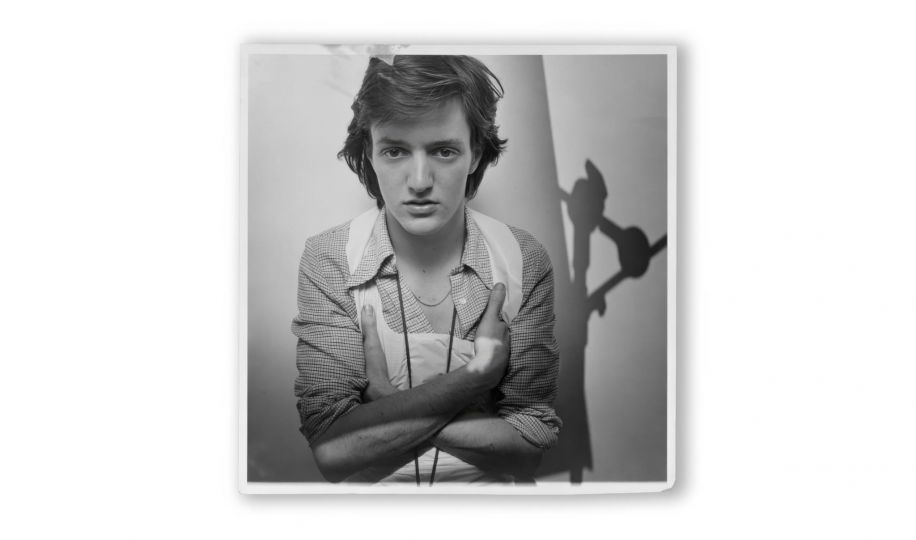
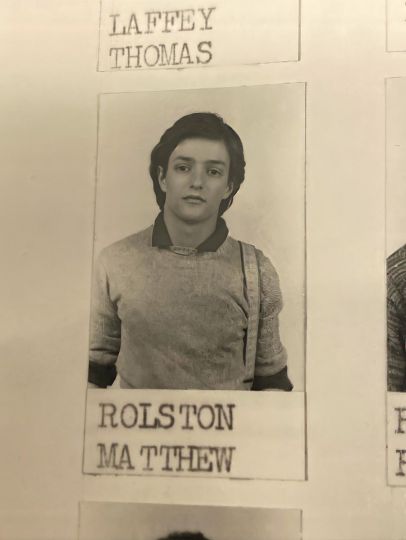


Matthew Rolston: The art of seeing
Matthew Rolston is more than a portraitist: he is an architect of the image, a photographer who pushes the boundaries between beauty, psychological intensity, and theatricality. Trained at the ArtCenter College of Design in Pasadena, he has imposed for over forty years an exceptional technical rigor and total mastery of light and color, transforming each portrait into an almost sculptural visual object.
His work with cultural icons illustrates this constant tension between control and intuition. Rolston does not simply reproduce familiar faces: he dissects them, elevates them, and sometimes unsettles them, revealing what glamour usually conceals. Every framing, every lighting choice, every chromatic decision is calculated to produce a tangible presence, an intensity that goes beyond mere surface.
What sets Matthew Rolston apart is his ability to make aesthetics and critical observation converse. His portraits do not merely seduce : they interrogate the very nature of the image, the power of appearance, and the artist’s role as a revealer of unseen truths. He imposes an exacting gaze on the viewer, leaving no choice but to confront what the portrait reveals and what it withholds.
Inviting Matthew to answer this questionnaire is an opportunity to explore the mechanics of a photographer who has made portraiture a field of technical mastery and critical lucidity, where each image is a performance of perception and reflection.
Carole Schmitz : Your first photographic trigger?
Matthew Rolston : My maternal grandfather was a distinguished doctor in Beverly Hills, here in California. In addition to his role as the Chief of Staff of the Cedars of Lebanon Hospital in Los Angeles, he maintained a private practice as a kind of ‘doctor-to-the-stars’. Most of his patients then were Metro stars (that’s how insiders referred to MGM back in the day). This was during Hollywood’s so-called ‘Golden Age’.
Some years later, by the time I came around, my mother would take me to visit her father, the famous doctor, at his private practice (which was still decorated in the style of the 1930s). Scattered around his wood-paneled office (the inner sanctum) were quite a number of glamorous black and white photographs of his patients, with elaborate inscriptions of thanks and florid signatures. These were framed in elaborate Lalique-style glass and sterling silver frames.
I later discovered that they were the works of the greatest of the Hollywood photographers – in the MGM photo studio. George Hurrell, Lazlo Willinger, etc. Feminine faces with impossibly perfect skin, in come-hither poses on silky satin-y backgrounds that were every bit as smooth as their skin. I was quite taken.
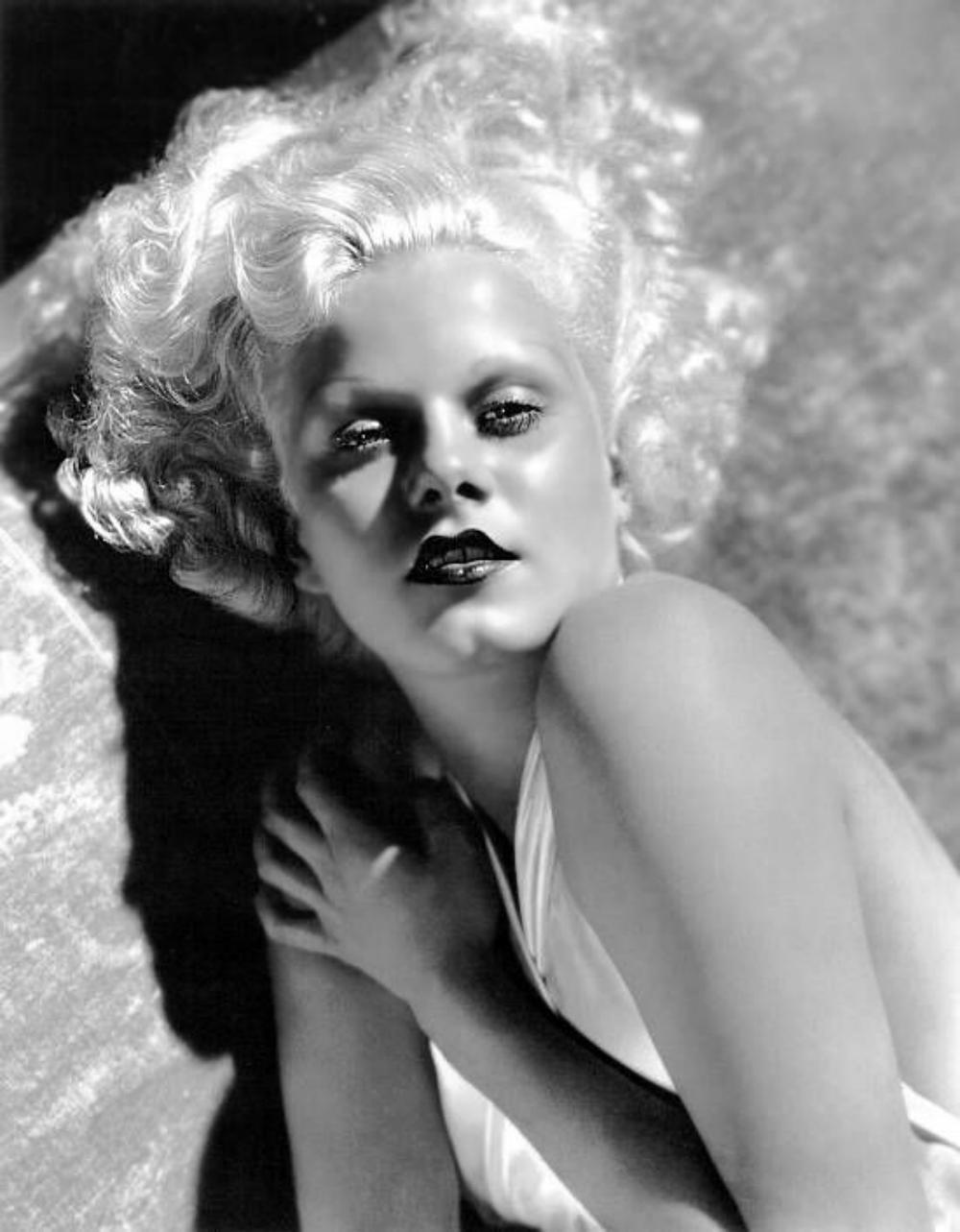
George Hurrell, Jean Harlow (Dinner at Eight), 1933
The man or woman of image who inspired you?
It would have been impossible for someone of my generation and interests: magazines (like Harper’s Bazaar and Vogue); portraiture; fashion; to have not been influenced by the twin greats of mid-twentieth century magazine photography – Richard Avedon and Irving Penn.
In a way, we’re all children of these two great image-makers, and I’m proud to count myself among their descendants. Their influence continues to this day, and not just for me.
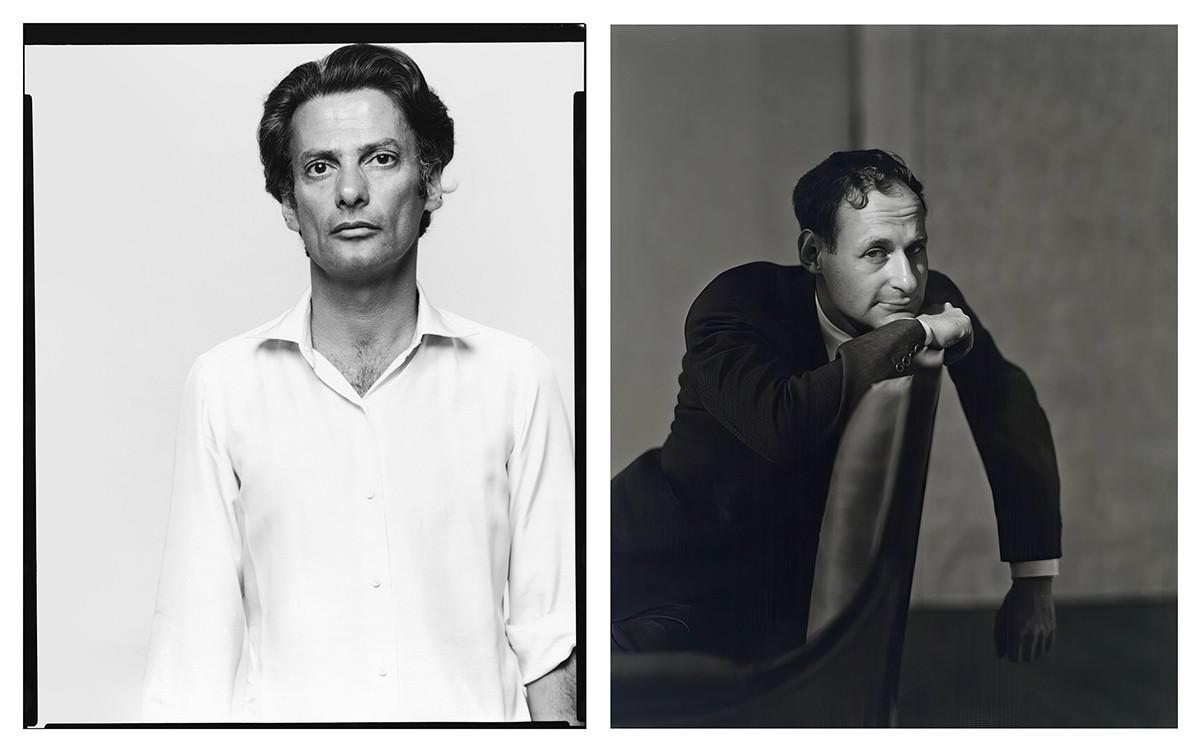
Richard Avedon, Self portrait, New York City, July 23, 1969 / Horst P. Horst, Portrait of Irving Penn, May 31, 1951
The image you would have liked to take?
An image I might yearn to have created is George Hurrell’s iconic photograph of actress Veronica Lake – the one with her silken tresses defying gravity. To me, it’s the apogee of a certain kind of Hollywood glamour.
If only I could have been behind the camera in the MGM photo studio back then! Instead, I’ll have to content myself with dreaming about what it could have been like to at least have been hiding in the shadows of that studio watching the great man himself at work.
I had a chance to meet Mr. Hurrell early on in my career (I was introduced to him in the 1980s by my lifelong gallerist David Fahey) and I asked the photographer a somewhat naïve question: “What is glamour?” And he said, “I don’t know, kid. I think it’s kind of a suffering look.” And it’s true. Real Hollywood glamour isn’t about smiling and kicking up your heels. It’s about portraying a kind of noblesse oblige. One suffers for one’s art!
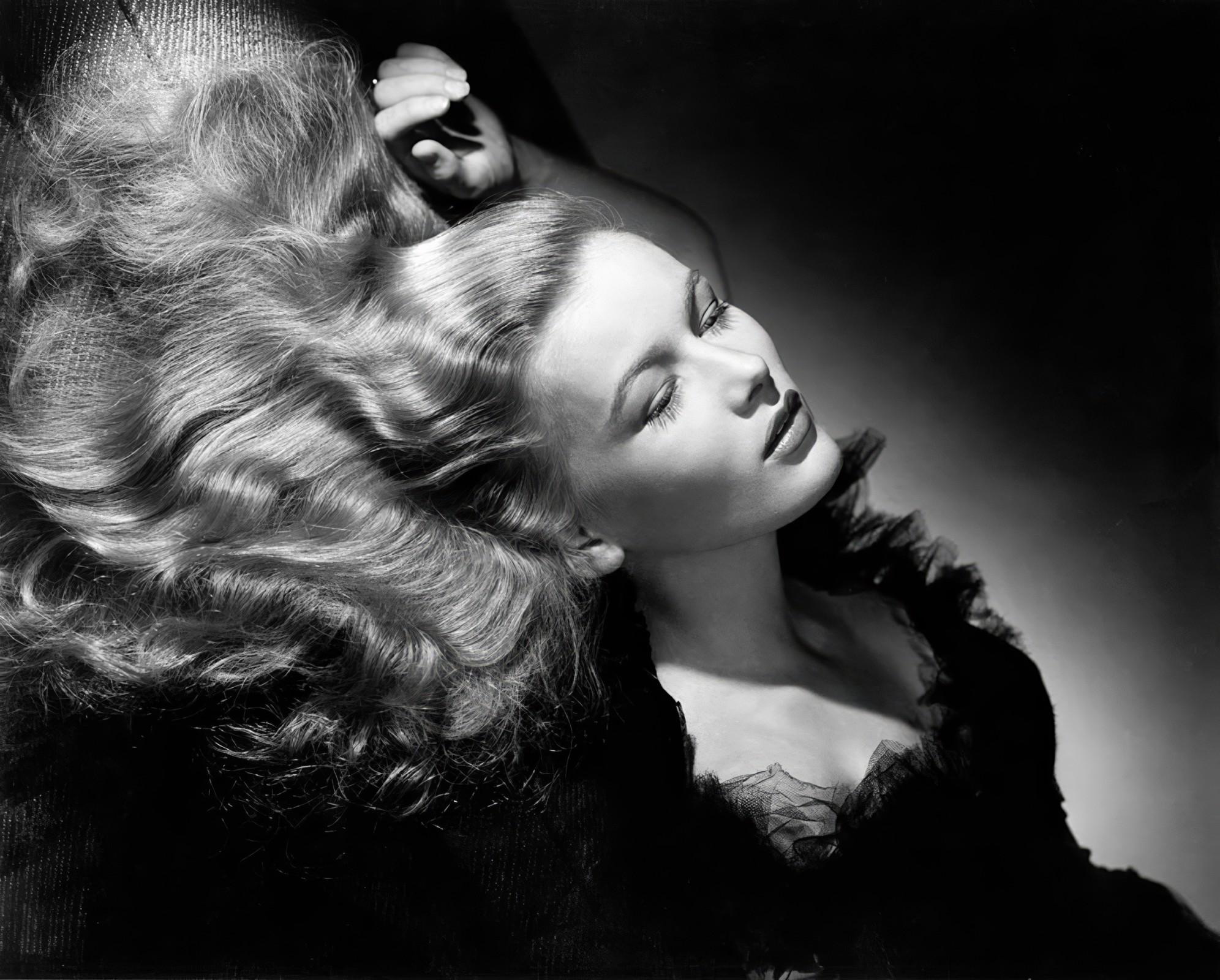
George Hurrell, Veronica Lake, 1941
The one that moved you the most?
I have always been deeply moved (and very much instructed) by Avedon’s somewhat unforgiving 1957 portrait of Marilyn Monroe, caught in what seems to be a brief unguarded moment. The ‘mask’ of glamour was dropped and Marilyn’s vulnerability showed through.
Knowing now how tragically Monroe’s life ended, and having had the pleasure of watching so many of her marvelous performances (not just on film, but in photographs as well), this image, for me, tells stories of abuse, suffering, sensuality and glamour, and instructs the viewer about the highly artificial and performative nature of Hollywood personae.
As a photographer, Avedon’s 1957 Marilyn showed me that many layers of meaning can be suggested in a photographic portrait. This image in particular allows the viewer to peek behind the curtain of glamour to experience something atypical (especially for that photographer, that star and that time period).
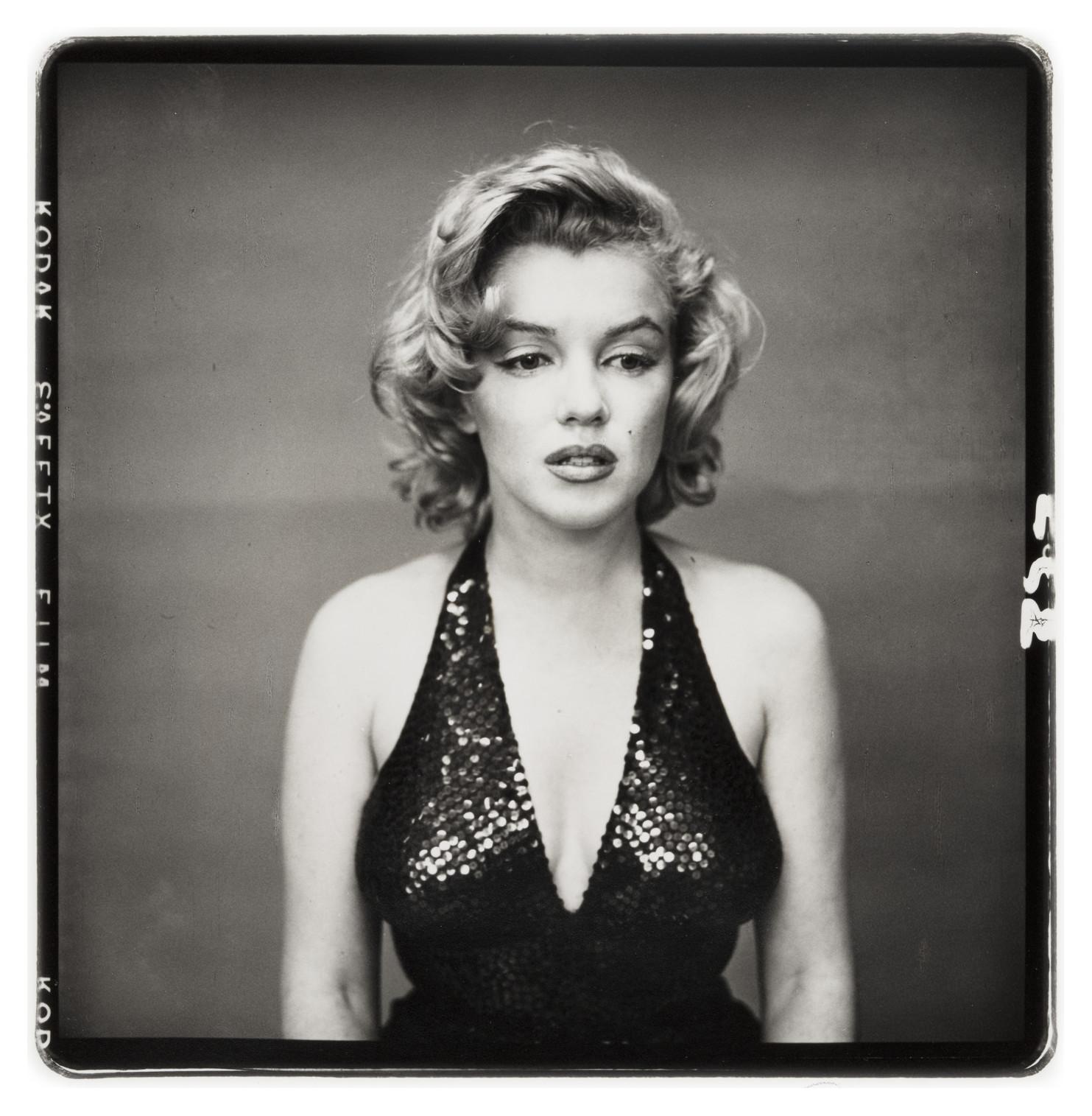
Richard Avedon, Marilyn Monroe, actress, New York, May 6, 1957
And the one that made you angry?
Avedon’s somewhat infamous 1957 portrait of the Duke and Duchess of Windsor is an absolute indictment. Their selfishness, their perceived guilt (perhaps as a result of the fact that they were known Nazi sympathizers), their obsession with fashion and status are all on full display.
There’s that saying – “you get the face you deserve” – here seen as a photographic comment on the part of Richard Avedon.
Looking at this portrait still makes me angry at them, but now it evokes my empathy as well. As an older person, I’m not as quick now to rush to judgment. The Duke and Duchess’ faces can be interpreted as being filled with the pathos of their tragic choices. Let’s not forget, the Duke was meant to be the King of England and instead, chose a life of superficiality and self-interest – choices that are, to me, representative of supreme cowardice.
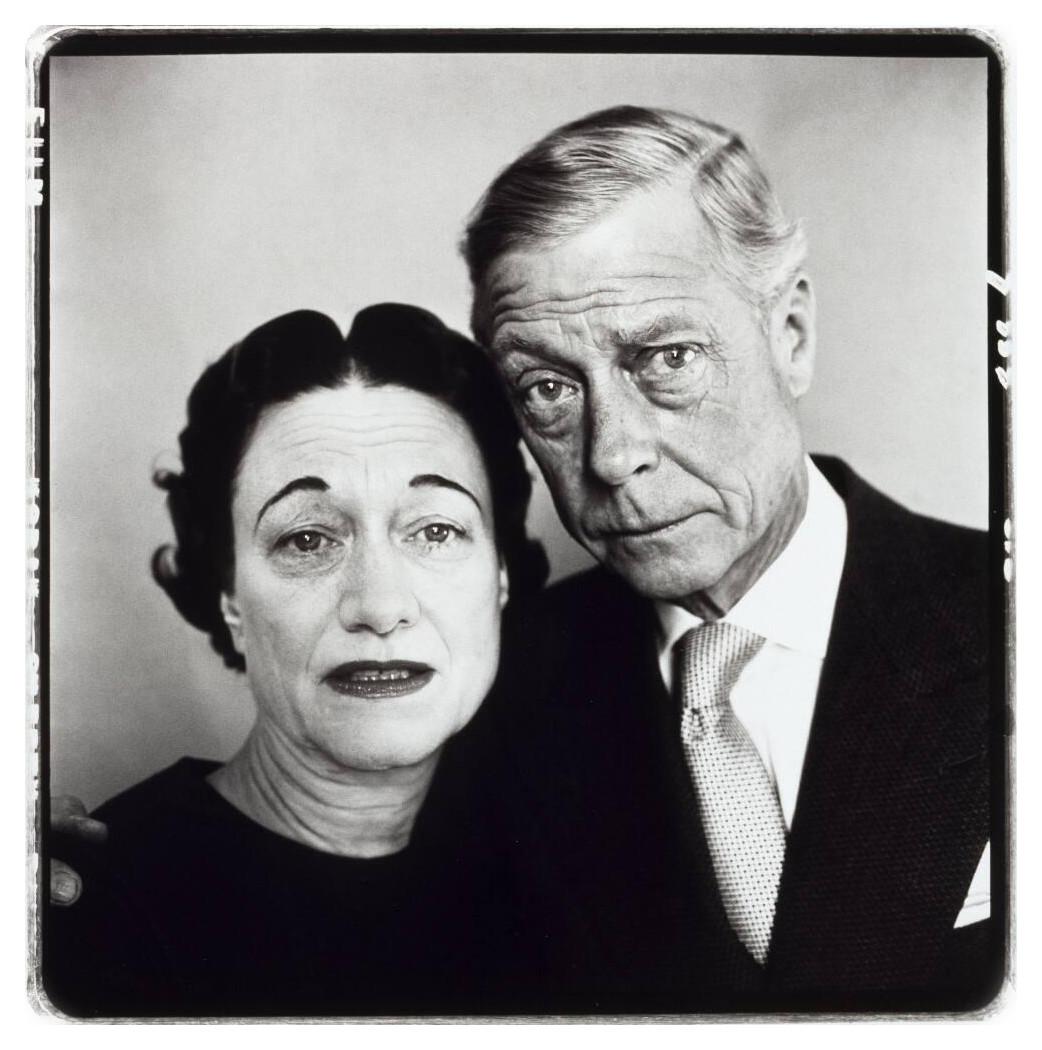
Richard Avedon, The Duke and Duchess of Windsor, April 16, 1957
Which photo changed the world?
What photograph changed the world? It’s a big world. Perhaps I will limit my answer to the photographic world!
The picture that comes to my mind isn’t exactly a photograph (although it appears to be). I’m thinking of German artist Boris Eldagsen’s infamous 2022 image called “The Electrician” – in my opinion, the first truly important AI lens-based creation. This image was submitted to and won the top prize in the ‘Creative Open’ category at the 2023 Sony World Photography competition, one of the world’s most prestigious photographic platforms. Eldagsen famously declined the award at the ceremony itself. He was making a strong personal statement to the world about the advent of generative image-making through the use of artificial intelligence.
“The Electrician” is a complex and highly literate image. It’s fascinating, even mysterious – with many layers of meaning, all of which are open to interpretation. To me, Eldagsen’s AI creation references the work of diverse photographers, some very important in the history of lens-based art (from different centuries in fact), such as Julia Margaret Cameron and Irving Penn.
Have you noticed that I am using the term ‘lens-based art’? I’m not the only one bandying about this phrase at the moment. To me, it may be time to redefine photographic image-making. I think limiting ourselves to the word ‘photography’ does not take into account where we’re headed. ‘Lens-based art’, however, is a much more “creatively open” and inclusive description.
I’m prepared to abandon the word ‘photography’ and instead say that, if an image came through a lens, or looks like it came through a lens, then it should be referred to as ‘lens-based art’. This of course includes traditional (or what I would now call ‘organic’) photography, images created through artificial intelligence, computer-generated imagery, even photorealist painting.
I would like to caution us all to remember that the advent of a new technology doesn’t necessarily mean the ending of the previous one. It’s not an ‘either/or’ situation. It’s a ‘yes, and’. For example, we have every digital means of creating and sharing music, but there are still avid collectors of vinyl out there. The world’s first mass media printed creation, the Gutenberg bible of the 1450s, hasn’t been replaced by the digital screens and literary means of today. Printed books are still very much alive – and so will be the ‘organic’ photograph. But the photographic world has recently undergone a seismic change, heralded powerfully by Eldagsen’s image.
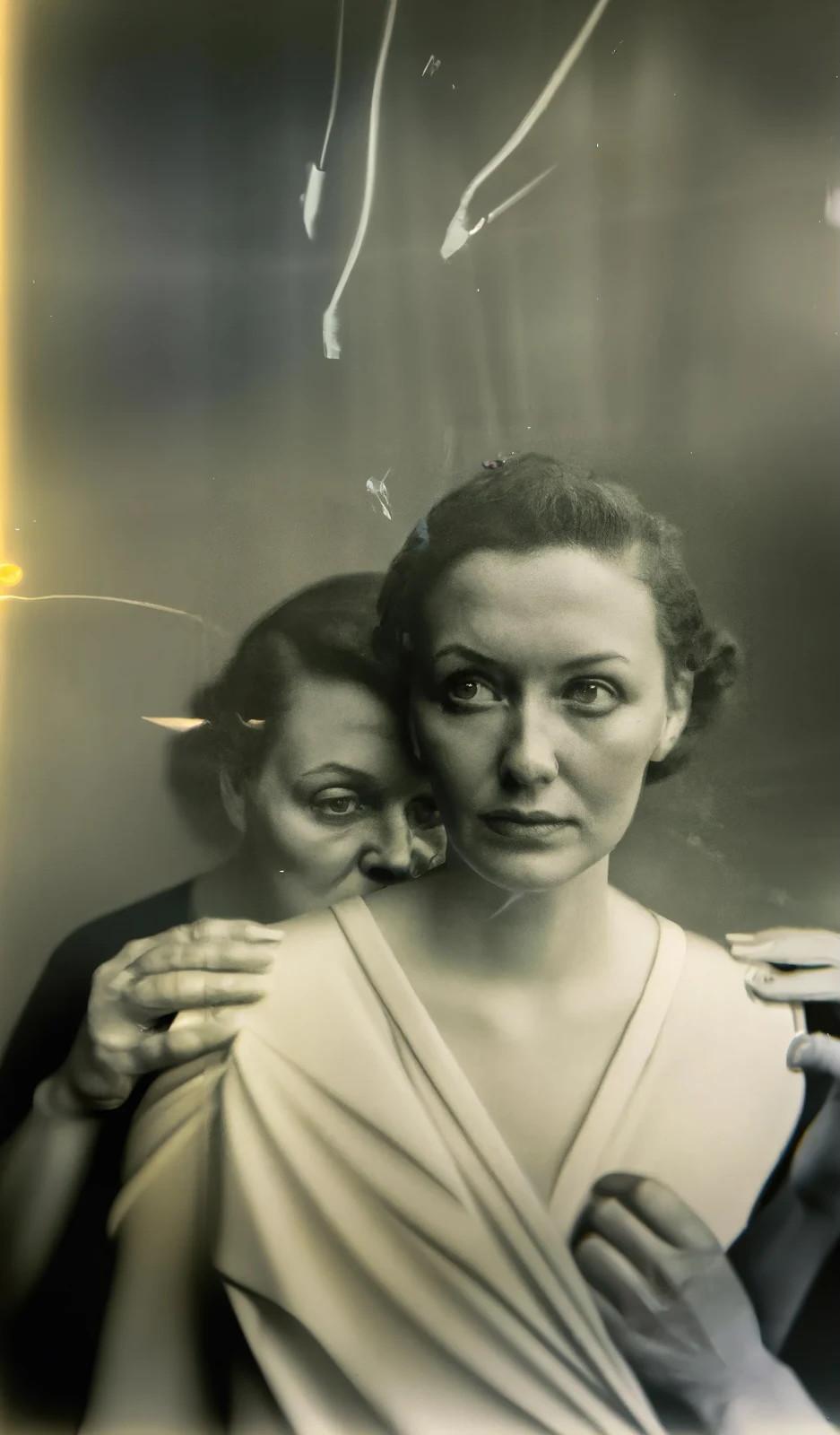
Boris Eldagsen, The Electrician, 2022
And which photo changed your world?
There is a simple dialectic known as ‘the unity of opposites,’ a concept that states that “seemingly contradictory or opposing forces, ideas or phenomena are interdependent and interconnected, forming a coherent and dynamic whole.” As humans, we often operate within binaries. We are comparative creatures and cannot describe anything without the predisposition of its opposite – even if we don’t acknowledge that. For example, there’s no tall without short. Up cannot exist without down. More to the point of my photographic world, that which is gorgeous cannot exist without that which is grotesque.
It is the nature of contradiction, of pictorial irony, to create in the viewer what’s known as ‘cognitive dissonance’. It’s nearly impossible for us to hold two opposing ideas in our minds at the same time, but under the right conditions, it creates deep engagement and a unique kind of pleasure. What are the right conditions in this context? A collision of opposites mediated by a secret ingredient: what people used to call ‘high style’.
Avedon’s 1972 portrait of the great Hollywood director John Ford in his declining years was considered by many viewers at the time to be an unnecessarily cruel depiction. For me, it was a revelation. From what I knew of Avedon’s exquisite fashion work, this was a significant departure. And this for a man who invented the ultimate in highly idealized depictions.
Watching the progression of the twin greats, Avedon and Penn, as they negotiated their mature years as artists, was an enormous inspiration to me. Each in their own way turned away from beauty to its opposite. It must have provided a tonic effect, a kind of relief, to look at the flip side of beauty. Avedon’s Ford portrait was one marker of this. Another was Penn’s 1974 “Cigarettes” series in which he elevated common street trash to powerful abstractions. To my mind, both photographers were turning towards that period’s fascination with minimalism and brutalism, Avedon with his later portraits and Penn in his experiments with detritus.
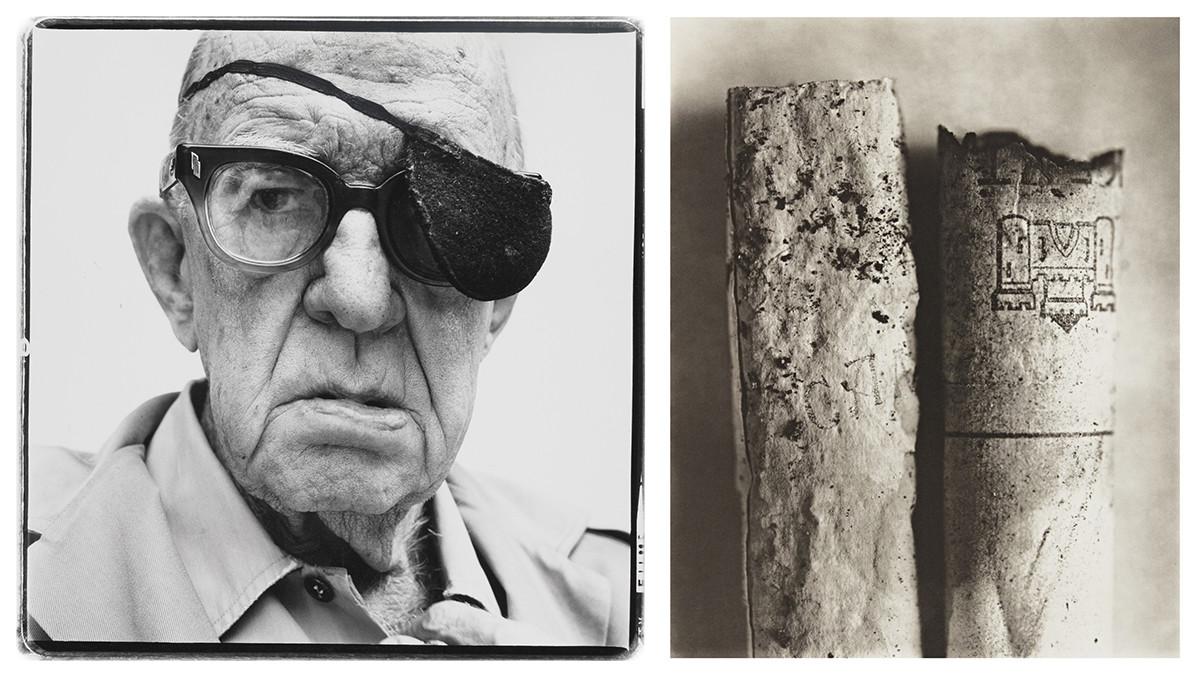
Richard Avedon, John Ford, film director, Bel Air, California, April 11, 1972 / Irving Penn, Cigarette No. 118, New York, 1972
What interests you most in an image?
What interests me most in an image is the above-mentioned concept of the unity of opposites – the idea of contradiction mixed with high style.
I’m also highly attracted to the use of pictorial irony as a visual technique, one in which typical cultural perceptions are challenged, which can create the opportunity for critique in the mind of the viewer. This technique, along with the unity of opposites, is part and parcel of my Vanitas series, in which a collision between the gorgeous and the grotesque is amply displayed.
All of my work – whether commissioned editorial portraits, or later personal fine art projects – is some form of portraiture. All portraiture deals with the human practice of projecting our life force into human simulacra – that is, depictions of humans. This is something we do unconsciously, likely based on primitive survival instincts.
This ‘projection’ effect is common to everything from figural depictions within religion, to idol worship, to Hollywood photography, filmmaking, and so on. These depictions are not living beings – in the case of a Hollywood film for example, we’re looking at literal projections of shadow and light on a wall. But we project our own life force into those projections, and to an extent, they become real to us.
I’m equally fascinated by the so-called ‘uncanny valley’, a term that describes the psychological and aesthetic relation between an object’s degree of resemblance to a human being and the emotional response to that object. This concept was explored by me in my Talking Heads series. That group of photographs isn’t really about ventriloquism (although clearly those dummies are the subjects). What Talking Heads is really about is the uncanny valley – as well as the nature of our unconscious need to project ourselves into human simulacra.
I didn’t know much about these ideas – I’m no intellectual – even though I employed many of them instinctively throughout my body of work. It was only through the passage of time and the ability to reflect on my work that I discovered these concepts for myself, and once discovered, intentionally employed them, perhaps hid them, in my fine art projects.
The unity of opposites, the uncanny valley, and our atavistic need to project our life force into depictions of humans have become the guiding forces behind my personal work.
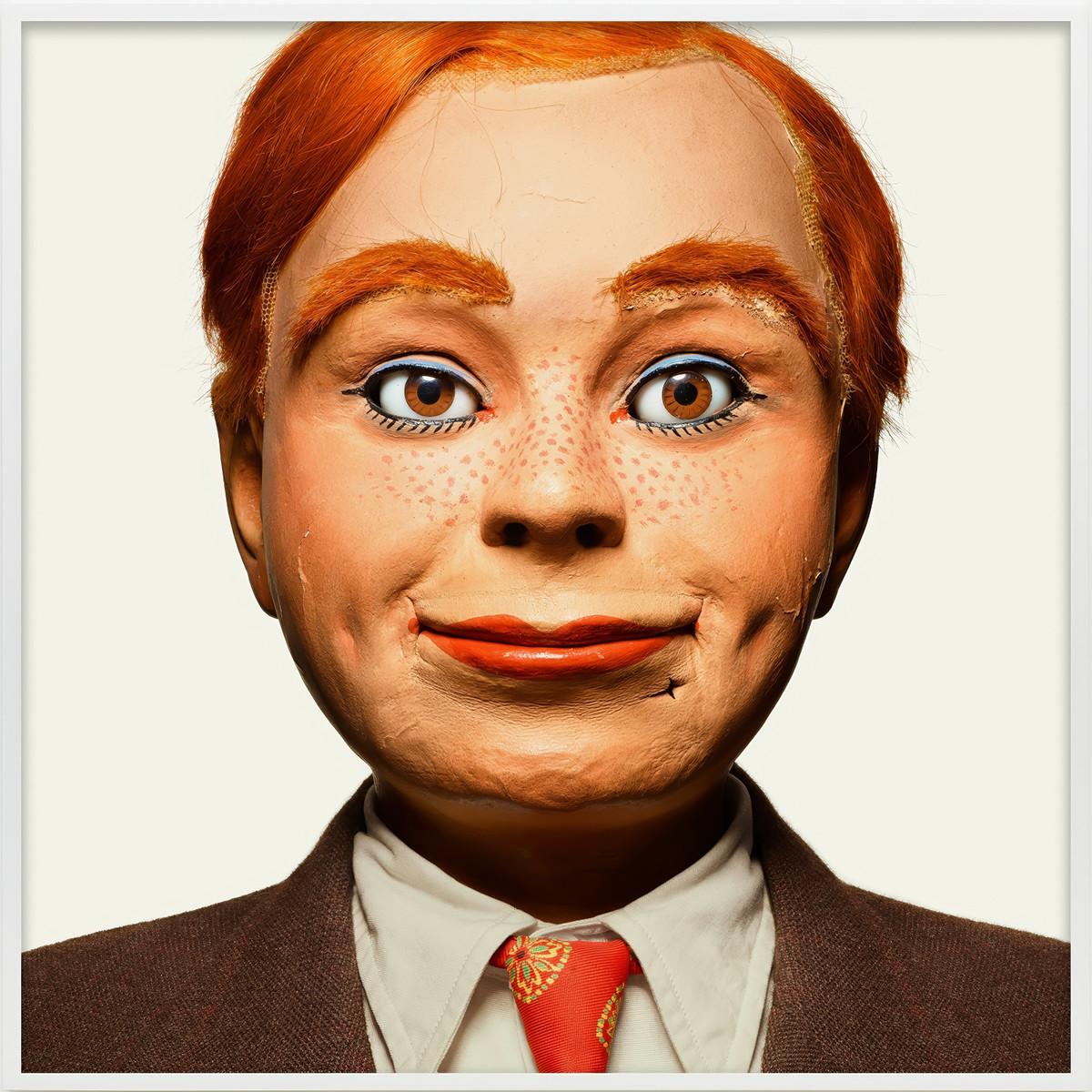
Matthew Rolston, Jonathan Jones, 2010
What is the last photo you took?
I consciously retired from commercial photography more than a decade ago. Sadly, I’m not the kind of artist that can simply pick up a camera and make art. My productions are elaborate and involve a great deal of planning and staff. It was time to move on to other pursuits.
These days I’m rarely involved in the production of photography – my focus is on my work as an educator, and as a fine artist and author. I’m equally involved in supporting scholarships in my name at my alma maters (ArtCenter College of Design in Pasadena, California and Otis College of Art and Design in Los Angeles), as well as building and funding a foundation whose missions will be to provide for further scholarships in lens-based artmaking, and the preservation of my archives/legacy for future study. Those are the activities my days are filled with now.
The last time I created original photographic work was for a very special commission from Paramount Pictures back in 2021. The director Damien Chazelle personally requested me to photograph the stars of his film Babylon in a ‘pop culture’ take on the style of the 1920s and 30s. This commission came about because I’ve been known throughout my career as somewhat of an expert in the re-creation of the vintage Hollywood look. The idea at the studio was to mount a traveling exhibition of these special portraits in galleries and institutions as the film opened around the world.
These days I turn down any kind of commercial request, but this one really interested me – especially after I read the script, which was a marvel. It was an absolute privilege to photograph Margot Robbie, Brad Pitt, and the other stars of the film, in character, in their costumes, in the style of Old Hollywood, and in the guise of a fine art series rather than typical advertising or promotional use. Sadly, the film was not received by the public in a favorable way, and after two or three exhibitions, the plan was shuttered.
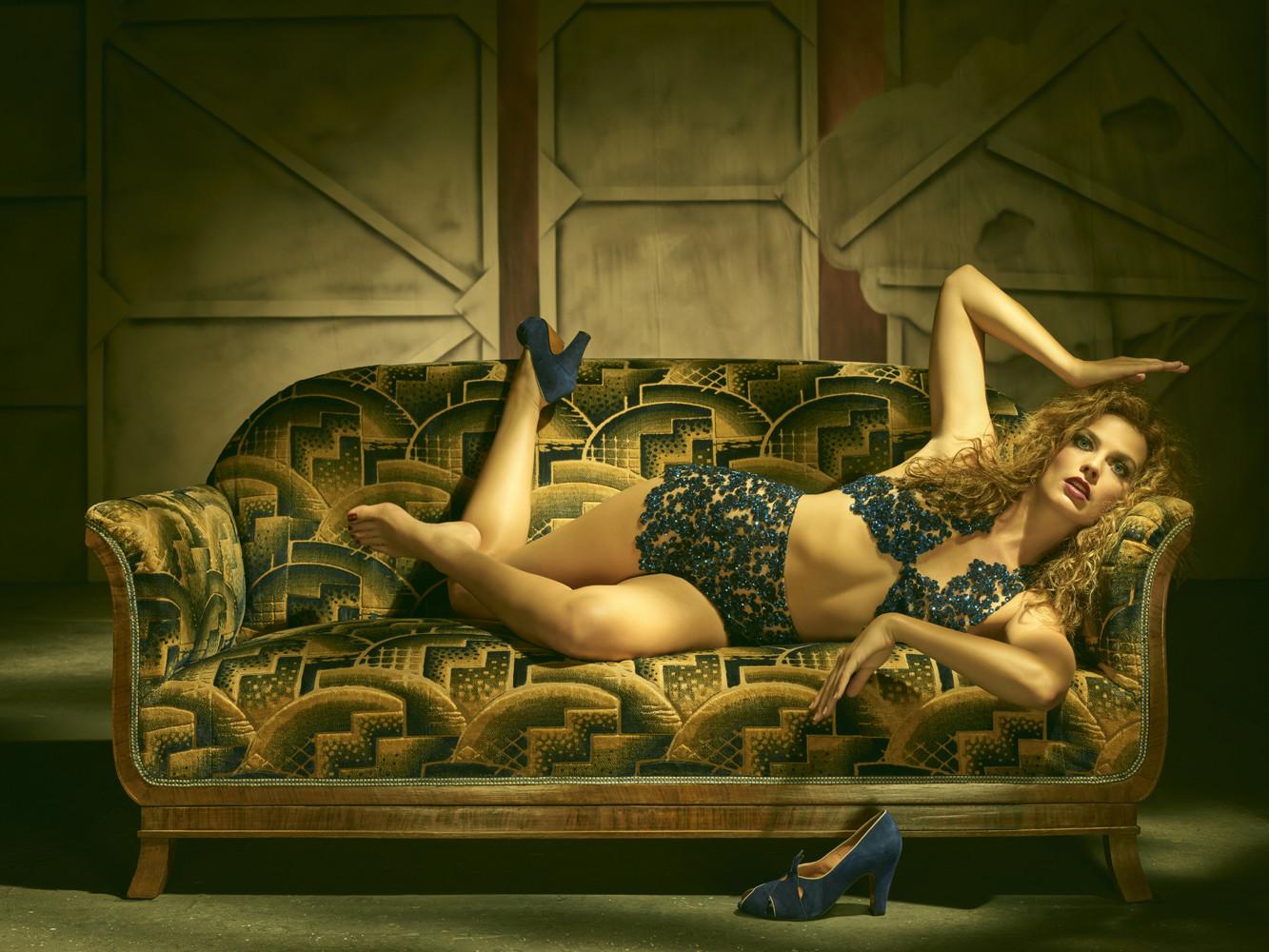
Matthew Rolston, Margot Robbie as Nellie LaRoy, Art Deco Sofa, Los Angeles, 2021, From the series ‘Babylon’ © Copyright Paramount Pictures. All rights reserved
A key image in your personal pantheon?
Many style experts consider the 1950s to be the golden age of fashion and fashion photography, and there is one image from that period which seems by general agreement to stand head and shoulders above all other American fashion photographs from any era – and this one stands at the top of my personal pantheon.
Dovima with elephants, evening dress by Dior, Cirque d’Hiver, Paris, August 1955 is widely thought to be the masterpiece of 20th-century fashion photography. It has the distinction of being sold for the highest price of any fashion photograph in history. If one was lucky enough to acquire a vintage print today, it would cost upwards of $1.5 million for a single print.
The work was made by the great Richard Avedon, here commissioned by the legendary Harper’s Bazaar editor Carmel Snow. Snow and her colleagues understood and employed the ‘unity of opposites’ as a guiding force. They understood the power of pictorial irony, that is, contradiction.
With this Avedon photograph, we have quite a few contradictions and, importantly, the special conditions of cognitive dissonance and high style: human civilization versus animal wildness; the smooth versus the rough; the appearance of freedom versus literal imprisonment (the animal is in chains, after all) – I could go on and on. All this with the legendary Dovima, in an exquisite gown designed by a young Yves Saint Laurent for the House of Dior.
Perhaps that’s why this photograph has proven to be so powerful for generations of viewers, and a memorable touchstone for me.
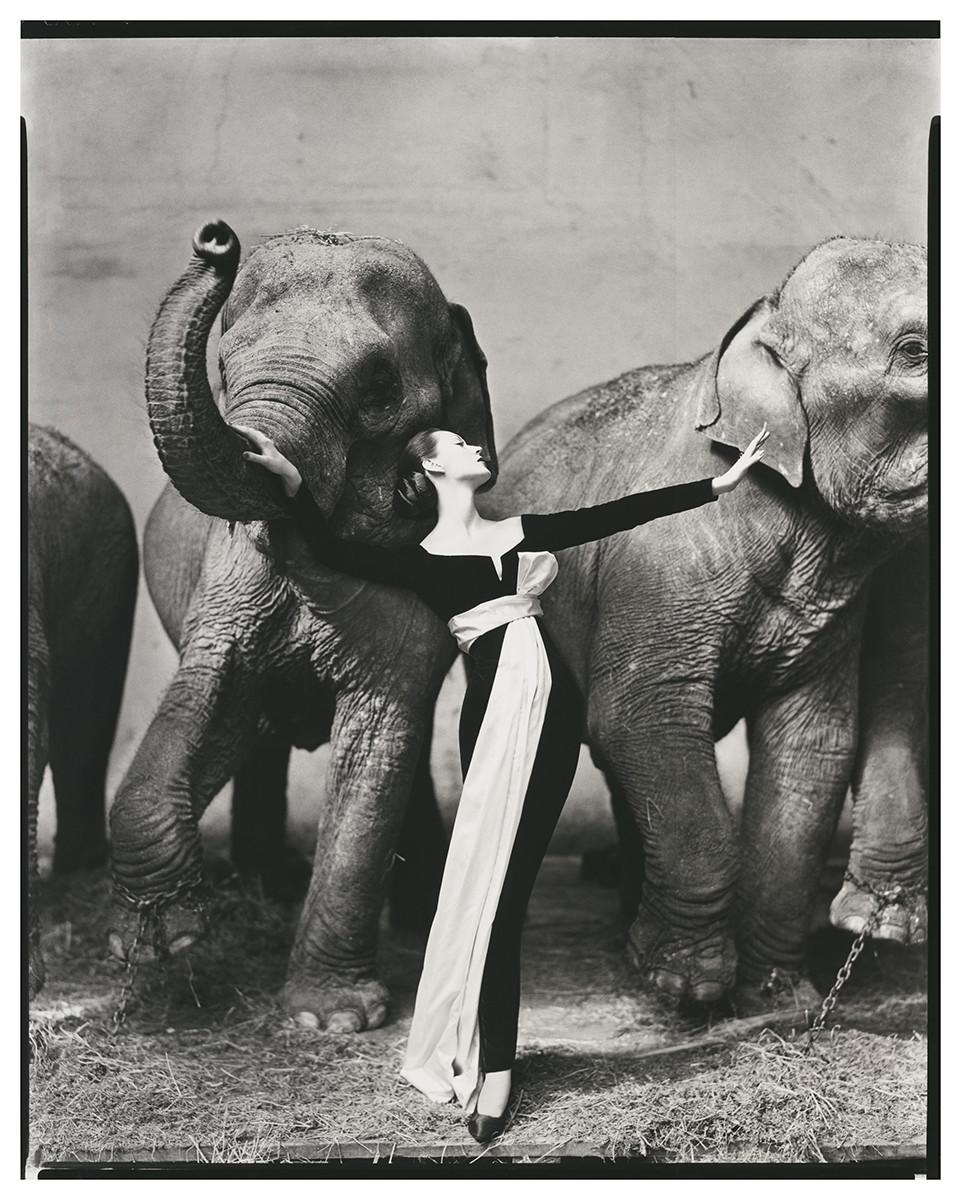
Richard Avedon, Dovima with Elephants, Evening Dress by Dior, Cirque d_Hiver, Paris, 1955
A photographic memory from your childhood?
In America, in my childhood years, it was very common for kids to be obsessed with their favorite sports stars and teams. For example, they might know the statistics – batting averages – of their favorite baseball player, etc.
Once I discovered my mother’s collection of vintage Harper’s Bazaar magazines – when I was around six years old – they became my obsession. My mother had maintained a subscription to the Bazaar since girlhood and had kept all of the issues from the 1930s through the 1960s.
I didn’t know batting averages, I didn’t even know baseball players’ names, but I knew the names of all the editors, photographers, designers, illustrators and writers that worked on the Bazaar in those years.
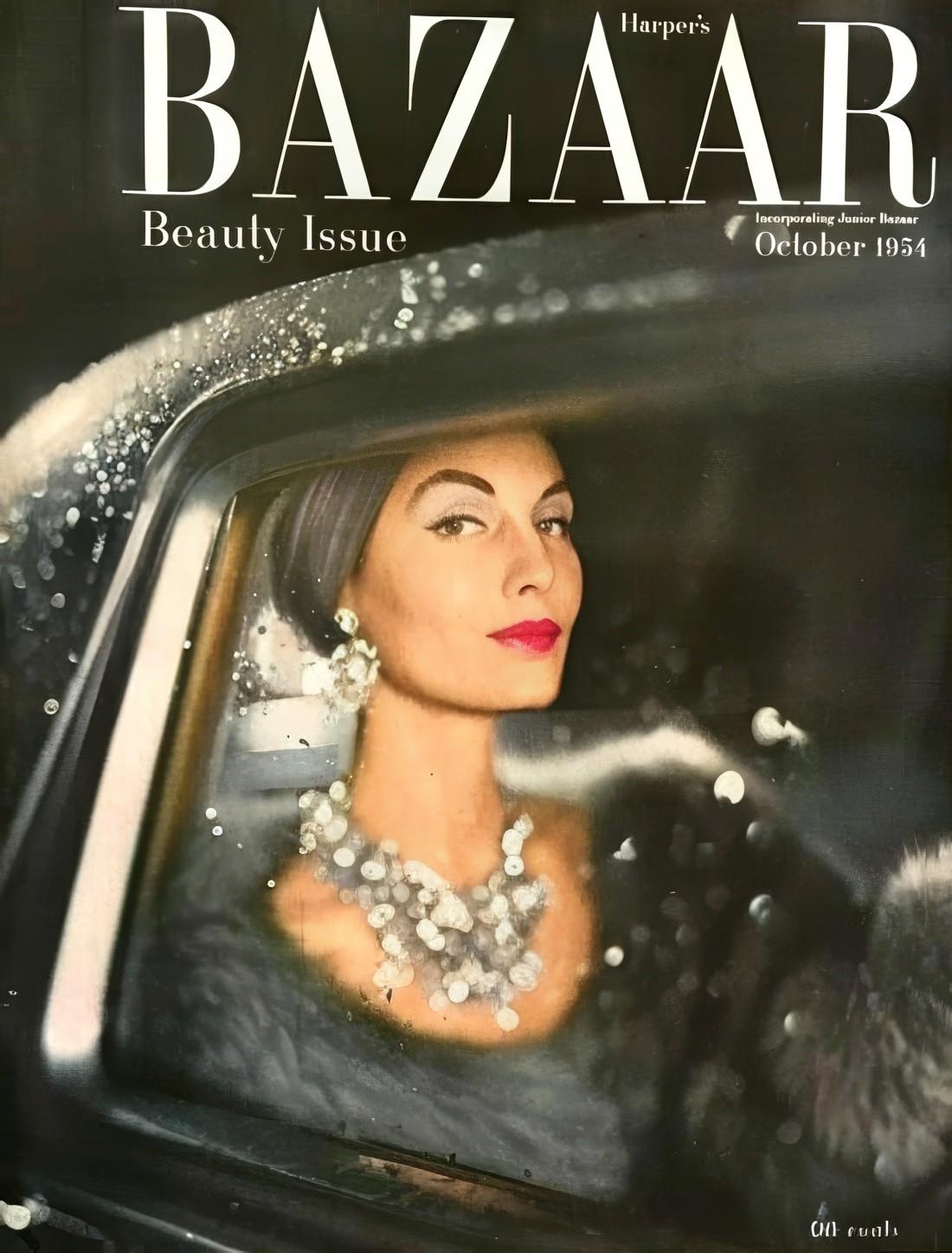
Richard Avedon, Cherry Nelms wearing Royal Canadian Opaline fox stole by Ritter Bros., diamanté necklace and earrings by Schering, Harper’s Bazaar (October 1954).
According to you, what is the necessary quality to be a good photographer?
Visual literacy is the key quality to being a good photographer. We all stand on the shoulders of the greats that have come before us, this is the nature of human culture and is essential to our evolution.
As we enter an age in which ‘lens-based art’ will likely be dominated by generative AI, it’s more important than ever to know the history of the field. Great images will be created by great image-makers, regardless of the tools at hand. And to be a great image-maker, you must know your history.
What makes a good photo?
Great photographs are unforgettable.
Once seen, they linger in the mind. They influence culture. They may even turn the tide of culture. This is not something that one can set out to do, it’s a condition that’s recognized by the audience.
Does the image stand the test of time? That’s another question.
Most important cultural artifacts (including photographs) have lives a great deal longer and more diverse than those of their creators. Just walk into any museum or library.
It’s impossible for us to gauge the value of a cultural artifact outside of our time. For example, Van Gogh only sold a single painting in his lifetime. But consider the way that Van Gogh’s art has come to be recognized today; it will likely remain in the pantheon for generations to come.
The person you would like to photograph?
During my active years as an editorial portrait photographer, I would often talk to my editors and beg to be assigned to photograph certain people. It’s important to recognize that the lived experience of a photographer is connected to, but separate and apart from the works that they create.
If I begged for an assignment, it was usually because I had an inkling that I’d be able to create a memorable image – and secretly because I was dying to meet that person. Remember that a portrait sitting is a kind of wordless “conversation” between the photographer and subject. That’s the lived experience for both participants.
Today I don’t really crave to photograph anyone. But at the moment (at least among the living), I would say the actor Tilda Swinton – and that’s because I admire her as an artist, I’ve enjoyed what I’ve learned about her as a person, she’s fascinating looking, has amazing style and I imagine I’d be able to create a memorable image. I’m also dying to meet her!
Let’s extend the question to someone no longer living! Here I’d have to say the inimitable art patron Gertrude Stein, preferably in Paris in the 1920s, during the period in which she held court at her apartment, the address of dreams: 27 rue de Fleurus.
The fantasy of time travel to that place, rubbing elbows with artists like Picasso and Matisse, and writers such as Ernest Hemingway, F. Scott Fitzgerald, Ezra Pound – the so-called ‘Lost Generation’ – that would be a dream. Talk about a lived experience!
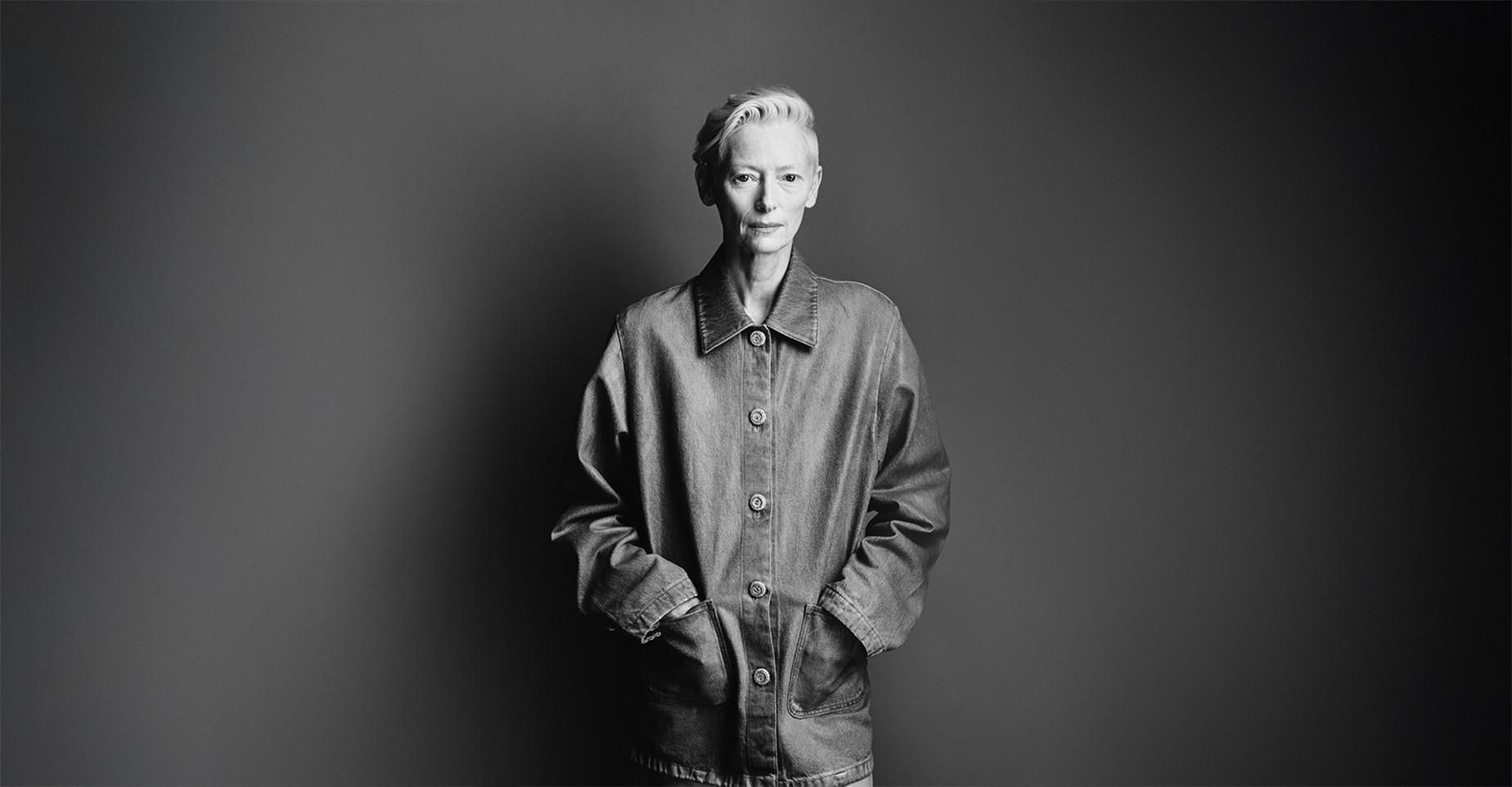
Tilda Swinton for ‘The Room Next Door’ photographed by Gareth Cattermole, 2024. Courtesy Getty Images
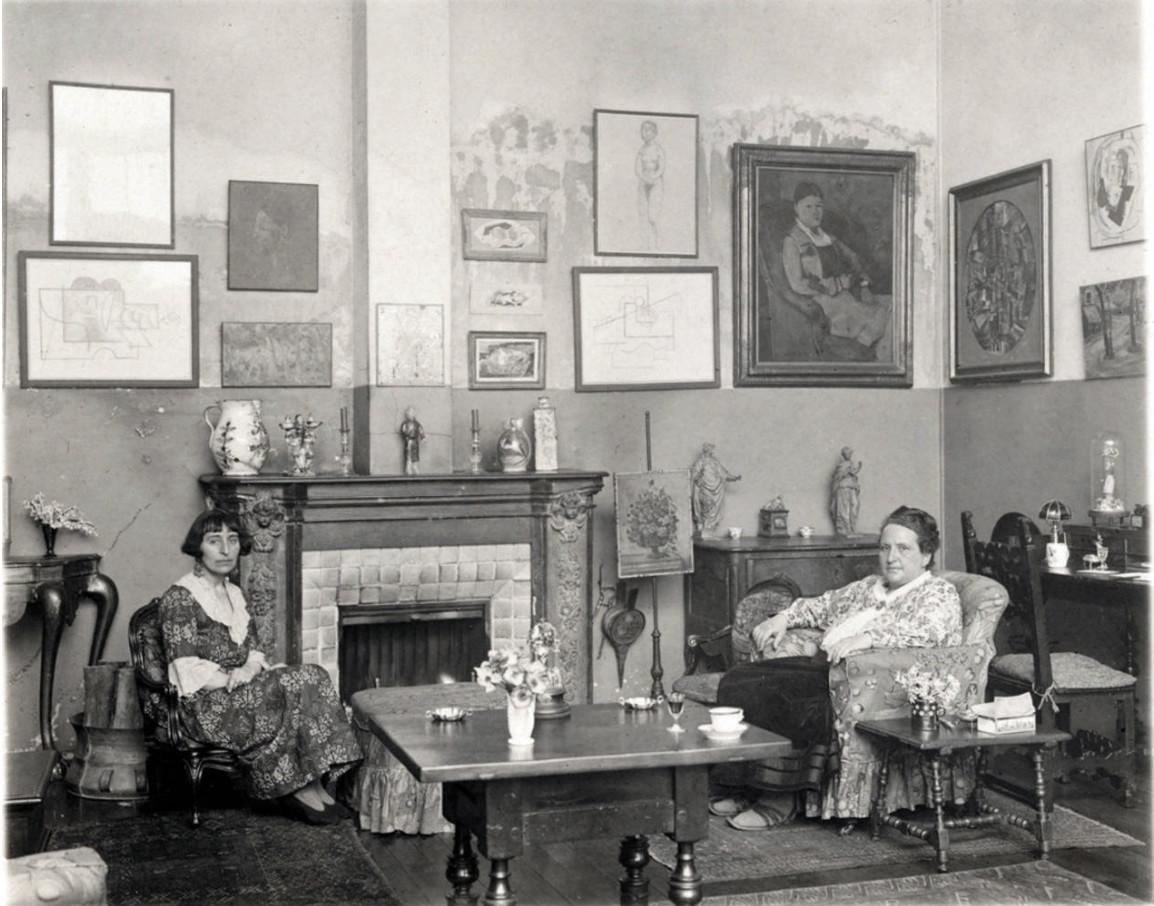
Man Ray, Alice B. Toklas and Gertrude Stein, 1922
An indispensable photo book?
A careful study of Avedon’s In the American West is an indispensable tool for any portrait photographer. To see Avedon apply his highly developed aesthetics – previously reserved for the world’s most beautiful and accomplished people – to some of the world’s least beautiful and least accomplished people, is to experience mastery.
Avedon proved conclusively, and with great minimalist simplicity, that it’s not who you photograph – it’s how you photograph.
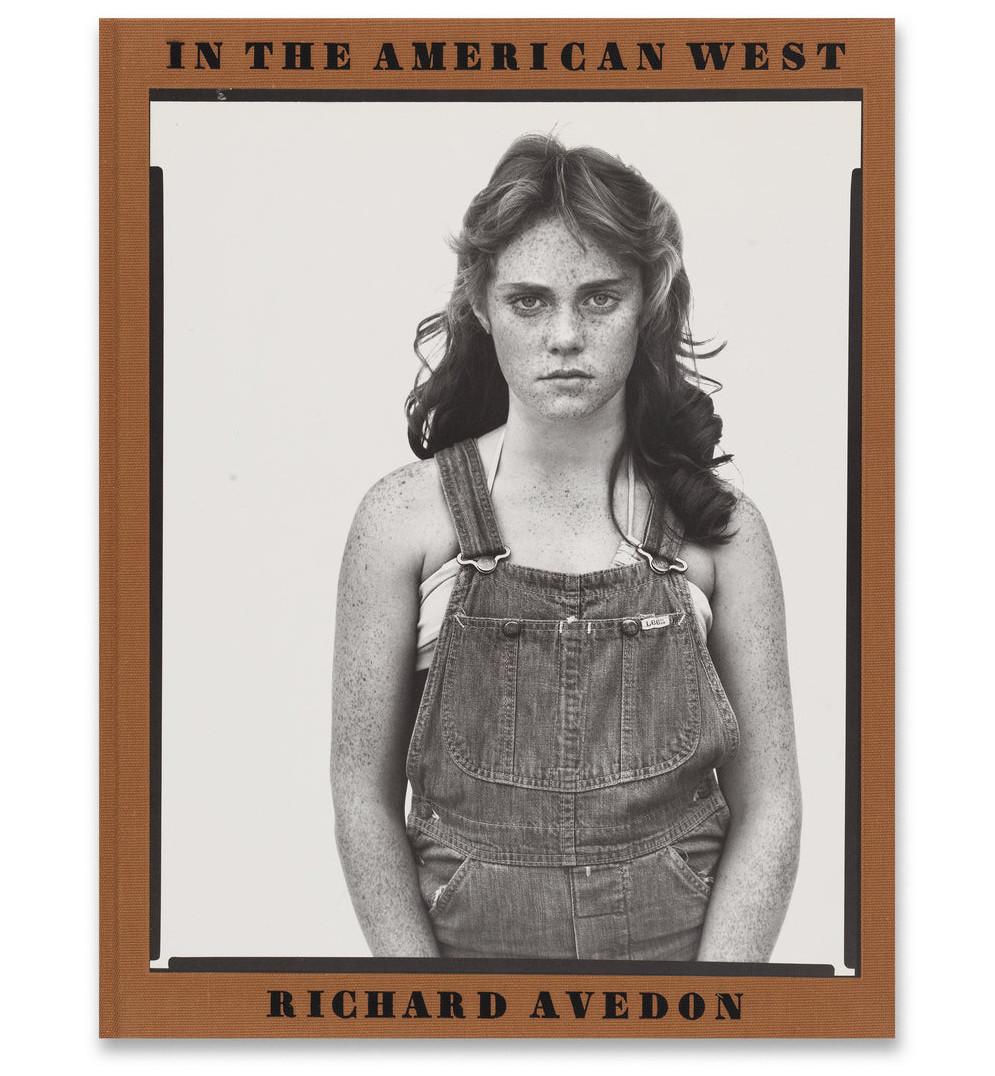
In the American West by Richard Avedon, Abrams Books, 1985.
The camera of your childhood?
I wasn’t in the least bit interested in being a photographer as a child. It’s true, I did love fashion photography and the portraiture that I saw in my mother’s collection of the Bazaar, but my earliest fantasies were about being an artist – maybe a fashion designer – or at least a fashion illustrator.
While the other kids of my generation were being ferried about town by their parents to soccer practice or baseball games, I was the “art school kid” in the family. Starting at around age six, it was a regular round of piano lessons, some dance training (very early on) and drawing, painting, etching, any kind of mark on the page that I could make with my hand.
Over my childhood years, I took art classes all around Los Angeles, from ArtCenter College of Design’s programs for elementary through high school students (Wednesday nights and Saturday mornings), to the Los Angeles County Museum of Art’s museum school for kids, to the Chouinard Art Institute, where I studied life drawing with Watson Cross, to Otis College of Art and Design, where I studied life drawing with George DeGroat – my focus was most definitely not photography.
Later, as soon as I got out of high school, I moved to San Francisco, and at age 17, started taking classes at the San Francisco Art Institute. But my love of fashion had never waned, so I took some classes at a place called the San Franscisco Art Academy – in fashion drawing.
At the Art Academy class, we were asked to photograph different types of textured fashion fabrics in different kinds of light so we could learn how to pencil-render those textures. For example, fabrics such as slubbed silk or linen look entirely different in soft light than they do in hard light. So those were my very first experiments with the camera.
The camera itself seemed off-putting to me: it was much too mechanical, and involved mathematics and empirical measurements – things that were against my nature. I’m not mechanical, or logical. I operate on a sensual and intuitive plane.
Anyway, one of my best friends at school was a lovely young woman (we’re still friends to this day) with a truly fabulous collection of clothing. We would set out at dawn for obscure parts of San Francisco (let’s say an alley in Chinatown) in order for me to capture morning light on the texture of her clothes. These early experiments evolved into portraits that were quasi-fashion photographs.
To be honest, even with all of my study, I never really drew with ease. My friends in class could create spectacular drawings that flowed directly from their hands to the page. I had to work and re-work to get what I wanted. The discovery of the camera was my flow state. Here I found the ease that was missing in my drawing.
The camera was my childhood Nikkormat, a very basic 35mm that I barely knew how to operate. But I learned. And I learned enough to create a portfolio of my portraits (mostly of my friend with the beautiful clothes) to apply to the photo department at ArtCenter, back in Los Angeles. So at age 19, I returned to the hallowed halls of ArtCenter (where I had previously studied drawing as a kid) to be initiated into the mysteries of photography.
The first year at ArtCenter, we were forbidden to use 35mm. That’s where I fell in love with the view camera, a giant apparatus that used the 8×10 format. That was real photography!
The one you use today?
If and when I do pick up a camera these days, it’s either going to be Phase One with the 100 megapixel back, or its equivalent at Leica.
What, in your view, is the primary role of photography in our perception of the world?
Photography can be a form of art.
The primary role of photography, at least for the photographers, is the same as that of artists.
Here are some of the reasons that I think people make art (and photography): to seek personal enjoyment and satisfaction; to express personal thoughts and feelings; to communicate.
People create imagery to make others see us more clearly; to provide us with new visual experiences; to record a time, place, person or object; to reinforce cultural ties or traditions; to affect social change.
Artists and image-makers tell stories. They create works to explain the unknown; to adorn themselves; as an act of worship; perhaps even to heal the sick. Of course, many artists and photographers also work to earn a livelihood.
The bigger question is: is there an evolutionary purpose to artmaking?
My answer to that question is that the defining characteristic of being human is our imaginative nature. Nearly every aspect of human culture is an imagined reality. Money, religion, nationality – it’s all imagined. Of course, it’s all too real for us. Here’s the thing: we are able to imagine things and make them real. I don’t know of any dolphins that have built a rocket ship and gone to the moon. We little humans imagined that, and we did it (not to say that dolphins don’t live lives unknowable to us). But the human thing is imagination. That is the subject of all art. That is my subject.
Should an image always be a reflection of reality, or can it break free from it?
I maintain that there is no such thing as objective truth in any part of human culture, let alone in a photograph.
My camera is a fabulous liar.
No photographic image, expressive, artistic, whether created for scientific research, war photography or any other purely informational form, is truly objective. The fact that the image was taken at that moment, framed in that way, and divorced from the time in which it existed, is by its very nature non-objective.
Avedon said it best: “There is no such thing as inaccuracy in a photograph. All photographs are accurate. None of them is the truth.”
Is there a particular era or photographic movement that especially resonates with your work or your tastes?
Beginning in 1930, the cultural elite, people in fashion, photography and art – not to mention the rest of humanity – lost the freedom that was so rife in the Roaring Twenties, the so-called Jazz Age.
Attitudes shifted. There was a desire among fashion photographers and magazine editors to return to more comforting depictions of traditional femininity, and a renewed hunger for escapism given the terrible realities of the Great Depression and the lead-up to World War II.
The result was a trend towards goddess imagery – a move in fashion to create an association between the modern and the antique.
Miss Sonia, Pajamas by Vionnet, Paris, 1931, is a fine example of the fashion photography of George Hoyningen-Huene.
This photograph resembles a Greek bas-relief, as if on a temple, perhaps one dedicated to the goddess Aphrodite, and it portrays a persuasive view of traditional feminine power.
I’ve always been interested in depicting feminine power. I regard my photography as a modern version of goddess worship. Think about the cadence of a glamorous photoshoot: the celebrant (the female subject) is anointed with unguents and oils (in modern terms, hair and makeup), clothed in ritual garb (fashion and styling) and invokes a deity (being a star, inhabiting constructed identities). The shaman (me, the photographer) kneels at her feet, as a group of worshipers (the crew) looks on.
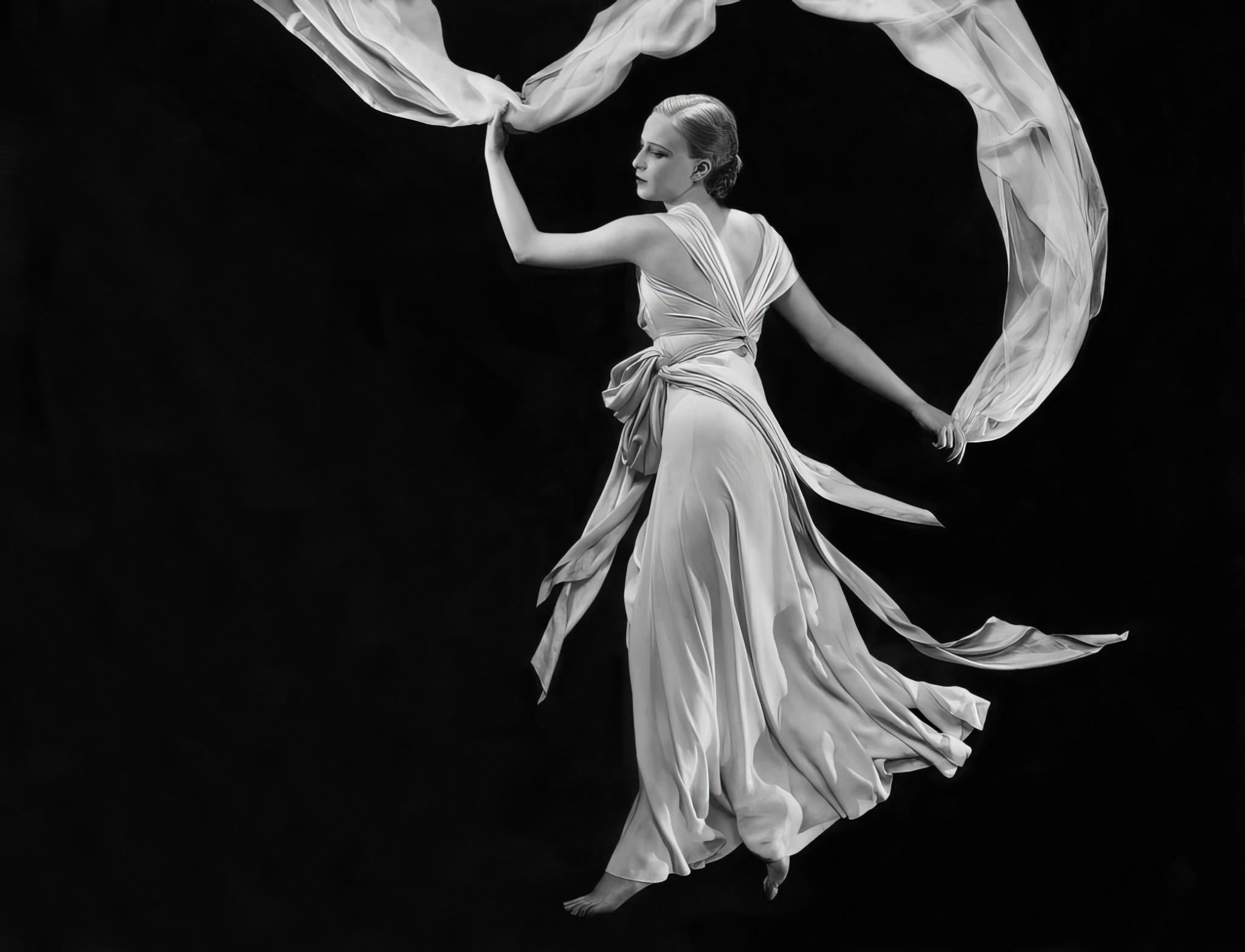
George Hoyningen-Huene, Vionnet Pajamas 2, Paris (Miss Sonia), 1931
If you had to choose one photograph that represents you, which one would it be, and why?
I’ve had a long and diverse career with many different periods, many different styles. It’s hard to pick one image to represent a life in photography. But if I had to choose one, it would be a very stylized portrait of pop star Cyndi Lauper made in 1986 for Andy Warhol’s Interview.
In the 1980s, I had the notion to revisit the imagery of Old Hollywood as a way to make a post-modern comment on the nature of contemporary celebrity and constructed identity. This image of Cyndi was meant to evoke the silent era in Hollywood, with a direct reference to the Art Deco star Mae Murray – chosen on account of Cyndi’s tongue-in-cheek stage presence (and with her outspoken public remarks, she was anything but silent). I just took those qualities and exaggerated them to the maximum.
This was the beginning of what I would now call a somewhat conceptual approach to portraiture, but I couldn’t have articulated that at the time
Much later, this image appeared in a retrospective of my first decade in photography. I called that retrospective Hollywood Royale. The exhibition title was a bit of a joke – it was a reference to so-called Hollywood royalty. And there may have been a few other ‘Easter eggs’ in that titling, one being the name of a famous apartment house from the 1920s called the El Royale where many stars lived – including Mae West.
My titling was also a sly reference to Tarantino’s film Pulp Fiction and the famous sequence between John Travolta and Samuel L. Jackson’s characters where they discuss the French naming of a McDonald’s hamburger in Paris – there, the Quarter Pounder is known as a Royale with Cheese – and there is undoubtedly a cheesy aspect to the notion of Hollywood “royalty”.

Matthew Rolston, Cyndi Lauper, Headdress, Los Angeles, 1986
What balance do you see between intuition and reflection in the construction of a photographic image?
Let me describe my ideation process, which is entirely nonlinear and more or less the same whether the issue at hand is the creation of a photograph, the writing and direction of a music video, the direction of a hotel concept, the writing of a lecture, or any one of the other many creative projects I’ve taken on over the years.
Research is always job number one. You can’t comment about something you know nothing about. So, the first step in any creative endeavor is a deep dive into research about every aspect of it. This of course is a logical process.
Next, it’s time to step away from logic, to absorb the information and let it be expressed intuitively through thoughts and feelings. For me, the way into this expression is through a play between music and color. I’m known primarily as a visual artist, but music is always the muse.
Once I settle upon a piece of music that feels like the emotion I wish to evoke, the headphones go on and out comes a little packet of colors – playing card-sized samples of pure pigment called Color-aid Paper. These cards were originally designed as a color ideation system by the artist and color theorist Josef Albers during his time at Yale University.
Using these cards and fueled by the music, I play a game of visual and audio association, not unlike playing the card game ‘solitaire’, using a perceptual phenomenon called synesthesia, in which stimulation of one sensory pathway leads to corresponding experiences in others. Think: the sensation of HEARing color or SEEing music. This is a powerful creative tool that allows me to explore the instinctive relationships and emotions between sounds, colors, words and ultimately, images.
The next step is to reflect on the results of that play, to make the mental connections between the rounds of research and intuitive processes. That’s where I discover why I made some of those choices.
By allowing myself to create a kind of playground of these elements, guided by the pleasure of the elements themselves, I find new kinds of creative connections and in the end result, the connections between the words, sounds, colors, and images start to tell me stories.
How would you define beauty in photography? Is it purely aesthetic, or does it carry a deeper message?
When I think about the nature of beauty in photography, I naturally turn to the perception of human beings, because that’s my primary subject. A lot of what we find beautiful actually ties back to survival instincts because over thousands of years traits associated with beauty have been linked to health and fertility.
Our attraction to symmetry in faces and bodies, for example, isn’t random or purely aesthetic. It has a much deeper message because symmetry can signal favorable genetics. Our brains actually reward us for noticing these traits.
Naturally, culture plays an enormous role. Different cultures at different times in history have emphasized different ideals of beauty. It’s a fluid and ever-changing set of values. Makeup, fashion, and even body modification can all accentuate traits associated with health or status, which add additional layers of social meaning.
So, when I think of the perception of human beauty in photography, what I’m really talking about is a mixture of survival-based instincts and cultural storytelling. What catches our eye in physical beauty often started as a survival mechanism, even if today it’s expressed through fashion imagery or Instagram filters.
Does photography have the power to change the collective perception of an event or an era?
An historic event may be chaotic or complicated, but a single photograph can distill it into a powerful image that becomes the public’s “memory” of what happened. I think of the well-known image known as “Napalm Girl” from the Vietnam War era. That iconic photograph, whether purely objective or not (likely not), helped shape how the world remembers that conflict.
Photographs have the power to persuade and to distort. We shouldn’t trust them, but we do. You know that phrase, “I’ll believe it when I see it”? That is the central lie inherent in the nature of photography itself, and one of the reasons why propaganda, advertising and so many other photographic forms retain their power over society.
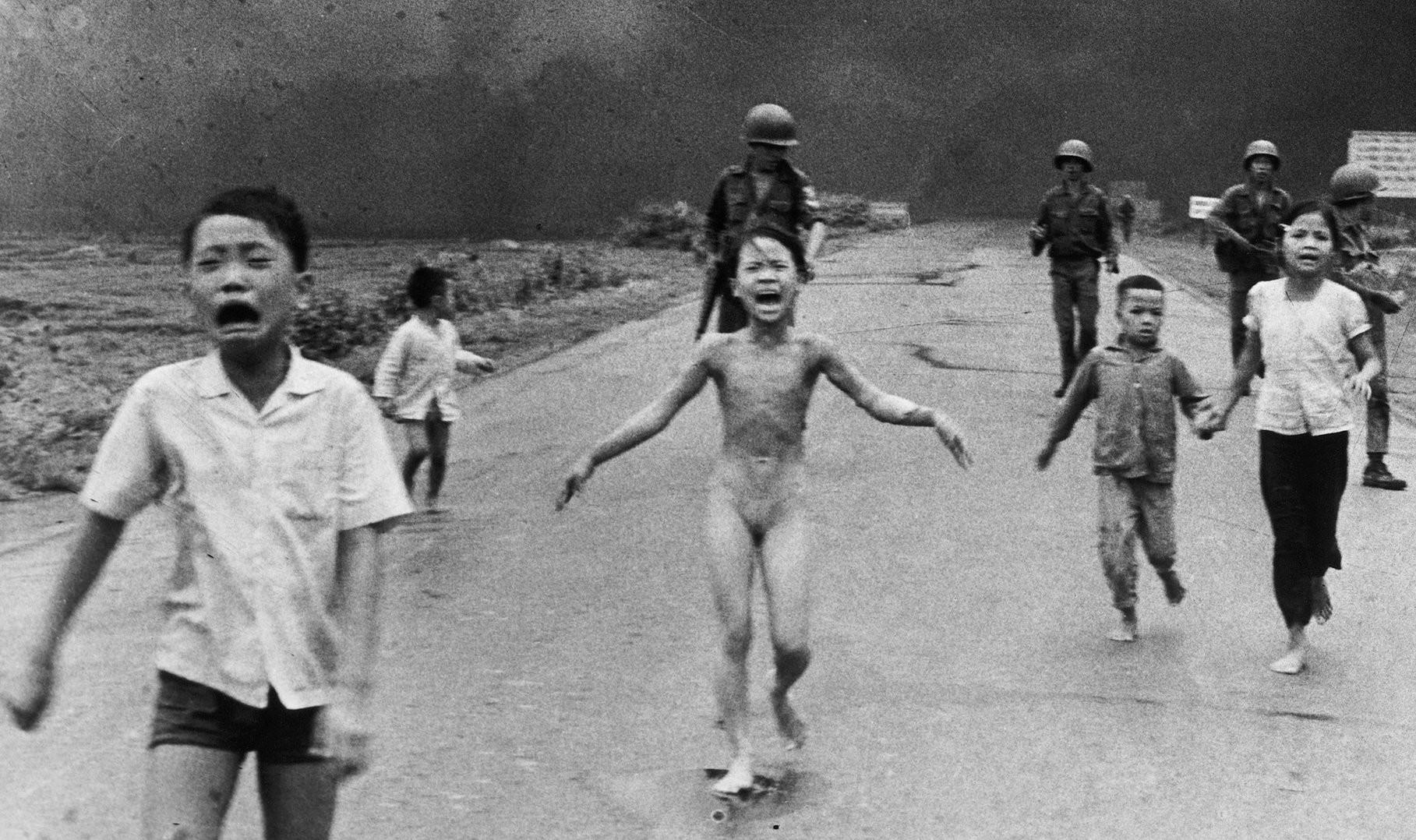
Nick Út, The Terror of War, 1972. Courtesy Associated Press
Is photography a form of testimony or of manipulation—or can it be both at once?
Again, photography is a non-objective visual form whose individual meanings are highly subjective and open to interpretation, but often masquerade as truth-telling.
What is the relationship between the intimate and the universal in your photographs?
As an example of the relationship between that which is intimate and that which is universal in my photography, I would cite my latest series Vanitas: The Palermo Portraits. It is a series of highly theatrical ‘portraits’ of ancient Christian mummies, which are preserved upright in a crypt at the Capuchin monastery in Palermo, Sicily.
Not unlike the ventriloquial figures chosen for a previous fine art series called Talking Heads, the surface of my subject is not necessarily the message. For example, in Vanitas, I’m not particularly interested in mummies. I’m interested in portraying the concept of the denial of death. All in an attempt to suggest our commonality.
Therefore, the mummies and the dummies serve as vessels for my ideas – ideas about our inherent projection of life into inanimate depictions of humans. Ideas about Western culture’s wholesale denial of aging, death and dying.
My photographic practice began in Hollywood. Hollywood imagery, glamour imagery, as much as it is a celebration of elevated humanity, is equally an inherent denial of death. In Vanitas, I decided to look at that dichotomy more closely. Glamour can be gorgeous. The theory of the unity of opposites informs us that the gorgeous can’t exist without that which is grotesque.
There’s nothing more intimate or more universal for every human being on earth than our own life cycle. Being born into this world, living our lives, and leaving for – well, we don’t know where – is something everyone shares. This of course is the great mystery, and our human imagination has led us to create elaborate mythologies (religions, philosophies, etc.) to protect against our fear of the unknown. The tragic element here is religious conflict. We are more than willing to kill each other in order to defend our belief systems – witness every religious war in the history of humanity.
With Vanitas, I selected as heated a subject matter as I could find, and photographed it in such a way as to create a visual collision between that which is beautiful and that which is horrifying, in order to create a cognitive dissonance in the mind of the viewer – a dissonance that may open the mind to question Western values of life and death.
An upcoming project that’s close to your heart?
I’m about to launch my most elaborate project to date: Vanitas: The Palermo Portraits. It’s a sort of capstone project, a late in life musing on what are commonly referred to as “the big questions”.
For me, Vanitas represents a milestone, one that draws on the perspective and artistic language I’ve developed over time. It’s not simply another self-initiated work; it’s an invitation to confront my own values, immerse myself in personal ideas, and shape them into an integrated whole.
Undoubtedly, the breadth of my experience – from Hollywood glamour to explorations of various art theories – is encapsulated in this series. More important to me than the final result of the photography has been the lived experience of creating this project.
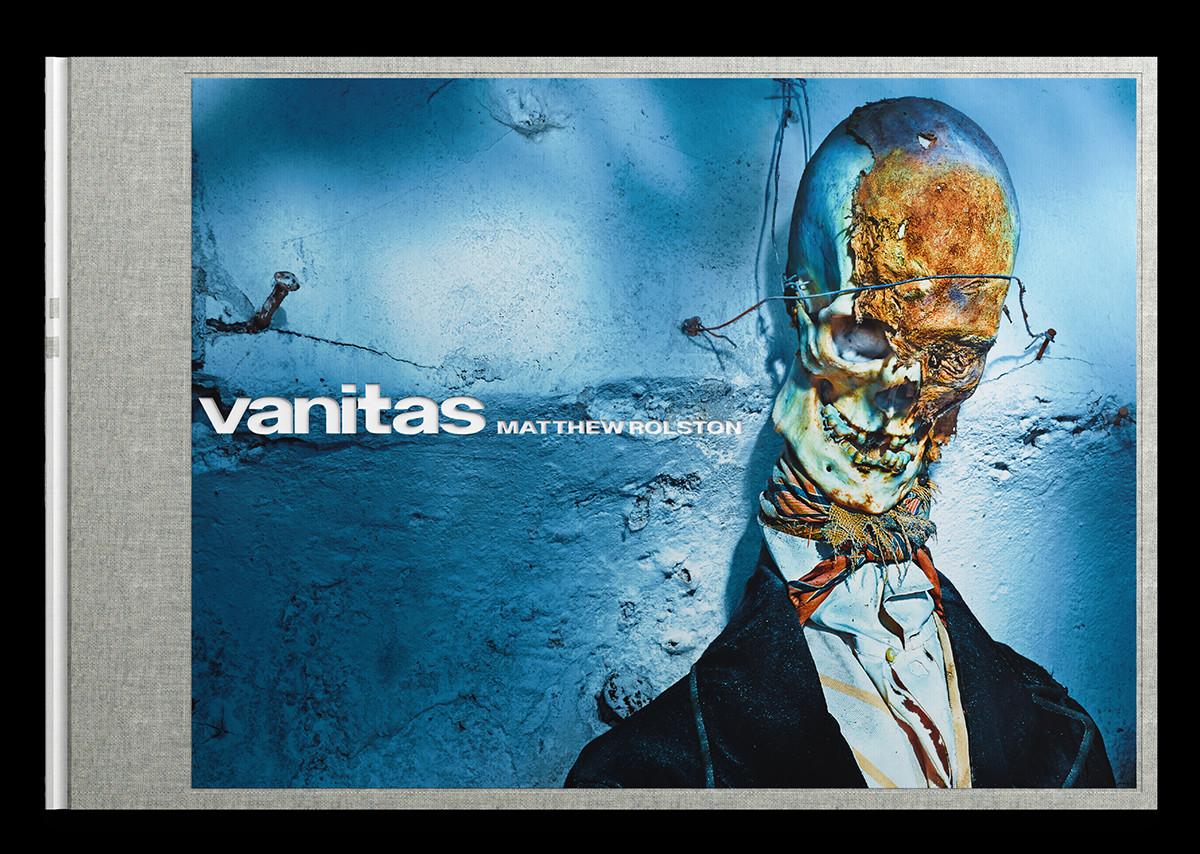
Vanitas- The Palermo Portraits by Matthew Rolston, Nazraeli Press, 2025. Monograph, front cover.
Your favorite drug?
There’s nothing more intoxicating than attempting an entirely new creative endeavor and having it miraculously turn out to be more than the sum of its parts. Perhaps that’s my “drug”.
The best way to disconnect for you?
The best ways to disconnect? Be with the people you love. Listen to music. Look at art. Enjoy wonderful food. Enough said.
What is your relationship with the image?
I’m going to address my appetite for images other than my own here.
I have to confess to a voracious appetite for visual stimulation. As an artist, it’s truly a lifestyle choice. There is nowhere in the world that I’ve traveled where I don’t follow a similar itinerary: I make it a point – within the limited timeframe of my travels – to visit every museum, gallery, important building or obscure collection, every bookstore of rare books on the visual arts (if such a bookstore exists in that place).
At home in Los Angeles, I’m constantly looking, grazing, seeking. Since my earliest days, Saturdays have been devoted to visiting galleries and bookstores, and Sundays reserved for visits to museums and institutions.
I used to travel to Paris at least six times a year for the fashion collections when I worked for Harper’s Bazaar in the late 1980s and early 1990s. This was a fair amount of time before the advent of the internet. I made a habit of always traveling with a large empty suitcase that would come home filled with books. That’s one of the ways in which I created my research library.
Another habit I indulge in is returning to certain museums to visit favorite works of art. Multiple visits always reveal new details. For example, I’ve returned to the Louvre in Paris countless times to stare at Ingres’ masterpiece La Grande Odalisque.
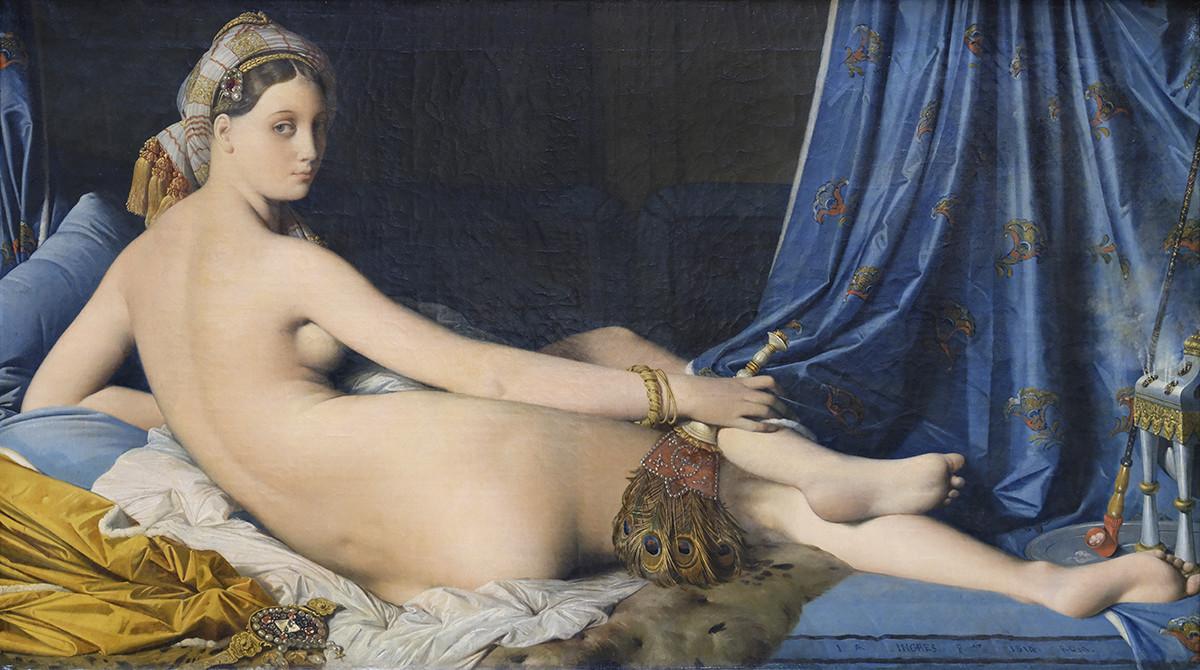
Jean-Auguste-Dominique Ingres, La Grande Odalisque, 1814 (Musée du Louvre, Paris)
Who would you like to be photographed by?
I don’t like being photographed, not even in snapshots. There’s nothing worse than a photographer being photographed. If I had to be photographed, the fantasy would be either by Avedon or Penn – but luckily for me (and unluckily for the rest of the world), neither of those great gentlemen are still in business.
The job you would not have liked to do?
Executioner.
Your greatest professional extravagance?
The folly of a fine art practice, as mentioned above.
What question gets you off track?
This one.
What was the last thing you did for the first time?
I’ve learned that when I run dry – that is, lose inspiration – the cure is very simple: go learn something new, for no good reason. It can’t be because it’s going to further your efforts or help you achieve something. The point is to refresh.
An example: there was a moment where I wasn’t feeling very good about myself. I had done a great many of the same kinds of assignments – a bit like being typecast as an actor. Sometimes success in a particular genre is a kind of trap.
I needed to laugh. So, I decided to take some pole dancing classes. You can’t imagine how ridiculous that was. I took a couple of private lessons (I wasn’t about to expose myself to a class of strangers) and told the head of the dance studio that I was researching a role for a script I was working on. They accepted my excuse.
What did I discover? A couple of things. First, I had a good laugh at myself. There are moments in life when one takes oneself too seriously. Secondly, I was humbled. What I thought of as a trashy form of entertainment was actually a highly evolved form of dance and acrobatics – one that’s incredibly hard to do. Not only does it take enormous physical strength and coordination to do such a thing well, it’s also an exercise in advanced aesthetics.
The city, the country or the culture you dream of discovering?
As a young person, beyond my hometown of Hollywood and fantasies of the so-called “Golden Age,” I had big dreams of Paris – the world of haute couture, the exotic behind-the-scenes of the fashion and magazine worlds. I have had the great blessing of living some of those dreams.
The place you never get tired of?
Home. Among loved ones.
Your biggest regret?
Many years ago, over an eighteen-month span, I lost my mother, my older brother and my sister. I know with great certainty that if they were alive today, my life would have been incredibly enriched. I miss them all terribly. Every day.
In terms of social networks, are you more into Instagram, Facebook, TikTok or Snapchat and why?
For the moment, Instagram would seem the leading social media platform for photography and visual arts, and I do spend quite a lot of time grazing, searching and “feeding” there. Amongst the trash, many jewels.
Color or B&W?
When I started out at Warhol’s Interview back in the late 70s, the return to black-and-white photography was very much a “thing”. I became one of the leading proponents of black-and-white photography, and perhaps somewhat of an influence for my generation. I was certainly not alone in this – other photographers of my time who had mastered black-and-white, like Herb Ritts or Bruce Weber for example, may have had an equal or greater influence on the culture of photography.
I started to book a fair amount of advertising projects. And at the end of about a decade of this type of work, I can remember my agent coming to me and saying something to the effect of, “there’s a big portrait campaign at such-and-such an agency, and they love your work, but the project’s in color and they don’t think you can handle that.”
I was stung. So I leaned into color with a vengeance. I taught myself a great deal about color theory, dynamics, harmonics, etc. I studied the works of great painters. This was just around the time I began directing music videos. And so my videos became drenched in color. I went pretty far.
A few years passed. Many, many color assignments for advertising and editorials. Came the day another agent (I’d moved on to someone new by then) came to me and said something to the effect of, “there’s a big portrait campaign at such-and-such an agency, and they love your work, but the project’s in black-in-white and they don’t think you can handle that.”
Oh well.
Daylight or artificial light?
In the early years, I really concentrated on studio work. I wanted to control the image through lighting. As mentioned before, one becomes bored with oneself when one does the same thing too many times.
So, I asked a friend of mine, a beautiful female model, to meet me at my studio in the evening and go on a little “photo safari” together. I had her dressed in a beautiful gown – of course, she was prepared with exquisite hair and makeup – and we left the studio together, just the two of us, made for the nearest bus stop and just let public transportation take us wherever – into the wilds of Hollywood at night.
Working with available light, whether that’s daylight or artificial, is its own challenging practice – rather than create lighting effects, one has to look at light. Or even look for light.
The pictures from that evening weren’t especially interesting, but from that point on and for a fair period of time, I only wanted to work outside the studio and only with available light.
Working with daylight is especially challenging because it’s ever-changing. I can remember so many trips for Harper’s Bazaar to Paris in which I anxiously scanned the sky for clouds or sun. You learn to scout locations ahead of a shoot, at the specific time that you’ll be there, so you can plan angles and shots. And then what happens? The weather is not conducive, so you have to be able to improvise.
And this was in the days of shooting color transparency, so if you didn’t get the exposure perfect, you were more or less sunk. The worst situation? A sunny day with rapidly moving clouds. I can remember setting up a shot at the Place de la Concorde in Paris for the Bazaar on such a day. I had an assistant standing just outside of the frame, side by side with the model, light meter in hand, shouting out the ever-changing aperture. Somehow a few of the exposures were on point.
Which city do you think is the most photogenic?
Obvious answer: Paris.
If God existed, would you ask him to pose for you, or would you opt for a selfie with him?
I’m not a fan of religion but I absolutely believe in God. I believe that God is good. I guess you could say “I believe in good”. But I don’t think of God as a being. I think of God as an energy. And if I was blessed to meet God, the last thing on my mind would be taking a photograph (let alone a selfie). My desire would be to be fully absorbed into the wonder of goodness. I only hope such a thing exists.
If I could organize your ideal dinner party, who would be at the table?
Gertrude Stein, Alice B. Toklas, Richard Avedon, George Hurrell, Irving Penn, Andy Warhol, Leonardo, Ingres, F. Scott Fitzgerald, Honoré de Balzac, where does this end…?
The image that represents for you the current state of the world?
The world is a big place. Let me address the photographic world once again.
We seem to be on the precipice of an incredible shift wherein ‘organic’ photographers are being joined by image-makers employing generative artificial intelligence in order to create what now I call ‘lens-based art’. I have to confess to being fascinated by certain of those artists.
Among them, I’ve avidly followed the work of pioneering digital artist, creative director, and AI filmmaker János Déri, who operates out Paris, New York and Milan. His work fuses design, sculpture, dance, photography, fashion and fine art using the latest AI technology.
By harnessing AI, Déri has developed a fascinating visual language across diverse subject matter including fashion, dance, automotive executions, film, and most recently, creating immersive multimedia museum exhibitions.
As one example, see Déri’s AI series “Hush,” a short film: https://creasenso.com/en/portfolios/gen-ai/ai-direction/janos-deri/hush-1
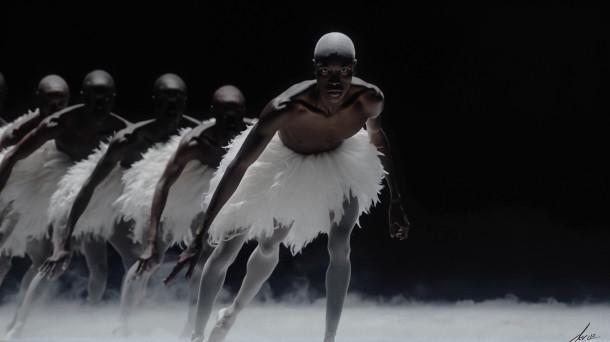
Still from HUSH, directed by János Déri, 2025
According to you, what is missing in today’s world?
Once again, the world is a very big place, so allow me to limit my comments to the photographic world.
I do have the pleasure of working with a number of young people as an educator, and the thing that I tell them over and over again is that they must become visually literate, they must study the history of their chosen field.
It’s also important to have hands-on experience with the craft of photography itself. For example, if you want to tell a machine (generative AI) to make a picture for you, you better know how to make a picture yourself.
As stated earlier, great image-makers make great images.
Beyond encouraging my students to study the history of art and photography, I challenge them to expand their attention spans. One of the tragedies of the mobile devices that seem to rule our lives now is the ever-shortening of our attention span.
And one of the biggest ironies of the era of the mobile device is that so much of the history of image making is within one’s reach within a couple of clicks. But young people don’t necessarily think to look to the past, they’re so caught up in the present. I call this condition “presentness”, and it needs to be pushed back against.
Another story. The first time I taught my class, over a decade ago – it’s called The Power of Pleasure, and it’s pointedly not a photography class; it’s a communications class centering around the worlds of fashion, beauty and luxury – I asked my students to go to the newsstand and buy the current issues of American Vogue and Harper’s Bazaar. I remember saying that these publications might not be the most creative (they certainly didn’t live up to the quality of Italian or Paris Vogue) but they were the mainstream of luxury communications.
My students came back the next week and said something to me like, “This is so cool, I never bought a magazine before.” My head exploded. After I picked up the pieces, I realized that I needed to educate myself about the evolution of photographic media in my field. I no longer recommend they buy those magazines. Instead, we visit a number of very well-curated blogs and Instagram feeds.
Pop culture is supposed to change!
If you had to start all over again?
Remember: I began as an editorial and advertising photographer. I evolved into being a music video and commercial director, and ultimately a fine art practitioner. But I wasn’t trained to be a fine art photographer – and I’m talking now about traditional and logistic practices, not creative issues.
If I had to do it all over again, I would focus some of my education on museology – that is, museum studies and library science – so that I would’ve had a better grounding in the correct way to organize my bodies of personal work.
What do you like people to say about you?
As a person? I would hope for “kind”, “funny”, “perceptive”. As a professional? More like: “it was terrible but at least it was over with quickly”.
The one thing we absolutely must know about you?
I am a romantic.
A last word?
At this late date, I know there are a few uniting factors in my work, however diverse those works may be.
One is an ever-growing curiosity about the nature of human imagination.
Another is my desire to create a very particular state in any person that views or experiences any form of my work – and that’s a state that I will identify as “infatuation”.
If you’ve ever sat with a new love over a glass of, say, champagne, and felt both excited and relaxed at the same time, well there’s simply no better feeling. That’s what I want to give my viewers.
Interview with Matthew Rolston by Carole Schmitz
Matthew Rolston responses, © MRCI. All rights reserved.