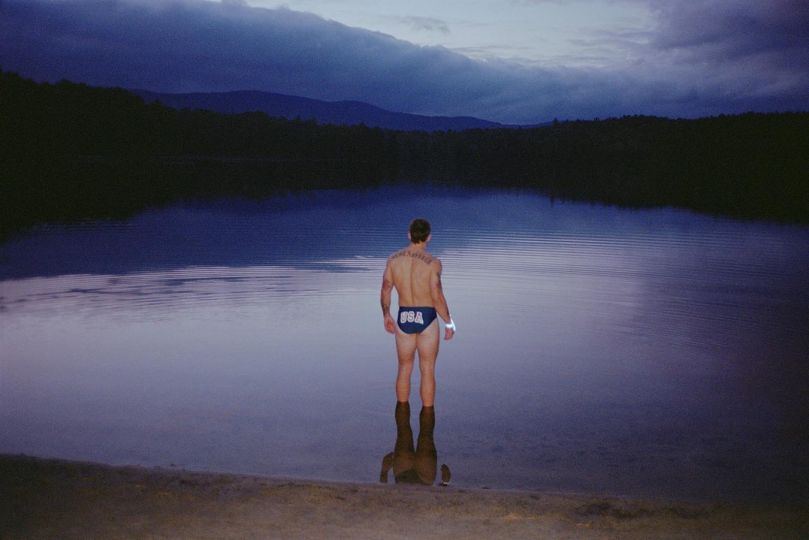
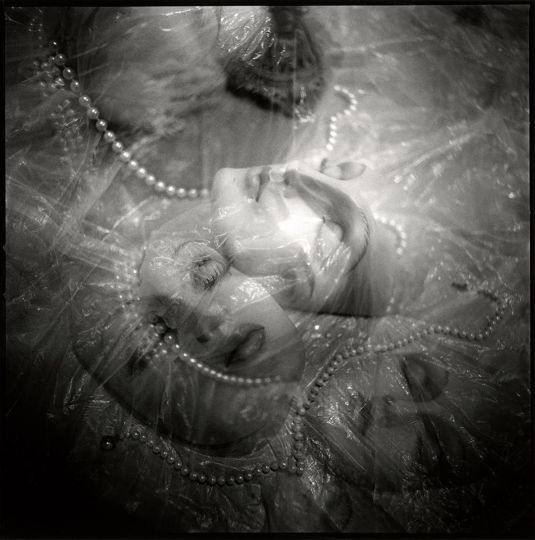
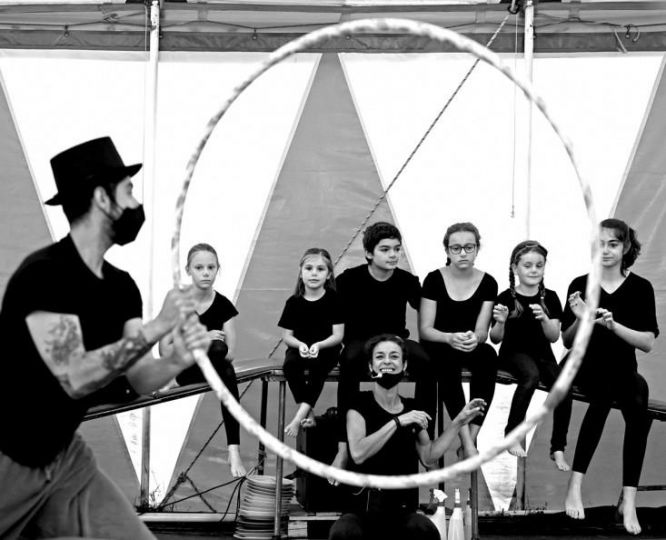
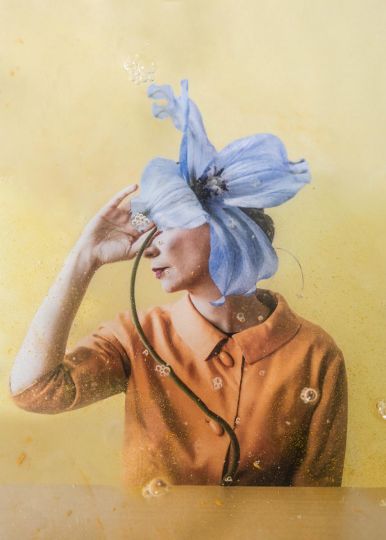
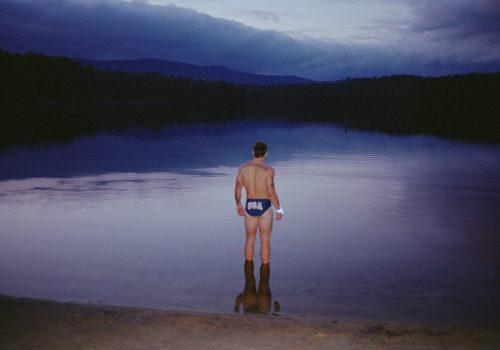
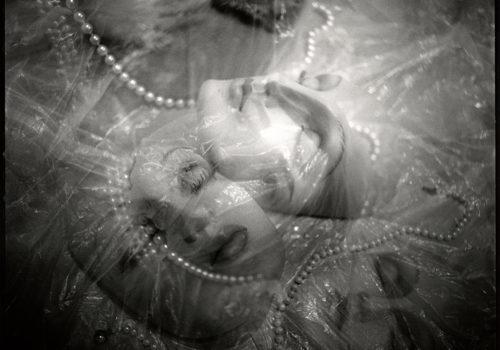
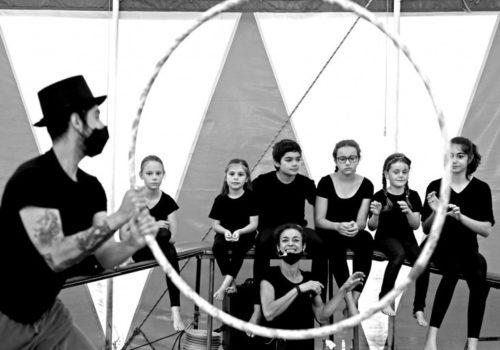
The Center for Art and Advocacy presents A Language We Share: Beverly Price and Gordon Parks, an exhibition featuring an intergenerational dialogue between Beverly Price (2023 Center Fellow) and Gordon Parks, one of the most significant and impactful American artists of the 20th century. By placing their works in conversation, A Language We Share considers how photographs function simultaneously as historical documents and symbolic forms, transmitting meaning across time. Rather than positioning the artists as past and present, the exhibition understands their images as occupying a shared continuum, speaking both forward and backward through enduring ethical commitments to dignity, truth and social responsibility.
The exhibition is anchored by a visual language and geographical focus shared by both Price and Parks. Price began working with the camera in 2016, ten years after returning home from incarceration. She started documenting life in her hometown of Washington, D.C., focusing on the Southeast Anacostia neighborhood and the Barry Farms community. Her work centers the experience of children in those communities, showing how their everyday lives can be and so often are defined by spontaneity and possibility. By showing them in moments of reverie, Price aims to preserve and protect forms of childhood that are routinely eroded in hyper-violent and over-policed environments. Through the act of image-making, she asserts care as a form of protection across time rooted in lived experience, accountability and personal reckoning.
Price’s photographs echo those made by Gordon Parks in the same neighborhoods in 1942, when he produced images that would become foundational documents of Black life in Washington, D.C. Upon winning the Julius Rosenwald Fellowship in 1942, Parks took a position with the photography section of the Farm Security Administration (FSA) in Washington, D.C. and, later, the Office of War Information (OWI). Working for these agencies, which were then chronicling the nation’s social conditions, Parks quickly developed a personal style that would make him among the most celebrated photographers of his era. Parks’ photographs—at once timeless and unmistakably of their era model the camera as both witness and moral instrument.
Price’s work extends the example of Parks forward—not through imitation, but through continuation. A Language We Share frames the historical dialogue between their work around the images of children that encapsulate much of the aspirational quality and social critique latent in their photographs. Sometimes tender and playful, at other moments poised with quiet resolve, the children depicted by Price and Parks appear as active participants in the futures they imagine. Though taken across decades, these images insist that the struggle for civil rights unfolds at the level of everyday human relationships and that joy and play persist not as detours from justice, but as embodied expressions of it. Bolstering both the argument and effect of the images of children are those of social and political protest, a category of picture-making that was essential to Parks’ life and work for the way it expressed the importance of advocacy and solidarity, the lineage of which Price carries forward into the future. For both artists, photography serves as a means of publishing a first draft of history—one that remains open, unfinished and carried by those who inherit it.
The exhibition coincides with two significant anniversaries: the twentieth anniversary of Gordon Parks’ death and the twenty-year anniversary of Beverly Price’s return home from incarceration, both in 2006. Together, these milestones underscore the exhibition’s central premise—that images do not end in the moment they are made, but rather persist, accumulate and speak across generations.
Beverly Price is a native Washington, D.C.- fine art photographer whose work focuses on the intersection of preventative justice and critical compassion. She is dedicated to using her camera as a tool for advocacy, particularly within marginalized communities, with a strong emphasis on supporting youth in navigating systemic challenges. Through her lens, Price captures the stories of young people, preserving their innocence and dignity while addressing issues like violence, inequality and displacement.
Her work embodies the concept of critical compassion, blending a thoughtful critique of social injustices with deep empathy for her subjects. Projects like Royal Blue: The Essence of Innocence—which examines the lives of three black boys impacted by gun violence—highlight her commitment to telling stories that foster understanding and healing. Price’s approach to photography not only documents moments but also serves as a call to action, urging viewers to engage with the broader narratives of community and justice.
Beverly’s photographic works mainly focus on youth advocacy, helping young people find their voice and future through creative expression. A graduate of the Maryland Institute College of Art with a Master of Fine Arts in Photographic & Electronic Media. Her dedication to preventative justice and her compassionate storytelling have earned her numerous accolades, including the Smithsonian James E. Webb Scholarship and the Art for Justice & Right of Return Fellowship.
In a career that spanned more than fifty years, photographer, filmmaker, musician and author Gordon Parks created a groundbreaking body of work that made him one of the most influential artists of the twentieth century. Beginning in the 1940s, he documented American life and culture with a focus on social justice, race relations, the civil rights movement and the African American experience. Born into poverty and segregation in Fort Scott, Kansas, Parks was drawn to photography as a young man. Despite his lack of professional training, he won a Julius Rosenwald Fellowship in 1942; this led to a position with the photography section of the Farm Security Administration (FSA) in Washington, D.C. and, later, the Office of War Information (OWI). By the mid-1940s, he was working as a freelance photographer for publications such as Vogue, Glamour and Ebony. Parks was hired in 1948 as a staff photographer for Life magazine, where for more than two decades he created some of his most notable work. In 1969 he became the first African American to write and direct a major feature film, The Learning Tree, based on his semiautobiographical novel. His next directorial endeavor, Shaft (1971) helped define a genre then referred to as Blaxploitation films. Parks continued photographing, publishing and composing until his death in 2006.
A Language We Share: Beverly Price and Gordon Parks
Until June 19, 2026
The Center for Art and Advocacy
22 Bancroft Pl.
Brooklyn, NY 11233
www.centerforartandadvocacy.org