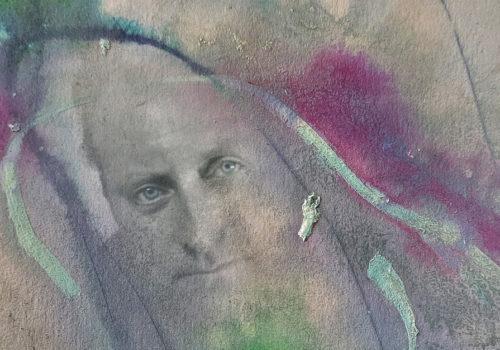
In Kalabongó, published by RM, Jorge Panchoaga crafts a dreamlike fable about the African heritage of Colombia, of which the village of Palenque de San Basilio remains one of the last guardians.
« The roots torn from Africa have sprouted here, in this land. The Palenque sky is in Africa, yet the roots, the tree, the fruits that sustain us, are here, in this free land, in Palenque. »
— Neudis Marimon Cañate, resident of Palenque de San Basilio
San Basilio is the last palenque in Colombia, those fortified communities founded in the 17th century by rebel slaves who wrested their independence through fierce struggle in 1713, becoming the first society in the Americas to break away from European domination. Located southeast of Cartagena — once a major slave-trading port — San Basilio de Palenque is home today to about 3,500 inhabitants, while the broader palenquero population in Colombia approaches 30,000. From its multiply-rooted language to its distinctive funerary rites and healing practices, the community continues to preserve a strong Afro-Colombian identity shaped by the idea of freedom. The history of Palenque de San Basilio still lives on through a vibrant oral tradition.
Originally from Cauca, Jorge Panchoaga developed an intuitive interest in photography during his anthropology studies. He now uses the medium to explore the history and multicultural identity of his country, building visual narratives inspired by references drawn from cinema, animation, comics, and as in this project ancient art, particularly painting and drawing.
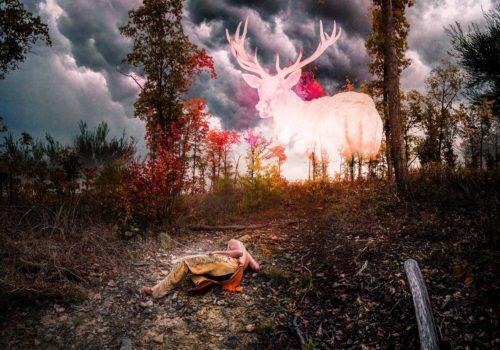
Born of the encounter between oral storytelling and visual culture, Kalabongó brims with symbols paying tribute to the enslaved Africans’ pursuit of freedom : a field of fireflies suggesting the inner light that guided them in their escape or the enduring tradition of hairstyles in which women hid seeds to fertilize the land where their community would one day take root. The bats that sweep through the book allude to a local legend collected by researcher Clara Inés Guerrero, according to which Spanish soldiers, startled by a swarm of bats, mistook them for rebel slaves taking flight. The uprooted plants, meanwhile, evoke the importance of belonging to a territory and the strength of the collective: “What is freedom, if not having a place where one can belong within a community?”
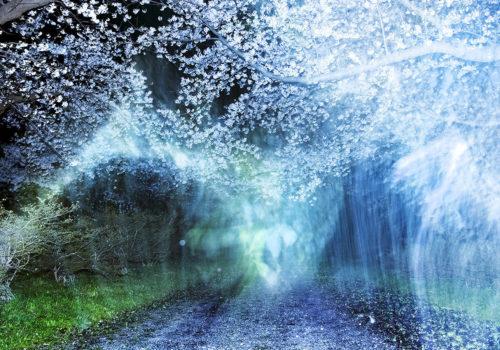
Originally conceived as a visual narrative about Afro-Colombian identity and the struggle for the cimarrones’ independence (the term used by the Spanish to describe escaped slaves), Kalabongó soon evolved into a meditation on memory. For Jorge Panchoaga, “memories are a doorway to another dimension.” The book is suffused with a nocturnal atmosphere, a space conducive to the merging of lived and imagined images. Memory, after all, is inseparable from imagination, which the photographer considers essential to society: “it structures our lives to recall, to resolve, to love, to create, to invent and yet societies neglect it.”
Playing with color, Kalabongó leads us through shifts between dream and reality, between collective memory and imagination. To make this transition visible, Panchoaga turned to another strand of visual culture: video games. “I often think of books as video games: their physicality allows you to travel between different dimensions — the everyday, historical fact, and the imaginary.” Here, the passage from one dimension to another unfolds through the treatment of the images. As the pages turn, the poetry of the everyday gives way to photographs saturated in incandescent red, the chromatic backbone of the book.
The result is an enchanting visual fable, a celebration of both the cimarrones’ resistance and the power of imagination, which closes on the optimistic image of a cherimoya : the seeds have taken root, flourishing at last on free soil.
Zoé Isle de Beauchaine
Jorge Panchoaga — Kalabongó
Editorial RM, 2025
144 pages, 88 images
24 x 30 cm / 9.4 x 11.8 in
Design: Estudio Herrera
Bilingual edition (In English with an insert in Spanish)