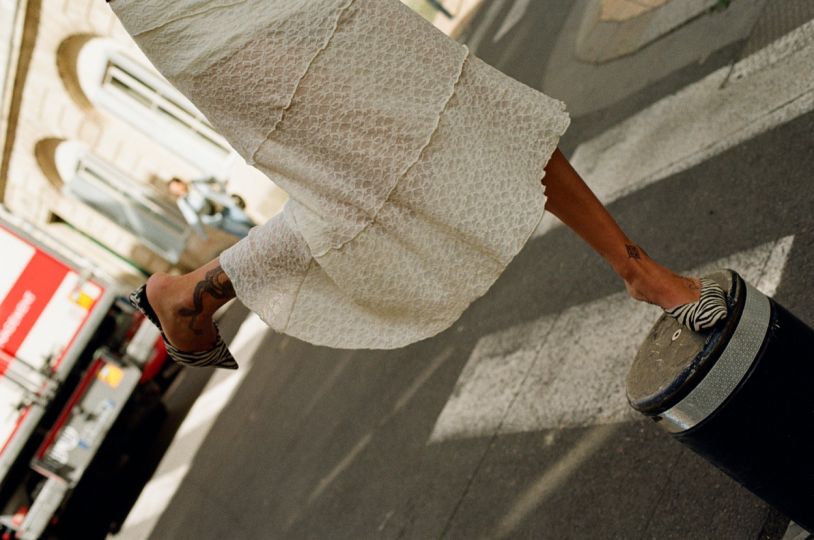
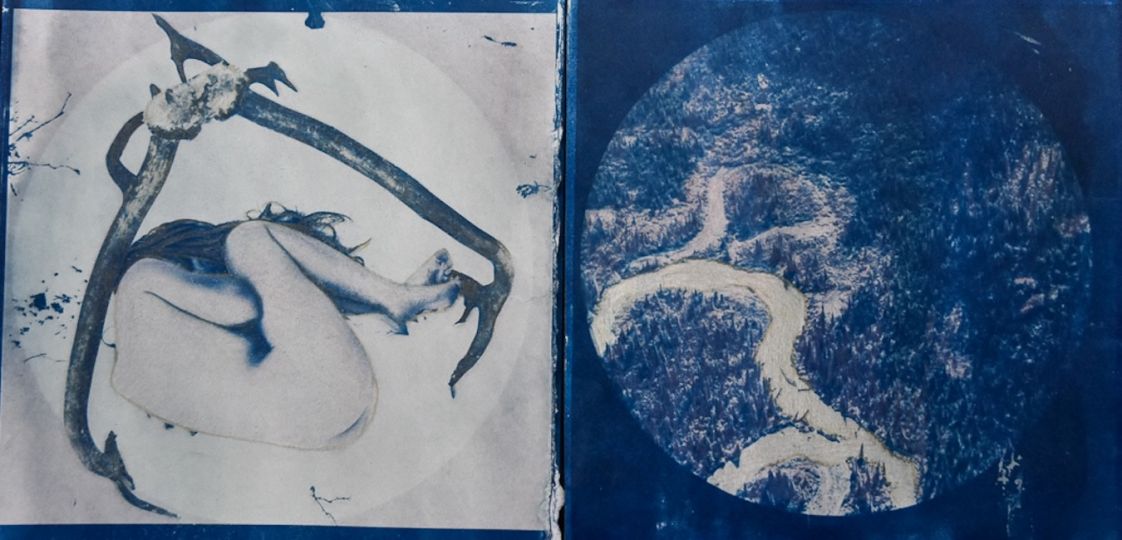
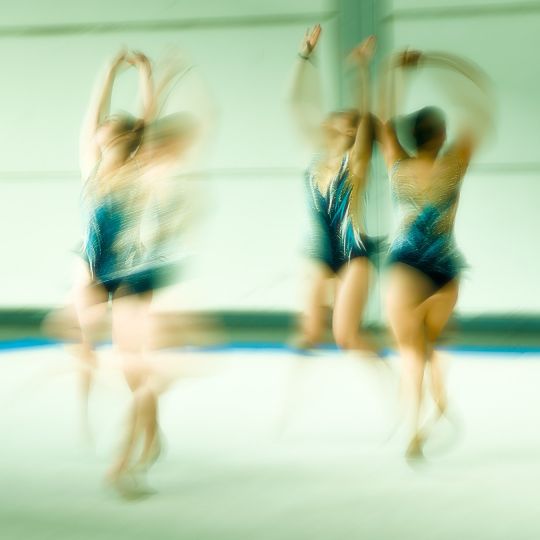
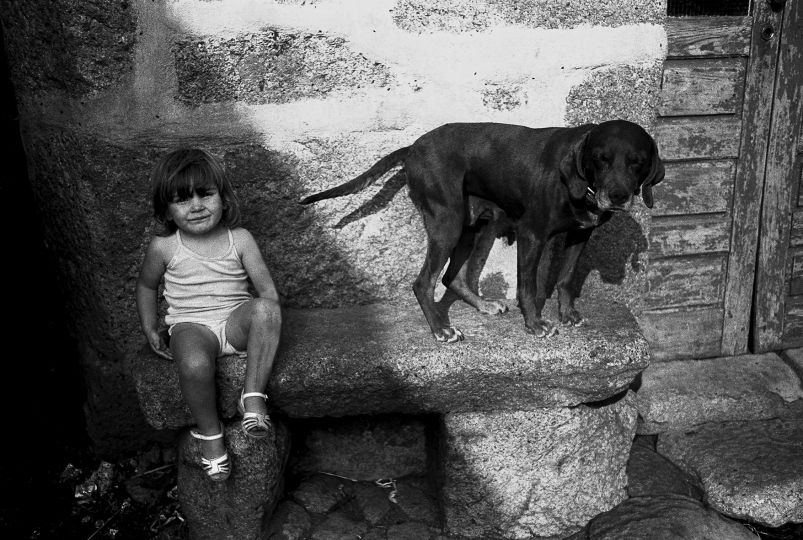
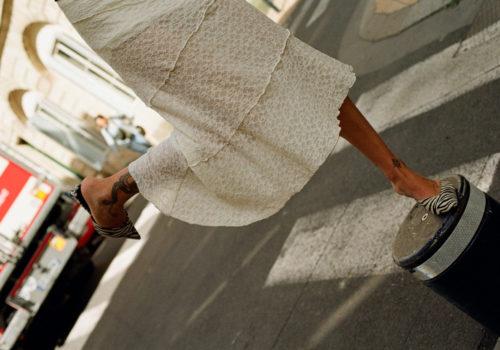
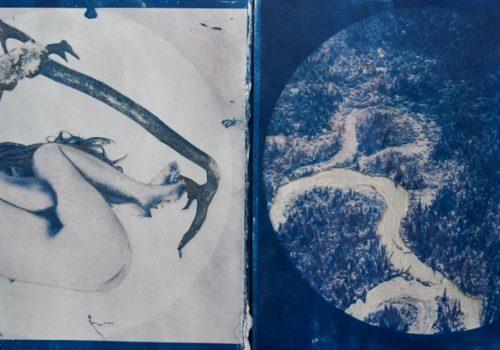
On the occasion of Paris Photo 2025 (13–16 November, Grand Palais), the auction house Gros & Delettrez will offer for sale in Paris an exceptional ensemble of works by Jesse A. Fernández (1925–1986), a Cuban photographer, draftsman and assembler whose cosmopolitan and singular vision marked the visual history of the 20th century.
This sale also takes place during the centenary of the artist’s birth, offering a unique opportunity to rediscover his work at a symbolic moment.
The auction, comprising over 250 lots — photographs, drawings and “curious boxes” — will be held on Saturday November 15th in the auction house’s future premises on rue de Bérite, in the heart of the 6th arrondissement of Paris.
From the late 1950s onwards, Fernández asserted himself with a series of images that have become historic: his portraits of Fidel Castro in the first days of the Cuban Revolution. Made for Lunes de Revolución at the request of his friend, the writer Guillermo Cabrera Infante, these images display rare acuity: neither propaganda nor simple reportage, but the eye of an author capable of revealing the man behind the political icon.
He went on to develop a major photographic oeuvre, portraying some of the most influential figures of his century: Francis Bacon, Salvador Dalí, Pablo Picasso, Hans Hartung, Jorge Luis Borges, Gabriel García Márquez, as well as leading figures from the music and performing arts such as Miles Davis, Billie Holiday, Dizzy Gillespie and Marlene Dietrich not forgetting Ernest Hemingway in Havana (1957). His images were published in Life, Time, Paris Match and The New York Times, attesting to his international standing.
A singular and cosmopolitan gaze
Born in Havana in 1925, Jesse Antonio Fernández embodied the figure of a cosmopolitan artist of the 20th century, navigating between continents and languages. Exiled several times first to Spain to flee the dictatorship of Machado, then back to Cuba to escape the Spanish Civil War. He grew up amidst cultures, political fractures and displacement.
In 1936, the Civil War forced his family to return to Cuba on the last ship leaving Santander, an episode that would leave a lasting mark on his memory as an exile.
Trained at the San Alejandro Academy in Havana, he moved to New York in the late 1940s, where he studied with George Grosz. There he met Marcel Duchamp, Frederick Kiesler, Willem de Kooning, Jackson Pollock and Robert Motherwell.
In 1948, his meeting with Wifredo Lam introduced him to European painters settled in New York, such as Esteban Francés and Frederick Kiesler. He also frequented the Painters’ Club on 8th Street, alongside de Kooning, Pollock and Milton Resnick.
In 1957, he worked as a photographer on the set of Luis Buñuel’s Nazarín in Mexico. In 1958, he became art director of the magazine Visión (New York) while continuing his work as a photojournalist, being distributed (notably) via the Gamma agency. He was awarded CINTAS Fellowships (1967–1968, 1975–1976), a major recognition within the Cuban diaspora.
But it was in Colombia (1952–1954) that he truly discovered photography, influenced by Cartier-Bresson and Walker Evans. “A form of contact with reality,” he would say.
Auction: Saturday 15 November 2025, 2 pm
Public viewing: 12–14 November 2025
Gros & Delettrez, 2 rue de Bérite (Paris 6th)
Catalogue: available early October — press copies on request (postal / courier).
Online bidding platforms: Drouot Live, Interencheres, Invaluable.