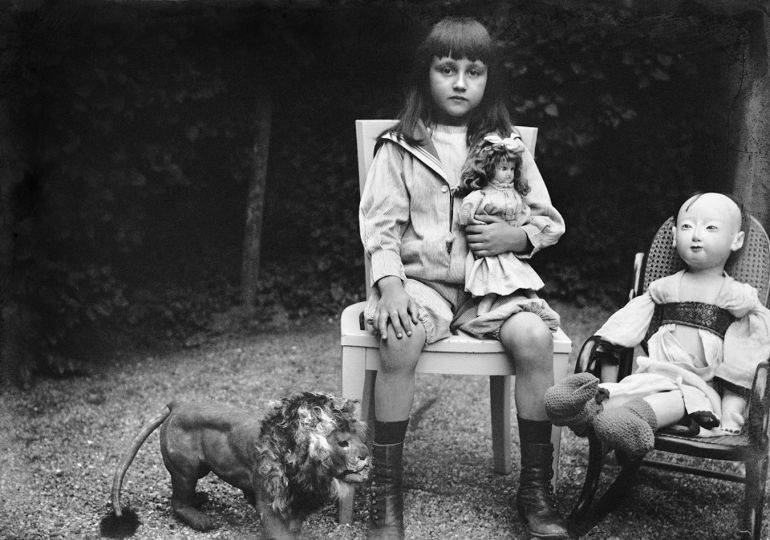
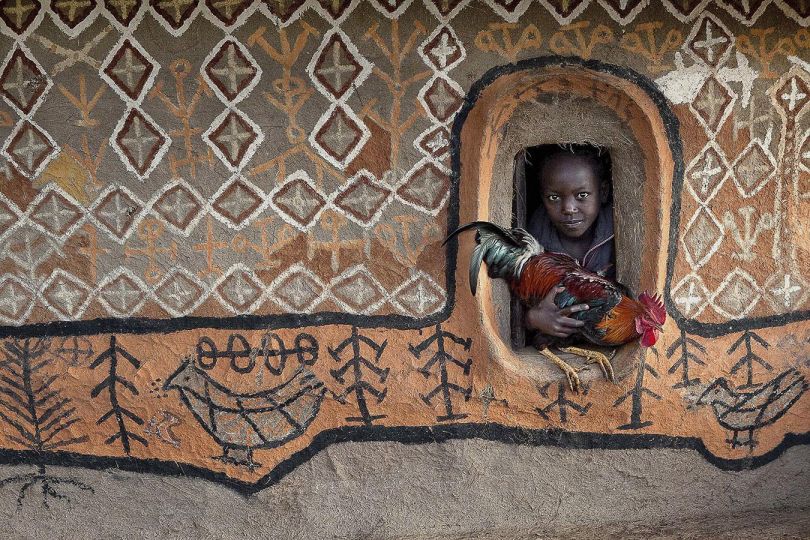
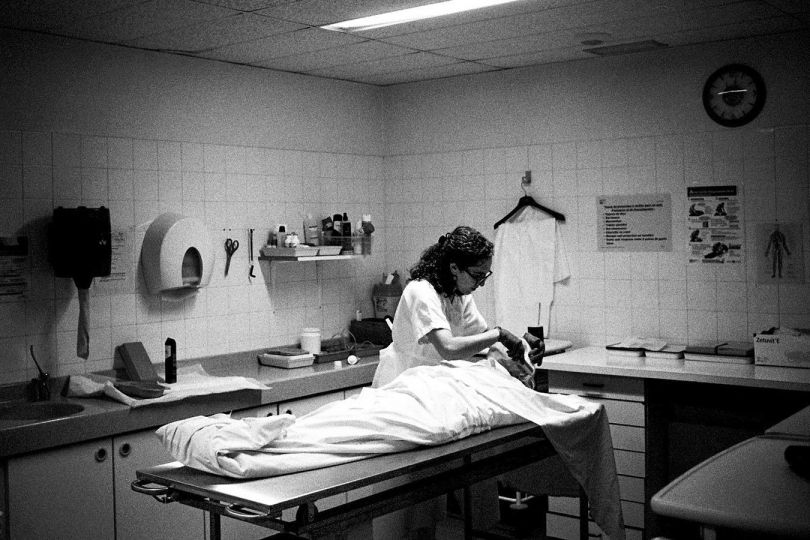
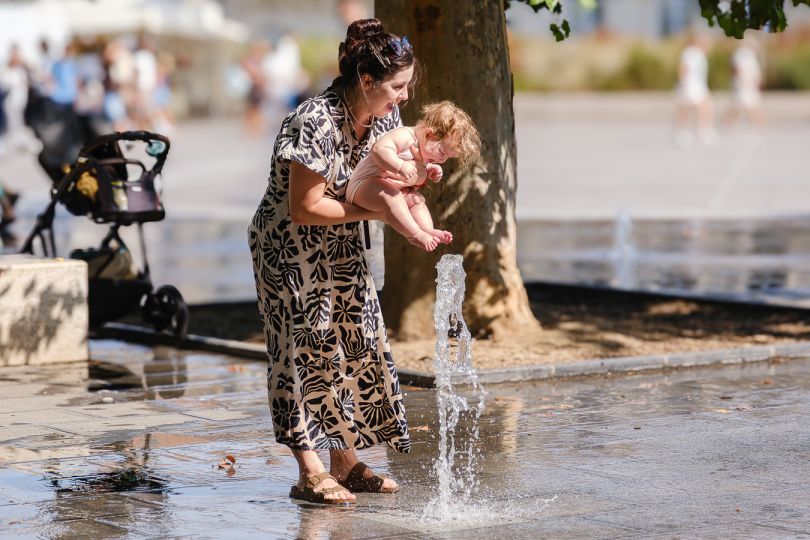
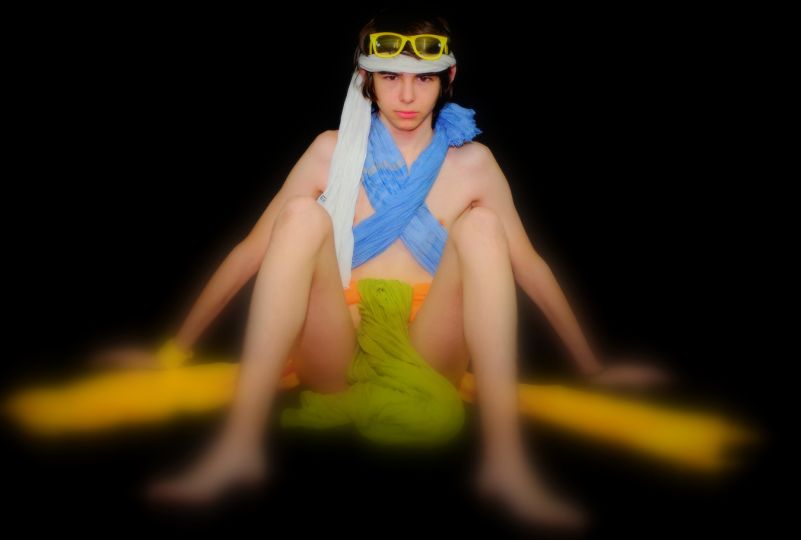
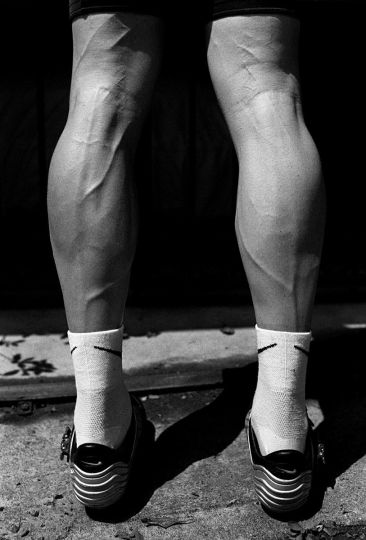
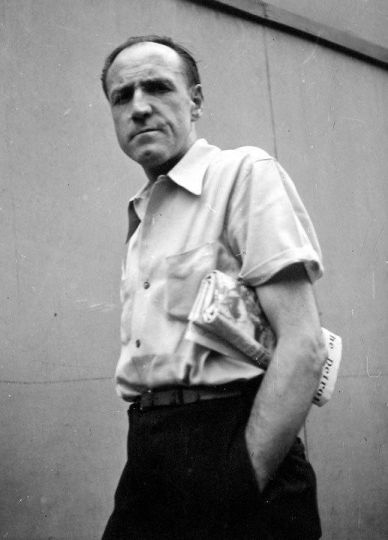
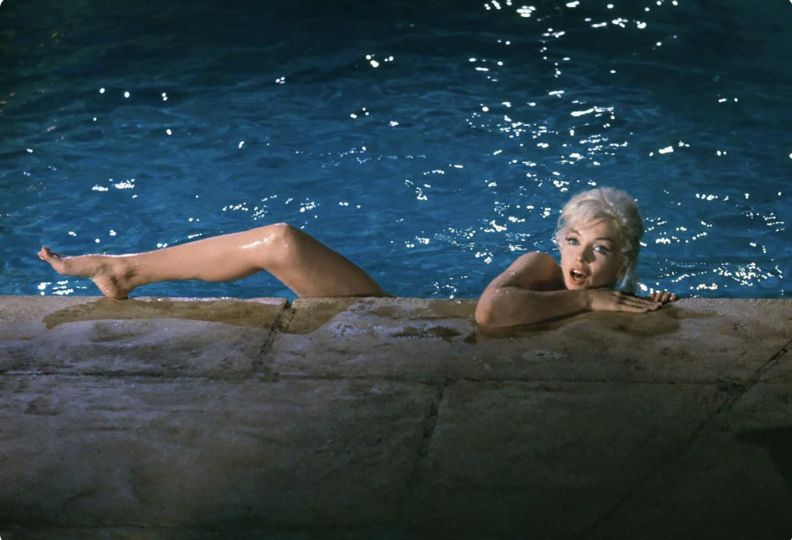
Friends from the same class, seven young photographers created System D to preserve the bonds they had forged and maintain a space for creativity. This summer, they presented Demain je serai plusieurs (Tomorrow I Will Be Many) at the Festival OFF in Arles: a collective project conceived, produced and designed together, which also takes the form of an “editorial object”. Discussion with three of the seven members after their week-long exhibition in Arles.
How was System D born?
Ginevra Carrozzo: We were classmates at EFET Photographie school in Paris. There was already a strong dynamic among friends. Alice and Pauline, from another class, joined us later.
Alice Calliopée: You already had a project underway: Empreintes de l’oubli. When we joined, we asked ourselves: what do we do with everything we’ve started? Do we make it official? We wanted to keep going. We were very close, very much friends, and everyone kept telling us, “You really have to hold onto this because in the professional world, it’s rare. It’s easy to lose time for personal artistic work once you’re immersed in the working life, even in photography.” So we wanted to preserve that momentum: to keep going together, support each other, promote our personal projects, and then came the desire to build a real collective project.
Oscar Berling-Pesant: We also had a teacher who came from Le Bar Floréal [a famous photography collective]. Several teachers encouraged us in that direction. They planted the seed, even if it took a while to grow.
What changed between Empreintes de l’oubli and this new project Tomorrow I Will Be Many?
Ginevra Carrozzo: Empreintes de l’oubli was a project about memory, dreams, and remembrance. Each of us worked in our own aesthetic: experimental, visual arts, or documentary. We merged those approaches into a seven-voice scenography that became our first exhibition last year at OFF festival in Arles. But this year, the creation was conceived and written collectively. It was a completely different process, both in terms of execution and in the editorial object.
Alice Calliopée: We wanted to try something new together more playful, to let go a little. We asked ourselves: how do we bring out a true collective voice? How can we have a group experience beyond just stitching together individual works? So we set a framework, set up protocols of experimentation. We chose a specific place and time: three days in Vaux-sur-Seine.
What did you put in place to bring out something truly different? Truly collective?
Ginevra Carrozzo: First, we collectively defined guiding lines and playful exercises: working with flash, exploring presence, distorting objects…
Alice Calliopée: There were also poetic, offbeat things: photographing the wind, putting ourselves off-balance. We wanted to shift our usual gaze.
Ginevra Carrozzo: And we selected texts to feed our thinking and offer paths for introspection.
Oscar Berling-Pesant: We didn’t know yet what material we’d get or what we’d do with it. But that uncertainty was important too. We let ourselves follow our instincts. You need those moments where you allow yourself to drift.
Ginevra Carrozzo: Everyone started shooting. And at the end, we all put our SD cards on the table and handed the editing to another member of the group. It created a real sense of letting go of our own images. It opened the door to fresh perspectives, to something we hadn’t necessarily seen in our own photos.
Alice Calliopée: It was shocking for all of us! To see one’s images passed through so many hands, It’s beautiful, but handing over your photos without pre-selecting them makes you feel vulnerable, it also exposes your failures.
Oscar Berling-Pesant: And sometimes, others choose your failures! At the end of the editing phase, we could feel a real mix of viewpoints.
Ginevra Carrozzo: From that point, ideally, we wanted to move toward a finished editorial object. But in the end, it took a different direction. We pushed further in material research, in writing, in the image-text relationship.
Alice Calliopée: Creating a framework also meant setting moments to talk about how we were feeling, what we were experiencing. In a collective creation, it was important to have time as a group of seven to recentre ourselves. But over the course of preparation, the framework shifted a bit. That really got us thinking: how do you set a frame? How far do you go? Is it sustainable? Is it balanced?
How did this project become what you call an “editorial object”?
Alice Calliopée: All seven of us have a strong attraction to books, the way you take hold of them. From the start, we knew we wanted a final object, but we didn’t yet know if it would be an installation, a simple zine, or something more ambitious, like what we ended up with.
Ginevra Carrozzo: We experimented a lot with materiality, formats, stitching, tracing paper, transparencies, cyanotype…
Alice Calliopée: The book has this sketchbook-like dimension. There’s collage, writing. There’s playfulness, research, storytelling. It’s like a mental walk, impressions, nightmares. Many images were made at night, with flash. There’s a certain underlying heaviness.
Ginevra Carrozzo: It’s a book you read in two layers: first through its material, its aesthetic, then through the writing that accompanies the object.
How did you translate this format into an exhibition for the Festival OFF Arles?
Oscar Berling-Pesant: In the end, pretty simply. We are starting to be good at exhibition scenography. Honestly, picking the color of the bookbinding thread was more complicated than designing the whole exhibit!
What’s next?
Alice Calliopée: We really want to keep going!
Ginevra Carrozzo: After this project, we do need a little break. Naturally, working as a collective meant putting aside our individual practices for a bit. We each need to return to our own voices before coming back strongly for a new group project.
Oscar Berling-Pesant: Seven personalities it’s a lot. We’ll probably do more collective projects, but in smaller groups.
Alice Calliopée: We’re all pretty aligned long-term: making projects as a group of seven, but also as duos or trios, showcasing other photographers, offering workshops… It’s not fixed. A collective is a huge space for freedom that everyone can shape in their own way. That’s the heart of collective commitment: freedom, sharing, transmission, and play. Going back to the artistic roots.
The System D Collective
Their photobook Tomorrow I Will Be Many is available for pre-order until August 31.