The work of celebrated photographer Ruth Orkin is on view at the National Museum of Women in the Arts through March 29, 2026.
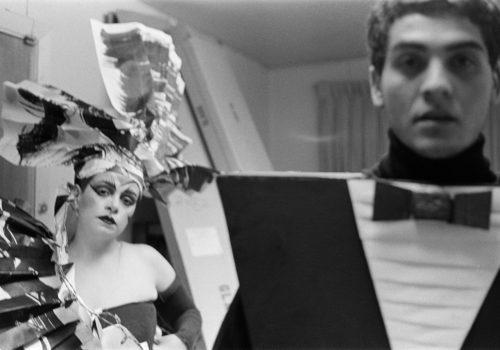
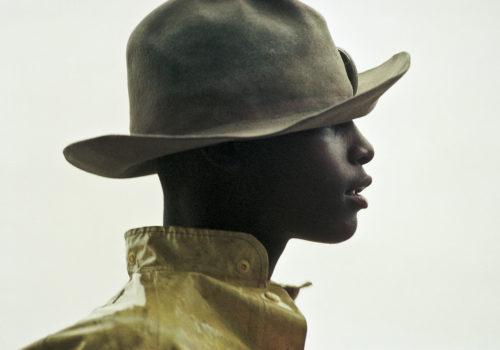
Ruth Orkin: Women on the Move explores women’s lives in the mid-20th century, capturing candid and iconic moments in the 1950s through the 1970s, when women were forging new paths at a pivotal moment in world history. The 21 featured images demonstrate Orkin’s approach to bringing her camera into classrooms, homes, parks, and urban neighborhoods to portray women as they were. Her photographs of tourists in Europe, Women’s Army Auxiliary Corps members, and stars on Broadway intimately reveal women in public and private spaces.
The daughter of a silent film actress, Orkin grew up in Los Angeles surrounded by the Hollywood film industry of the 1920s and 1930s and began taking photographs in childhood. She had hoped to pursue filmmaking, but she was barred from becoming a member of the cinematographers’ union, which did not allow women to join. She applied a clear narrative vision to her photography, approaching her work with the aim of telling a story in a single frame.
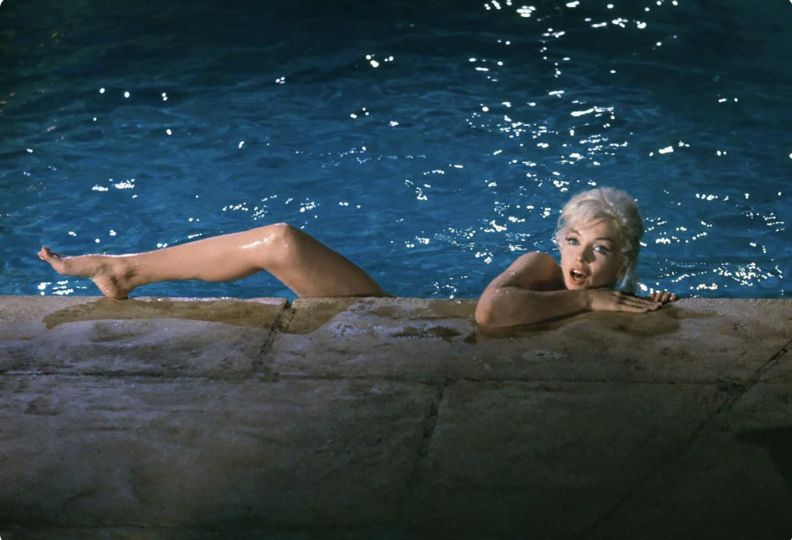
One of the highlights of Ruth Orkin: Women on the Move are the artist’s insightful portraits of glamorous Hollywood celebrities, such as Ava Gardner and Jane Russell. Orkin focused on capturing the vulnerable, less staged sides of her famous subjects. Conversely, she brought a confident star power to her photographs of anonymous women soldiers during WWII in the Women’s Auxiliary Army Corps based in Monticello, Arkansas. Yet the images that attracted some of the most attention were often developed in collaboration with her subjects and reflected her purposeful inversion of the conventional “male gaze.”
American Girl in Italy (1951) depicts a self-reliant woman named Ninalee Craig, nicknamed Jinx Allen, an art student whom Orkin met while traveling in Florence. The two bonded over their experiences as women travelers, so Orkin proposed they explore the city together and document their experience. As Craig pulls her shawl over her shoulders and holds her head high, she exudes strength despite the reactions of the surrounding men. Orkin pitched the photograph, along with others, to Cosmopolitan magazine, where they were used for an article titled “When You Travel Alone…”, which encouraged young women to set aside their fears and embark on solo journeys.
As Orkin said, “If my photographs make the viewer feel what I did when I took them—’Isn’t this funny-terrible-moving-beautiful?’—then I’ve accomplished my purpose.”
The National Museum of Women in the Arts (NMWA) is the first museum in the world solely dedicated to championing women through the arts. With its collections, exhibitions, programs and online content, the museum inspires dynamic exchanges about art and ideas. NMWA advocates for better representation of women and nonbinary artists and serves as a vital center for thought leadership, community engagement and social change. NMWA addresses the gender imbalance in the presentation of art by bringing to light important women artists of the past while promoting great women artists working today. The collection highlights a wide range of works in a variety of mediums by artists including Rosa Bonheur, Louise Bourgeois, Lalla Essaydi, Lavinia Fontana, Frida Kahlo, Hung Liu, Zanele Muholi, Faith Ringgold, Niki de Saint Phalle and Amy Sherald.
NMWA is located at 1250 New York Avenue, NW, Washington, D.C. It is open Tues.–Sun., 10 a.m.–5 p.m. and closed on Mondays and select holidays. Admission is $16 for adults, $13 for D.C. residents and visitors 65 and over, students and educators, active-duty military and veterans, and visitors with a Native/Tribal affiliation; and free for visitors 21 and under, visitors with disabilities, and SNAP/EBT card holders. Admission is free the first Sunday and second Wednesday of each month.
For information, call 202-783-5000,
visit www.nmwa.org
Broad Strokes blog, Facebook or Instagram.