



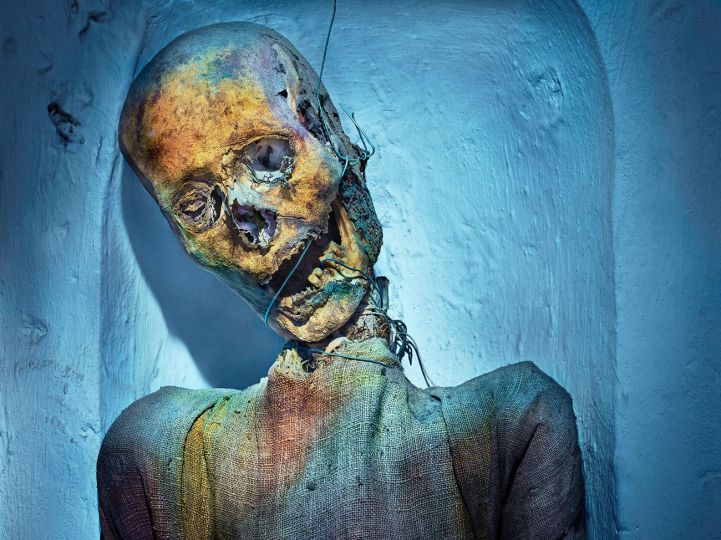


The Aesthetic of Mortal Sublimity
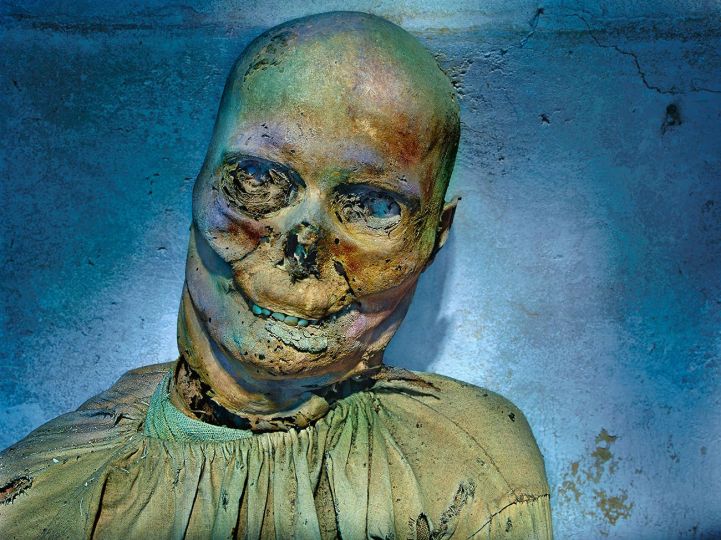
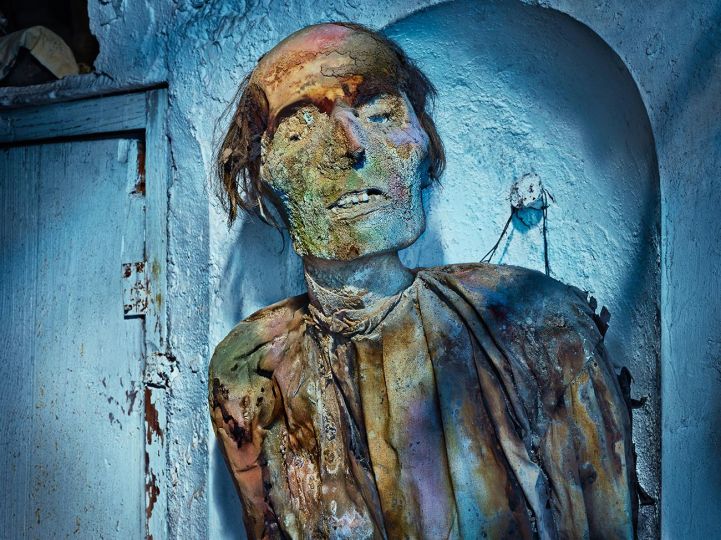
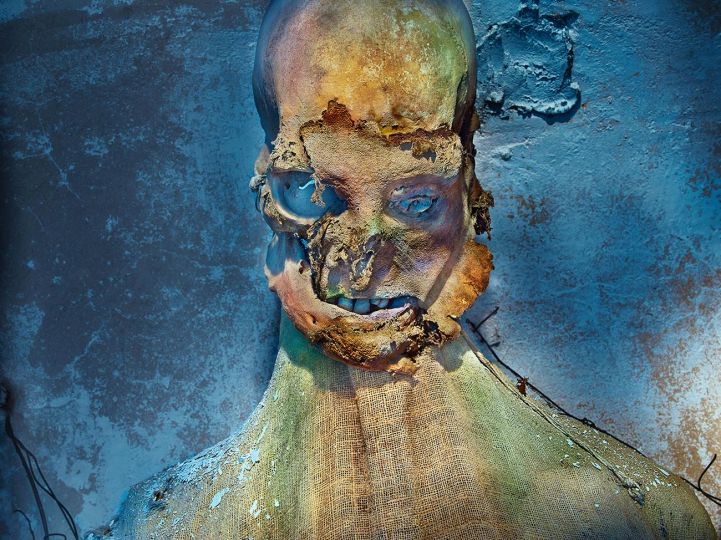
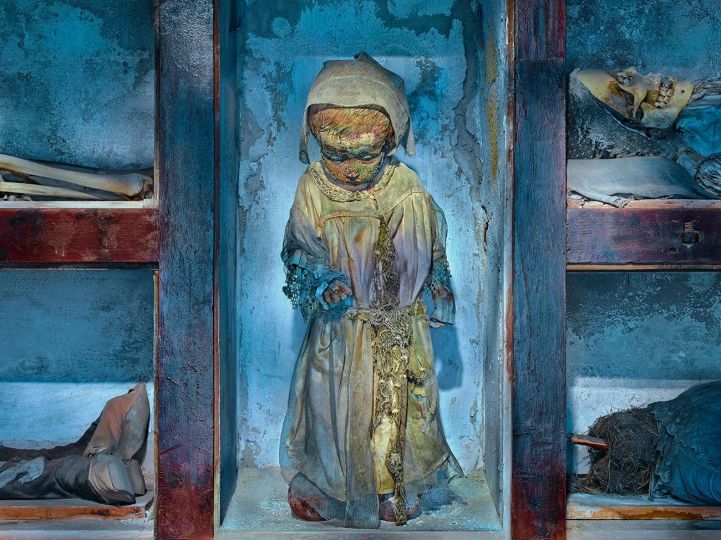
With Vanitas: The Palermo Portraits, Matthew Rolston ventures where few contemporary photographers dare: to the threshold between the living and the dead, in that ambiguous space where beauty, decay, and memory converge. After decades spent shaping the images of popular culture icons, Rolston reverses his own visual grammar to address its exact opposite: disappearance.
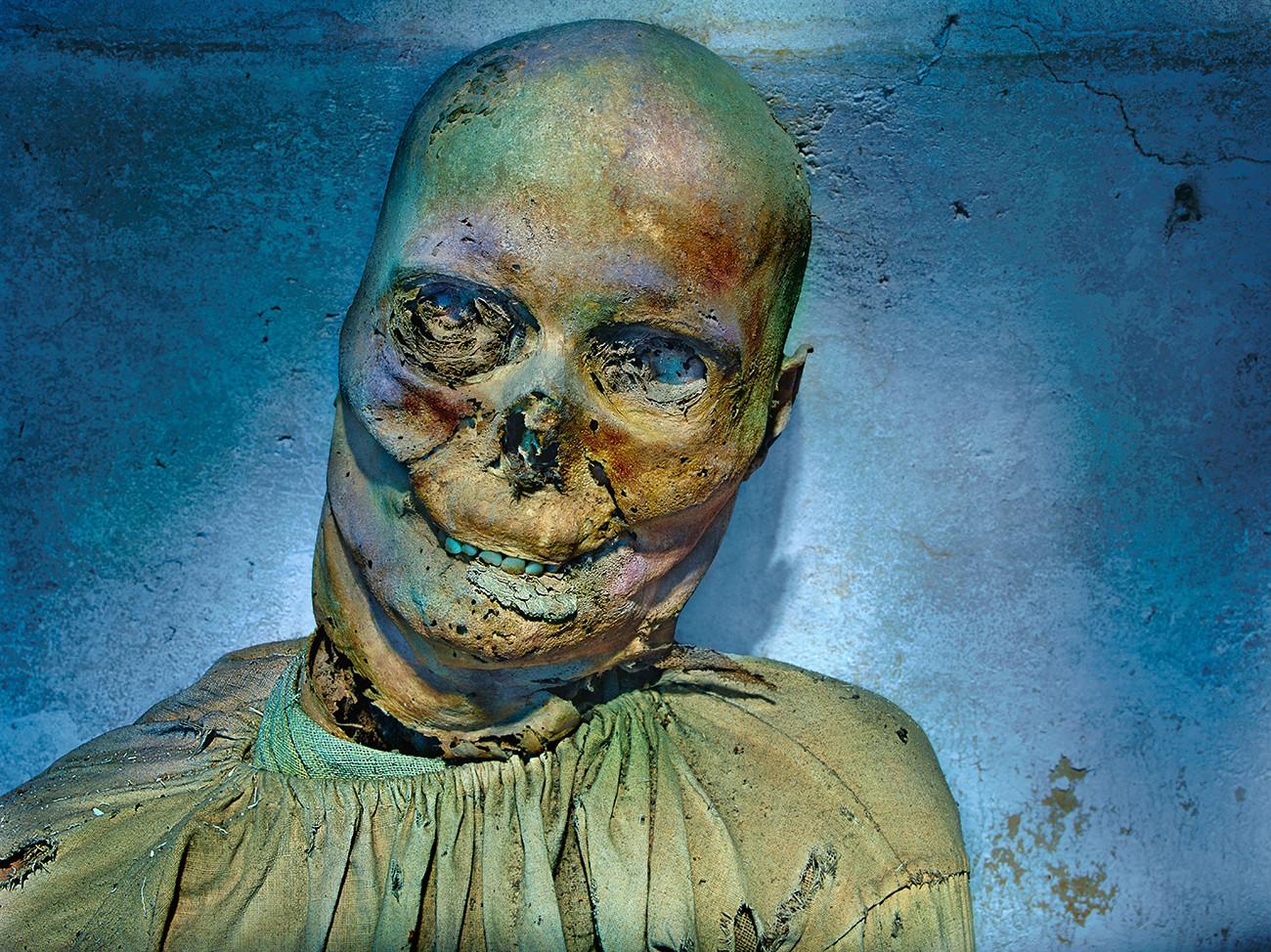
The subjects, mummified in the Capuchin Catacombs of Palermo, are photographed with the same meticulous care as a movie star: dramatic lighting, frontal framing, monumental prints. This deliberate dissonance is mesmerizing. Where glamour promises the eternity of flesh, Rolston confronts the viewer with the inevitable defeat of the body. The light that once glorified the living now acts as a metaphysical scalpel: it reveals, dissects, interrogates.
Executed with a precision bordering on the liturgical, this work draws on the tradition of Baroque vanitas but radically shifts its register. These are no longer painted symbols — skulls, hourglasses, wilting flowers — but real faces, tangible embodiments of the passage of time. Through photography, the artist restores a lost dignity to these figures. The work is less documentary than existential: Rolston does not show death, he stages it, dramatizes it, to examine it more deeply.
The series’ hyper-controlled aesthetic — triple exposure, expressionistic color, almost painterly textures — might seem at odds with such a raw subject. Yet it is precisely this tension that gives the project its power: the balance between the stylist’s distance and the mystic’s intensity. Rolston walks a tightrope, risking with every image to tip into a spectacle. He never falls. His photography does not celebrate death; it confronts it head-on, with the lucidity of an artist and the compassion of a human being.
In Vanitas, beauty is no longer a promise — it becomes a question: what remains of the image when the body fades? The series answers with unsettling precision: light remains, the gaze, suspended time. In doing so, Rolston transcends his own legacy as a portraitist, reaching a genuinely philosophical dimension.
At a time when contemporary imagery multiplies simulacra of perfection, Vanitas acts as a counter-image. A visual meditation on impermanence, on the theatricality of the body, on the vanity of all representation. A work at once sumptuous and unsettling, where death, far from an end, reveals itself as the ultimate metamorphosis of the portrait.
What led you to the Capuchin Catacomb of Palermo, and what did you feel during your first encounter with these preserved bodies?
Matthew Rolston : My journey to the Capuchin Catacomb was spurred by a desire to confront and capture Western culture’s fraught human relationship to death – a reaction to years immersed in the age-defying beauty and inherent denial of death contained in my Hollywood glamour imagery. I arrived in Palermo, Sicily after a months-long odyssey for a subject equal to the thematic scope of this endeavor.
I ventured first to the Sedlec Ossuary in the Czech Republic – a chapel decorated with macabre splendor using the remains of over 40,000 skeletons. While morbidly spectacular, I found the “Church of Bones” (as it is also known) too architectural and impersonal, humanity lost in their deconstruction.

Interior detail, Sedlec Ossuary, Kutná Hora, Czechia
This led me to next seek out an alternative subject – the famous “Bejeweled Skeletons” of Middle Europe – elaborately adorned remains of what had been purported to be Christian, sent to churches across Europe by the Vatican, in reaction to the Reformation. But these magnificently decorated skeletons, trapped behind glass coffins in inaccessible areas of those cathedrals and churches, were virtually impossible to light in the way that I was planning.

Paul Koudonaris, St. Munditia, in the church of St. Peter, Munich, Germany, 2013. From Heavenly Bodies. © PaulKoudonaris
I finally found what I was looking for in the catacomb of the Church of Santa Maria della Pace in Palermo, Sicily. An opportunity to stare death square in the face, to peer into the sunken eye sockets of the Capuchin mummies: senior members of the clergy and the elite of Palermo that had been placed in the crypt over nearly four centuries.

Eugen Poppel, Catacombs of the Capuchins, Palermo, Sicily, Italy, 1927
I was first introduced to the Capuchin Catacomb through my discovery of a series of somewhat obscure watercolors by Otto Dix that he had made there in the early 1920s. Seeing the mummies for myself, I found them, with their decaying but still elaborate wardrobe (some lovingly updated to the then-latest fashions by attentive relatives years after their interment), to be a ghoulish mimicry of life; the perfect vessel for my ideas.
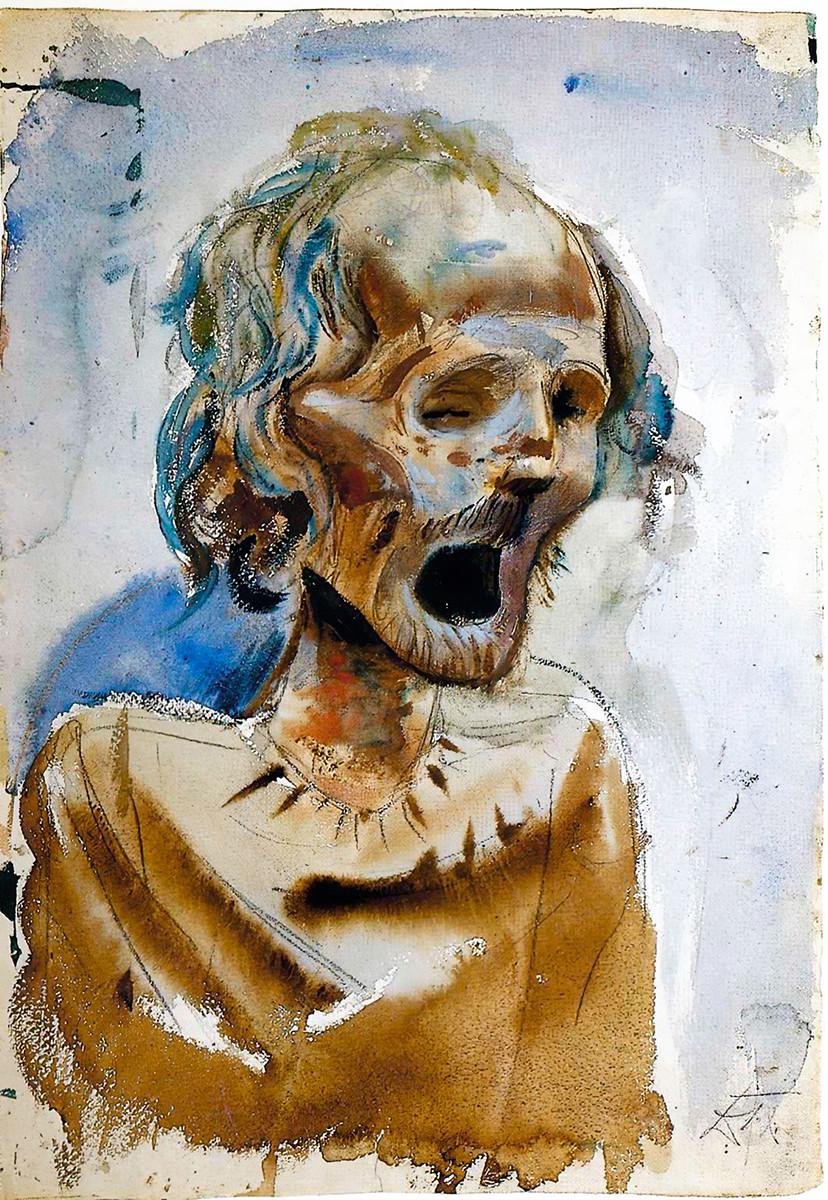
Otto Dix, From the Catacombs in Palermo I, 1924
In their contorted expressions (which can be read as emotion but are in fact the result of gravity and decay), I felt I could see personality, and perhaps even suffering, pain and anguish. I knew this was the innate impulse of we, the living, to project ourselves onto human simulacra (that is, depictions of humans or things perceived to be). That effect is an important conceptual part of this project itself. Nonetheless, I found myself profoundly moved by these figures. They serve as shocking and grotesque reminders of our transience on this earth. I had to stifle sobs. And I knew, at that moment, that I had found my subject.

Matthew Rolston, Untitled (Crying), Palermo, 2013 From the series Vanitas_ The Palermo Portraits © Matthew Rolston. All rights reserved. Courtesy Fahey Klein Gallery, Los Angeles
Did you conceive this as an artistic project from the very beginning, or did the inspiration emerge afterward, in front of these figures?
Matthew Rolston : Common to my fine art projects, Vanitas was inspired by a simple dialectic called ‘the unity of opposites’: the idea that contradictions are interconnected and mutually defining (i.e. light can’t exist without dark, and vice versa). This inspiration and a personal reckoning with questions of meaning and existence were the sparks that ultimately became the Vanitas series.
The high-style Hollywood portraiture that had informed my previous photographic practice, and where I had spent much of my career, is an exaltation of youth and beauty and a flagrant denial of death and decay. After realizing this some years ago, I found myself increasingly drawn to the opposite of that dichotomy. At the same time, I had begun grappling with my own anxiety and awareness of aging and mortality.
Unlike the entertainment figures and fashion models I had spent many years capturing in all their impossible perfection, the Capuchin mummies were unwavering evidence of human decay and blemish. Photographing my morbid, petrified subjects with the same stylized levels of beauty and elegance that I customarily applied to the living, challenged me to explore layers of meaning in those contradictions. The lighting approach in itself was conceptual, an elevation of the grotesque into the gorgeous. The hope was that this extremely theatrical approach would create a kind of ‘cognitive dissonance’ in the mind of the viewer. Under the right conditions, cognitive dissonance can create powerful engagement.
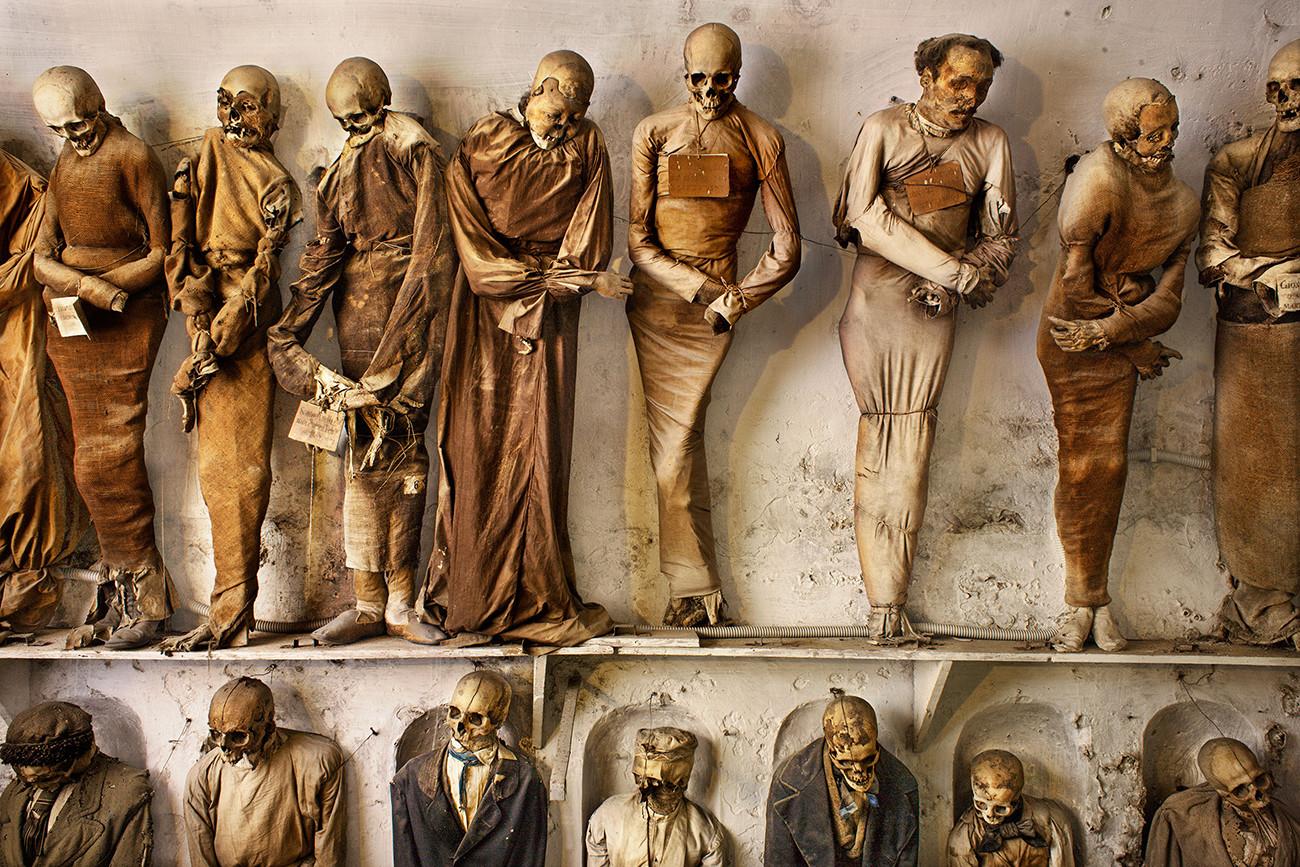
Vincent J. Musi, Untitled, Palermo 2008
So, to answer your question directly, the Capuchin mummies were not the inspiration, but they were the final piece of the puzzle to bring Vanitas (ironically) to life.
How did you negotiate the balance between anthropological observation, aesthetic curiosity, and ethical responsibility?
Matthew Rolston : I am not a documentarian. The Vanitas series, although photographed with high resolution, nearly forensic accuracy, sets out to be an expressive document. There is very little objective truth in any part of human culture, and certainly not in a photograph. Instead, I pursue an expressive truth. It is as much the choice of subject, as the way in which the subject is depicted, that creates my personal commentary.
To the question of ethical responsibility, it should be said that the mummies of Palermo were made available to me with the full permission of the Frati Cappuccini (that is, the brothers of the Capuchin Order in Palermo) for artistic and historical reasons. For purposes of discretion, the Frati insisted that I not identify the names of the figures that I photographed (N.B. In some cases, they don’t have proper identification).
Further, I made a significant donation to the church in order to gain access. It’s interesting to note that the use of that donation, as I understand it, was not to preserve the mummies or the crypt, but instead to serve the primary mission of the Order – to feed, clothe, and give medical assistance to the neediest members of their community.
I see a strong Bacon influence in this work. And also, your portraits evoke both classical painting and modern expressionism — which artistic or pictorial lineages do you consciously claim?
Matthew Rolston : I would describe my artistic and photographic approach to the Vanitas series as “neo-Expressionist”: my goal with these portraits was not to document, but rather to craft a highly emotional reflection on the anxiety of human transience and an inquiry into the ultimate truth of death.
By photographing the twisted and decaying bodies of the Capuchin mummies – inescapably, grotesquely mundane in their mortality – in a highly theatrical manner, I sought to find greater meaning in the dissonance between style and subject, as well as all the contradictions they contained: life and death, eternity and transience, the earthly and the divine.
I drew some formal inspiration from photographer Irving Penn’s 1970s Cigarettes series (and his other explorations into the elevation of found street detritus), wherein the elegance of his sophisticated eye was applied to capturing garbage. Photographer Richard Avedon’s later portraiture, including raw, unflinching images of his dying father Jacob Avedon, were another particular influence for me in their portrayal of how decay and the denial of death are rooted in the human consciousness, in particular that of Western culture.

Richard Avedon, Jacob Israel Avedon, Sarasota, Florida, 1971
Far beyond photographic tradition, for this project I drew primarily on the visual language of painting. In particular, I took inspiration from the visceral figuration of the Viennese and German Expressionists Egon Schiele and Otto Dix, and the pre-Expressionist Belgian painter James Ensor. Further, I looked to what I refer to as the “neo-Expressionist” painters of the mid-20th century, the so-called “School of London”. In particular the painters Lucian Freud and – as you astutely observed – Francis Bacon.
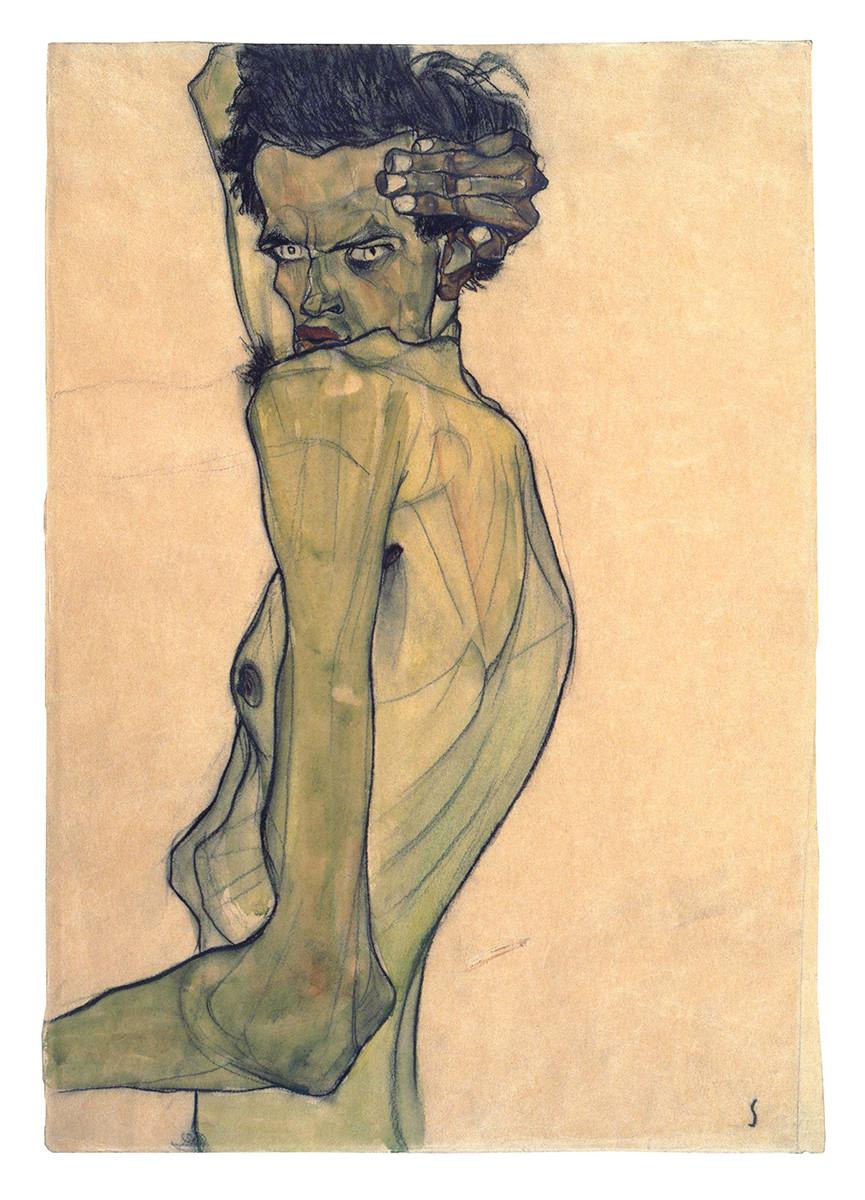
Egon Schiele, Self-Portrait with Arm Twisted above Head, 1910
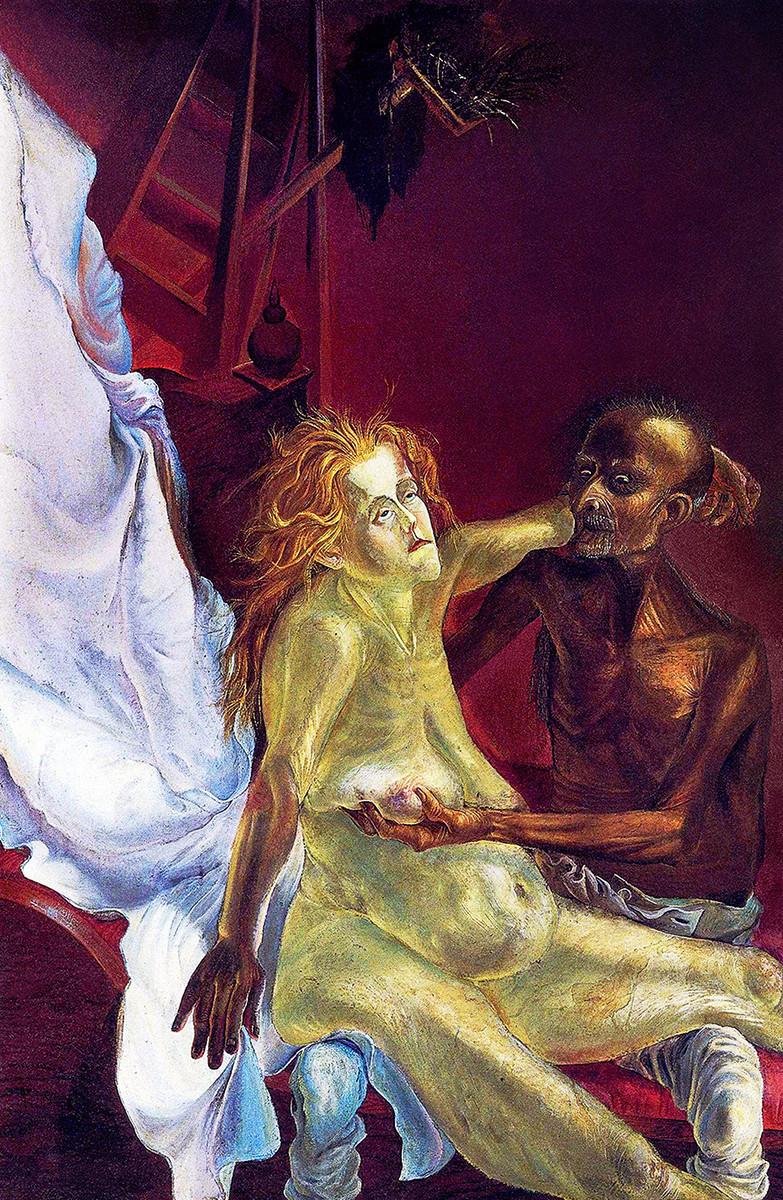
Otto Dix, Old Couple, 1923
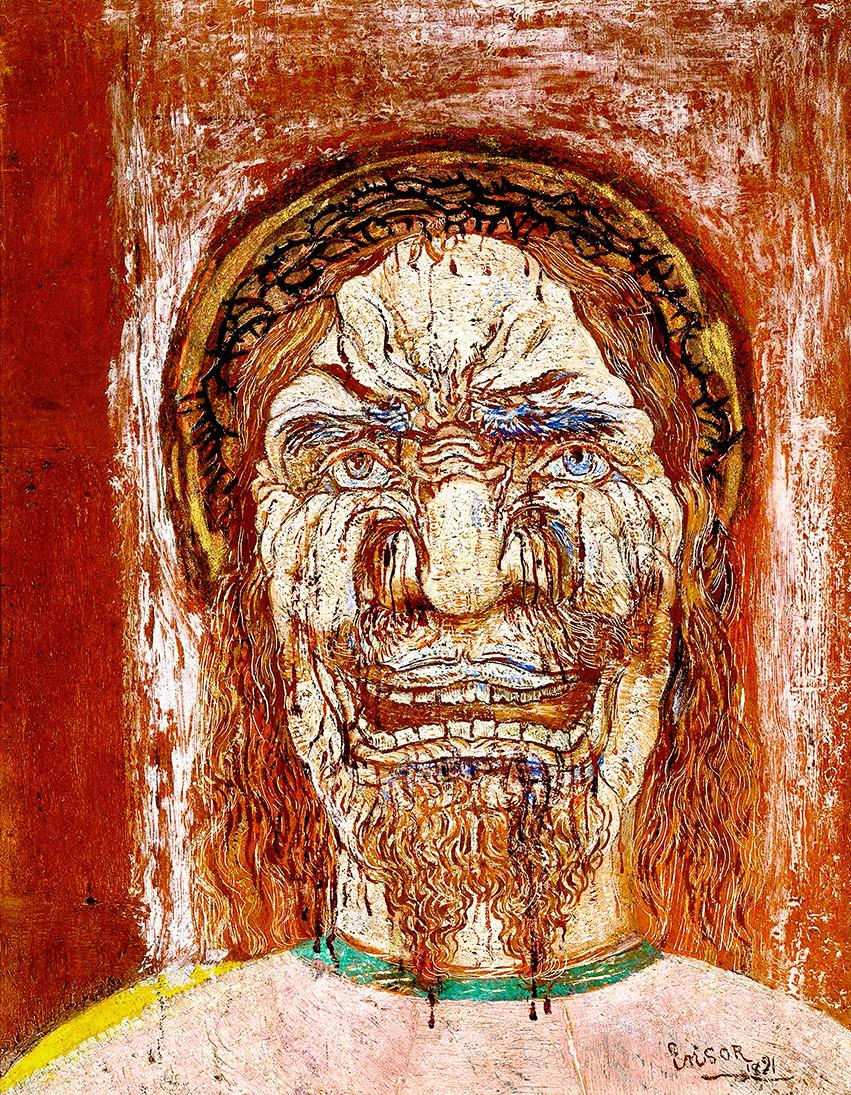
James Ensor, Man of Sorrows, 1891
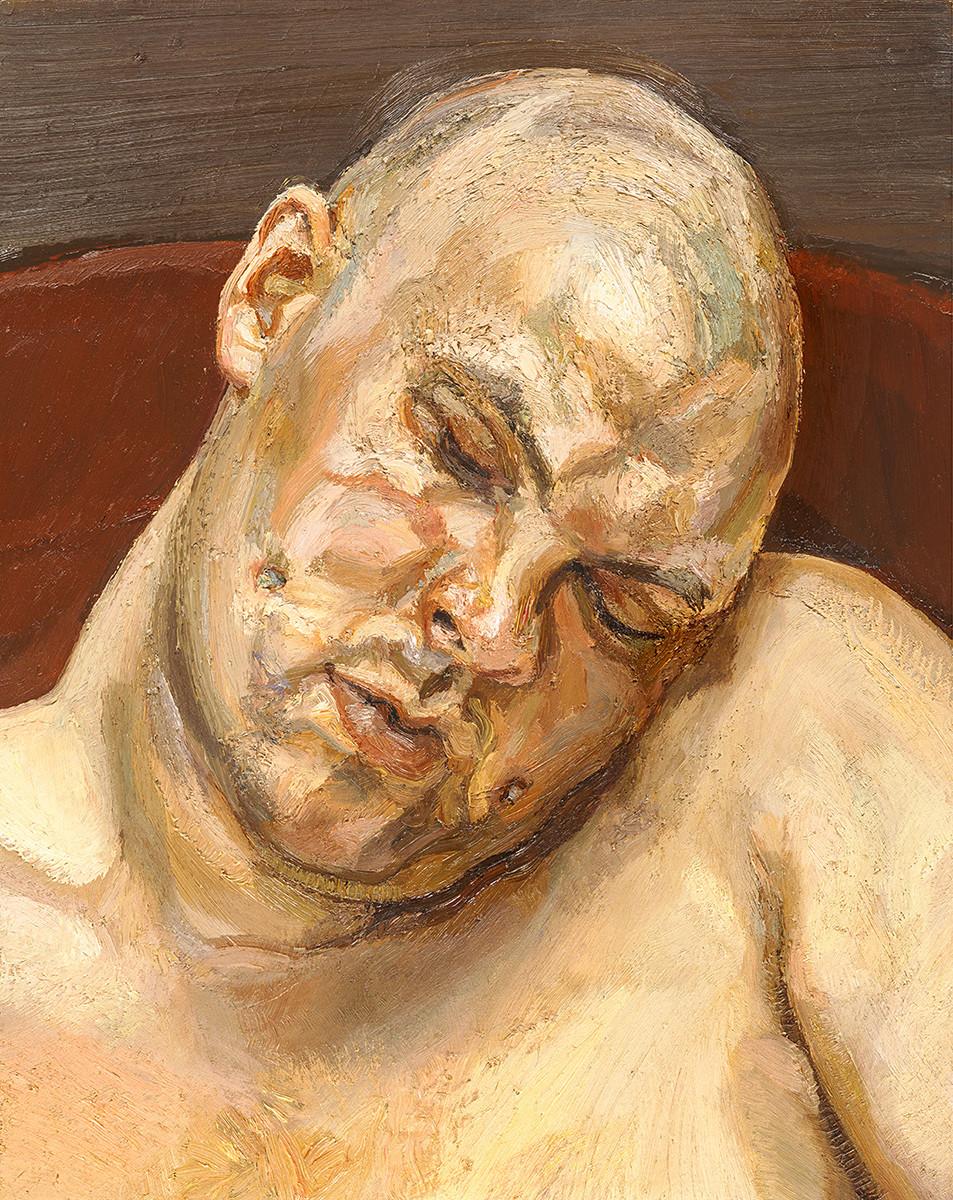
Lucian Freud, Leigh Bowery, 1991
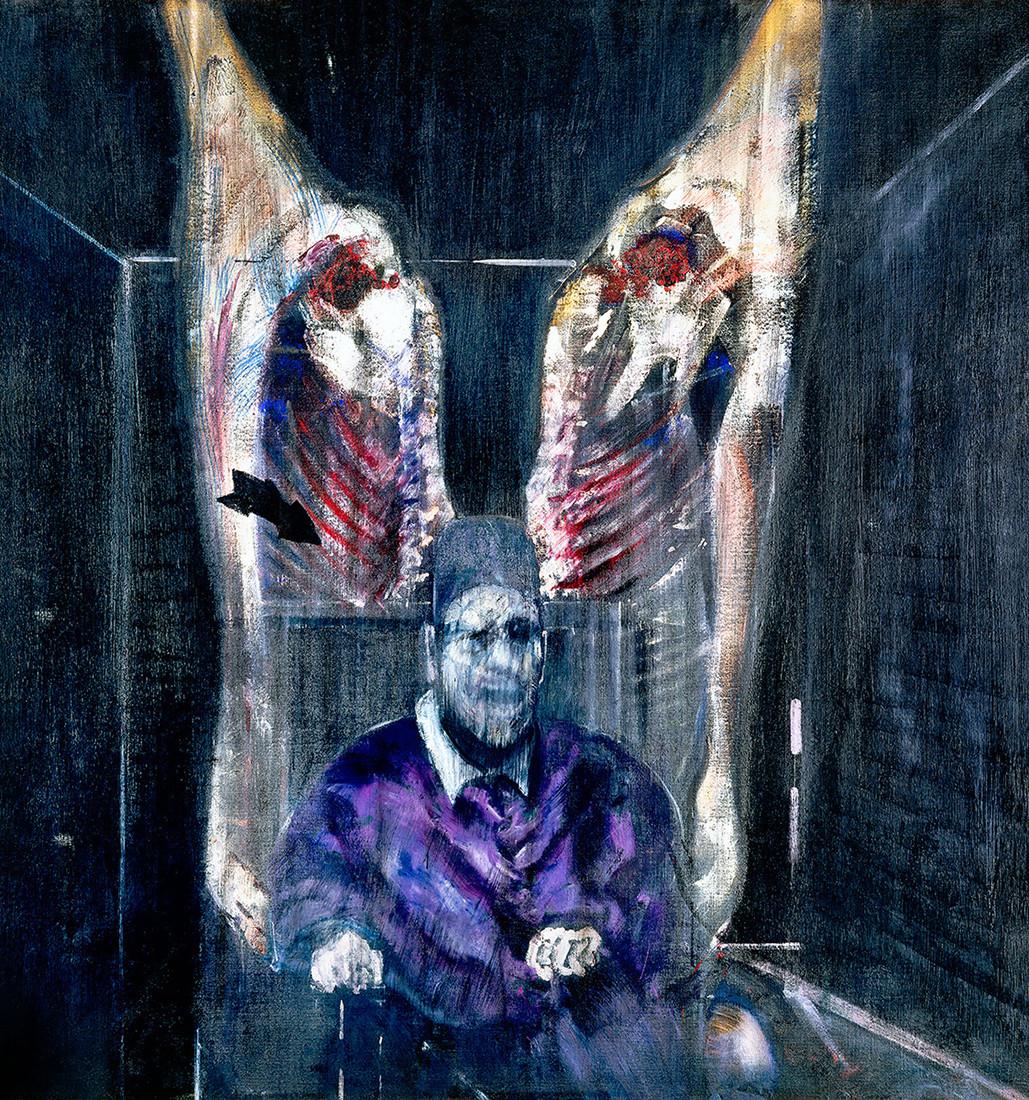
Francis Bacon, Figure with Meat, 1954
Further, the name of this series, Vanitas, is an art-historical reference to a genre of 17th century Dutch still life painting associated with memento mori – works symbolizing the vanity and futility of earthly desires given the certainty of death. From Latin, memento mori translates to “remember you must die”. I felt this summed up my artistic intentions: to confront head on – rather than avoid, as in the tradition of Western culture’s Hollywood glamour imagery – the anxiety and inevitability of death.
Why did you choose such saturated and dramatic colors, sometimes far removed from the raw materiality of the bodies?
Matthew Rolston : I sought to create a visual and thematic collision between that which is beautiful and that which evokes horror – and by extension, the secular and the divine, life and death, etc. – in order to invite viewers to derive meaning through the observation of pictorial irony.
I approached the Capuchin mummies with the same stylized consideration I would a living subject. I used what I call an “expressionistic” lighting technique, a combining of three separate wavelengths of light to create a ‘painterly’ effect. The result was a spectrum of blue tones, sickly greens, deep violets and dark magentas – a bruise-like palette, suggesting a pulse of life beneath the surface of decay.
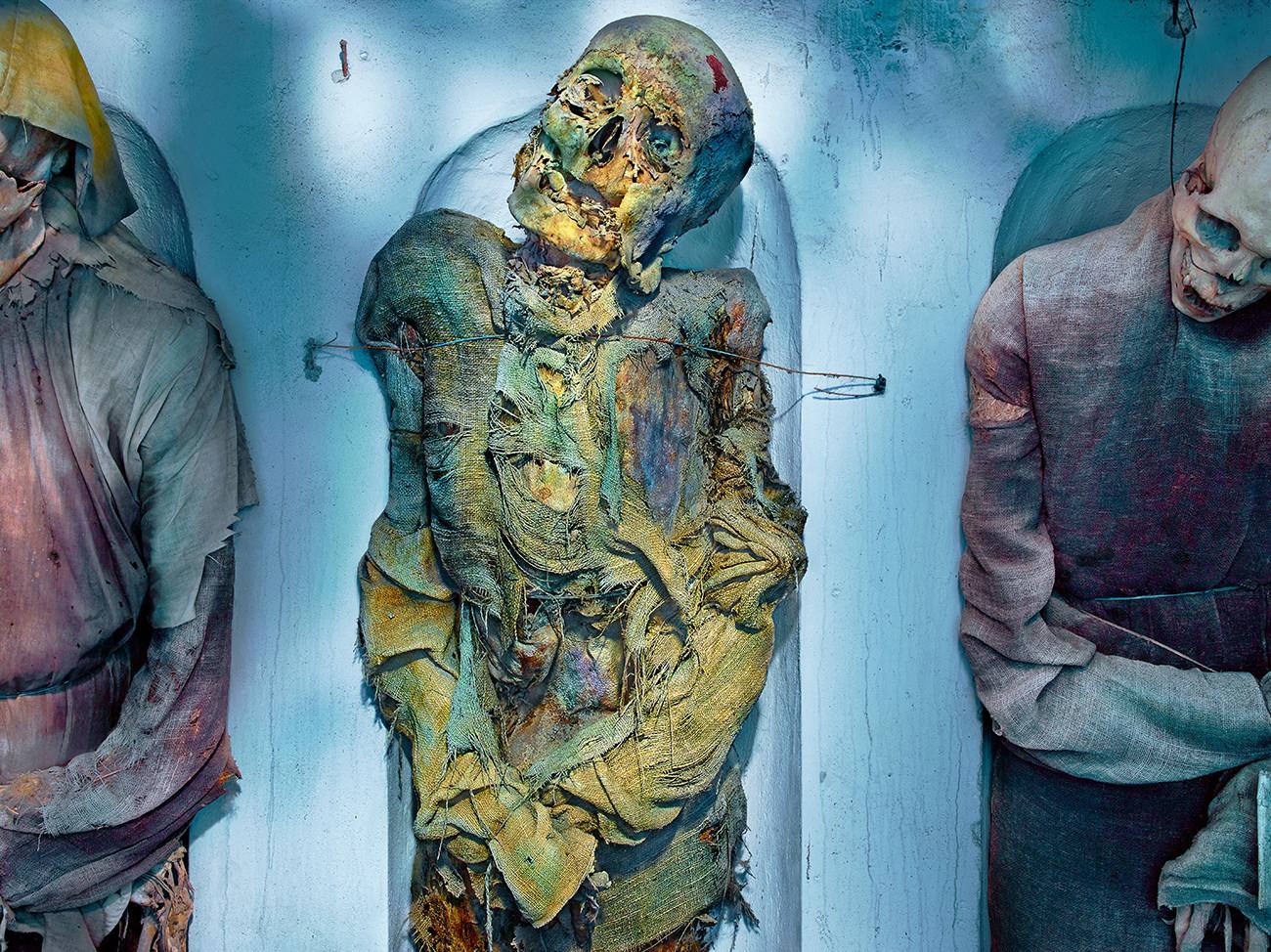
Matthew Rolston, Untitled (Rainbow), Palermo, 2013
Beyond the color’s devotional relevance to Catholic iconography, the cyan-blush glow cast by my lighting on the cracking lime-coated walls of the crypt was also inspired by the neon halo behind a statue of the Virgin Mary in a cave chapel – the Sanctuary of Santa Rosalia (Palermo’s patron saint) – on Monte Pellegrino, another sacred site associated with death and remembrance.

Berthold Werner, Interior, Sanctuary of Santa Rosalia, Palermo, Sicily, 2012
In combination, the drenching of my lifeless subjects in saturated, theatrical lighting – giving them a stylized beauty – served to visually reinforce the dichotomies I set out to explore.
Your prints are conceived as unique pieces, going against the reproducibility of photography: why this radical decision?
Matthew Rolston : My approach to the presentation of this series was an intentional departure from photographic tradition.
Treating these works as unique – making them singular pieces, not unlike paintings, instead of reproducible in the typical presentation manner of photographs – is a continuation of my formal strategy and influences.
This style of presentation allows me to offer further comment on the series’ themes. Humans attempt to manage our terror of death and the mundane insignificance of a transient life by seeking significance through symbolic culture and often through the creation of art objects.
In creating these images, I was both participating in and offering a counter to that particular human impulse, one that cultural anthropologist Ernest Becker called an “immortality project”: an attempt to negate death by giving ourselves permanence and meaning beyond the flesh.
But doing so, as Becker observed, is an inherently futile endeavor; it is the ultimate vanity – the desire to cheat death: an impossibility. It is also a uniquely human act, and one done due to and in defiance of our collective anxiety of death, one that I am surely a part of. Artists create objects to live on after their lifespan. Isn’t that a desire to cheat death? So I’m as guilty as the other members of Western culture and its customary denial of death.
As my portraits of these mummies, forever suspended in a macabre imitation of lifelike gesture, attempt to show, neither symbolism nor the creation of art objects can stop death. There is no immortality, only eternity. Equally denying my images themselves a type of immortality through reproduction, reinforces that idea of the futility of seeking symbolic permanence – denying death – through material objects.
Finally, this style of presentation and the work itself is as close as I can come, as a photographer, to creating a painting through light.
What role does the gilded framing play in the perception of the work — simple ornamentation or an integral part of the discourse?
Matthew Rolston : I chose to present the monumentally scaled, richly-hued Vanitas prints framed in patinated gold leaf, in a manner suggestive of and in tribute to the paintings of Francis Bacon. The gilded setting itself serves as a kind of ‘proscenium arch’ accentuating the highly theatrical nature of the photographic style.

Matthew Rolston, Triptych in the Style of an Altarpiece, Palermo, 2013. Installation view, ArtCenter College of Design, Mullin Transportation Design Center, Pasadena, California, 2025
How do your photographs transform these mortuary relics into contemporary icons?
Matthew Rolston : As alluded to earlier, humans have a complex relationship with existential terror. The concept of ‘Terror Management Theory’ proposes that a basic psychological conflict results from having a self-preservation instinct, while at the same time realizing that death is inevitable, and to some extent unpredictable.
In Western culture, this conflict can produce incredibly uncomfortable feelings, which we attempt to manage through escapism, denial, and cultural beliefs that counter biological reality. Hollywood glamour imagery is particularly suspect, a comment upon which was the primary point of this exercise.
Beyond Hollywood glamour culture, the most obvious examples of cultural values that assuage death anxiety are those that purport to offer a literal immortality (e.g. belief in the afterlife through religions and philosophies).
Conceptually, the Vanitas series explores the nature with which we project our life force into human simulacra. This is a phenomenon shared by figural religious depictions, idol worship, and Hollywood glamour imagery alike.
The series also attempts to address intertwined narratives of human existence, the dichotomy of beauty and the grotesque, and the power of art to connect with what lies beyond.
Do you think this work confronts the viewer more with death… or with the beauty of life
Matthew Rolston : The project is both a confrontation with death and a reminder of life’s beauty. The Vanitas series attempts to denote the futility and emptiness of our obsession with the material. Material objects will eventually fade. To be fixated upon worldly possessions, unnecessary adornment, the pursuit of social status and excessive wealth is to be fixated upon that emptiness. It has been said, “you can’t take it with you”. But what can one take from this earthly realm? One’s soul, if such a thing exists.

Calcedonio Reina, Love and Death, 1881
Upright as if already risen, some attired in decaying vestiges of worldly wealth, and believing themselves first in line for resurrection on the Day of Judgment, the monks, religious leaders, aristocrats, and persons of means that line the Capuchin crypt remain, for me, disturbing relics of humanity’s romantic visions of immortality.
The Vanitas portraits attempt to portray humanity’s stubborn insistence to touch the eternal and thereby achieve that immortality, wrought here literally as portraits of decaying bone, silk and cotton clinging to existence even with the spirit long departed.
Today, left to neglect, reduced to shreds of their former glory, these mummies remain both twisted and eternally poised, to me as mannered as Schiele’s watercolors of tortured flesh.
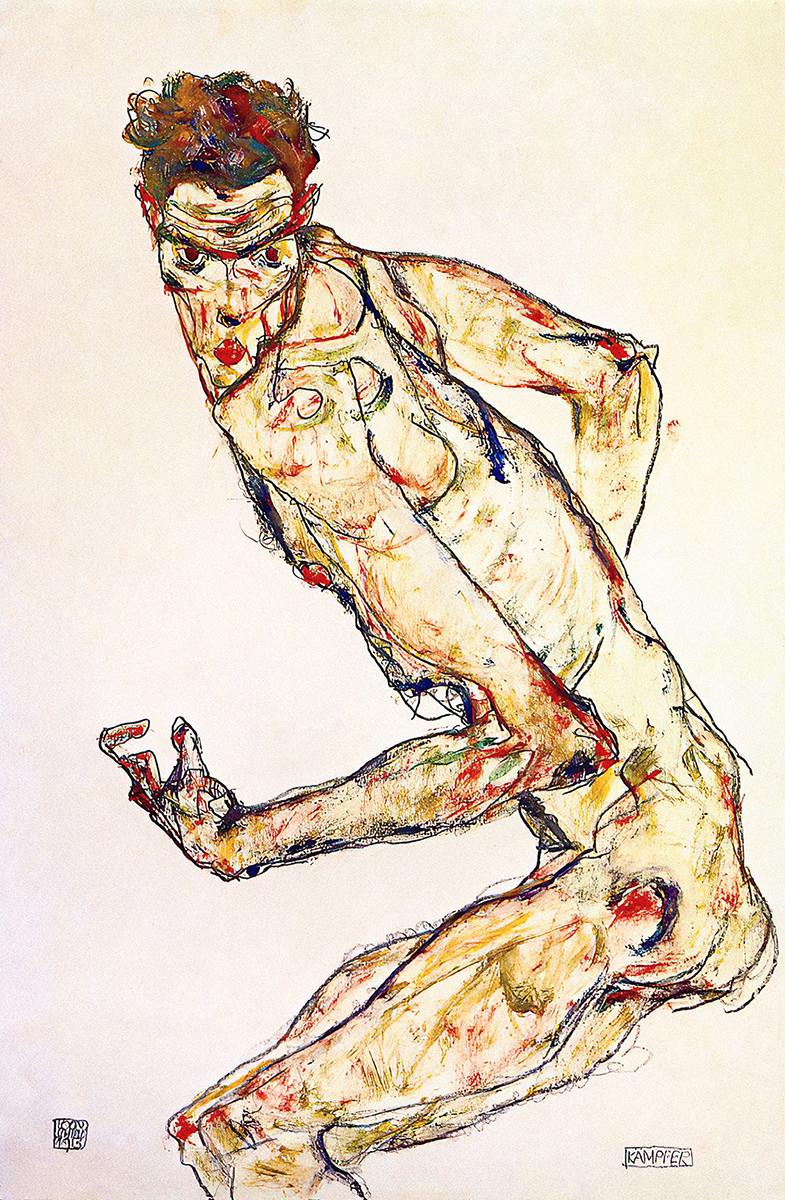
Egon Schiele, Fighter, 1913
Did you seek to recreate a form of ritual or spirituality in the staging of these portraits?
Matthew Rolston : My process in any creative project, whether in my commercial or fine art work, is in itself a form of ritual. Starting first with research and ideation, and then in my choices of subject and formal decisions of staging, including color, lighting, lensing, angles – all of these are deeply and carefully considered as artistic rites.
So it’s fitting that my ritualized process was applied to a form of negotiating with what could be called spiritual, or at least existential, questions, and allusions to religious iconography.
My primary focus for this project – examining and confronting how humans grapple with and attempt to negate death anxiety, often through symbolic culture – naturally drew me to religious sites and iconography, as religion is the most pervasive human design to manage our fear of mortality and the unknown. So, it was unsurprising that my pursuit of the perfect subject led me to multiple religious sites, and finally to the Capuchin catacomb in Palermo. There, I found and chose – a key step in my ritual of photography – the subject that spoke to and moved me most personally.
The setting and subject matter informed many of my formal choices in staging. Inside the crypt under the Church of Santa Maria della Pace, surrounded by the mortal remains of the faithful, I considered how I might find beauty and meaning in such an unconventional subject. Religious allusions lent themselves naturally to my approach. In my choice of color, as mentioned earlier, I leaned into hues as vivid and evocative as those of a stained glass church window. My choice of dominant blue tones – in particular, a shade known as ‘Marian blue’, one that carries significance in traditional Catholic dogma and display – was meant to imbue the images with a quality that conjures both the melancholy and the transcendent. For me, it’s a kind of exquisite beauty; one, however, that has proven disturbing to many viewers.

Palais de la Cité, Sainte-Chapelle, upper level interior, Paris, France
These figures obviously can’t actually move, but through choices of lighting, lensing and camera angle, I attempted to create the illusion of gesture and movement. My choice of this somewhat theatrical photographic staging, and the resulting photographs, may have offered these figures a different form of resurrection than they were originally poised to receive.
Why did you opt for a “mostra diffusa” spread across four venues in Los Angeles, rather than a monolithic exhibition?
Matthew Rolston : I decided to show Vanitas spread across four venues for several reasons. First, it was an artistic choice: these images are large scale, highly dramatic (not to say theatrical), and – for some viewers – rather challenging, if not disturbing. I personally would not like to see ten of these images in one room. It’s just too much. To me, it’s preferable to see them sparingly. It is also a nod to art historical traditions wherein singular works were presented in isolation.
That’s why we decided to adopt a multi-venue approach, one that’s referred to in Italian as a mostra diffusa. The kickoff venue of our multi-week exhibition program, ArtCenter College of Design in Pasadena, California, is the most ambitious: a wall-sized installation of a triptych.
Along with being my alma mater, ArtCenter has a significant presence in the Los Angeles art community and maintains several gallery spaces at the campus. This exhibition is curated by Julie Joyce, the College’s Director of Exhibitions.
How do you expect the perception of the project to vary depending on the context of each venue (gallery, art school, museum, Leica Gallery)?
Matthew Rolston : I conceived the mostra diffusa approach to exhibiting Vanitas in order to offer a range of perceptual experiences for viewers as diverse as the locations themselves.
ArtCenter College of Design presents a triptych of the Vanitas work as a wall-sized installation in an area of its ‘Mullin Transportation Design Center’ known as the Oculus. It’s a dramatic vaulted space located within a former wind tunnel. The eighteen-foot high exhibition wall is curved, recalling the quality of the exhibition spaces at the Guggenheim Museum in New York, its surface painted black, as a metaphor for the darkness of the unknown. The triptych comprises two images of mummified children flanking one of an elderly adult. Hung together in the style of an altarpiece, I conceived this presentation as a visual and symbolic collision of the sacred and mundane, youth and elder age, beauty and the grotesque. This venue allows the work to be seen in an institutional setting.

Matthew Rolston, Triptych in the Style of an Altarpiece, Palermo, 2013. Installation view, ArtCenter College of Design, Mullin Transportation Design Center, Pasadena, California, 2025
Fahey/Klein Gallery, one of Los Angeles’ enduring exhibition spaces for photography, and my home gallery since I began my professional career, houses a larger presentation: four further individual pieces, each a singular experience isolated on a separate wall. This presentation includes the monograph’s cover image as a large-scale fine art print. Fahey/Klein is a familiar location for serious collectors of photography, and considered by many to be the leading gallery of its genre in Los Angeles.

Matthew Rolston’s Vanitas, The Palermo Portraits, exhibition. Installation rendering, Fahey_Klein Gallery, Los Angeles, 2025
Finally, two additional prints are separately and individually on display: one at the inauguration of the new Daido Moriyama Photo Foundation’s museum in Los Angeles, and the other at Leica Gallery, Los Angeles.
Daido Moriyama Photo Foundation’s ‘Daido Star Space’ is the more intimate of the two smaller venues, available to view by appointment only. The exhibition opened with a private book launch and artist signing, presented by publisher Chris Pichler of fine art photography imprint Nazraeli Press and hosted by noted Los Angeles book dealer Lee Kaplan of Arcana Books on the Arts. The presentation thematically echoes the foundation’s interest in showing the works of other photographic artists in ‘conversation’ with the aesthetics of its founder, photographer Daido Moriyama.

Matthew Rolston’s Vanitas, The Palermo Portraits, exhibition. Installation view, Daido Moriyama Museum _ Daido Star Space, Los Angeles, 2025
Our final venue, Leica Gallery, Los Angeles, led by curator and gallery director Paris Chong, was chosen for its celebration photography and access to compelling exhibits. The first of its kind for Leica Camera, the space serves primarily as a hub for photographers and Leica loyalists, providing opportunities for the Los Angeles community of fine art photography enthusiasts and photographers to connect with one another. This venue was also chosen for its roots in the technical and material traditions of photography – the focus of an artist talk and book signing highlighting the painterly, craft-driven aspects of the Vanitas project.

Webpage announcement, Matthew Rolston’s Vanitas, The Palermo Portraits, artist talk. Leica Gallery, Los Angeles, October 2025
What place do you give to mediation with the public: do you wish to provoke a shock, a meditation, or an intimate recognition?
Matthew Rolston : Mortality is the most universal and the most intimate of human conditions. Birth, life and death are things all of us experience – with the great mystery of what comes after having fueled countless generations of imagination, creating elaborate mythologies, philosophies and religions to protect us against the fear of the unknown.
No artist ever knows how the public will respond to their efforts. Vanitas seeks to provoke questioning, create shared spiritual meditation, and invite intimate, personal recognition. It’s a reflection of our common experience, the point being to demonstrate in a dramatic fashion that we are more alike than we are different. We’re all going to the same place, but none of us really know where that is.
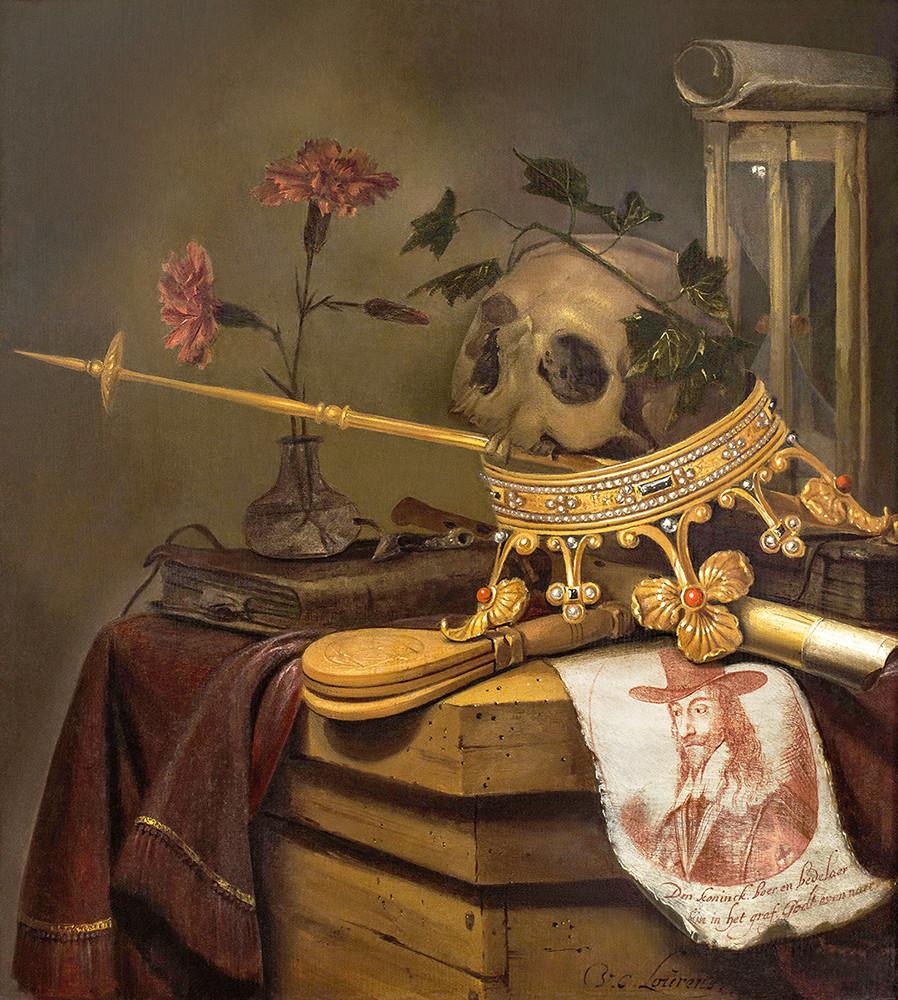
Vincent Laurensz van der Vinne the Elder, A Vanitas Still Life with a Skull, Crown, Scepter, Flute, Bellows, Hourglass, Carnations in a Glass Vase, Scroll, Book and an Engraved Portrait of Charles I, c. 17th century
The namesake of the Vanitas series, the 17th century Dutch genre of memento mori still-life paintings, appears at first glance to proclaim death. Works characterized as ‘vanitas’ use symbolic imagery to invite contemplation – and perhaps reconciliation – of life and death. To our modern eyes, the Dutch genre depictions of skulls, dying flowers and worldly riches may appear random, but these objects are deeply imbued with meaning. Each item symbolizes the transience of worldly pleasures – the fragility and ephemerality of life. In the context of a ‘vanitas’ artwork, meditating on mortality is an exercise in the pursuit of spiritual growth: to live a life more worthy.
My intention with the Vanitas series was not dissimilar. In order to understand our world and its many conflicts, human beings separate themselves through discrete spiritual belief systems, with sometimes highly contested boundaries. Vanitas seeks to transcend these divisive boundaries, ones that may limit our perceptions of the world, of the relationship between the living and the dead, and of the subjectivity of our relationship to time.
Vanitas attempts to demonstrate that the human experience exists in a long, fragile yet miraculous, borderless and unified continuity. In doing so, the hope is to invite the viewer to question and challenge Western conceptions of life, death and an imagined afterlife.
The book is published in a limited and luxurious edition, almost like a reliquary. Do you see it as an extension of the exhibitions or as a work in its own right?
Matthew Rolston : The Vanitas images are meant to be experienced at the scale of significantly sized paintings. Clearly, very few people will have the opportunity to see the ten pieces selected to be shown in this form – especially considering that the prints on exhibition are unique.

Vanitas The Palermo Portraits by Matthew Rolston, Nazraeli Press, 2025. Monograph, front cover
The overscaled monograph, presented by Nazraeli Press, serves a different yet related function. Unlike the exhibition, the book displays the works as an extended series of fifty images, including the ten that have been selected for exhibition.
The book contains various essays and texts, including my own journal entry, written during the period of the creation of the series; an introduction from noted New York Times photography critic and author Philip Gefter; a foreword excerpted from cultural anthropologist Ernest Becker’s seminal 1973 book The Denial of Death; as well as my own afterword. In addition to the images from the series, the book includes a range of reference photography and artworks that ground Vanitas in an art historical context.
In receiving the Lifetime Achievement Award, how do you perceive the fact that this project — rooted in death — is being celebrated as a major milestone in your life as an artist?
Matthew Rolston : As a person and an artist closer to the end of my career than the beginning, it seems apt to present a project that meditates on mortality at a moment in which I am being recognized by my alma mater, ArtCenter College of Design, and celebrated for the breadth of my lifetime in photography – from Hollywood glamour to explorations of various art theories in my ongoing fine art projects.
Vanitas is undoubtedly my most elaborate and personal endeavor to date. Over a decade in the making, it serves as a sort of capstone project, a culminating body of work that attempts to demonstrate the knowledge, skills and creative vision I’ve developed over the course of my career. Vanitas is a chance to question my own and society’s values, to deeply explore a highly personal theme, and to present that theme as a cohesive body of work. Beyond the photographs, the lived experience of creating the Vanitas project has been more important to me than either the final result or the way in which those photographs may be received by the public.
All that said, it’s important to remember that the creation of art as an object (in this case, a series of unique large-scale prints and an oversized monograph) is an artist’s own vanitas, acknowledging that the life of objects is a great deal longer and more varied than that of their creators.
Interview with Matthew Rolston by Carole Schmitz
PROJECT WEBSITE: https://www.vanitasproject.com
Matthew Rolston responses, © MRCI. All rights reserved.