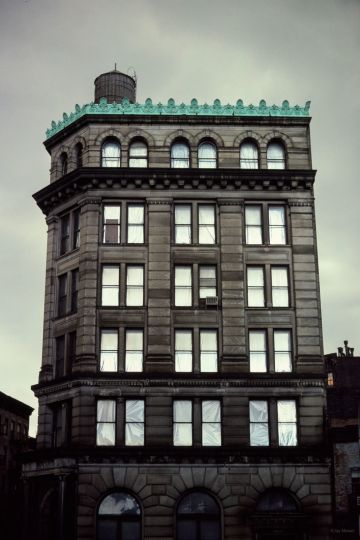
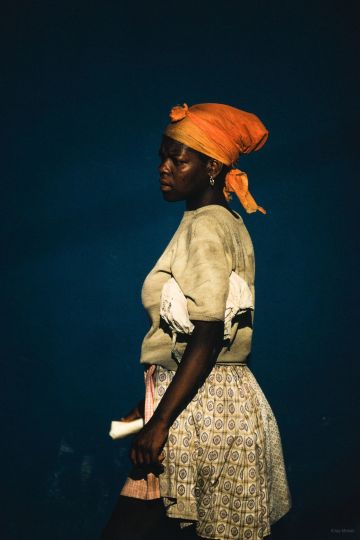
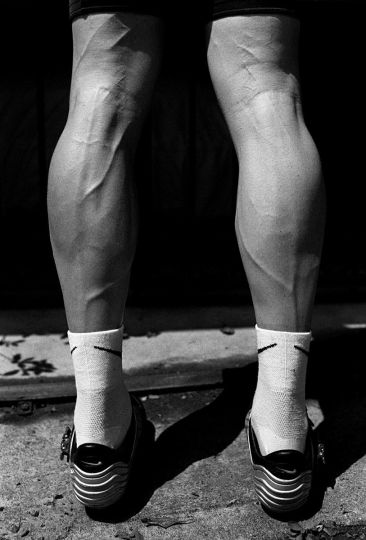
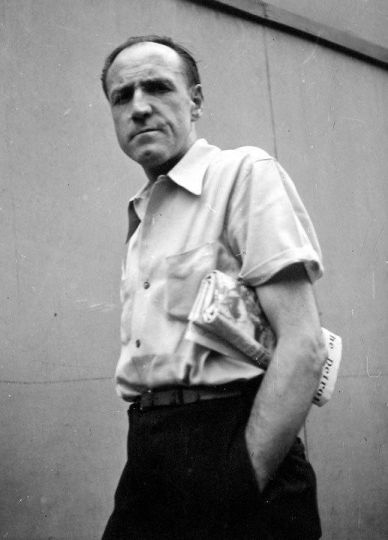
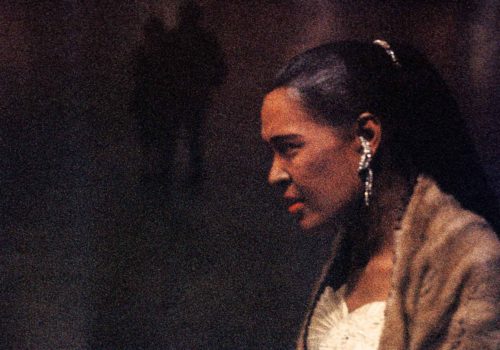
Along the way, the name Dolorès Marat has become part of the French photographic landscape, year after year, to the point of representing a distinctive and personal universe, just like her atypical career. Present at the opening and signing at L’Angle in Hendaye, which is offering a good selection of her iconic images, the opportunity for a meeting was obvious.
Jean-Jacques Ader- You say in “Dolorès,” the documentary Thomas Goupille dedicated to you, that you don’t really know how to talk about your work?
Dolorès Marat- In fact, for me to take a photo or push the trigger at a given moment, I need an emotion. Wherever it comes from: a person passing by, a tree, nature, etc. If something moves me there, in my heart, I have to photograph it, right away.
JJA- It’s instinctive, then.
DM- Yes. I don’t think about it.
JJA- You’re self-taught. How did you learn?
DM- I worked for a photographer, Claude Froissard. At first, it was to clean and organize equipment. But I quickly understood how a camera, a view camera, and lab development worked. I worked for 27 years in a women’s magazine and then 17 years in a lab. Afterward, I started traveling to take my own photos.
JJA- You like to give titles to each of your photographs.
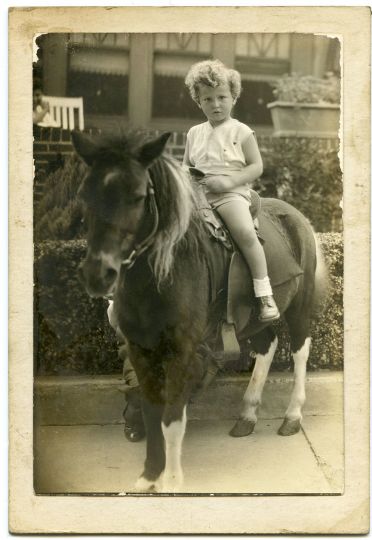
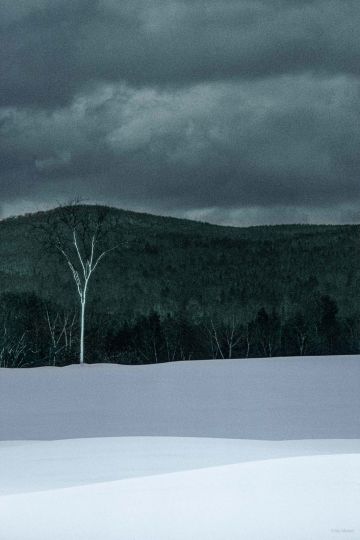
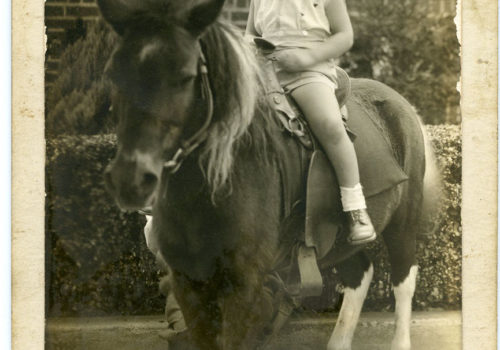
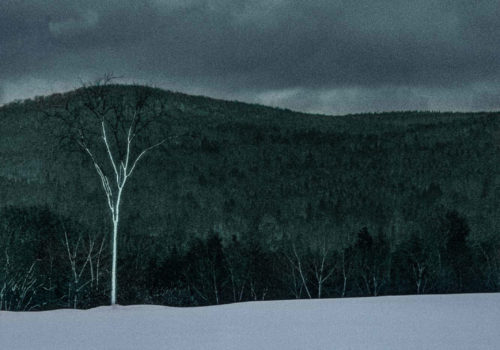
DM- Oh yes, their names are what I see. And it’s easier to recognize them: la vache sacrée(the sacred cow), les oiseaux de Marseille (the birds of Marseille), le saut du chat (the cat leap), le retour à Paris (the return to Paris, le cheval vert (the green horse), l’arbre qui marche (the walking tree).
JJA- Where was that one taken?
DM- I’ll tell you the story. I had gone to Aurillac for an exhibit, accompanied by some students from the Arts Déco school. I stayed long enough to set everything up, and then I was supposed to meet the students in a café. When I left, I discovered it had snowed, and I love snow. So I set off, and along the way, I felt like I was being followed. I turned around: no one was there. Being sure they were following me, I took a photo while turning around, in the process, and it was the tree.
JJA- Where was that one taken?
DM- I’ll tell you the story. I went to Aurillac to exhibit, accompanied by some students from the Arts Déco school. I stayed long enough to set everything up, and then I was supposed to meet the students at a café. When I left, I discovered it had snowed, and I love snow. So I set off, and along the way, I felt like I was being followed. I turned around: no one was there. Being sure that I was being followed, I took a photo while turning around, in the process, was the tree.
JJA- It was the tree following you.
DM- There you go (smiles)
JJA- You never get people to pose?
DM- Never. It’s instinctive. I need a feeling that comes from my gut, but I’ve never had anyone pose.
JJA- What is photography for?
DM- For me, it’s to record emotions. I don’t wait somewhere for something to happen. Wherever I am, I have to walk, I walk, and sometimes, when I don’t feel anything, I don’t take pictures.
JJA- And do you find these emotions when you’re selecting your photos?
DM- When I don’t find them, I throw them away. If I don’t feel the same thing in my slides as I did when I took the photos, I don’t keep them. Especially since I usually only take one photo, on the spot. Once, coming back from New York, I brought about fifty rolls of film, and I didn’t keep anything… it was exceptional. But I didn’t blame myself; I’d missed my chance, and that’s it. It never stopped me from continuing, actually.
JJA- You’ve been a fan of Fresson prints for a long time.
DM- Yes, the Fresson was a shock and a revelation for me. The first time I saw one, I knew that was what I wanted for my photos. From now on, I have my prints made on Awagami Japanese paper. Sunghee Lee does this in his studio in Arles.
JJA- You took care of hanging the exhibition yourself. How did you go about it?
DM- I always want to do it; I think I’m the best person for that; I associate the photographs by color rather than by subject, as different colors represent different emotions.
JJA- These colors you’ve loved so much since discovering two painting books when you were little.
DM- Actually, before that, my mother had placed us with the nuns, and often, when we worked well, we were given religious images, whose colors I admired, with blue, red, and gold. I received the books by Cézanne and Van Gogh later, as first prizes when I was at the dressmaking school. They were the only books in the house. These colors fascinated me and have stayed with me throughout my life as a photographer.
Jean-Jacques Ader
Exhibition “L’arbre qui marche ” at L’Angle Galerie in Hendaye (64) from May 2 to June 2, 2025. Information: https://www.langlephotos.fr/
The documentary film “Dolorès” directed by Thomas Goupille is available on
The Darkroom Rumour. https://www.thedarkroomrumour.com/fr
“Dolorès Marat” monograph, most recently published by Delpire & Co (2024)