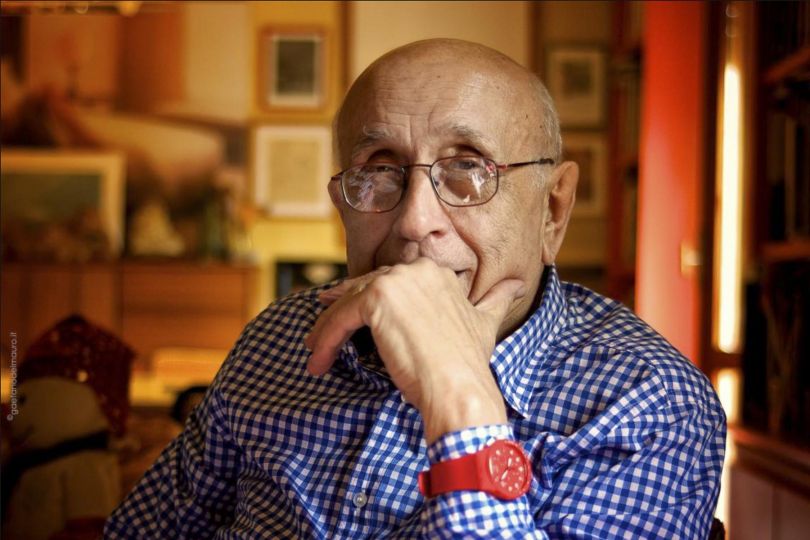
Howard Schatz sent us his series Homeless – Portraits of Americans in Hard Times accompanied by his essay.
Sometime in the early 1980s, in San Francisco, I saw a middle-aged woman sitting on a downtown street, her back against the wall of a shop. She held a sign that read, “Hard Times,” and in front of her sat a cup. I had my camera with me but felt it would be wrong to make a photograph of someone who seemed so desperate and vulnerable.
I began to talk with homeless people and to ask them about themselves. I introduced myself, sat down on the sidewalk with my back to a wall—shoulder to shoulder—and I tried to strike up a conversation. Most people I approached readily spoke with me and shared their stories.
Some were too emotionally or cognitively compromised to converse. I felt confident, however, that a photographic project was possible.
Most of the people I asked agreed to participate in a portrait session and recorded interview.
Some people allowed me to photograph them but did not wish to, or were unable to, tell me much about themselves.
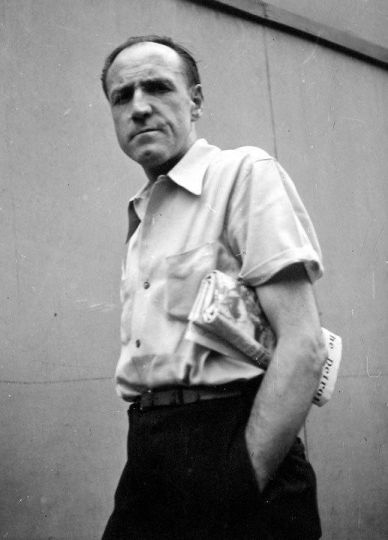
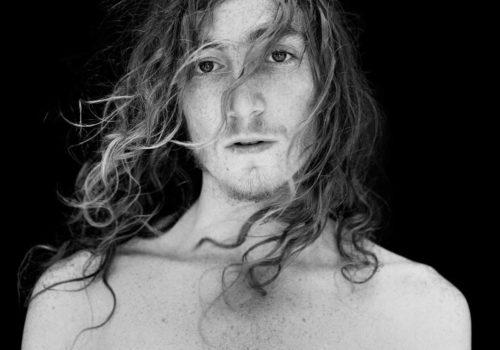
I wanted to see—to look directly at each face. I asked each person to look at the camera and never suggested a mood. During the session, I conversed and asked questions, always respectful and warm.
The people I met and the stories I heard helped me to understand, somewhat, the condition of homelessness. I have learned, quite vividly, that for many, homelessness in a large part results from misfortune or accident.
There are many homeless people who are, to some degree, mentally ill.
Some are addicted to drugs (heroin, cocaine, crack, etc.) or alcohol. I heard a number of times, “I’m an alcoholic, I can’t keep a job and can’t pay my bills.”
And I met people just out of jail with nowhere to go: no halfway house, job training or guidance—lost.
And, finally, there were people who were homeless by virtue of economic hard times.
Homelessness rarely happens by choice. The vast majority of homeless people are poor and vulnerable, struggling desperately and suffering helplessly and hopelessly.
They don’t know how to or just can’t get out from under.
Working on this project, seeing these faces, and having these experiences has profoundly changed me. I never used to believe in luck. I used to think, glibly, that “luck is when opportunity meets preparation,” or “you make your luck.”
I now understand the arrogance and ignorance of such aphorisms. I was born with a reasonably good mind, into a loving home with two parents who provided an emotionally stable environment with structure. They taught me to be respectful, to revere education, and to work hard. And I was born white in the United States of America. I can take no credit for any of this.
Since the sight of homeless people in the streets has become so common, we have stopped noticing. We don’t want to be caught looking. It is easier to keep on walking, to ignore them, and to imagine that they are not there.
I made these photographs because I had to look.
Howard Schatz