Since October 15, 2025, the Galleria Nazionale dell’Umbria in Perugia has been paying tribute to Mario Giacomelli (1925–2000), a major figure in 20th-century photography. With Papaveri rossi, an exhibition conceived by Alessandro Sarteanesi in the Camera Oscura space, dedicated to photography and integrated into the museum itinerary, the institution sheds light on a less expected aspect of the master from Senigallia’s work.
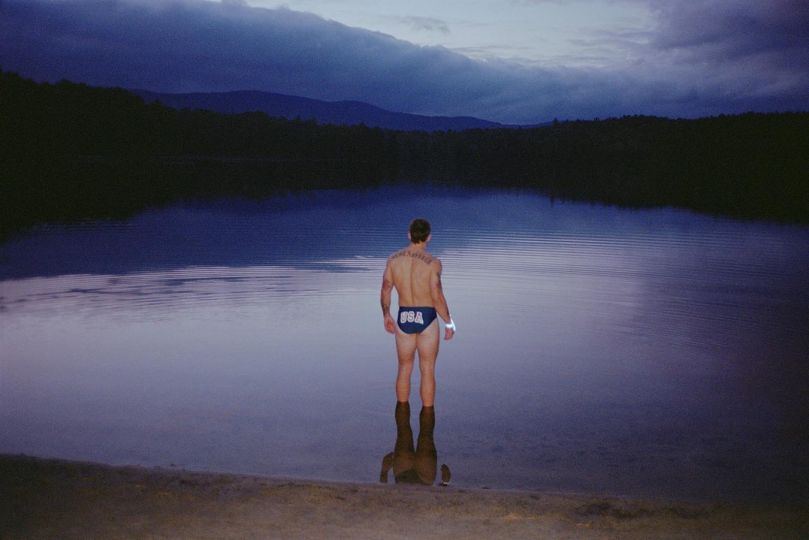
For the first time, the exhibition reveals a series of views of the Umbrian landscape in which color unfolds with an almost painterly intensity. A rare approach in Giacomelli’s work, whose name remains above all associated with a visual vocabulary grounded in the sharp contrasts of black and white. Here, color softens nothing; on the contrary, it opens up a new reading of his work, confirming how fully the photographer conceived of his medium as a genuine plastic language.
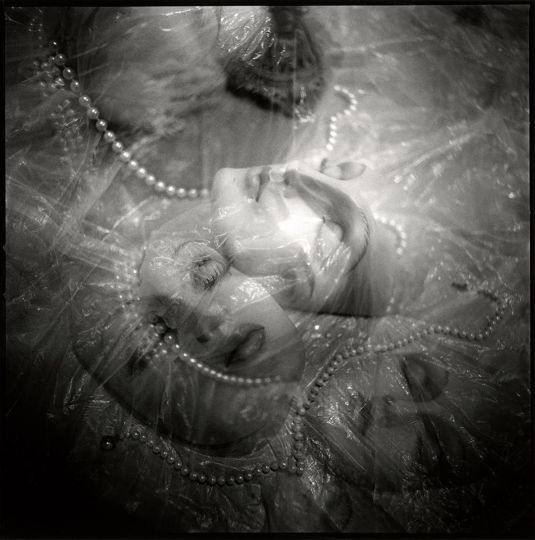
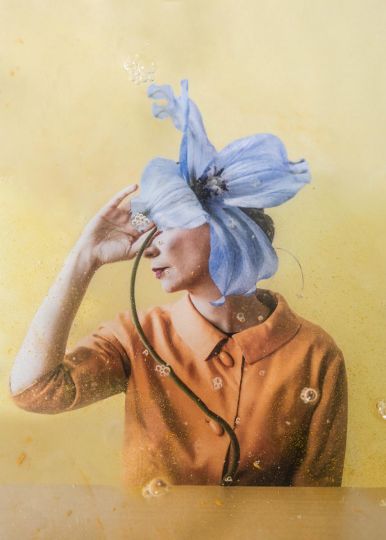
At the heart of the exhibition are five previously unseen photographs, taken in the 1960s on the Colfiorito plateau and at Castelluccio di Norcia. Added to this group are around a dozen contemporary abstract works, likewise nourished by landscape and color.
Curator Alessandro Sarteanesi emphasizes: “It is through a path that crosses the centuries, documented by works from the museum’s collection, that Giacomelli’s work finds fertile ground for a radical contemporary reflection, in contrast to the obsessively repetitive banality of displays of flowers immortalized by social media. The Colfiorito plateau, once inhabited and cultivated, has gradually become depopulated as its fame has grown, and the vitality of the landscape, consumed as a showcase image rather than an experience, is progressively eroding.” The quote sheds light, beyond the homage itself, on the way we look at landscapes and transform them into images.
The exhibition also presents two photographs among Giacomelli’s most emblematic subjects, including the famous Pretini, showing a round of priests, visible in Perugia for the first time, including in a color version.
Born in Senigallia, in the Marche region, in 1925, Mario Giacomelli lost his father at the age of nine and grew up beside his mother. At thirteen, he entered Tipografia Giunchedi, before founding Tipografia Marchigiana in 1950. He began photography in 1953 and soon met Giuseppe Cavalli, who encouraged him to enter his first competitions. In 1955, Paolo Monti described him as “the rising figure of photography”. His magical realism then moved beyond neorealism to impose a more inward and carnal vision of reality.
Series such as Vita d’ospizio (1954), Mattatoio (1961), and Verrà la morte e avrà i tuoi occhi (1966) were immediately striking for their brutality and existential power. In 1963, his meeting with Nemo Sarteanesi led him to Alberto Burri, with whom he formed a long friendship. In 1964, he was the only Italian selected for The Photographer’s Eye, the exhibition organized by John Szarkowski at MoMA in New York, which acquired his series Scanno. This recognition marked his emergence on the international scene.
He would then pursue a body of work deeply tied to poetry, from Caroline Branson da Spoon River (1967–1973) to the cycles of the 1980s and 1990s. In 1978, he took part in the Venice Biennale with A contatto della natura negli spazi puri. From 1996 onward, he embarked on his final visionary work, Questo ricordo lo vorrei raccontare. He died on November 25, 2000.
Beyond this exhibition, the project Camera Oscura. La Galleria Nazionale dell’Umbria per la fotografia, led by Marina Bon Valsassina and Costanza Neve, questions the very function of photography. Drawing on the original principle of the camera obscura, it reminds us that this medium is born from the encounter between light and shadow. In this space, marked by a neon sign and immersed in evocative dimness, the visitor is invited to think of time, exposure, depth, and focus as so many keys to understanding photography, at once a technique, a language, and an art of seeing.
Jean-Jacques Ader
Magonza catalogue, with texts by the exhibition curator, Costantino D’Orazio, and Bartolomeo Pietromarchi. The exhibition was organized with the support of L’Orologio società cooperativa – Business Unit Sistema Museo.
From October 15 to April 6, 2026 National Gallery of Umbria, Perugia.