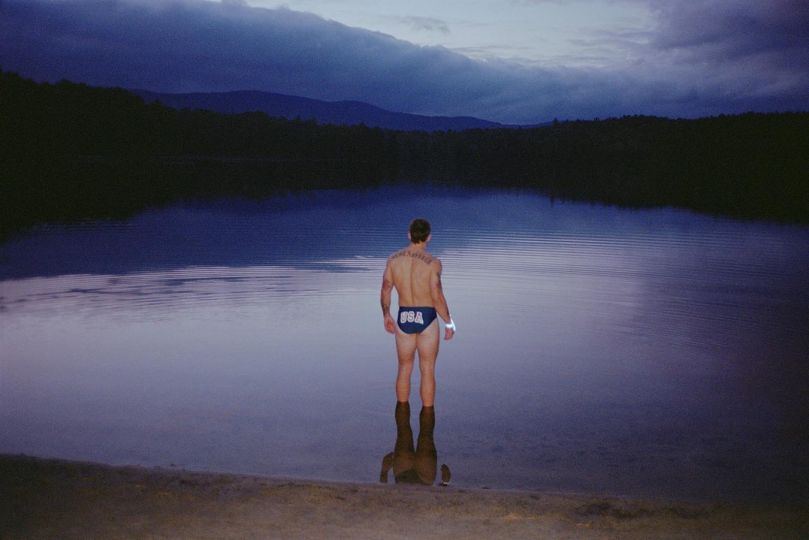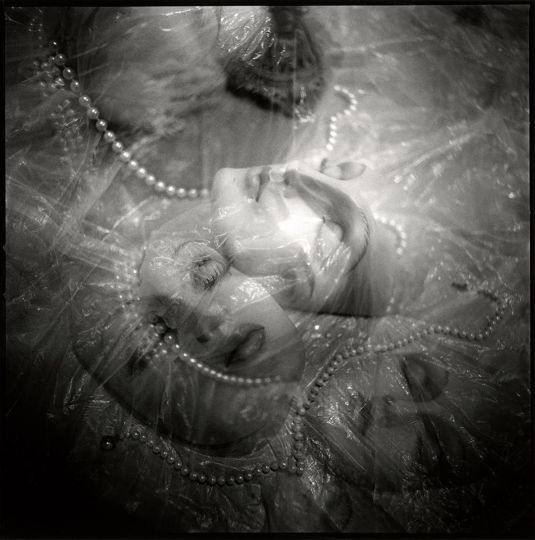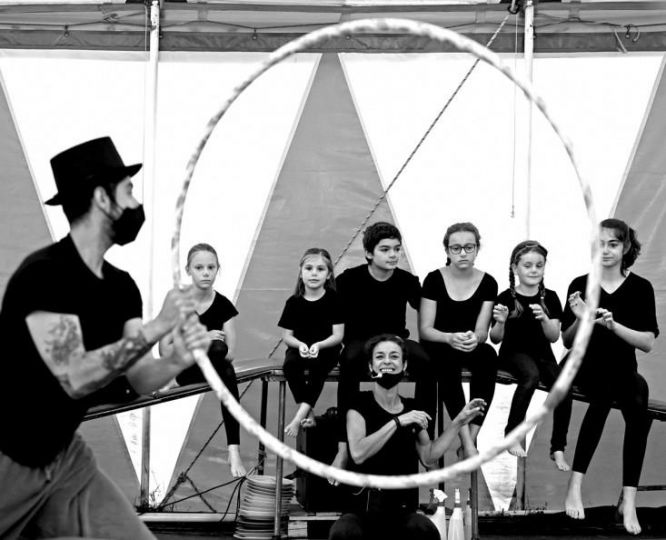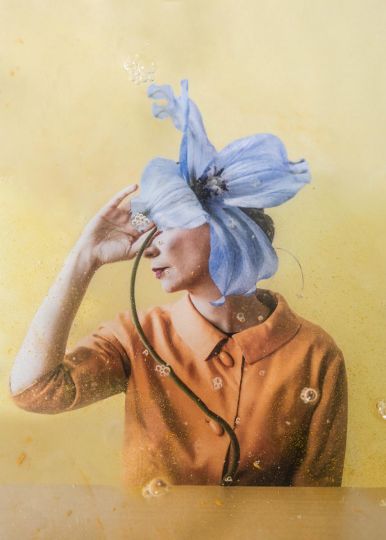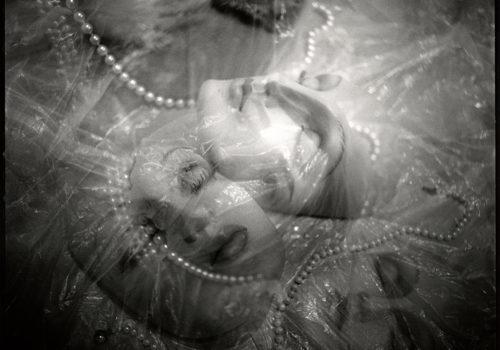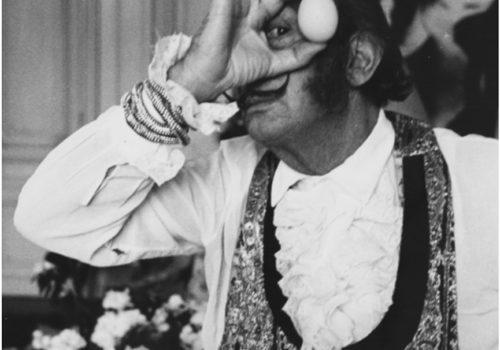
The Fondation Auer Ory pour la Photographie (Hermance- Switzerland) presents Histoires d’œufs (Tales of Eggs), a group exhibition bringing together, among others, Pierre Boucher, Véronique Bourguoin, Marc-Albert Braillard, Vaclav Chochola, Horacio Coppola, Julien Coulommiers, Mario Cravo Neto, Claude Ferrand, Hans Finsler, Aris Georgiou, Jean-Denis Haberstich, Ryszard Horowitz, Rudolf Lichsteiner, Félix Nadar, Man Ray, Irving Penn, Emile Savitry, Magdi Senadji, Emmanuel Sougez, Anton Stankowski, Jean-Pierre Sudre…
Alexandre Fiette writes :
A world unto itself.
How can it be described? It is not a perfect form like the sphere. With its base and its summit, it seems to offer absolute stillness, and yet its center of gravity does not give it stability. Its shape is unique; a triumph of standardization.
It exists in several sizes and several shades, and its surface sometimes features textured effects and variations in color. One might think it solid; it breaks far too easily.
Trivial or extraordinary? He knows how to be both, transcending his own reality to evoke the future through what he carries within him: life. It’s no surprise, then, that he has become the subject of photography: he poses with complete simplicity, allowing himself to be observed in his natural state, yet never forsaking the sophistication of a complex composition. He doesn’t mind playing on the supernatural aura that lighting bestows upon him. Gentleness, coldness, mystery, or banality; seriousness or humor these have inspired the atmospheres created by the greatest photographers to capture his portrait. He has almost become an indispensable subject in the world of photography.
The Fondation Auer is dedicating its walls to it since March 25, 2026. Let us recall that its president, Michèle Auer, devoted a book to it, bringing together the most surprising works of those who used it in their photographic practice, and assembled a beautiful collection devoted to this personality, a true world unto itself, that the egg can be.
Alexandre Fiette
Fondation Auer Ory pour la Photographie
Created in March 2009 by M+M Auer, the Fondation Auer Ory pour la Photographie aims to preserve the existing collection, promote it, acquire photographic objects and works, organize exhibitions, update daily and disseminate the International Encyclopedia of Photographers, publish works contributing to a better knowledge of photography, promote the work of young artists and of forgotten or little-known artists, organize training courses or workshops, and host researchers, artists, and trainee students.
Michel et Michèle Auer
For 40 years, they have been building an exceptional collection, rare for its richness and diversity, with more than 500 cameras, 21,000 books, unpublished materials, 50,000 original prints, art objects, writings, postcards, posters… This impressive body of work traces the history of photography from 1839 to the present day, the fruit of long research and of images that clearly illustrate processes (beautiful or interesting images that offer multiple readings of the invention). At the same time, they have undertaken encyclopedic work on the people who made photography and elevated it to the level of art. They regularly publish books to accompany the exhibitions.
2026 ARTISTES – Histoires d’œufs, quelques lignes biographiques provenant de l’Encyclopédie internationale des photographes de 1839 à nos jours, Michèle 0ry Auer
Boucher, Pierre (Paris, 1908-2000, Faremoutiers), was a designer at the Printemps department stores after an internship in 1926 at Draeger. In 1928, he worked for Tolmer, publisher of The Spur magazine. In 1931, during an internship at Deberny-Peignot, he met Maurice Tabard, Herbert Matter, René Zuber, Cassandre… the team decided to work on the ground floor of the Damour agency in Paris. In 1935, he traded his infrared prints for a Rolleiflex camera, created the Alliance Photo agency with Maria J. Eisner, René Zuber, Pierre Verger, Robert Capa, and Chim. In 1941, he built a watertight underwater box for taking pictures, Ondiphot, purchased by Cousteau, the U.S. Army, and Rainier of Monaco. He collaborated with the Jeune France group in 1944, photographed E. Allais, world ski champion, in action and in decomposed movement. In 1945, he created the Agence de documentations et d’éditions photographiques (ADEP). Between 1948 and 1952, he headed the graphic department of the Marshall Plan; from 1952 to 1972, he was artistic director of the Multiphoto agency, which he created.
Bourgoin, Véronique (Marseille, 1964), armed with her first camera, a Pentax K1000, she began research on the theme “The study of life, a life I do not know anyway and that is why it interests me.” A series of experiments with the photographic medium then extended into a multiplicity of media such as publishing, drawing, painting, video, and installation. The experimental character of her practice unfolds through “the manipulation of physical, chemical, and psychic elements, bringing to light the transformational effects of vision and imagination, and insisting, in particular, on the spectacular effects that apparently counter-spectacular contexts can have.” At the same time, she developed an international network of collaborations with artists, which took shape and multiplied within the framework of Atelier Réflexe (1995-2016), an experimental photography school created with Juli Susin.
Braillard, Marc Albert (Geneva, 1941), began photographing in 1952 with the Baby Box Kodak given to him by his grandmother. From 1955 to 1960, he traveled in Italy and Greece and photographed in color. From 1962 onward, he began working on series on various themes such as hands, children around the world, cars at night, bicycles, studies of materials… before photographing the neighborhoods of Paris and their inhabitants between 1964 and 1971. He sailed from England to Chile with his cousin, Patric van Godtsenhoven, the first Swiss to round Cape Horn, then followed Bardiaux’s trail through the canals of Patagonia, traveling across South America and Europe. In 1973, after a fall, he stopped photographing for 15 years. He took up his Leica again and photographed the camps of Sahrawi refugees from the Western Sahara, resumed his research on matter, and from 1997 began the series “Œufs” at the instigation of Michèle A.
Bruyère, André (Orléans, 1912-1998, Paris), graduated from the Paris School of Architecture in 1934 and collaborated with Emile Aillaud on the Pavillon de l’élégance for the 1937 Paris Exposition. From 1938 onward, he collaborated with André Centre, chief architect of the historic buildings of France, on numerous projects. Architect, decorator, sculptor, writer, and inspired polemicist, he overflowed with imagination and carried with him a total freedom of creation. Throughout his life he pursued his insolent body of work in search of truth. In 1968, he published Pourquoi des architectes, in which he advocated a lyrical architecture independent of the “disciplinary and dictatorial” urban grid, and defined architecture as “the way of molding tenderness onto a constraint.” In 1977, he took part in the competition for the Centre national d’art et de culture Georges Pompidou with an egg-shaped building, an idea he took up again the following year for a skyscraper project in New York. He continued to assert his reflection on this theme, and in 1981 he was invited to create an ovoid skyscraper at La Défense, a project that met with opposition from the President of the Republic. In 1995, he was commissioned to study a 35-story egg comprising 350 apartments and 600 hotel rooms, to be built on the seafront in Monaco; in 1997, a project called for the construction of an egg in Marseille’s old port…
Chochola, Vaclav (Prague, 1923-2005), began an apprenticeship as a photographer in 1941 with Otto Erban in Prague. In 1945, as an independent photographer, he collaborated with the press, the National Theatre and other renowned stages. In 1949, as a member of the Union of Czech Creative Artists, he began collaborating with publishers and photographed the life of horses in Czech stud farms (1953-56). In 1961, he was one of the eleven photographers representing modern photography in Czechoslovakia. During a nine-month stay in France, he made portraits of Salvador Dalí, Max Ernst, Brassaï, and Man Ray before bearing witness to the occupation of his country in 1968/69. He received the Josef Sudek commemorative medal in 1989. A grantee of the Charta 77 Foundation at the Château de Napoule in the south of France, from 1990 to 1993 he prepared, with his daughter, a retrospective exhibition of 268 prints. In 2004, a monograph was published (Fototorst) during a Salvador Dalí exhibition at Langhans; the following year he received the Trebia Prize for his creative work, a collection of portraits of Dalí, from the Miro Gallery.
Coppola Horacio I. (Buenos Aires, 1906-2012), was introduced to photography in childhood and then learned from his older brother, Armando. After studying law in 1930, he traveled and studied art history in France, Italy, Spain, and Germany, where he bought his Leica camera.
First photographs of his native city, first publication. In 1932, he was at the Bauhaus with Walter Peterhans and at Tempelhof with K. Frölich. First film in 1933 with Walter Auerbach. He collaborated with the studio ringl + pit (Ellen Rosenberg/Auerbach & Grete Stern) and traveled through Europe. Back in Buenos Aires, he set up his studio in 1937 and worked with his wife, Grete Stern. Between 1975 and 1982, as a professor, he taught at the School of Museology of the National History Museum. In 1984, he created Grupo Imagema. The following year, he received the Grand Prize of the National Arts Fund.
Coulommier Julien (Vilvoorde, 1922-2014), the son of a railroad worker, worked for the Belgian railways, where he handled illustration and layout for prestige publications until 1982. Armed with a Rolleicord, he began photographing in 1949 the poetic aspects of everyday reality. A member of the Boitsfort Photo-Club, he became aware of the artificial and academic character of the images advocated in amateur circles. Drawn to the new trends emerging in other countries with movements such as Fotoform, Subjektive Fotografie… He first came into contact in 1954 with the experimental art movement Cobra and very quickly entered into contact with European groups, poets, critics, artists…
He wrote, took part in debates, gave lectures on the international renewal of photography, and carried out poetic experiments with Marcel Broodthaers, the poet Chris Yperman… In 1988, he received the Art Prize awarded by the Flemish Community of Belgium.
In 1997 and 1998 he worked on photograms on the theme of the egg for the exhibition Histoires d’œufs organized by Michèle Auer.
Cravo Neto, Mario (Salvador/Bahia, 1947-2009), after training as a lab technician with Hans Mann in Rio de Janeiro, learned photography from Fulvio Roiter during his stay in Bahia. In 1969, he was in New York in a Soho studio, studied at the Arts Students League; color series On the Subway and a series of sculptures using the ‘Terrarium’ process (plexiglass). Back in Brazil in 1971, he was a sculptor, conceptual artist, photographer, and filmmaker. He began exhibiting and collaborating with magazines such as Veja, Manchete, Islo é… In 1975, his film Ubirajara received the award for Best Director of Photography of the Year 76 from Embrafilme. In 1990, he made his first video GH 43-Goulf War, followed by Nash, U 19, Amazonia in 1991, and Exu dos Ventos in 1992. From 1995 to 2001, he worked on the Série negra. In 1998, he began work on the mystical world of Ilé Opo Aganju in Salvador.
Dohmen Léo (Antwerp, 1929-1999), earned a business degree in 1947 and became passionate about chemistry; he received a Gevaert S.A. diploma in 1949, and was hired by the company. An artist, he made collages; a businessman and man of the night nicknamed Le Pirate, he illegally opened a bar in his apartment… In 1953, he bought his first camera because his wife wanted souvenirs of their honeymoon. Becoming passionate about Surrealism and searching for books, he met Gilbert Senecaut, the poet and collector who financed Marcel Mariën’s editorial projects; he also met Mariën’s circle and the journal Les Lèvres nues… He made frequent trips to Paris armed with suitcases full of books he tried to sell. The peddler of Belgian Surrealism met Tristan Tzara, André Breton, Man Ray, Hans Bellmer, Georges Hugnet. In 1955, he met Guy Debord, a member of the Lettrist International who in 1957 became co-founder of the Situationist International… In 1965, dismissed from Gevaert, the “superstar of dealers,” as Freddy De Vree wrote, launched into the art trade with Guy Doreken. Esso Belgium discovered his talents; he became marketing director, carried out serious research on plastics and polyethylene, but did not abandon his taste for nightlife and art dealing… In the early 1990s, he gave up his art trade and created objects grouped under the title Art Postcolombien.
Ferrand, Claude Edmond (Beaulieu-sur-Mer, 1927-2006, Paris 15th), after studying at the École nationale des arts décoratifs in Nice and as a student in André Lhote’s studio, was the only photographer in the Espace group under the presidency of Sonia Delaunay. In 1946, his first camera was an Elgy.
The following year, military service in Trier and Bayonne, corporal by accident. From 1949 to 1953, he worked in the Kodak color research laboratories in Vincennes. While drawing for the couturier Jacques Fath, he decided to make fashion photographs: this would mark the beginning of a very harsh painting-photography duel. From 1953 to 1962, he headed the color laboratories of the Jean Chevalier studio (the weekly Elle). First Kodak International Prize 62
(Hutchinson Trophy) in Rochester, NY. Between 1962 and 1991, he opened and directed his own studios and laboratory in Paris (graphic and experimental research for photography and cinema), invented two color processes, including the Ferrandtype; in advertising photography he worked for Air France, Chanel, Dior, Guerlain… collaborated with Vogue, Harper’s Bazaar… From 1971 to 1984 he was a lecturer at higher schools of decorative arts, graphic arts ESAG in Paris, and the photography school in Arles…
Finsler Hans (Heilbronn, 1891-1972, Zurich), while teaching art history in 1921 at the Halle School of Arts and Crafts (a school competing with the Bauhaus), created a class devoted to object photography and asked the question: how should objects designed according to precise laws be photographed? His research radically changed the usual approach to object photography. One of his themes was the egg, a white body of perfect form, as he put it. In his research he drew inspiration from the writings of the professor of Roman law, historian and philosopher Johann Jakob Bachofen, from the canton of Zurich, who was also interested in archaeology and who spoke of the egg in Römische Grabkampen, Gräbersymbolik der Alten… From 1932 to 1957, he headed the Zurich School of Arts and Crafts, where he had many students such as Werner Bischof, René Burri, René Groebli…
Georgiou, Aris (Thessaloniki, 1951), left the Athens School of Higher Economic Studies and from 1971 went to Montpellier to study architecture. From 1977 onward, he pursued three parallel and alternating directions: painting and drawing, photography, and visual works using photography. From 1979 to 1985, he produced radio programs (ERT Macedonia). In 1981, he began his ANASYnGRAPHES research. Founding member in 1984 of the association Parallaxis for creative photography. Founding member and executive committee member of the Hellenic Museum of Photography. Between 1988 and 1996, he founded and directed the photography month PhotoSynkyria in Thessaloniki. Between 1998 and 2002, director and curator of the Museum of Photography in Thessaloniki. He has shown us many series (Olympos Naousa, Retour à Montpellier, Thank you Mer Goethe, Ubuquité, Arborétum, …).
Haberstich, Jean-Denis (Clarens, 1944), after finishing secondary school, wanted to become a photographer, but the lack of places for apprenticeship forced him into the profession of typographer. A part-time educator to pay for his apprenticeship in Geneva. He undertook his first research on landscape from 1970 onward. Studied photography at the Vevey School of Arts and Crafts. From 1974 onward, he supervised several photography workshops at the Centre d’entraînement aux méthodes d’éducation active (CEMEA) in France and Switzerland; then from 1976 to 1981 he was a photographer’s assistant at ESAV and EAD in Geneva, taught evening industrial courses, and ran the Photo-Club of Perly…
From 1981 to 1994 he taught photography at the École supérieure des arts visuels (ESAV) and at the École des arts décoratifs (EAD) in Geneva. First participation in exhibitions in 1986 under the name Jean-Denis. In 2005, he left his teaching in Geneva and settled in France aboard his barge La Bricole.
Herendi Peter (Budapest, 1953), alongside his work as an assistant at the Palace of Arts in Budapest, became interested in photography, with his first solo exhibition in 1983. From 1987 onward, he became passionate about processes such as solarization, photogram, positive/negative sandwich, hand-coloring, photo-painting, photocopying… He received numerous prizes (Ofoter at Photography 89 in 1989, from the city of Esztergom at the 9th Photo Biennial in 1994, the Sen. Divald Károly Prize at the 10th Esztergom Biennial in 1995, a prize at the graphosme biennial in Györ in 2003…) Member of associations (Hungarian Photographers, FAME artists of shadow and light, Atelier-Photo Union…).
Horowitz Ryszard (Krakow, 1939), one of the rare child survivors of Auschwitz liberated by the Red Army. After studies at the Academy of Fine Arts in Krakow, painter and photographer, he exhibited his works in 1958. Scholarship holder to study painting, theatre, and cinema in an avant-garde center. Fascinated by American photography, he arrived in New York and studied at the Pratt Institute (design) with Alexey Brodovitch. Diploma in hand, he worked for film and design companies. Director for Grey Advertising. In 1967, he opened his own studio, where he handled advertising (Lincoln-Mercury, fashion, pens…). From 1961 onward, his work received numerous prizes and distinctions (Art Directors Club, Creativity, Mead Library of Ideas, Kodak VIP Image Search ’91, First Annual Advertising Photographers Award New York 1994, Cross of the Order of Merit of the Republic of Poland 1996, Gutenberg Award Montreal 2002, Doctor Honoris Causa of the Academy of Fine Arts in Warsaw, Lifetime Achievement and Hall of Fame St. Louis, Missouri, 2017…).
Keres, György (Selyp H, 1906-1989, New York); studied with Istvan Csok at the Academy of Fine Arts in Budapest. In 1925, he won his first camera for painting work on a photographer’s shop window. In 1928, he joined the revolutionary political and artistic group Munka. Between 1929 and 1945, he used the cliché-verre technique. Invited by Laszlo Moholy Nagy to Berlin, the two conducted research on light together and carried out drawing experiments. In 1936, he had his studio in London. In 1937, he headed the lighting and color department at the New Bauhaus School in Chicago. From 1941 onward, he designed numerous exhibitions and taught in various colleges and schools. In 1950, he created seminars whose material served as the basis for the seven volumes of Vision + Value. Naturalized American, he directed in 1967 the Center for Advanced Visual Studies, Massachusetts, whose plans he had been preparing since 1960. In 1978, he was elected an academician of the National Academy of Design.
Lichtsteiner, Rudolf (Winterthur, 1938-2022, Freiburg im Breisgau), an advertising photographer in Basel between 1955 and 1960 after training as a retoucher. In 1966, he shared the famous Prix Nicéphore Niépce with Marc Garanger in France. He traveled to Prague the following year and produced his first leporello, Prague (9.20 m). In 1972, he became an independent photographer in Zurich. From 1983 to 1986 he directed photography courses at the School of Arts and Crafts. At the same time, he worked on many themes (a journey around my room, working on a journal, traveling outward (…). From 1993 onward, color photograms of everyday objects. From 2009 onward, he wrote about his images.
He says: ‘Knowing how to wait. Eliminating chance in order to favor a considered intention. It is in fact the organ of vision that is the photographer’s instrument. An instrument without a soul becomes creative through a thinking eye. Knowing how to wait. Representing something to oneself generally makes possession, and consequently photography, superfluous. Knowing how to wait. The photographic image must attract and stimulate an exchange of questions and answers. The visual result will call forth the invisible. The external factual image must stimulate a second look behind things and a third through them. Knowing how to wait…’
Man Ray (Emmanuel Radnitsky, Philadelphia, 1890-1976, Paris), coal dealer, president of the Chewing Gum trust, modern architect, banjo player, he studied at the New York Academy of Fine Arts with Robert Heni. In 1913, he took the name Man Ray and discovered the work of the European avant-gardes. In 1915, at his first painting exhibition, he bought a camera to reproduce his works, beginning a friendship with Marcel Duchamp. A member of the Dada group in Paris in 1921, he made fashion photographs for the couturier Paul Poiret, known for his boldness and as a precursor of the Art Deco style. He made his first rayographs the following year, and his first film Retour à la raison in 1923. In 1935, he set up his studio at 8, rue du Val-de-Grâce in Paris. In 1938, he photographed the mannequins of his friends (Dalí, Duchamp, Ernst, Miró, Malet…) at the Surrealist exhibition in Paris. In 1966, a retrospective of his work at the Los Angeles County Museum earned him the DGPh Culture Prize in Germany.
Maris (Maris Embiricos, born in France, 1956). In 1978, he composed the music for the film Koko, the talking gorilla. He had been photographing since 1969 with a Rollei 35 camera, with frequent trips to Greece. In 1979, B.A. in anthropology at the University of Southern California in Los Angeles; he abandoned photography. In 1982, after meeting Pierre de Fenoÿl, he decided to take up photography again. He worked on themes of architecture, monuments, still lifes, and landscape. He photographed Versailles in 1990; the following year, first solo exhibition.
In 1993, he traveled and photographed in India. In 1995, he produced a body of work on flowers, which was presented in 2003 at PhotoSynkyria in Thessaloniki. In 1996, he began working on geometric bronzes and Greek Cycladic objects under the title Mythologie.
Paul, Manfred (Schraplan, 1942); after classical studies, he held various jobs (in a quarry for a lime factory, laying rails in the railway industry, laboratory apprenticeship at Photokino Krugen…) before becoming interested in theatre photography. He worked for the Landestheater in Halle and volunteered at German television. From 1968 to 1974, he studied at the Potsdam Film School. Independent photographer from 1974 onward, he taught, worked with the writer G. Kunert on a cycle about Berlin, and collaborated with the Berlin Ballet School. He made a series of portraits for the Operncafé project with the graphic designer and visual artist Wolfgang Krause. He received the DDR-Fotoschauen prize in 1985, was visiting professor at the Hochschule für Grafik und Buchkunst in Leipzig, and professor of photography and audiovisual media at FHTW, Berlin.
In 2009, he began a series, Der Zyklus (still life).
Senadji Magdi (Dijon, 1950-2003, Princé), photographed street spectacle from 1965 onward. From 1969 to 1973, he attended the Famous Photographer’s School in Westport, Connecticut. In 1975, he won the Grand Prize at the Salon de la recherche photographique in Royan with his series Lieux communs. He photographed painters of the École de Nice (César, Ben, Arman…). He truly discovered the photographic image with Charles Harbutt, whose assistant he became in 1976 in Arles. In 1980, he settled in Paris, ran a clothing shop, and began working in color (large formats). In 1985, he produced a phototypy portfolio at the request of Pierre de Fenöyl on the Midi-Pyrénées. Winner of the Villa Medici hors les murs for Italy in 1991. Beginning of numerous commissions from 1992 onward (Cartier perfumes, Ostend racecourse, FIACRE grant Le Cabinet noir, DRAC Bourgogne, the cities of Vitré, Dijon, Bourse, Ministry of Culture Paris…). Winner of the Villa Medici hors les murs, Lisbon in 2002.
Stankowski, Anton (Gelsenkirchen, 1906-1998, Esslingen), apprenticed with the painter and building decorator Franz Pusch. In 1924, he painted in the studio of religious art Dortmann & Vietz in Düsseldorf. First camera, a Bergheil Voigtländer, which he bought on credit for 5 DM per month. After studies (1927-29) at the Folkwangschule in Essen with professors Max Burchartz and Wilhelm Poetler, he worked as a graphic designer in Max Salang’s advertising studio in Zurich, developed Constructive Graphic Design, collaborated with the Zürcher Illustrierte and Arnold Kübler, photographed in the style of Neue Sachlichkeit (Bauhaus influence), and was a member of the artists’ group Les Yeux gathered around Max Bill and Welti. Experimental photographs, object photographs, photomontages, concrete pictures… In 1937, he left for Stuttgart, painter and graphic designer, reportages for the Stuttgarter Illustrierte. During the war, he was prisoner from 1945 to 1948 in Russia, then released, he found his bombed-out studio. In 1949, reporter and editor-in-chief of the newspaper Stuttgarter Illustrierte. In 1951, independent, he became a leading figure of graphic design (the visualization of abstract processes through visual symbols). In 1956, he created Gruppe 56.
From 1963 to 1975, he was president of the German group of AGI (Alliance graphique internationale), of which he had been a member since 1956. In 1983, creation of the Stankowski Foundation, three archive sites. He received the Hans-Molfenter-Preis in 1991. In 1992, M+M Auer Ory produced a portfolio with 11 of his photographs (1931-1954).
Other authors (the final choice depending on formats and exhibition space):
Pascal Benoît (F, 1958), Jenö Detvay (H, 1956), René Groebli (CH, 1927), Pierre Jahan (F, 1909-2003), Klara Kuchta (H, 1941), Gheorghe Lazaroiu (RO, 1930-2005), W. Haller (F ?), Elisabeth Le Grand (F, 1948), Adrien Louvois (B, 1851-1930), Félix Nadar (F, 1820-1910), Irving Penn (USA, 1917-2009), Emile Savitry (F, 1903-1967), Louis Stettner (USA, 1922-2016), Jean-Pierre Sudre (F, 1921-1997), Tress, Arthur (Brooklyn, New York, 1940).
Histoires d’œufs
From March 26 to June 1, 2026
Fondation Auer Ory pour la Photographie
10 rue du Couchant
CH – 1248 Hermance – Switzerland
www.auerphoto.com