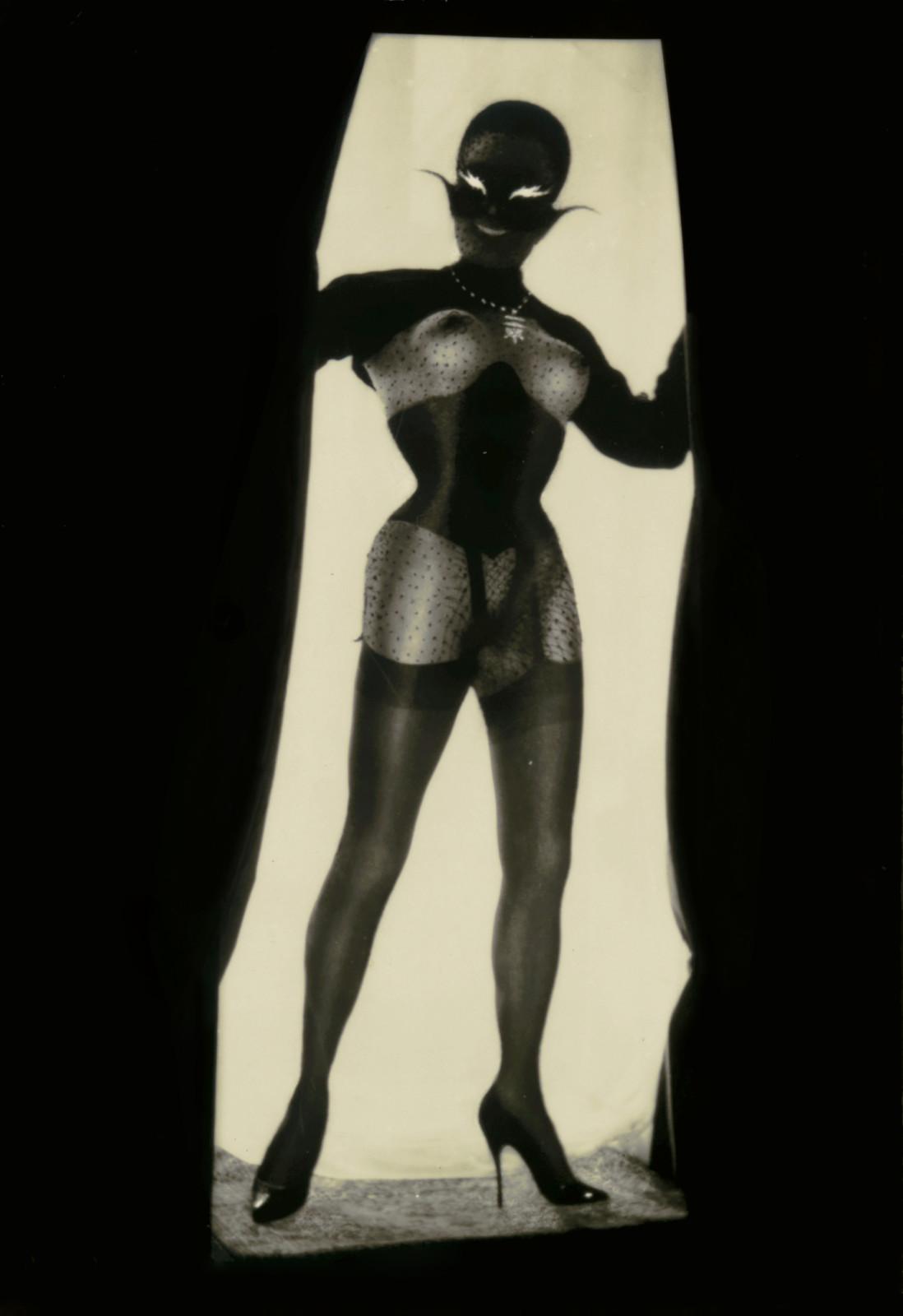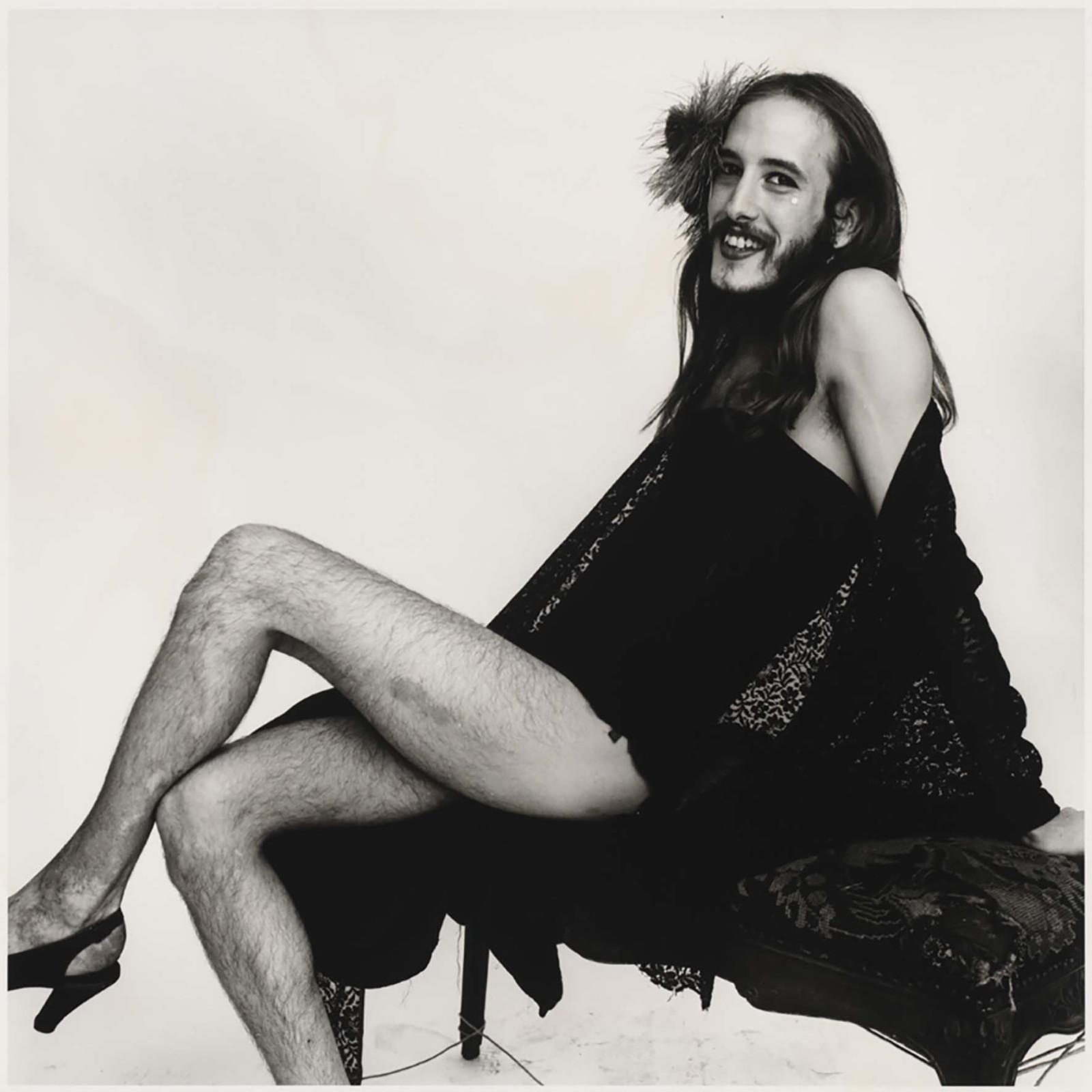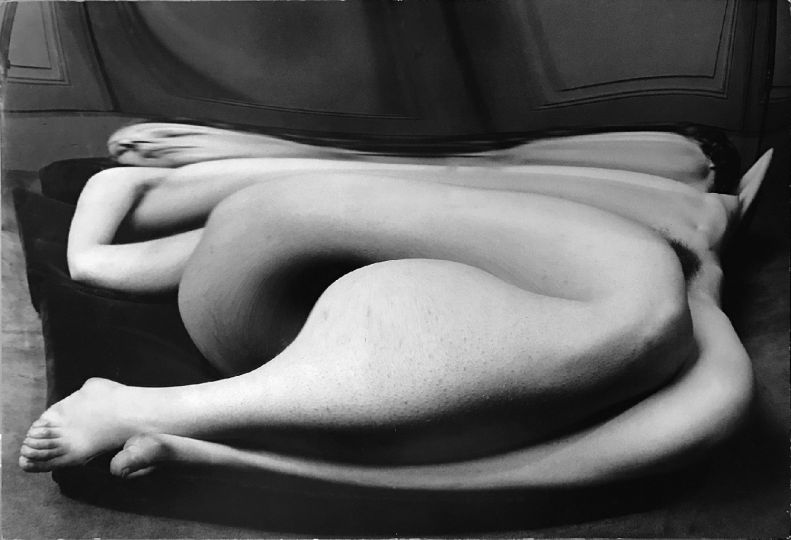
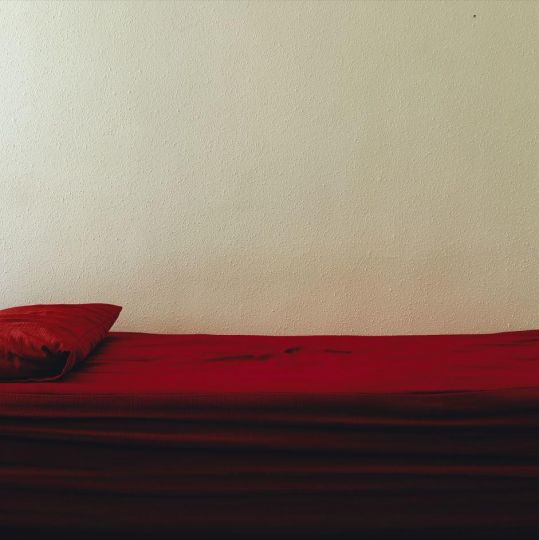





There comes a moment when collecting ceases to be an act of accumulation and becomes an act of self-representation. It’s a moment when the collector decides to take centre stage and become a living part of his collection. This is what happened to Ettore Molinario, the protagonist of a project that challenges the boundaries between art, identity, and performance. In other words, the collection as a mirror of a constantly changing soul and the collector as a performer who becomes an active protagonist who interprets and represents himself through his collection.
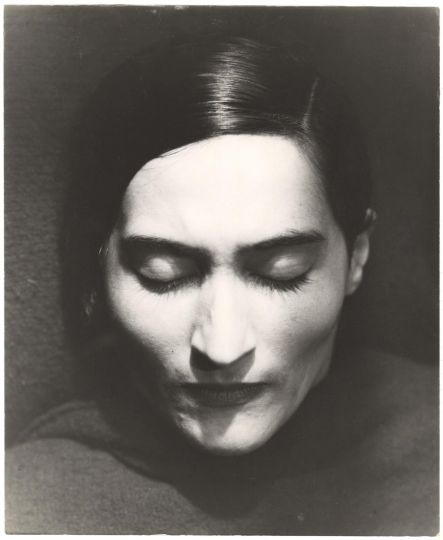
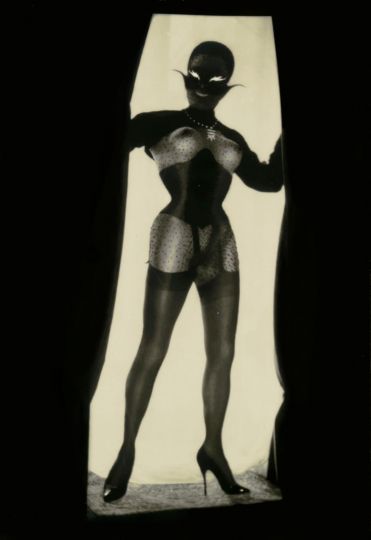
It is not a simple collection of photographs; it’s a “moving mosaic,” an emotional atlas that explores themes such as identity, ambiguity, contrasts and synergies between masculine and feminine, beauty and terror, light and darkness. It’s also a search for beauty as a means of salvation and self-discovery. Ettore is at the centre of this universe. He doesn’t just collect images; he interprets them, lives them, acts them out and becomes them.
At the age of 50, Ettore abandoned his high finance career to return to art, his lifelong passion. It was a drastic change. However, he approached it in a rational and empathetic way. He graduated with a degree in art, embarked on a Grand Tour of museums and works of art, and began creating a collection that was not just a selection of works, but an autobiography in images.
He explains that “great photographers also take pictures for me” and, in a sense, entrusts their images to interpret him, to bring parts of himself to the surface. For him, photography becomes a means of recomposing the fragments of his identity, a journey into the unconscious through images that “recompose and reconnect the rational and more visionary parts of my identity, which is both defined and fluid at the same time”.
For Ettore, the composition of the collection, image after image, is comparable to “a journey of exploration within one’s own identity, which also occurs, physically, through cave diving, that is a sort of parallel exploration in the dark that requires torches and lighting. This is followed by a discussion of accepting the hidden parts that emerge.
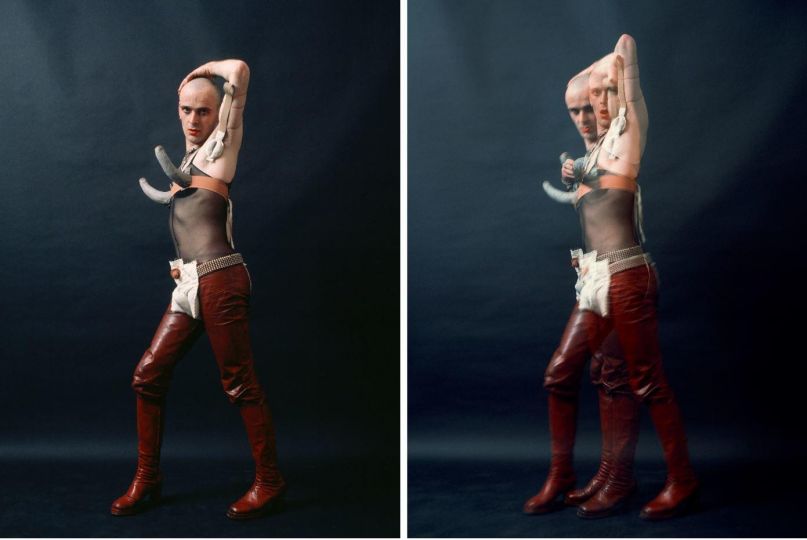
However, the real conceptual leap occurs when Ettore decided to “wear” the collection. This is the moment of representation. “Through the space of the Casa Museo Molinario Colombari, I represent the elements that I have found. There is a self-representation through the collection. I interpret the collection; in fact, I become a performer of my collection,” he says.
In other words, we encounter the original figure of the collector-performer, while identity becomes a stage. The collector becomes the protagonist of his collection, playing a game of roles. Through cross-dressing, performance, and self-representation, Ettore Molinario turns himself into a living work of art. This is a profound and conscious exploration of the femininity that coexists within him. He embodies both roles with great consistency, embracing the duality of the man and the woman, the prince and the beast, in a creative tension that seeks not resolution, but expression.
“After an initial phase, in which the therapeutic benefits of self-discovery were prevalent, we touch on other visual modalities through representation and performance. These refer to a flow of images, a continuum, as if it were cinema,” Ettore explains.
This representation is a work of art in itself, created by Ettore, the collector who becomes the protagonist. He offers “an interesting form of outing” because he is fully convinced of the value of self-exposure, which he shares with others.
It is an extremely mature performance, taking place in a setting that is particularly well-suited to being a stage. However, it also protects him because it is his place, his scene: a womb-like cave where the performance opens up to this second birth and the process of shedding and re-shedding his skin.
Disguise and changing identity are two of the most striking themes in the collection. Here we have a collector who presents himself as a general who has commanded the manoeuvres of the ever-changing reality of the collection, and now stands at the head of his army and allows it to converse, break down, and rebuild itself.
In short, we are faced with a living collection that comes to life. The quality of the Molinario collection also lies in its dual nature: a solid, coherent structure, rooted in precise cultural references, and a thematic fluidity that enables images to engage in dialogue, forming new and ever-changing connections. Cinema is among its essential components, with references to Stanley Kubrick and Beauty and the Beast by Jean Cocteau, for instance.
There is therefore a coherent and strong, yet also germinative, structure that goes hand in hand with the character of the collector and his continuous ability to grow, be reborn, increase and produce, almost suspended between neurosis and Fordian production.
As in a Warburgian atlas, the works respond to one another through submerged meanders, guided by a collective and personal unconsciousness. The therapeutic process of collecting is suspended between re-emerging from the abyss and perfectly learning its lesson, which becomes a reference point: the risk and vertigo of the abyss.
However, as we have seen, a new development has emerged that connects the collector-performer with his collection, considered as a form of performance.
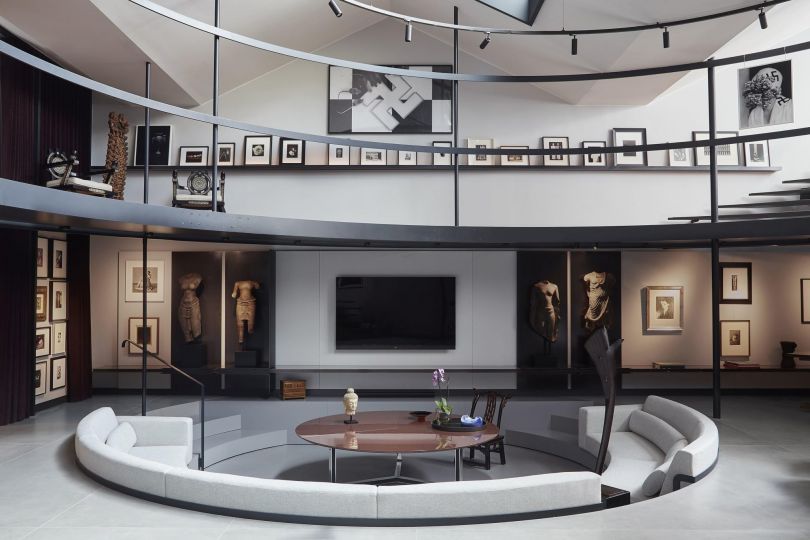
This project reaches its natural conclusion—or perhaps its ultimate expansion—in the Casa Museo. Conceived as a circular space, it is a “cave-womb” in which the collection comes to life and the collector becomes the protagonist. Here, the works are performed as well as exhibited. The ancient sculptures near the walls become sentinels that engage in dialogue with the collection and protect it. The photographs come to life, as in Cocteau’s Beauty and the Beast.
All collections are a projection of the collector’s subconscious. Here, however, the collector acts and interacts with his own collection, taking on different roles. “I also play with my life partner,” explains Ettore, who can dress up with confidence and ease, managing to embody a female figure, as his desire to dress up and change his appearance stems from a long time ago.
The theme of photography is identity. Ettore is absolutely certain of himself. He is a man who, on this occasion, presents himself as a woman, and he has a great ability to embody profound femininity. The moment of transformation is therefore a climax of tension; the transformation is always reversible, in line with his ever-changing collection. The game of seduction, which usually involves two people, is instead resolved within himself, an ego capable of containing everything.
In this endless quest, another pillar of the collection is the resolute pursuit of beauty. This beauty is not escapism, but a path to the self. Beauty as a necessity and salvation, and photography as a process and a mirror of a constantly evolving identity. A collection can be so much more than a series of images: it can be an act of courage, an exploration of the self and an ongoing performance.
More information