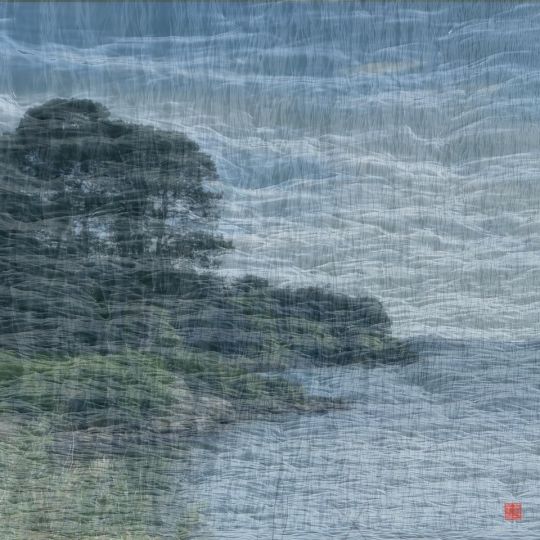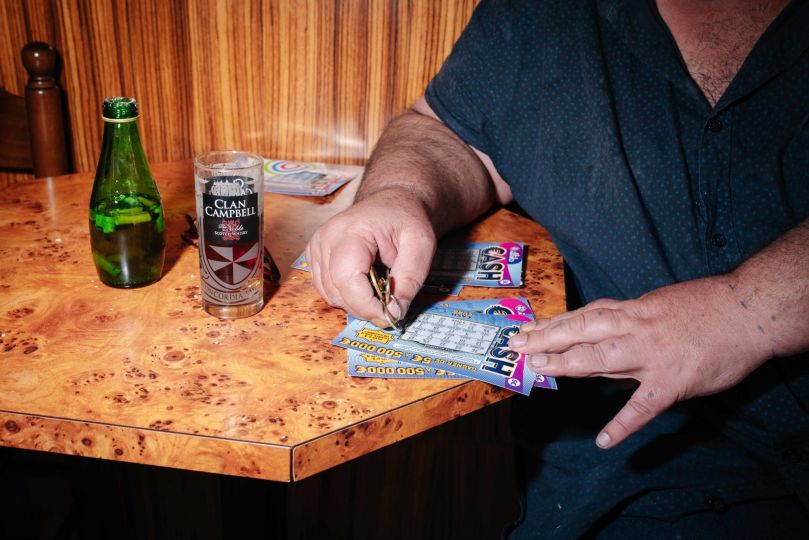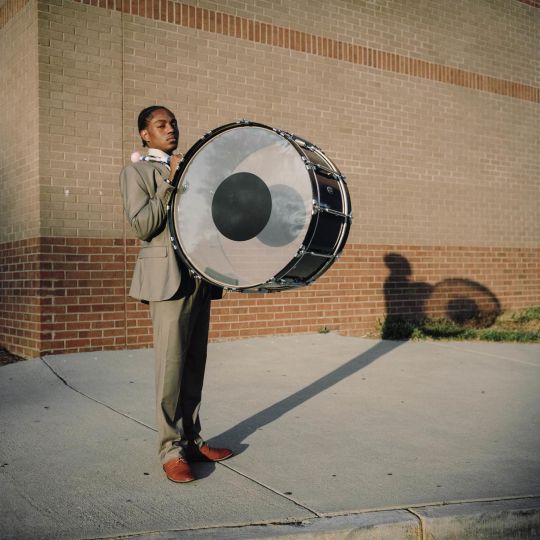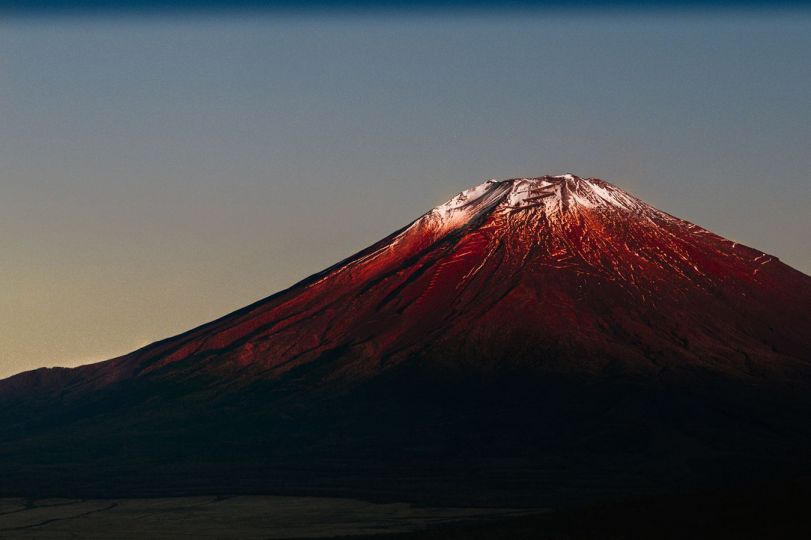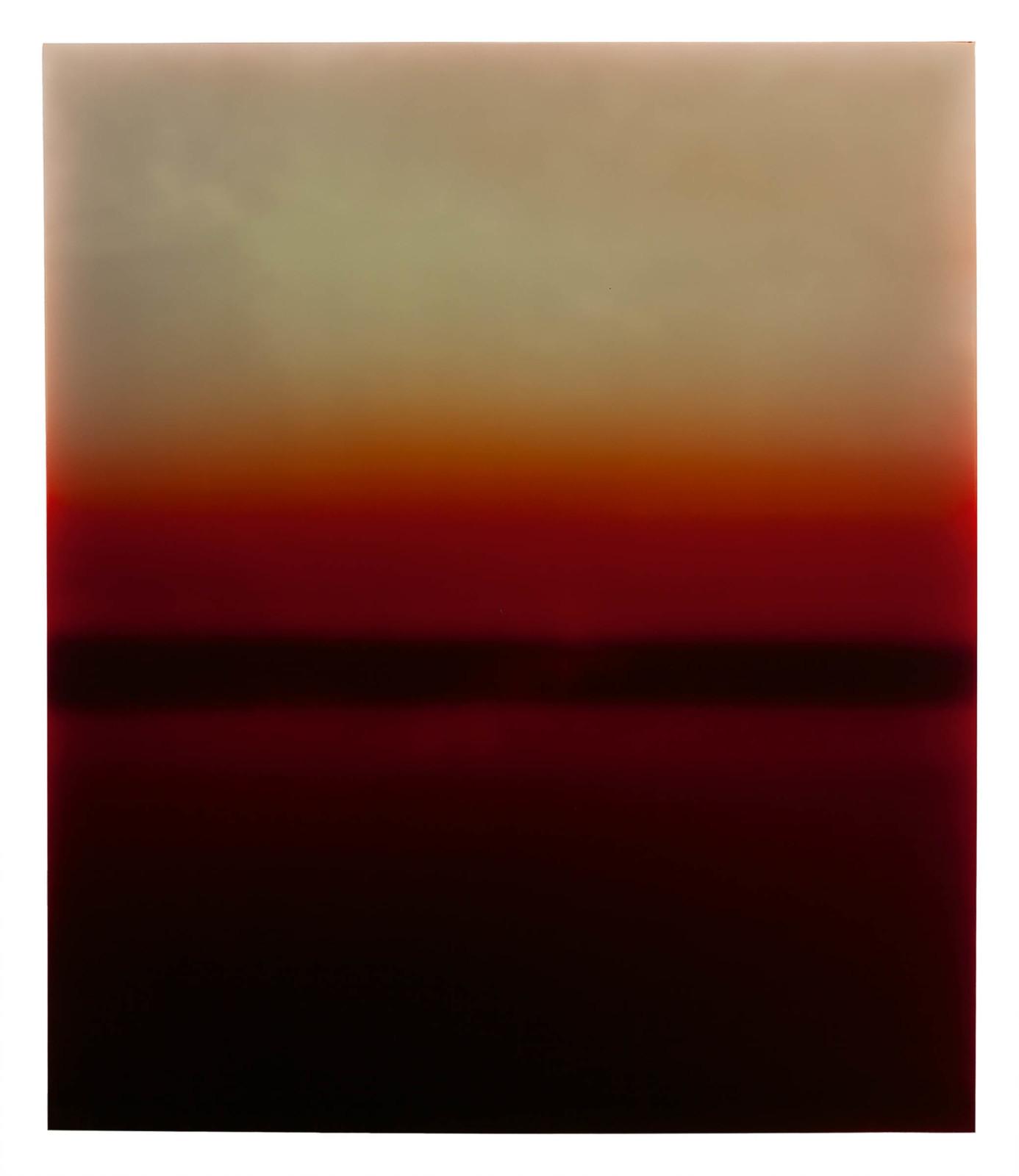


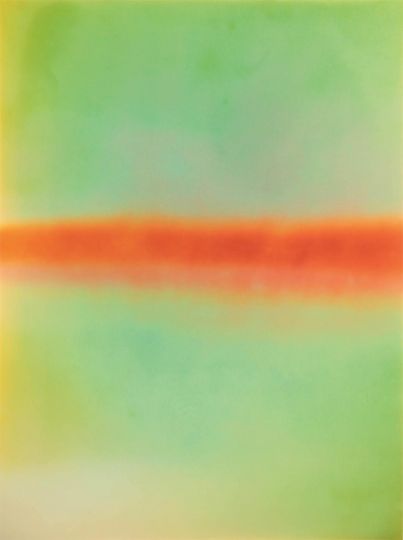

Until May 31, Laure Tiberghien presents Time Capsule in Toronto as part of the CONTACT Festival. Invited by curator Gaëlle Morel, she takes over the Davisville subway station with twenty vibrant images stemming from her research into camera-less photography. A conversation with the artist and the curator.
Gaëlle, you are an independent curator for the festival and also a curator at Toronto’s photography museum, The Image Centre. What role does photography play in the city?
Gaëlle Morel: Compared to Paris, for example, the city is relatively small and the entire artistic community knows each other. There are major institutions like The Image Centre, the Art Gallery of Ontario which has a photography department, and also the universities. There are also artist-run spaces, two of which are photography-oriented… So there is a genuine photographic community. The CONTACT festival exists since 1997, and its value lies in presenting exhibitions throughout the city. There are openings, parties—the entire city turns toward photography for the whole month of May. It acts as a catalyst that enables many exchanges.
What is your role in the festival?
Gaëlle Morel: The museum’s exhibitions are part of the festival. We collaborate and build partnerships, and regularly, the festival asks if I would like to participate in one way or another. They have a public installations program in partnership with the company that owns the advertising panels. There are huge billboards, bus shelters, etc. Two years ago, they asked me to propose a series for billboards in an industrial area. This year, they offered the Davisville subway station. It’s interesting because it’s an outdoor station, and above all, they have more than twenty panels we can use, which gives the project real presence.
What is your role as a curator?
Gaëlle Morel: With my background and experience, what is expected of me is to offer opportunities to photographers whose work I admire and consider talented. I particularly enjoy looking toward France, and I find it meaningful to highlight young artists who are already somewhat recognized but for whom an international opportunity can bring a new dimension—especially in a city so welcoming to photography and full of energy.
Artistically, I love this reclaiming of photography’s early practices and how artists transform them to propose new forms. When young artists engage with the history of photography through their practice, they also become historians of the medium. There are some who work that way—Yann Pocreau comes to mind—but they’re not the majority, so I pay close attention to them. Laure’s work is very important to me, both as a photography historian and curator, because she touches the very essence of the medium. There’s a kind of magic in her technical and visual experiments.
Laure Tiberghien: I really like that idea—the history of photography in my work, and even history in general. I see myself more as an artist than a photographer because it broadens the field of possibilities. My interests are very broad: I once did an exhibition on how long it takes sunlight to reach Earth—not exactly a photographic subject. I want to work with stone, minerals… I choose topics that interest me and turn them into pieces.
Do you think Laure’s work fits well in this subway station turned exhibition space?
Gaëlle Morel: I felt her works could create a disruption in this very chaotic and visually aggressive space that is a subway station—especially in North America, where advertising is everywhere. To offer something different, something that breaks away from figurative imagery, something that causes a reaction… I love that idea in public installations: if there’s no surprise or sense of disruption, something’s been missed.
Laure, how did you respond to the proposal?
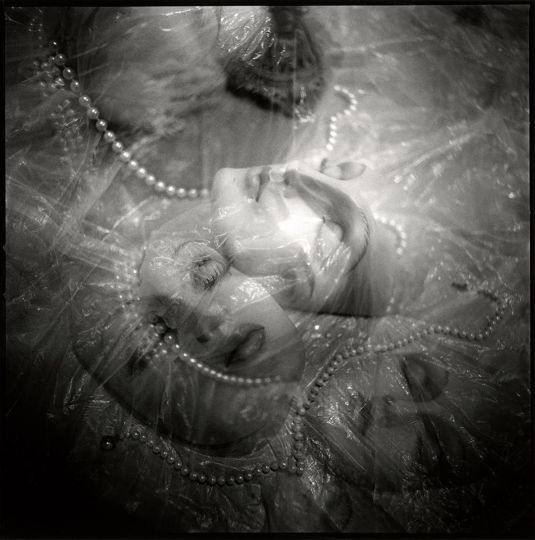
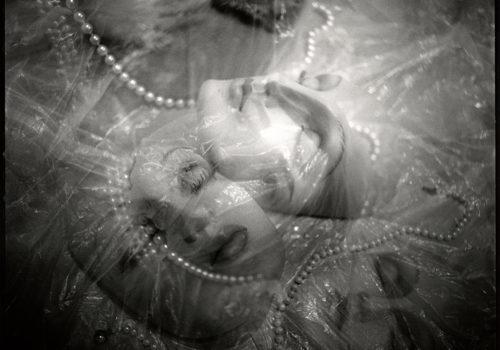
Laure Tiberghien: Gaëlle contacted me a few months ago with this project. I was immediately very enthusiastic. I’m not used to working abroad, so Toronto is a great opportunity to present around twenty images! Gaëlle quickly explained that it would involve reproductions. Normally, I create unique pieces—I have a very physical relationship with the work: it’s almost choreographic; I interact with a light source, with paper. The paper is very specific and important to me.
Gaëlle Morel: I thought you might refuse because of that!
Laure Tiberghien: On the contrary, that’s a dimension that really interests me. It’s different—we’re not looking at the original piece, but the idea of reproduction interests me, like in a book. That’s the beauty of it. The work on scale is also fascinating.
And regarding the location?
Laure Tiberghien: It’s not a typical context for me. I’ve never exhibited images that weren’t, strictly speaking, in an enclosed space. I agreed naturally because I think it’s still a defined place. On the street, it might have bothered me more. The subway is a space: you wait there—it can become a place for an exhibition.
How did the two of you work together?
Laure Tiberghien: It happened very naturally and smoothly: I made an initial selection, then you made a second one, and we exchanged ideas via video calls.
Gaëlle Morel: We refined it gradually. For Laure, some works were more important than others, and for me, it was important to show the full range of what she’s capable of.
Laure Tiberghien: Then, with the team, the graphic designers—everyone was very attentive. I work with highly oxidized papers, whose edges are often iridescent, sometimes very thin. For me, if you cut off those edges, there’s nothing left. So we chose a black background to preserve the entire image. The result works very well. For me, reproducing images is always a delicate matter. But once they’re printed, it becomes a unique experience: the more time passes, the more I enjoy seeing my work transformed according to the medium—giving the work another kind of life.
Gaëlle Morel: When a festival is entirely dedicated to one medium, it allows for real expertise to develop and for a true photographic project to emerge.
CONTACT Photography Festival
Toronto, Canada
May 1st to May 31, 2025
More information
Laure Thiberghien