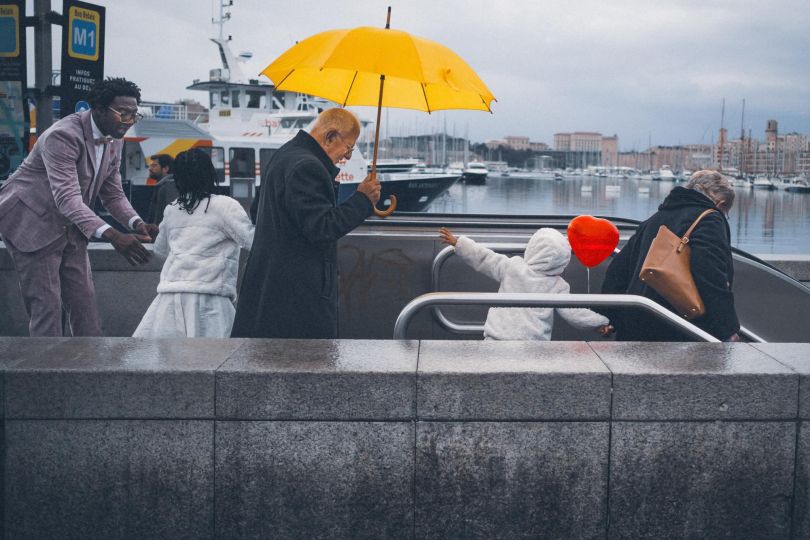
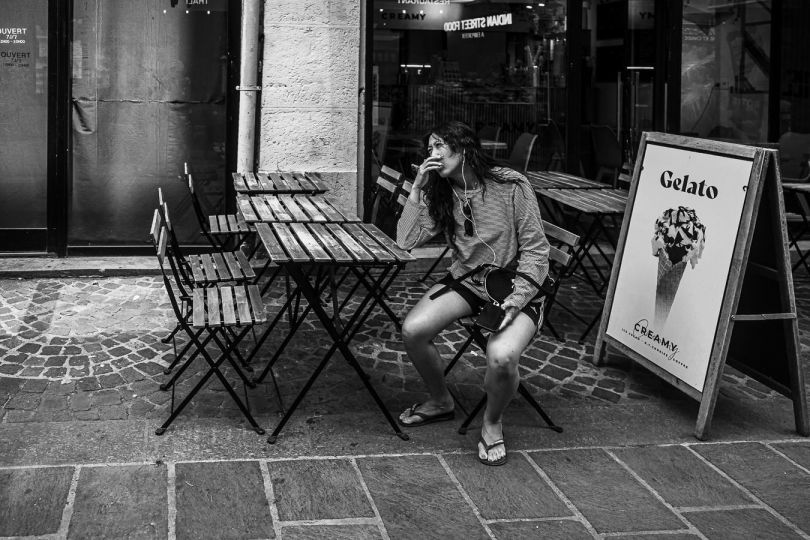
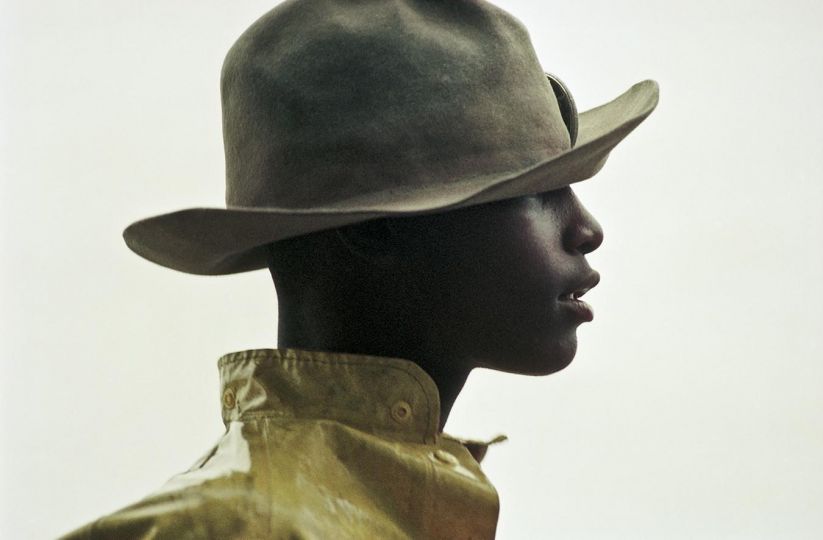
This new dialogue is a tribute to the lifeblood of adolescence, so vital, and therefore so often punished with violence, as shown in the work of Agnès Geoffray’s girls. Beside them, it is Bettina Rheims and her Modern Lovers who chastise us instead for having grown up and become adults. Together, Bettina and Agnès remind us that to be « modern », to be truly present in our own time, there is nothing to do but love, each in our own way.
Ettore Molinario
I was won over by the title, Modern Lovers, as if different eras, ancient and contemporary, could coexist within the sublime act of loving. Loving in modern times: a theme Bettina Rheims offered me in this way, with the cruel grace of her monumental photographs and the androgynous beings she portrayed between 1989 and 1990. Those were years of dazzling, booming economies, and at the same time of profound, threatening shifts, when the AIDS pandemic had darkened the joy of seduction and the freedom to meet, and when an army of adolescents began searching for an escape from it all. In their bodies, in their faces, in the provocative melancholy of their eyes, in that Mona Lisa smile – neither masculine nor feminine – a new balance emerged, a distance from the roles that until then had governed our adult game. Modern Lovers made me feel like a citizen of another world, of another era in which everything – despite my thirty-five years at the time – already felt defined, precise, irrevocable. I too wanted to step away from all of that. Like Charlie Chaplin in Modern Times, released in 1936 – another essential reflection on our century – I wanted a new path. I wanted to become a wanderer, and I wanted a little rascal by my side. What I wanted – and what I only understand today – was to feel that eternal energy, that eternal openness to tomorrow and all its uncertainties which youth, that green age still in formation, grants each of us at least once in a lifetime. I wanted it forever.
When, last summer at the Rencontres d’Arles, I came across Agnès Geoffray’s work, I felt – thirty-five years after the release of Modern Lovers – that same feeling, that same disorientation in front of those female bodies: so young, so constrained, and so rebellious. They were actresses, I knew that; it was a staging, and therefore at a different distance from the « truth » of Bettina Rheims. But the script Agnès had offered her performers was extraordinary: to go back in time – but is it really a return to the past? – and to expose that male power, that repressive, moralistic paternalism which, in France, from the late nineteenth century to 1951, had locked away underage girls who were already too disobedient for their time in the so-called Écoles de préservation pour jeunes filles. What punished them then was their desire for independence, for freedom, for sensuality, judged as vice and perversion. What redeems them today are Agnès and her girls, who « swerve », a neologism coined by the artist, stepping courageously off the straight path laid out by others: flipping themselves upside down, legs in the air, leaping from walls and fences, running away barefoot, as if even shoes might restrain the body’s natural euphoria. I look at these beings, all so modern; I look at myself, and I wish for their anger, their tenacity, perhaps even their age. I wish I could fall with them, lose my balance, and for a few meters walk on my hands too, bare against the asphalt.
Ettore Molinario
DISCOVER THE COLLECTION DIALOGUES
https://collezionemolinario.com/en/dialogues