Since founding the Auckland Festival of Photography in 2004, Julia Durkin has become the longest-serving female director of a festival in the Auckland region of Aotearoa New Zealand. Over the past two decades, she has been instrumental in shaping the festival into a vital platform for photography across Australasia, while steadily expanding its international reach. L’Œil de la Photographie had the pleasure of speaking with her about her journey and the ongoing evolution of the Auckland Festival of Photography.
Could you tell us about your background and how you became interested in photography ?
My father, who was a musician but had a passion for photography, gave me my first camera in my early twenties. I started taking pictures as a hobby. Like many people during the film era, I loved the ritual and the excitement of seeing your photographs after a delay, compared to today’s instant digital results. One could say was my personal introduction to photography… Professionally, my career has spanned over 30 years in the creative industries—working with different forms of visual storytelling through photography, television, film, and now through the Auckland Festival of Photography. I’ve worked with photographers’ stories, essays, and concepts. So I would say my career has been solidly built on photography.
You founded the festival in 2004, how did it all start ?
We—myself and a couple of friends and colleagues—started exploring the idea in 2003. We did some research about launching a photography festival in Auckland. The stakeholders we spoke to the Auckland Art Gallery, Auckland Museum, private dealer galleries, photography associations, media all loved the idea. They thought it was a great way to gather many minds and different types of photography. So we launched the first festival in 2004. It was small, a boutique event across the city, with ten exhibitions and events. It was all driven by passion and the desire to make something happen. We also launched our Open Access program where photographers, collectives or galleries could show work in the festival without us having to make a selection. At the time, I believe we were the only festival that allowed that kind of open participation without curating all of it ourselves. In the early years, our curatorial footprint was quite light, but we’ve strengthened it a lot since around 2013 when we opened the programme to the international.
There is a strong sense of community and openness.
The festival is for the general public, not just an arts audience. We have schools, students, a broad demographic. Like many arts audiences in Western democracies, ours is largely female and well-educated. But I’d say our community is more a set of communities. Each show attracts different people and different supporters. Across the four weeks of the festival, we log about 120,000 viewing experiences—from large outdoor installations to small talks with 12 people. This year, our theme is Sustain, which touches on archives and preserving visual heritage. We’ve launched a community commission with Auckland Libraries to help contemporize their photographic collections. These archives—like in most countries—are male-dominated, especially pre-1970s. So we’ve commissioned three female Pacific artists to reinterpret and respond to those collections. Auckland has the largest Pacific Islander community outside the islands, so it’s vital that they see themselves reflected in public archives.
The festival is divided between indoor and outdoor exhibitions. Could you tell us about the locations you use ?
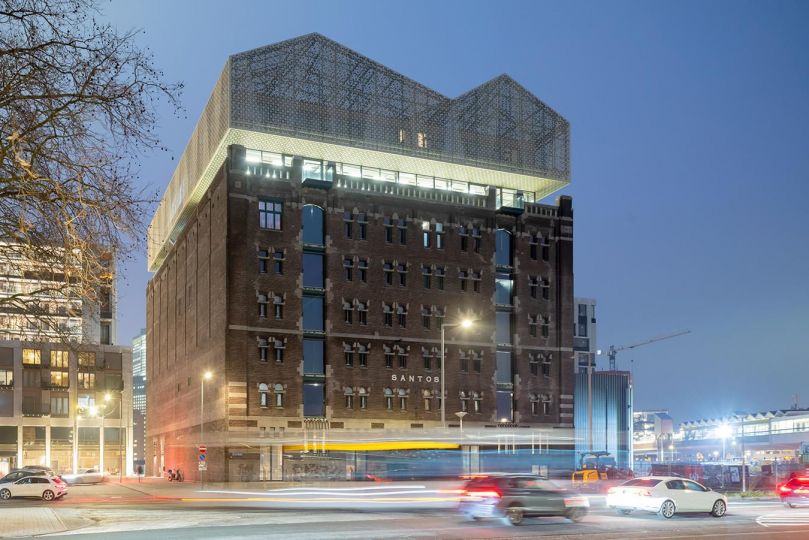
Since 2004, we’ve always embraced alternative exhibition spaces. We aim to bring photography into communities into places people naturally go, rather than confining it to galleries, which some may find intimidating. So we have a mixed model. While many exhibitions are outdoors and mostly in the city center along the waterfront, we also partner with external curators and venues. Some shows are held in historic houses buildings from the colonial era that are now public trust properties. This year, we have three shows in such venues. Our main venue is in a silo an old industrial site on reclaimed waterfront land, which has a great industrial feel.
What were the big highlights of these last 20 years ?
One came the very first year of the festival when we launched Auckland Photo Day in 2004. It was part of the first festival. The idea was to create a photographic version of “a day in the life of a city.” It’s common in media to write about that, but we did it through photography. Within the first five years, I’d say one highlight was in 2008 when we did the first outdoor photography projection onto buildings. It was called Manukau Lights or Night Lights in South Auckland. It was a one-off special event curated by Christopher Johnston, the former director of Auckland Art Gallery. Some of New Zealand’s top photographers were involved. It was something that hadn’t been done before. For me, of course, being rewarded by a New Years Honour in 2020 was humbling achievement and a privilege. More recently, I’d say our international program has been a solid backbone of the festival since about 2013. We’ve welcomed over 50 or 60 top-quality international experts, practitioners, and curators. For a small boutique festival, and given how far New Zealand is from everywhere else, that’s a great achievement.
This internationalisation of the program is also linked to the creation of Asia-Pacific PhotoForum in 2010, of which Auckland Festival of Photography is a founding member. Could you tell us about this network ?
It’s a network of like-minded photography festivals in the Asia Pacific region, covering Asia, India, Singapore, Australia and New Zealand. The goal was to combine knowledge and create a hub for sharing ideas and conversations around photography. That partnership has allowed Auckland Festival of Photography to network across the region—Singapore, Japan, China, India, Bangladesh. These connections have been essential for presenting relevant and contemporary international work each year, especially since New Zealand is very remote. I’ve probably visited more photography festivals than anyone else in New Zealand because of this network. We use these visits to research, reference, and scout new work. We’ve also invited directors from other festivals to curate for us. Jessica Lim from Cambodia curated in 2019, Gwen Lee in 2018, and Shahidul Alam from Bangladesh in 2017. They brought top-quality international artists to our festival. Partnering with international festivals in our region has been a strategic decision, and we focus more on Asia Pacific than Europe. We’re trying to create new conversations in photography that aren’t rooted in the traditional Western markets.
How do you position yourself vis-à–vis the rest of the photography world, which can be very Western-centered ?
We’re not trying to slavishly follow the pack. New Zealand’s geography gives us the chance to take more risks, to try unconventional approaches. We have something to prove, but we also have less to lose. Also, being a relatively young democracy by Western standards, there’s a kind of energy and motivation to make things work without the same rigid procedures you’d find in more established environments. It’s important for us to focus on the Global South and the Asia Pacific, where there are huge opportunities. For example, in 2012 we were invited to show Auckland Photo Day images at the Pingyao Festival in China—the largest photography festival there. That led to a seven-year partnership where we exhibited New Zealand photography in China. In 2016, thanks to that partnership, we brought the first Māori and Pacific photography exhibition to China. That was a major achievement for a small charity trust like ours. Some national galleries here with million-dollar budgets have never done that. So we’ve been quite unique in how we engage with Asia and build meaningful partnerships that reflect a distinct vision for our audience.
More information