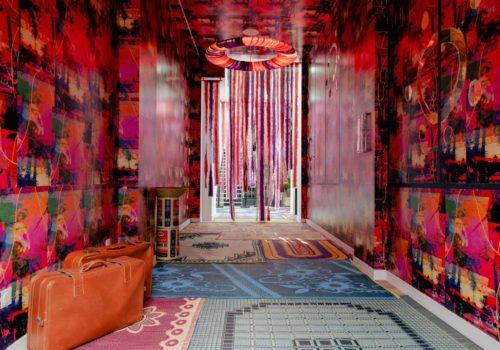
The MansA – Maison des Mondes Africains opened last October in the heart of Paris’s 10th arrondissement, in a former sewing workshop transformed into a multidisciplinary space redesigned by the young architects Meriem Chabani and Mélissa Dyminat. Its wide-ranging program places images, in the broadest sense, at the center. A conversation with Elisabeth Gomis, founder and director general, and Imane Lehérissier, curator.
MansA is a very young institution with an already diverse and assertive identity: a cultural institution dedicated to ‘the promotion, transmission and enhancement of contemporary African and Afro-diasporic cultures’. It is a place for exhibitions, reflection and critical thinking, as well as a place to gather or doze off. The MansA’s inaugural exhibition invited the Paris-based artist Roxane Mbanga, born in 1999. What did the opening of this new space represent for you last October?
Elisabeth Gomis : Opening a space is extraordinary. For a young institution like the MansA, it is both a celebration and a powerful act. It means opening wide opening the door: to exhibitions, to artists, to new circulations. At first, this building was not meant to host artistic practices. We had to imagine it differently, ask ourselves: how do we transform this space, how do we inhabit it otherwise?
Imane Lehérissier : Opening a space is also the opportunity to question institutional codes right away. How do you inaugurate a new institution without falling into habitual frameworks or existing models? With Roxane, the reflection began outside: the exhibition started before you even entered the building. Her work explores the intimate, social and political dimensions of the body. We extended this exploration by inscribing it within an institutional architecture still in the making. The installation was conceived and built on-site with a substantial number of artisans. It was also an opportunity for her to experiment with forms and scales she had never worked with before.
One immediately senses that the MansA is not a traditional museum. It is instead a living place, a multidisciplinary space. Was that your intention from the start?
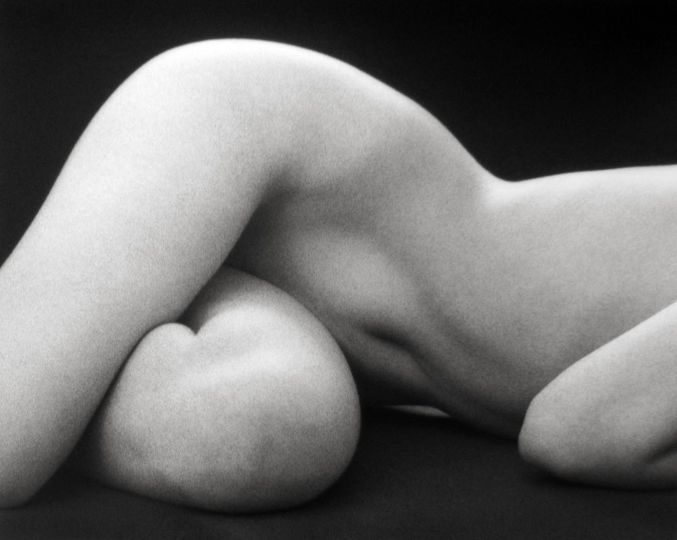
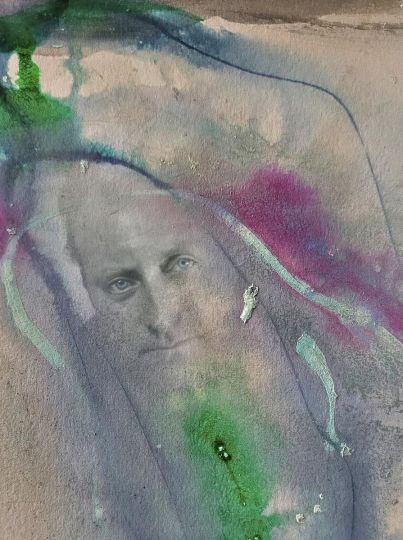
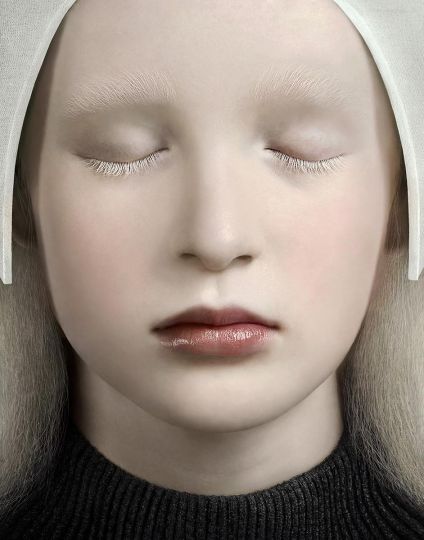
Elisabeth Gomis : Yes, and yet I realized that even I was still confined by very institutional reflexes. Imane helped me “break the lines,” to embrace the shift. I am lucky to attend openings and exhibitions in France and abroad, and without noticing it, I had absorbed these codes as a norm. With the MansA, I wanted flexibility, the possibility of moving between disciplines. But I had not yet understood that this flexibility could also be structural. Roxane made that possible through the inaugural exhibition. The exhibition used textile materials and emphasized the presence of bodies and faces. In a way, it reflected a multiplicity that could well be the MansA’s guiding principle.
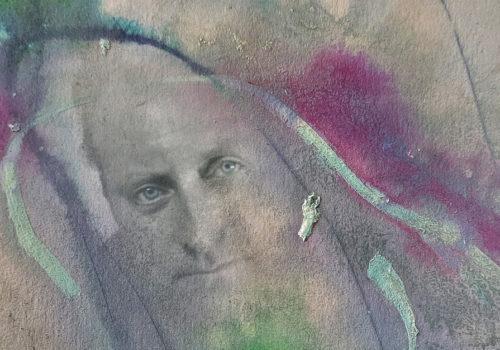
Imane Lehérissier : There was deep reflection around fabric, skins, what we wear and what we move through: spaces, inheritances, identities. The large cotton pieces, dyed using batik techniques, were very organic and produced through a physical and collective process. Female faces appeared on some surfaces. It was about taking up space, expanding, without conceding anything. To me, the exhibition spoke of the possibility of fully being oneself, without choosing a single identity.
Elisabeth Gomis : This idea of “being everything” lies at the heart of the MansA’s identity. For a long time, I felt pressured to define myself, to limit myself. I am not “African” in the conventional sense: I grew up in France, and I am shaped by my parents’ histories. Why should one choose only one trajectory? Why give up complexity? At some point, I decided to let go, to stop asking whether it was legitimate. I told myself: you have nothing to lose. That is when the project truly took shape.
The MansA places significant emphasis on archives, especially photographic ones. Why this choice?
Elisabeth Gomis : Archives are central to the project because there is a history of dispossession, but also one of reclaiming, that the MansA seeks to carry forward. What we are doing today is also building an archive for tomorrow. I want a young person, in ten or twenty years, to be able to access this memory without having to beg institutions to consult a magazine or a document. We work with major organizations like the BnF, but access can be complicated. The idea is to keep a record of what we produce and make it accessible.
The hybrid nature of the space also comes through in the programming: photography, video, text, painting…
Imane Lehérissier : Absolutely. There is an entire generation of artists who do not fit into traditional administrative or disciplinary categories. Roxane’s exhibition included photography, video, text, printed images. We want to place all forms on equal footing. To welcome artists without hierarchizing mediums. The next exhibitions will continue in this direction, notably with more audiovisual projects.
You also support artists who are often recognized abroad but little shown in France.
Imane Lehérissier : Many artists move between the United States, the United Kingdom and other countries, yet struggle to find spaces in France. Our responsibility is to give them a place of recognition here, based on the aesthetic and critical value of their work—not solely because of a geographic or cultural affiliation.
Elisabeth Gomis: The mechanisms of legitimation are still very narrow. The French cultural landscape often works with the same names, the same references. At the MansA, I wanted to take a step aside, favor voices that may be less identified but are just as essential. It’s a posture I inherited from journalism: breathing in the margins.
How does this project fit within today’s political and social context?
Elisabeth Gomis : The MansA emerges at a moment of strong tensions, but also great cultural richness. Paris is a deeply multicultural city, despite discourses of closure. We are not trying to reconcile anyone—that is not our role. We want to create a space for sharing, where each person leaves with something different. What moved me most during the opening was seeing my mother in the space. She had never imagined that a cultural institution could be a place for her. That day, she felt legitimate, at home. This is also why the MansA exists.
Plus d’informations