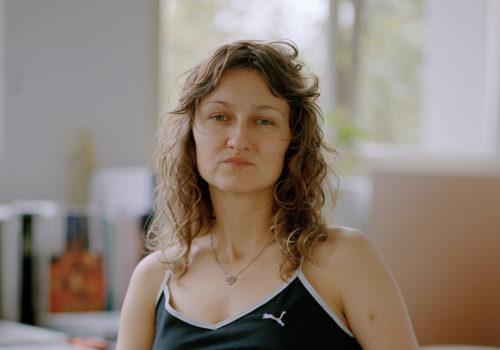
I met Victoria Pidust in Berlin and was immediately intrigued by the way she frames the everyday. Recently, I visited her show to sit down in person and talk through the ideas and decisions behind her photographs. Enjoy the read!
Nadine Dinter : Your current show is titled The sun is not yellow, it’s chicken. What’s behind this unusual title – where does it come from, and what does it mean to you?
Victoria Pidust (VP) : The title comes from Bob Dylan’s song Tombstone Blues. It came up during a funny conversation while installing a previous show with Lina Stallmann and Daniel Spivakov, and I immediately liked it. For me, the feeling it evokes is more important than a literal meaning, but I think it fits well with how the world is today. Reality is not as simple as it seems, and language doesn’t always work “correctly.” Similarly, what you see in an image is not always exactly what it is. A photograph might appear truthful, but the objects themselves can be different from how a viewer perceives them.
Like many other photographers, you’ve largely swapped a traditional camera for an iPhone. What pushed you to make that shift? What does the phone let you do that other cameras don’t?
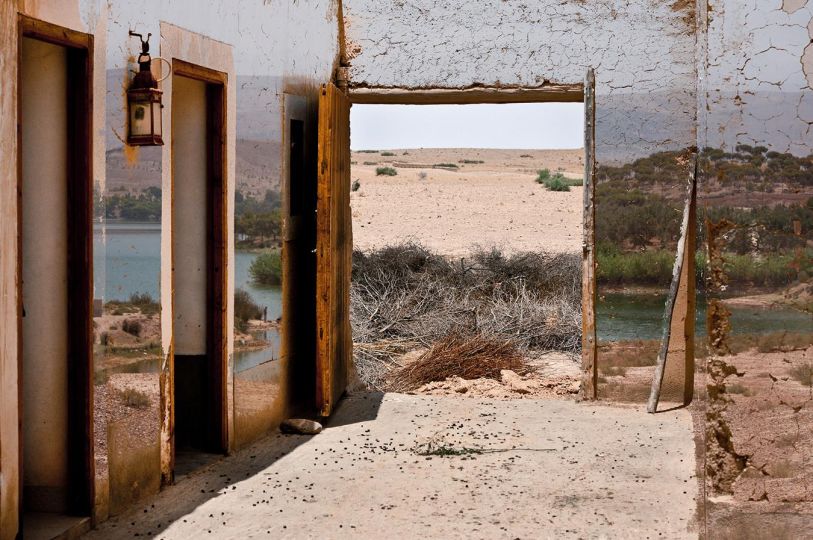
VP : I wanted my work to be different from others. It’s cool to work with a camera that shows reality in a different way. The iPhone’s zoom and built-in AI give its images a painterly feel, which I find very exciting compared to other digital cameras. I love that it allows me to zoom, be invisible, and react quickly to what is happening around me – and that it’s with me all the time. With this series, I wanted to use a classic documentary approach to capture daily life. It made me curious and excited to see what I could create with a camera that belongs to so many people in the world.
In your current exhibition at Stallmann Galerie, Berlin, you present a focused selection of works, featuring everyday objects – almost like objets trouvés. How do your motifs find you ?
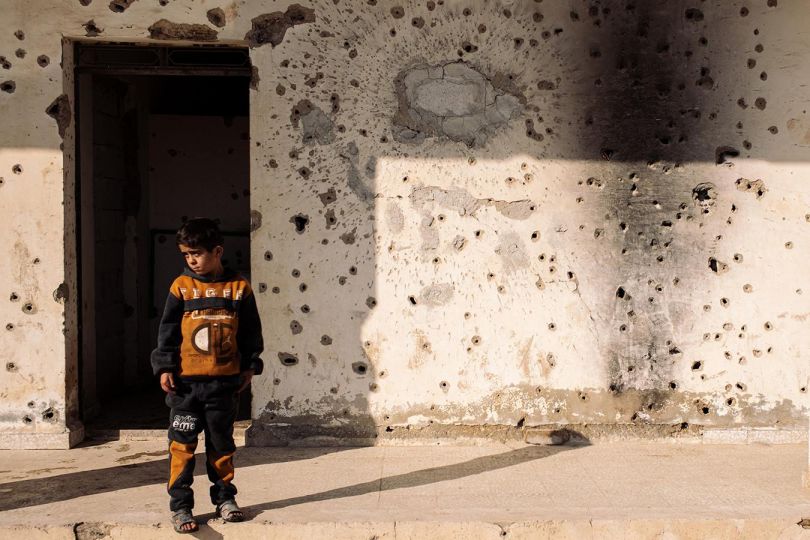
VP : Absolutely. Many of the objects and moments I photograph are ordinary, everyday things – like objects trouvés. I don’t stage them; I see something in daily life and am drawn to the way it looks or the feeling it evokes. Beauty is everywhere, even in moments of difficulty or violence, like the ongoing war in my home country, Ukraine. There, too, I was able to find overlooked objects and discover strong perspectives on them. I think it’s simply my way to be present. I love to take pictures; it’s a way to exist for me.
You’re firmly rooted in contemporary photography, but your work still engages with more “classic” photographic strategies. Who do you look to as aesthetic or conceptual role models?
VP : Yes. In this series, I approach reality in a very classical way – through framing and composition, but with a smartphone. This produces different visual quality: a distorted, pixelated digital reality that is the opposite of the high-resolution clarity of other digital cameras. The images become painterly. These moments sometimes look almost unreal, and I still cannot fully define them as photography; they seem to be trying to be something else.
I do have role models. Among my favorites are Thomas Ruff, Wolfgang Tillmans, Boris Mikhailov, Thomas Demand, Cindy Sherman, Katja Novitskova, and Hito Steyerl, but I’m also strongly influenced by painting.
When did you begin this series, and is this an ongoing project?
VP : Yes, it is ongoing series. I started it with my first iPhone in 2017, and it’s still ongoing. As the camera and its zoom function improve, the images change. I sometimes print them small for exhibitions (almost the size of the screen), or very large (up to three meters high) to experience a very new quality of the image.
In one image, we see a miniature dinosaur. What’s the story behind that one?
VP : There isn’t a big story behind it, it was a small toy dinosaur on the roof of a car in my yard. I saw it and took the photograph. I rarely construct or stage scenes – these moments already exist around me.
Your work has been shown internationally – Berlin, Vienna, Venice, Brussels, Paris, Munich, Kyiv, Bonn, and London. Which city has been the most inspiring to you so far?
VP : As a photographer, I love to travel, and many places inspire me in different ways. Paris is great, it has a special energy, beautiful colors, and unexpected visuals everywhere. Berlin still inspires me as well, with its grayness and everyday life. Venice has an incredible quality of light and color. I love to be in places with movement – cities where life and culture unfold in many layers at once. I’d love to photograph in New York, London, or Tokyo one day, and also to travel through Europe.
Have you noticed any patterns – certain objects, environments, cities, or landscapes that consistently pull you in?
VP : Yes, I think I’m slowly starting to notice certain patterns, but I also love photographing without fully understanding what I’m seeing in the moment. It can be nature or destroyed objects, food, a dog, or dirt on the floor. Sometimes the images become very abstract and you can’t even tell what they depict, and sometimes I forget what the original subject was.
Finding patterns becomes another layer of the work – one that happens later, while sorting the images, grouping them by themes, or tracing connections that only reveal themselves in retrospect. I really like a sentence about my work from Lina Stallmann’s exhibition text, which describes it very well: They are photographs that don’t try to be photographs.
What’s next for you?
VP : I’m currently working on a book titled Iphone Zooms with Studio Yukiko in Berlin, and I’m looking for funding to publish it. I also have a couple of residencies in planning.
Interview by Nadine Dinter
For more information, check out the artist’s IG account @victoriapidust
Her show The sun is not yellow, it’s chicken is on view at Stallmann Galerie, Berlin, through 20 February 2026.
Link to the show: https://www.stallmann.club/the-sun-is-not-yellow
IG: @stallmann.galleries