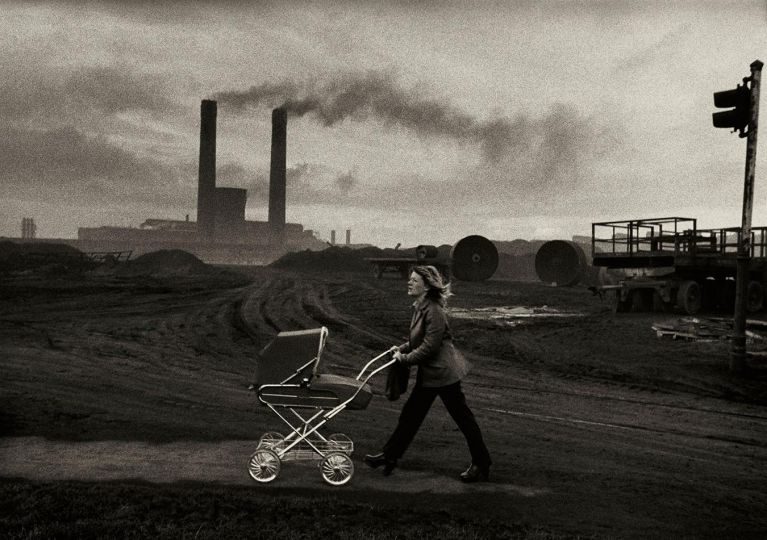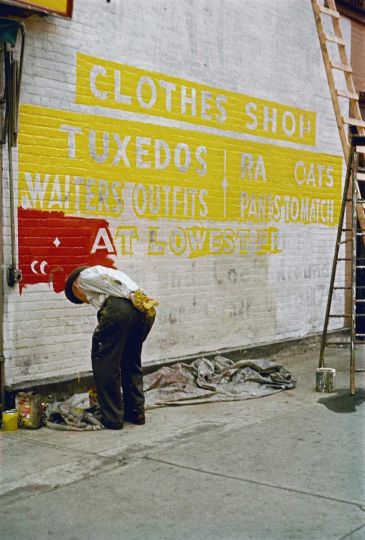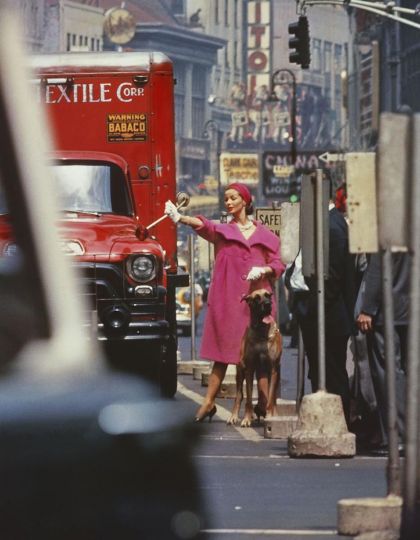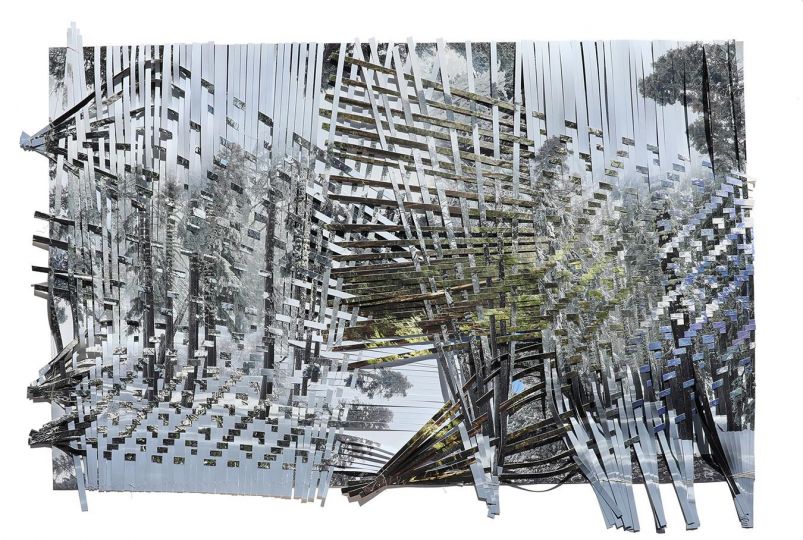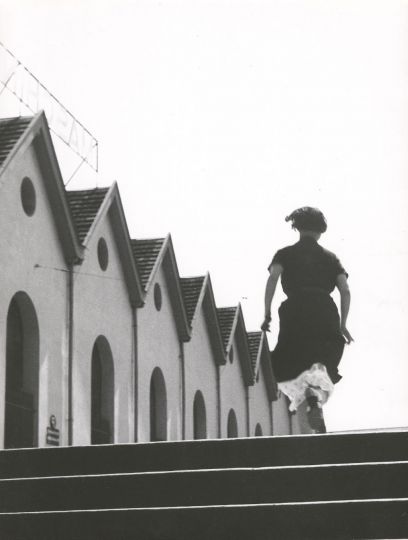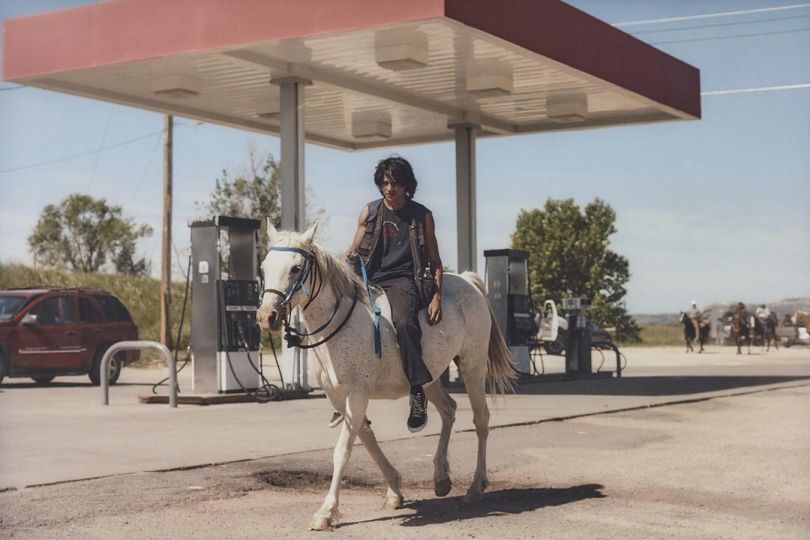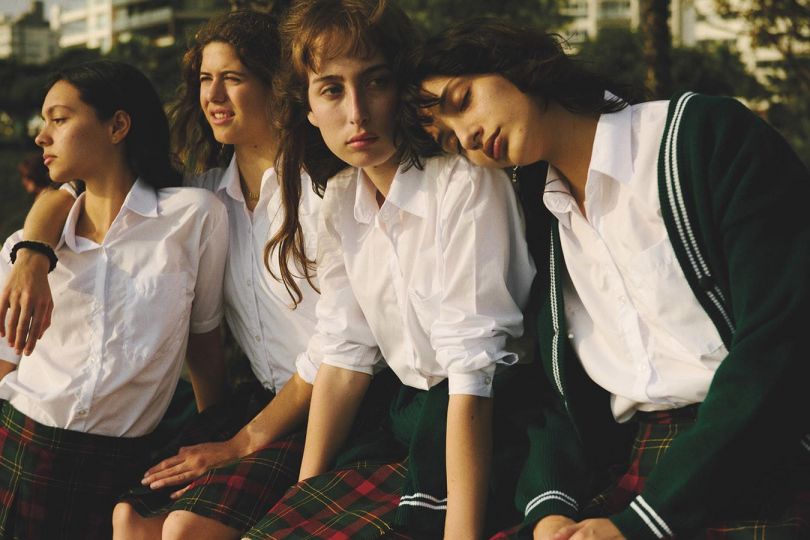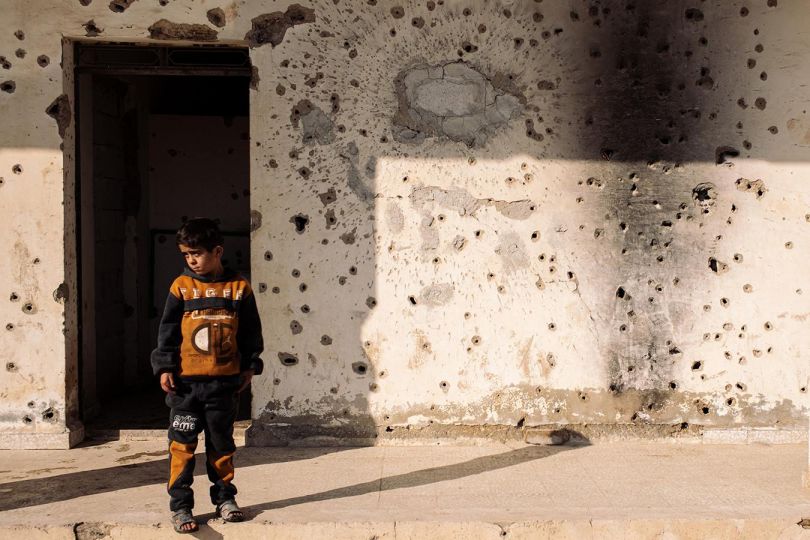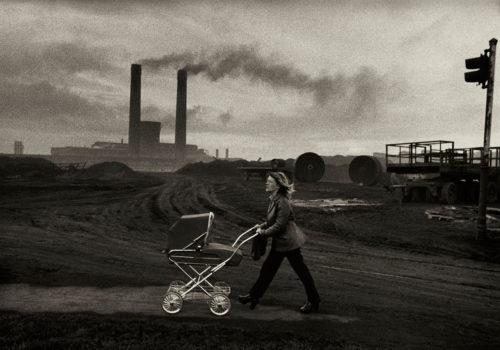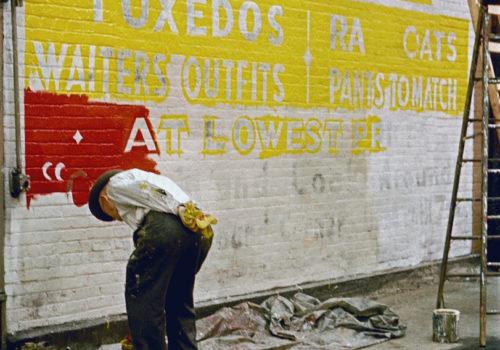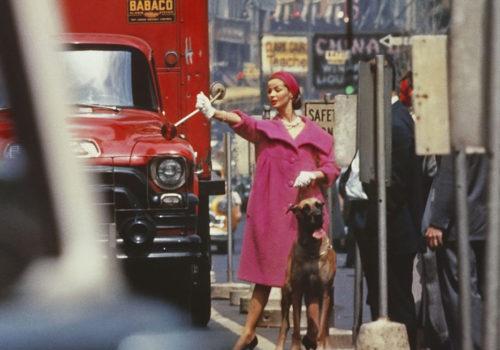
Les Douches la Galerie presents Robert Frank – Mabou / John Cohen – Pull My Daisy, an exhibition bringing together two bodies of work centered on Robert Frank, corresponding to two very different moments in his life and work.
This exhibition embodies a story of friendship, and beyond Robert Frank’s own circle of friends, it speaks about creative process.
In the spring of 1958, Frank’s book of photographs from his Guggenheim-supported travels across America was sent to the printer for release in the fall by Delpire as Les Américains. In that summer between, he engaged in three creative projects. He rode New York City buses alone while photographing out the window; he spent all night at Coney Island on the 4th of July, again alone, photographing people mostly sleeping on the beach; and he experimented filming his family and a group of friends at a beach on Cape Cod with a 16mm movie camera. By the end of the summer he found that the solitary activity of making still photographs no longer satisfied his creative urge. He felt that photographs on their own, even in groups or sequences, were too mute, they needed words, sound and movement.
During that period, Frank lived in the East Village in a neighborhood of writers, musicians and artists of all sorts. With his friends and neighbors, Alfred Leslie, Allen Ginsberg and Jack Kerouac among many others, they combined talents to make the film Pull My Daisy based on a play by Kerouac. Frank’s friend and neighbor, John Cohen, was making a name for himself as a leading figure in the American Folk Music Revival through his gathering and dissemination of field recordings of older musicians and especially with his band The New Lost City Ramblers. In addition to being a musician, ethno-musicologist and filmmaker, Cohen was also knowledgeable about Peruvian textiles and an accomplished photographer. Frank made photographs for the Ramblers’ record album covers so it was natural for him to ask Cohen to be stills photographer on the production of Pull My Daisy.
Cohen was an insider. More than simple movie stills, these are fresh and intimate portrayals of collaborators such as Gregory Corso, Peter Orlovsky and Larry Rivers in addition to Leslie, Ginsberg and Kerouac. He photographed French actress Delphine Seyrig here in her first movie appearance. Also, in one of the photos are Frank’s then wife Mary and their son Pablo. These images were all captured during the making of this improvisational landmark of what came to be known as the New American Cinema.
Pull My Daisy features many of the characteristics of this film movement such as real-life settings, hand-held camera, non-professional actors and independent financing. Included here is a record of their innovative way to promote the movie. They hired a horse-buggy from Central Park, attached handmade signs and drove around the city handing out daisies to people on the street.
Unlike The Americans which was a commercial and critical failure when it appeared, Pull My Daisy received a significant amount of praise, although no real commercial success either. But it gave Frank sufficient encouragement and impetus to continue in his aspirations to make films, so for the next decade he devoted his creative energy exclusively to filmmaking.
Frank went through a major life change beginning in 1969 when he left his wife Mary. The following year, with artist June Leaf, he bought a house and waterfront property on the north coast of Cape Breton, Nova Scotia at Mabou. For the rest of their lives, Frank and Leaf spent several months a year in various seasons at their remote house.
Leaf found it easy to work in the isolation afforded by their new setting while Frank yearned for the collaborative effort of filmmaking which he found difficult to engage in from Mabou. Having no darkroom there, he acquired a Polaroid Positive-Negative camera. By 1976 he was working with the small instant prints from the camera that simultaneously provided negatives that he could print from later in New York. Frank returned to the solitary activity of making photographs but, unlike before, he added words by writing on the surface, including them in the image, or scratching into the negative. He combined two or more images as well, such as enlarging filmstrips, a practice he had experimented with in the sixties as an outgrowth of his filmmaking.
Frank worked out image ideas in Mabou but really only completed them after working in the darkroom with his, by then, long-time printer and friend Sid Kaplan. Frank would arrive with negatives and sometimes a drawing to show Kaplan how to combine negatives the way he wanted them on a sheet of photographic paper. He would suggest changes and sometimes work on the prints, the negatives, or both, later at his New York home on Bleecker Street, returning to the darkroom to advance with the printing in collaboration with Kaplan.
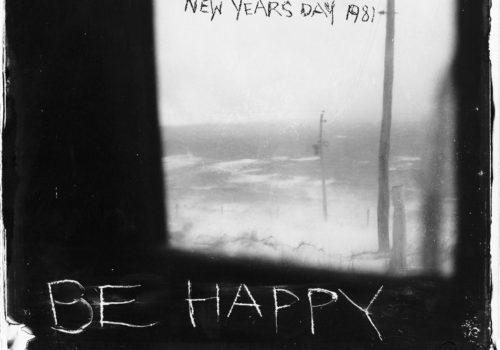
The introspective nature of the photographs is reflective of more than the isolation of Mabou, especially in winter, but rather of the maturing artist’s psyche — his musing on time and mortality. Frank’s daughter died in a plane crash, aged 20 in 1974 and his son Pablo had developed mental illness and died in 1994. He rearranged items found on his property such as rocks and wood to form monuments to his children which sometimes appear in his later photographs. Here, despite the bleak wintry vision seen out the window, there is the reminder, ’Be Happy’.
Frank first began working with master printer and photographer Kaplan in 1968. Over the years, Frank expressed his gratitude and paid the highest of compliments to his friend by giving him signed and personally dedicated prints. In the late 1990s, Cohen had prints made by Kaplan as well but the photographs here are vintage prints directly from the estate of the artist.
This exhibition is distinguished, not only by the rarity and quality of vintage prints of impeccable provenance, nor by the personal and poignant dedications, but by the story of friendship that it tells..
Stuart ALEXANDER
Independent curator
Photography historian
Robert Frank – Mabou / John Cohen – Pull My Daisy
September 4 to October 31, 2026
Les Douches la Galerie
54, rue Chapon
75003 Paris
09 61 48 92 34
www.lesdoucheslagalerie.com