



For its fourteenth edition, the Hamdan International Photography Award celebrates photographers from around the world with a central theme: Power, alongside five major categories.
From the image selection process to the impact of the award on their artistic journey, we spoke with Rahul Sachdev, Karim Iliya, and Norris Niman, three winners from previous years.
Can you tell us about the image, series, or video you submitted for the prize?
Rahul Sachdev: I chose a photograph of a solitary white rhinoceros standing amidst the golden hues of the morning in a yellow-barked acacia forest. The image captures the majestic presence of the rhino, highlighting both its strength and its vulnerability.
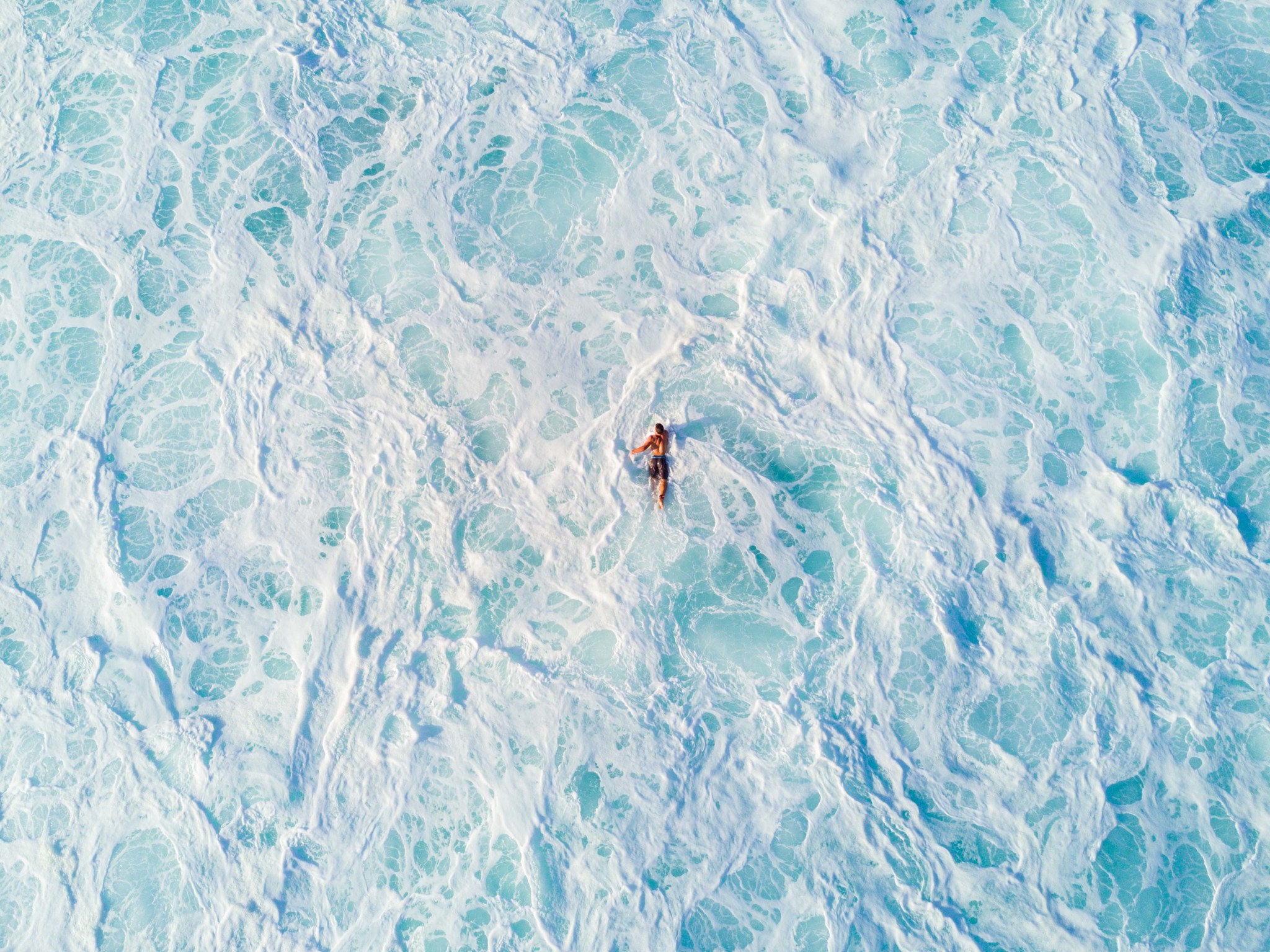
Karim Iliya: This is the second time I’ve won the HIPA contest. For this most recent award, I submitted a photo of a surfer paddling through foamy, white surf. I took this photo with a drone to offer a unique perspective—one that a bird might have when flying over a wave.
Norris Niman: The video that won the prize is a documentary of a two-week sailing expedition along the remote east coast of Greenland: a 2,600-kilometer stretch home to only 3,500 inhabitants. It’s protected by an almost impenetrable wall of ice blocks. Everything seems to say: this is not a place for humans. But we survived to tell the story as best we could.
Why did you choose this particular work for your submission?
Rahul Sachdev: This image resonated deeply with me, as it captures the essence of the wild and the urgency of its preservation. I felt this photo, with its rich colors and emotional composition, aligned perfectly with HIPA’s celebration of powerful visual storytelling.
Karim Iliya: I submitted it in the Sports category. Usually, when people think of sports, they imagine powerful movements and action. It was a bit risky to submit something unconventional, but I wanted to show a different kind of image—one that might catch the judges’ attention.
Norris Niman: That vastness, the sense of isolation, the icebergs, the songs of whales, the northern lights, the human warmth of those who live there—it was the most unique story I had to tell.
What impact has this prize had on your career? On your visibility as a photographer?
Rahul Sachdev: Winning the HIPA Prize was transformative. It raised my profile in the international photography community and led to many collaborative opportunities. This recognition also strengthened my credibility, allowing me to take part in meaningful projects and discussions around wildlife conservation and photography.
Karim Iliya: For me, the impact on visibility is hard to measure, but financially, the prize itself is very generous. It allowed me to pursue other projects, travel to photograph new things around the world, and continue documenting animals and nature on our planet.
Norris Niman: HIPA is still a young prize but deserves more recognition. I hope that comes. For me, winning this award was a fantastic acknowledgment after more than a decade of hard work, often without much reward for the effort, passion, sweat, time, and money invested.
Looking back, what do you take away from this experience?
Karim Iliya: Having to review your work and try to narrow it down to just one photo is an interesting process. I think it’s important to learn how to distill your work in a way that captures attention and tells a story in a very brief moment. The experience of being invited to meet other laureates and attend the award ceremony was also thrilling—talking with other winners, people from all over the world with beautiful photographic styles.
Rahul Sachdev: This experience reinforced my belief in the power of photography as a means of inspiration and advocacy. It emphasized the importance of authenticity, patience, and passion in capturing moments that resonate. It also highlighted the role of platforms like HIPA in drawing global attention to stories that matter.
What advice would you give to photographers considering submitting to this new edition of HIPA?
Karim Iliya: Try to take a step back and look at your work as a whole. Identify the most unique and interesting images—ones that reflect your passion and tell a story. Go through your archives with fresh eyes, searching for images that show something people don’t usually see.
Rahul Sachdev: Remember that it’s not just about technical excellence, but also about the ability to tell a moving story that can inspire and touch others. “Impactful Visual Storytelling” are the three words I would emphasize.
Norris Niman: Go for it! The worst that can happen is you don’t win. And you probably won’t win. But if you do, it’s pretty incredible. Very often, it’s just a matter of luck. You’ve probably judged your own work for far too long. Let someone else do it for a change.
More information