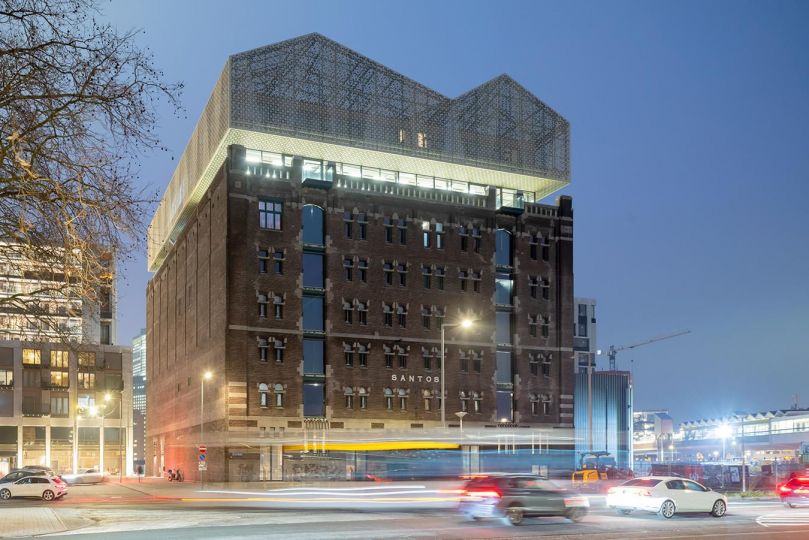
While it marks the beginning of winter in Aotearoa (the Māori name for New Zealand), the month of June in Auckland is synonymous with a celebration of the photographic medium. Since 2004, the Auckland Festival of Photography has taken over the streets of the city and some of its most unique buildings: a disused silo offering a brutalist atmosphere, the John Kinder House with its neo-Gothic architecture evoking the country’s colonial era, the waterfront promenade, and the stunning Auckland Art Gallery. Our correspondent Zoé Isle de Beauchaine shares the final highlights of this 22nd edition.
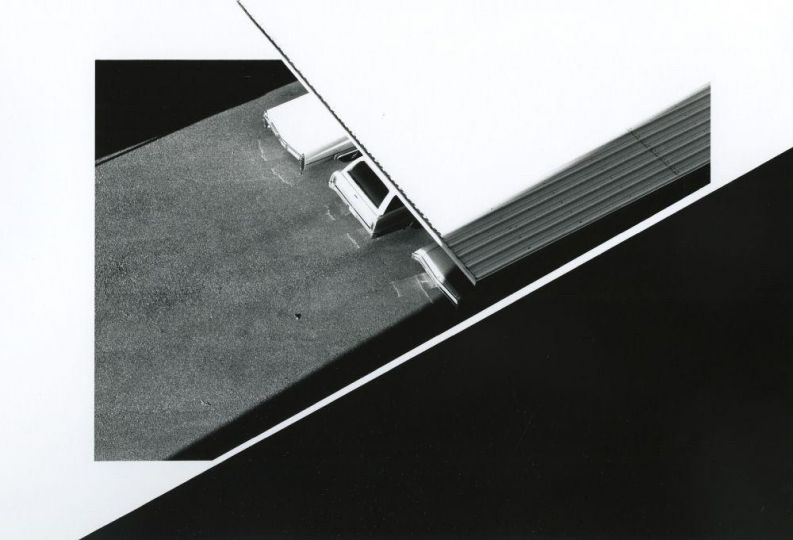
The relationship with territory can be approached more directly, as shown by Theo Macdonald at Strand Arcade, who explores the notion of New Zealand’s political identity through the nuclear issue. This project was partly carried out during a residency in Japan as part of the Kōwhai Residency, a partnership between the Auckland Festival of Photography and the T3 Photo Festival Tokyo. He drew inspiration from fūkeiron, a theoretical and photographic movement that emerged in Japan in the 1960s and 1970s. It advocated focusing the lens on landscapes—urban, industrial, rural, etc.—rather than people, to grasp the political and social structure of a country. In his black-and-white photographs, imbued with quiet poetry, Theo Macdonald captures the urban and natural landscapes of Auckland and Tomioka to reflect on the identities of these two culturally twinned cities—one staunchly anti-nuclear, the other directly impacted by the Fukushima disaster.
This reflection on national identity continues in the work of Australian artist Asher Milgate at satellite2, who uses photomontage and embroidery to explore both his personal story and that of his country. He particularly questions how cultural heritage shapes our relationship to land: “Culturally, we tend to view things from a personal perspective—whether Indigenous or more Western—observing the same reality but each from our own angle. For me, it’s about engaging in that conversation and learning to appreciate our differences.” He sees his works as a love letter to the idea of community.
The theme “Sustain” also encompasses deeply human struggles, such as the fight for LGBTQ+ rights in politically hostile contexts an issue addressed by Clara Watt at Te Komititanga. The Senegalese-Canadian photographer uses collage to denounce the human rights violations represented by the recent anti-LGBTQ+ laws passed by the Ghanaian parliament. Originally conceived as “a proud portrait of Ghana’s LGBTQ+ community,” her series quickly became a threat to those who had agreed to pose and share their stories. Watt therefore chose to conceal their faces, replacing them with excerpts from the legal texts. For Julia Durkin, this was a necessary conversation: “It’s a crucial issue, especially at a time when we’re seeing a troubling rise in far-right politics in many countries—particularly in the United States. It’s no longer as safe as it once was to be gay, or simply different.”
Another key aspect of the festival is its conference program, which fosters dialogue around photography. The topics are diverse: from the provocative talk on the “inevitable death of photography” brought on by artificial intelligence (led by the flamboyant photographer Jon Carapiet), to an overview of New Zealand’s photographic archives presented by Keith Giles, curator of the Auckland Libraries’ photography collections. A full day was also dedicated to publishing: photographer Alice Connew shared her approach to photobooks through her latest publication, Joyriders (Gloria Books), which documents the female motorcycle group Petrolettes. Special guest Michael Itkoff, editor of Daylight Books in New York, discussed his latest release with New Zealand photographer Chris Corson-Scott. The result of ten years of image-making, The Afterglow of Industry is a meticulous investigation into the impact of the industrial era on New Zealand’s landscape. The scars still visible today speak to the deep connection between industrialization and colonization scars that capitalism has yet to heal.
Dedicated to the theme of sustainability, this edition of the Auckland Festival of Photography highlights the commitment of photographers and the power of images to raise political, social, and ecological awareness. More than ever, at a time when many regimes threaten human and environmental rights, we must not look away.
More information